Danny Garick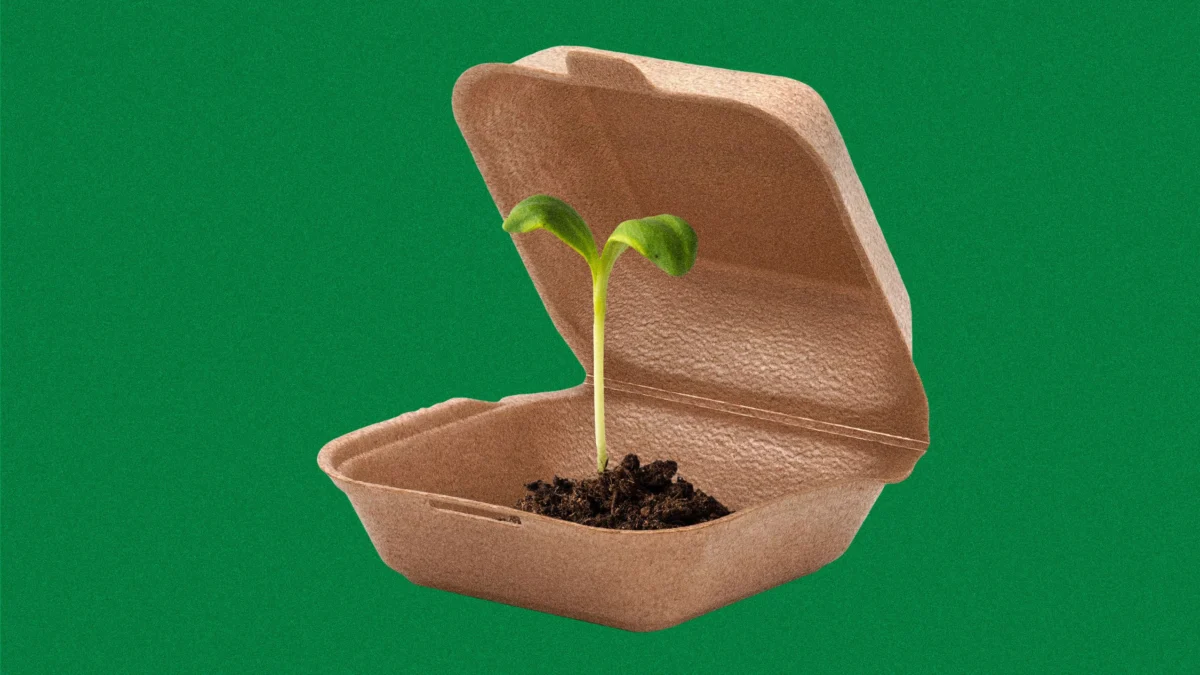
The global proliferation of single-use plastics has catalyzed an urgent search for sustainable alternatives, leading to the rapid emergence of "compostable" and "biodegradable" packaging in the consumer marketplace. While these terms are frequently used interchangeably in marketing materials, they represent distinct scientific processes and disposal requirements that are often misunderstood by the public. As plastic waste continues to saturate marine ecosystems and landfills—with the National Oceanic and Atmospheric Administration (NOAA) reporting millions of tons of debris entering the ocean annually—the distinction between a material that merely breaks down and one that actively nourishes the soil has become a critical focal point for environmental policy and consumer behavior.
The Science of Decomposition: Defining Compostable vs. Biodegradable
To understand the current landscape of sustainable packaging, one must first distinguish between the broad category of biodegradable materials and the specific subset of compostable products. According to Olga Kachook, Director of the Sustainable Packaging Coalition (SPC), the common misconception is that any bio-based material will naturally vanish if left in the environment. In reality, "biodegradable" is a generic term indicating that a material can be broken down by microorganisms such as bacteria or fungi. However, this definition lacks a specific timeframe or a guarantee that the material will not leave behind toxic residues or microplastics.

Research published in journals such as ScienceDirect suggests that certain bioplastics, like polylactic acid (PLA), can actually contribute to microplastic pollution if they are not processed in controlled environments. A landmark study by the University of Plymouth illustrated the limits of biodegradability when researchers found that "biodegradable" grocery bags remained fully intact and capable of carrying a full load of shopping after being buried in soil for three years.
In contrast, compostable packaging is a more rigorous designation. These materials are engineered to biodegrade at a rate consistent with natural organic matter, such as food scraps, without leaving behind synthetic residues. Typically derived from plant-based sources like cornstarch, cellulose, or sugarcane bagasse, compostable products must meet specific international standards, such as ASTM D6400 or D6868 in the United States, to be officially certified. These standards require the material to disintegrate within a specific timeframe—usually 90 to 180 days—under industrial composting conditions.
The Environmental Stakes: Methane and Landfill Dynamics
The push for compostable packaging is not merely about reducing physical litter; it is a strategic move to address the massive carbon footprint of the waste management sector. Data from the Environmental Protection Agency (EPA) indicates that food waste and organic matter account for more than 58% of methane emissions from municipal solid waste landfills. Methane is a potent greenhouse gas, possessing a warming potential approximately 28 to 36 times greater than carbon dioxide over a 100-year period.

When organic matter is trapped in a landfill, it undergoes anaerobic decomposition (without oxygen), which produces methane. Compostable packaging serves as a critical "vehicle" for diverting this organic waste. By allowing consumers to toss food scraps and their containers into a single bin destined for a composting facility, the industry aims to streamline the collection of organic matter. When properly processed through aerobic composting, these materials turn into nutrient-rich soil amendments rather than atmospheric pollutants.
The Infrastructure Gap: Industrial vs. Home Composting
One of the most significant hurdles in the "compostable revolution" is the disparity between product design and waste management infrastructure. Most compostable containers, particularly those made from bioplastics like PLA, are "industrially compostable." These items require the high-heat environments (often exceeding 140°F), specific moisture levels, and controlled aeration found only in large-scale commercial facilities.
"Most compostable packaging is only certified to break down in an industrial facility, and it likely won’t break down in a typical home composting setup," Kachook explains. For the average consumer, a backyard compost pile or a small countertop bin—which many refer to as "glorified food scrap containers"—does not generate the thermal energy required to snap the molecular bonds of bioplastic forks or heavy-duty takeout bowls.

The timeline for certification is evolving to address this confusion. In September 2025, the Biodegradable Products Institute (BPI) officially launched a new "home-compostable" certification label. This designation helps consumers identify products that are tested to break down in lower-temperature environments, such as a backyard bin. However, even with this certification, experts warn that composting remains a "hands-on" scientific process. Without regular agitation to introduce oxygen and the correct balance of "green" (nitrogen-rich) and "brown" (carbon-rich) materials, even home-approved packaging can take six months or longer to decompose.
The Perils of Improper Disposal: Recycling Stream Contamination
A major point of failure in the lifecycle of compostable packaging is the "blue bin" error. Because many compostable plastics look and feel identical to traditional petroleum-based plastics (like PET or HDPE), consumers frequently toss them into recycling bins. The EPA has issued clear warnings regarding this practice, noting that compostable plastics act as a contaminant in the recycling stream.
Mary Katherine Moore, a senior marketing and communications expert for GreenBlue, emphasizes that when compostable materials are intermixed with traditional recyclables, they can degrade the quality of the recycled resin, making the final product brittle and unmarketable. Furthermore, food-soiled compostables—such as greasy pizza boxes or sauce-stained containers—clog the automated sorting machinery at Material Recovery Facilities (MRFs), leading to costly downtime and the eventual landfilling of otherwise recyclable materials.

This is why compostable packaging is increasingly being restricted to food-service applications. While a compostable mailer or a personal care bottle might seem eco-friendly, they often confuse the consumer’s established recycling habits. By focusing compostable technology on items that are naturally paired with food waste—such as coffee filters, tea bags, and produce bags—the industry hopes to create a more intuitive "compost-only" stream.
Chronology of the Compostable Movement
The evolution of the compostable market has followed a distinct timeline of innovation and regulation:
- Early 2000s: The introduction of PLA (polylactic acid) as a viable alternative to petroleum-based clear plastics.
- 2010-2015: A surge in corporate sustainability pledges leads to the widespread adoption of "biodegradable" claims, many of which are later criticized as "greenwashing" due to a lack of infrastructure.
- 2018-2022: Municipalities like San Francisco and Seattle implement mandatory composting ordinances, forcing a shift toward standardized compostable labeling.
- 2023-2024: Heightened scrutiny regarding "forever chemicals" (PFAS) in compostable fiber packaging leads to new regulations banning these substances to ensure the resulting compost is safe for agriculture.
- September 2025: The launch of the BPI Home-Compostable Certification, providing a clear regulatory framework for backyard-safe materials.
Broader Impact and the Future of Waste
The success of compostable packaging is inextricably linked to the scaling of composting infrastructure. Currently, while thousands of communities in the United States have access to curbside recycling, only a fraction have access to industrial composting services. According to data from BioCycle, there are roughly 4,700 composting facilities in the U.S., but only a small percentage are equipped to accept and process compostable packaging alongside food waste.

Technological interventions at the household level are attempting to bridge this gap. Devices like the Lomi or Mill electric composters use heat and mechanical grinding to accelerate the breakdown of organic matter, turning scraps into a "pre-compost" in a matter of hours. While these devices can handle some certified compostable plastics, they represent a high-cost solution that may not be accessible to the general population.
Industry analysts suggest that the future of the sector lies in "extended producer responsibility" (EPR) laws. States like California, Maine, and Oregon are leading the way with legislation that requires manufacturers to fund the end-of-life processing for the packaging they produce. This could provide the necessary capital to build regional industrial composting hubs, ensuring that a "compostable" label actually results in a composted product.
Ultimately, the transition away from single-use plastics requires a sophisticated understanding of material science. Compostable packaging is not a "magic" solution that allows for guilt-free disposal; it is a tool within a complex biological system. For these materials to fulfill their environmental promise, they must be supported by clear labeling, robust municipal infrastructure, and a consumer base that is educated on the vital difference between a recycling bin and a compost pile. Without these three pillars, the "green" revolution in packaging risks becoming just another layer in the world’s growing landfills.