Jono Maryono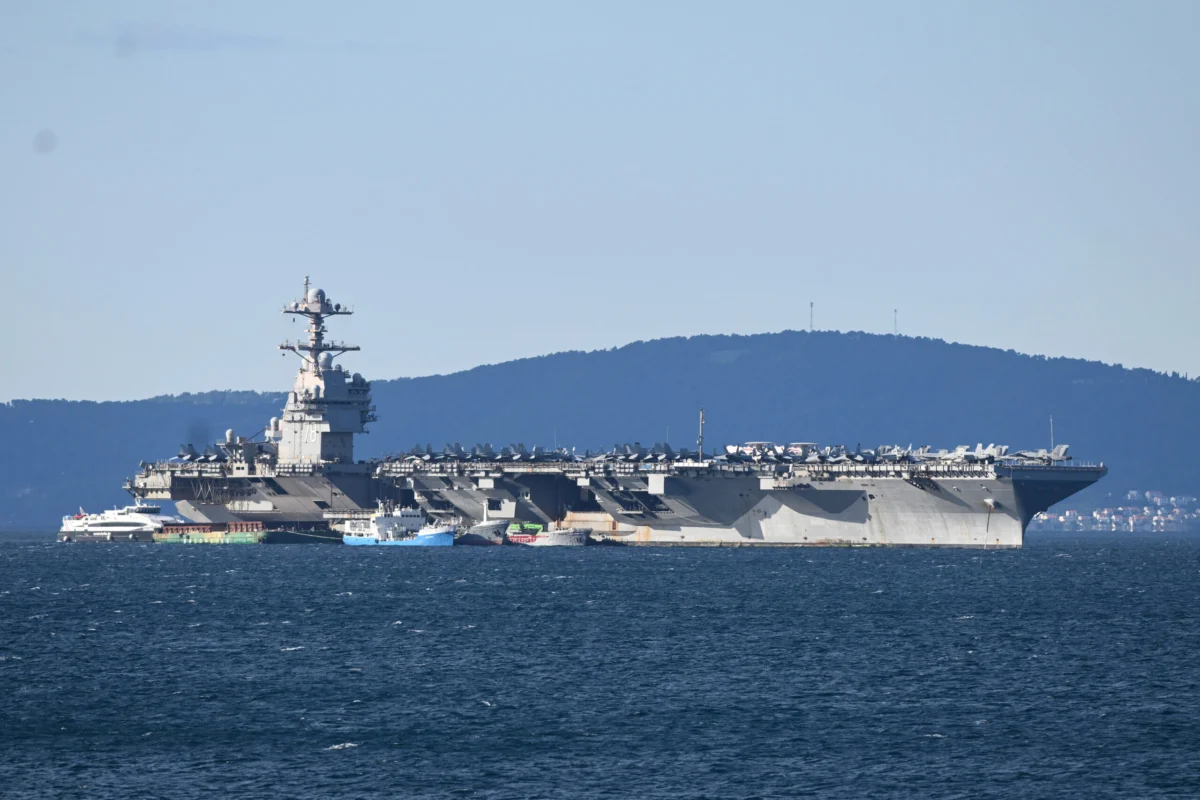
As the United States extended its ceasefire with Iran, President Donald Trump announced a continued near-week-long blockade on Tehran, awaiting a "proposal" from Iran for further talks. However, this diplomatic maneuver is overshadowed by a pressing domestic deadline: May 1st, when the President’s authority to maintain military deployments in ongoing conflicts, as stipulated by the War Powers Resolution of 1973, is set to expire unless explicitly authorized by Congress. This critical juncture raises significant questions about the future of U.S. military engagement in the region and the President’s ability to navigate the complex legal and political landscape.
The War Powers Resolution, enacted in the aftermath of the Vietnam War, was designed to reassert congressional authority over the nation’s involvement in armed conflicts abroad. The law mandates that a president must inform Congress within 48 hours of initiating military action and limits deployments to 60 days, unless Congress grants a 30-day extension or provides specific authorization for a longer commitment. Failure to secure such authorization beyond this 90-day window necessitates the termination of U.S. armed forces’ deployment.
The Legal Framework: Understanding the War Powers Resolution
The 1973 federal law, often referred to as the War Powers Act, places a significant check on the president’s unilateral power to engage the United States in armed conflict. Under its provisions, the president is obligated to report to Congress within two days of deploying troops into hostilities. The initial deployment period is capped at 60 days. Following this, the president can request a single 30-day extension, but any commitment beyond this 90-day threshold requires explicit congressional authorization, such as a formal declaration of war or a specific legislative approval for continued military action.
Maryam Jamshidi, an associate professor of law at Colorado Law School, explained the nuances of this legislation. "To extend the 60-day window by 30 days, the president must certify, in writing, to Congress that the continuing use of armed force is a result of ‘unavoidable military necessity,’" she stated. "Beyond this 90-day window, the president is required to terminate the deployment of U.S. armed forces if Congress has not declared war or otherwise authorized continuing military action." However, Jamshidi also pointed out a critical limitation: "There is no clear legal avenue for Congress to successfully force the president to abide by this termination requirement, and indeed, past presidents have refused to do so, claiming that this part of the War Powers Act is unconstitutional." This legal ambiguity has historically allowed presidents to circumvent congressional oversight, a pattern that now looms large over the current situation with Iran.
Congressional Divisions and Uncertain Authorization
The prospect of President Trump securing congressional authorization for continued military action against Iran appears increasingly uncertain, largely due to deep partisan divisions within the House of Representatives and the Senate. On April 15th, a fourth bipartisan attempt in the U.S. Senate to limit the President’s authority to conduct military operations using the War Powers Resolution was defeated. The vote, which stood at 52-47, saw members voting overwhelmingly along party lines, underscoring the partisan chasm.
Democrat Senator Chris Murphy, a vocal critic of the administration’s Iran policy, highlighted the significance of this lack of oversight. "We should not fail to note how extraordinary it is that our Senate Republican leadership has declined to do any oversight of a war that is costing billions of dollars every week," he remarked. While many congressional Republicans have largely refrained from interfering with the President’s actions during the initial 60-day period afforded by the War Powers Resolution, a growing number have insisted that congressional approval will be imperative thereafter.
Republican Senator John Curtis, in an opinion piece published in April, articulated this position. "I support the president’s actions taken in defense of American lives and interests. However, I will not support ongoing military action beyond a 60-day window without congressional approval. I take this position for two reasons – one is historical, and one is constitutional," he wrote. Similarly, Republican Congressman Don Bacon told U.S. media, "By law, we’ve got to either approve continued operations or stop. If it’s not approved, by law they have to stop their operations."
Even some Republicans who have steadfastly supported President Trump’s actions in Iran are reportedly expressing unease about the prospect of a protracted conflict. While they have previously blocked efforts to curtail the President’s powers, some have indicated a potential shift in their voting stance if the conflict extends beyond the 60-day mark, further complicating the path to congressional approval.
The Illusion of a Ceasefire: Persistent Naval Activity
Despite the declarations of a two-week ceasefire on April 8th and its subsequent unilateral extension by President Trump, military pressure has continued, particularly at sea. On Monday, U.S. forces intercepted and captured the Iranian-flagged container ship Touska in the northern Arabian Sea, near the Strait of Hormuz. The U.S. stated that the vessel had ignored orders to alter its planned transit to the Iranian port of Bandar Abbas. This operation followed Washington’s imposition of a naval blockade on all Iranian ports on April 13th.
In response, Iran captured two foreign commercial vessels in the Strait of Hormuz two days later, moving them to its coast. Subsequently, on Wednesday, the U.S. military intercepted at least three Iranian-flagged tankers in international waters, reportedly redirecting them away from their intended destinations near India, Malaysia, and Sri Lanka. This continuous cycle of interdiction and capture highlights the ongoing friction and the fragile nature of the declared ceasefire, suggesting that the conflict is far from dormant.
The President’s Dilemma: Escalation or De-escalation?
Salar Mohendesi, a professor of History at Bowdoin College, described the conflict as "terrible" for President Trump, with public opinion polls consistently showing opposition to the war. However, he suggested that the President is likely to continue the engagement in some capacity. "His entire brand is based on winning. He told the American public that he could extract a better deal from Iran, he promised that he would not get involved in a war, and his beleaguered party is about to head into midterm elections in the midst of a historically unpopular war," Mohendesi told Al Jazeera.
Mohendesi further analyzed the President’s strategic calculus: "Trump can still walk away and staunch the bleeding, so to speak, but that would mean accepting defeat. He is a gambler, so it’s very possible that he will continue to escalate in the hopes of eking out some sort of victory down the line." The crucial question, according to experts, is not whether the conflict will continue, but in what form, and how President Trump might seek to circumvent congressional limitations if necessary.
Circumventing Congress: Legal Avenues and Historical Precedents
The Authorization for Use of Military Force (AUMF), a piece of legislation first passed in 2001 following the September 11th attacks to authorize the "war on terror," and again in 2002 to authorize the invasion of Iraq, presents another potential legal pathway for the President to justify continued operations. Successive administrations have utilized these AUMFs to legitimize a wide array of military actions.
Notably, President Trump invoked the 2002 AUMF in 2020 to order the assassination of top Iranian General Qassem Soleimani in Baghdad. A 2015 congressional report detailed how former President Barack Obama relied on the 2001 AUMF for continued operations in Afghanistan and for initiating a new campaign against ISIS/ISIL, with the possibility of expansion. The Obama administration maintained that its military operations against ISIL in Syria, which began in 2014, fell under the purview of this authorization.
Historical Precedents: Presidents and Congressional Authority
Beyond the AUMF, U.S. presidents have historically found various ways to conduct military operations without explicit congressional approval, particularly before the AUMF’s widespread application. Since the passage of the War Powers Resolution in 1973, presidents have frequently relied on differing legal justifications and claims of inherent executive authority.
During the 1990s, former President Bill Clinton authorized several military operations, including in Iraq and Somalia. In March 1999, Clinton deployed U.S. forces against the former Yugoslavia without congressional approval, citing the Serbian ethnic cleansing of Kosovar Albanians. A lawsuit filed by former U.S. Representative Tom Campbell and others, arguing that Clinton needed congressional authorization under the War Powers Act, was unsuccessful. The military campaign in Yugoslavia lasted 79 days.
More recently, during the U.S. military campaign in Libya between March and June 2011, the Obama administration argued that the mission did not meet the legal definition of "hostilities" as defined by the War Powers Resolution. Consequently, the administration contended that explicit authorization from Congress was not required, as the campaign did not involve "active exchanges of fire with hostile forces." These historical instances demonstrate a recurring pattern of presidential interpretation and application of existing legal frameworks to conduct military operations, often pushing the boundaries of congressional oversight.
The current standoff with Iran, therefore, is not merely a geopolitical crisis but also a critical test of the War Powers Resolution and the balance of power between the executive and legislative branches of the U.S. government. As the May 1st deadline approaches, the nation watches to see whether President Trump will seek congressional authorization, attempt to circumvent the resolution through alternative legal justifications, or face a mandated termination of U.S. military deployments. The outcome will have significant implications for both U.S. foreign policy and the constitutional framework governing the use of military force.