Danny Garick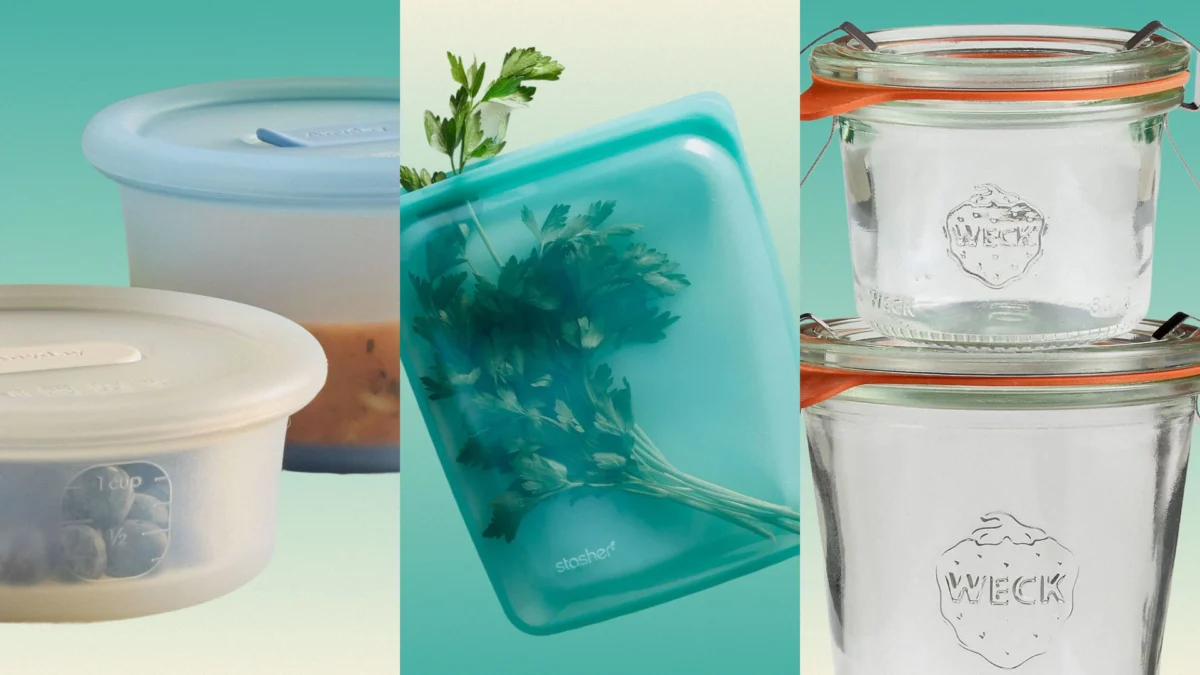
The global consumer landscape is currently undergoing a significant shift as households increasingly prioritize sustainability without wishing to compromise on the convenience of modern living. In the United States alone, the average household generates a substantial amount of waste through the reliance on single-use plastics and paper products. Recent data indicates that Americans use approximately 13 billion pounds of paper towels annually, while the average family goes through roughly 500 plastic zip-top bags every year. For many, the kitchen is the primary site of this environmental footprint, characterized by an endless cycle of Costco-sized paper towel rolls, boxes of cling film, and stacks of plastic deli containers. However, a rigorous month-long evaluation of modern eco-friendly kitchen alternatives suggests that the transition to a zero-waste kitchen is not only feasible but may actually improve culinary efficiency.
The Scientific Context of Food Storage Safety
The impetus for moving away from traditional plastic storage is not merely environmental but also rooted in health concerns. For years, the convenience of reusing plastic take-out containers—often referred to as "deli containers"—has been a staple of home organization. However, a growing body of scientific research has raised alarms regarding the structural integrity of these plastics when subjected to heat. Environmental health scientists have frequently cautioned that the repeated dishwashing and microwaving of low-density polyethylene (LDPE) or polypropylene (PP) containers can lead to the leaching of microplastics and chemical additives into food.
Studies published in journals such as Environmental Science & Technology have highlighted that heating plastic can trigger the release of bisphenols and phthalates, which are known endocrine disruptors. This scientific consensus has driven a surge in the "reusable" market, as consumers seek materials like glass and food-grade silicone that offer thermal stability and chemical inertness.
Methodology: A Month-Long Transition Trial
To assess the viability of sustainable swaps, a month-long trial was conducted focusing on four primary categories of kitchen waste: plastic deli containers, dry good storage, zip-top bags, and cling film. The criteria for success were defined by three metrics: utility (how well the product performs its intended task), efficiency (the ease of cleaning and storage), and durability (the ability to withstand daily wear and tear in a high-volume kitchen).
Phase One: Transitioning to Silicone-Based Deli Containers
The first major hurdle in eliminating single-use plastic is finding a replacement for the ubiquitous deli container. These containers are prized for their stackability and lightweight nature. The trial introduced Anyday Silicone Delis as a direct replacement. Unlike traditional plastic versions, these are manufactured from high-grade silicone and feature stainless-steel-reinforced rims to prevent warping—a common failure point in all-silicone designs.
During the testing period, these containers were utilized for Sunday meal preparations, including the storage of high-staining foods like curries and acidic yogurts. The results indicated that the silicone material resisted the staining and odor retention common in plastic. Furthermore, the inclusion of sealable vents for steam release allowed for seamless transitions from the refrigerator to the microwave. From a logistical standpoint, the one-size-fits-all lid system mirrored the convenience of professional kitchen delis, significantly reducing the time spent searching for matching components in a crowded cupboard.

Phase Two: Glass Storage and Vertical Efficiency
While silicone is ideal for meal prep and transport, dry good storage requires visibility and long-term stability. The trial replaced standard mason jars with Weck Mold Jars, a design originating from Germany with a history dating back to the early 20th century.
A critical finding in the trial was the importance of "stackability" in small-footprint kitchens. Unlike traditional tapered mason jars, the Weck Mold Jars feature a straight-walled design that allows them to be stacked securely. This vertical efficiency proved vital for storing homemade snacks, such as crispy chickpeas and nuts. The use of glass—a non-porous and infinitely recyclable material—ensured that the contents remained fresh without the risk of chemical migration. While the weight of glass makes it less ideal for commuting, the trial found it superior for pantry organization, where the ability to gauge inventory at a glance prevents over-buying and subsequent food waste.
Phase Three: Eliminating the Zip-Top Cycle
Perhaps the most significant source of kitchen waste identified was the plastic zip-top bag. The trial implemented Stasher Bags, which are constructed from 100% food-grade platinum silicone. This material is distinct from lower-grade silicones as it does not contain fillers or chemical byproducts.
The versatility of these bags was tested across various temperatures, including freezer storage and oven use (up to 425°F). The trial found that the "Value 15-Pack" provided enough variety—from flat snack bags to stand-up "mega" bags—to handle everything from half-cut vegetables to liquid-heavy soups. Data from the trial suggests that while the initial investment (approximately $163 for a comprehensive set) is high, the break-even point occurs within 12 to 18 months for a high-volume household, given the rising cost of disposable plastic goods.
Phase Four: The Replacement of Cling Film
The final stage of the month-long trial focused on eliminating cling film, a product notorious for its lack of recyclability and frustration-inducing handling. Stasher Lids were utilized as an alternative. These stretchable silicone covers provide an airtight seal over various vessels, including ceramic bowls and stainless steel pots.
The trial noted that while these lids cannot wrap an odd-shaped piece of fruit as easily as plastic wrap, they excel as "universal lids" for leftovers. By creating a vacuum-like seal, they extended the shelf life of refrigerated produce by preventing oxidation. This phase of the trial highlighted a shift in kitchen habits: rather than wrapping the food itself, the focus shifted to sealing the container, which proved to be a more durable and less wasteful approach.
Supporting Data: Economic and Environmental Impact
The broader implications of these swaps are substantiated by waste management statistics. The Environmental Protection Agency (EPA) reports that containers and packaging make up a significant portion of municipal solid waste, totaling over 82 million tons annually. By adopting the four swaps mentioned—silicone delis, glass jars, silicone bags, and reusable lids—a single household can divert an estimated 30 to 50 pounds of plastic from landfills each year.

Financially, the "Sunk Cost" of sustainable goods is often the primary barrier to entry. However, a comparative analysis of the products tested reveals a long-term economic benefit:
- Plastic Bags: $5–$10 per month vs. Stasher Bags: One-time investment of $100–$160.
- Paper Towels/Cling Film: $15–$20 per month vs. Reusable Lids/Cloth: One-time investment of $40–$60.
- Total Annual Savings: Estimated $240–$360 after the first year.
Chronology of Adoption: Challenges and Adjustments
The transition was not without its learning curves. The first week of the trial was marked by "muscle memory" errors, where the subjects instinctively reached for paper towels or plastic wrap. By the second week, the reorganization of the pantry and the introduction of a dedicated drying rack for silicone bags helped solidify the new routine.
A notable observation was the failure of certain "eco-swaps" not included in the final recommendation. For instance, some paper towel alternatives, such as certain brands of Swedish dishcloths, were abandoned if they did not match the absorbency required for heavy spills. This underscores a vital reality in the sustainability movement: for a swap to "stick," it must perform at or above the level of the disposable product it replaces.
Broader Impact and Industry Trends
The success of these reusable products reflects a larger trend in the housewares industry. Companies like Anyday and Stasher have seen exponential growth as they pivot toward "performance sustainability." Industry analysts suggest that the kitchenware market is moving away from "disposable convenience" toward "durable utility." This shift is being supported by retailers like Williams Sonoma and Costco, which are increasingly stocking high-end reusable options in response to consumer demand.
Furthermore, the "aesthetic of organization"—popularized by social media and home-editing professionals—has inadvertently boosted the sustainability movement. Glass jars and uniform silicone containers are often chosen for their visual appeal, yet they serve the dual purpose of reducing plastic dependency.
Conclusion: A New Standard for the Modern Kitchen
The results of the month-long evaluation demonstrate that ridding a kitchen of single-use plastic is an achievable goal that aligns with both health-conscious and fiscally responsible living. The transition requires an initial financial investment and a period of behavioral adjustment, but the long-term rewards—ranging from reduced exposure to microplastics to significant cost savings—are substantial. As the global community continues to grapple with the environmental consequences of a "throwaway culture," these four swaps provide a practical, high-performance blueprint for the future of domestic life. The kitchen of the future is not one of endless disposables, but one of durable, versatile, and scientifically safe tools that respect both the cook and the planet.