Layla Zulfa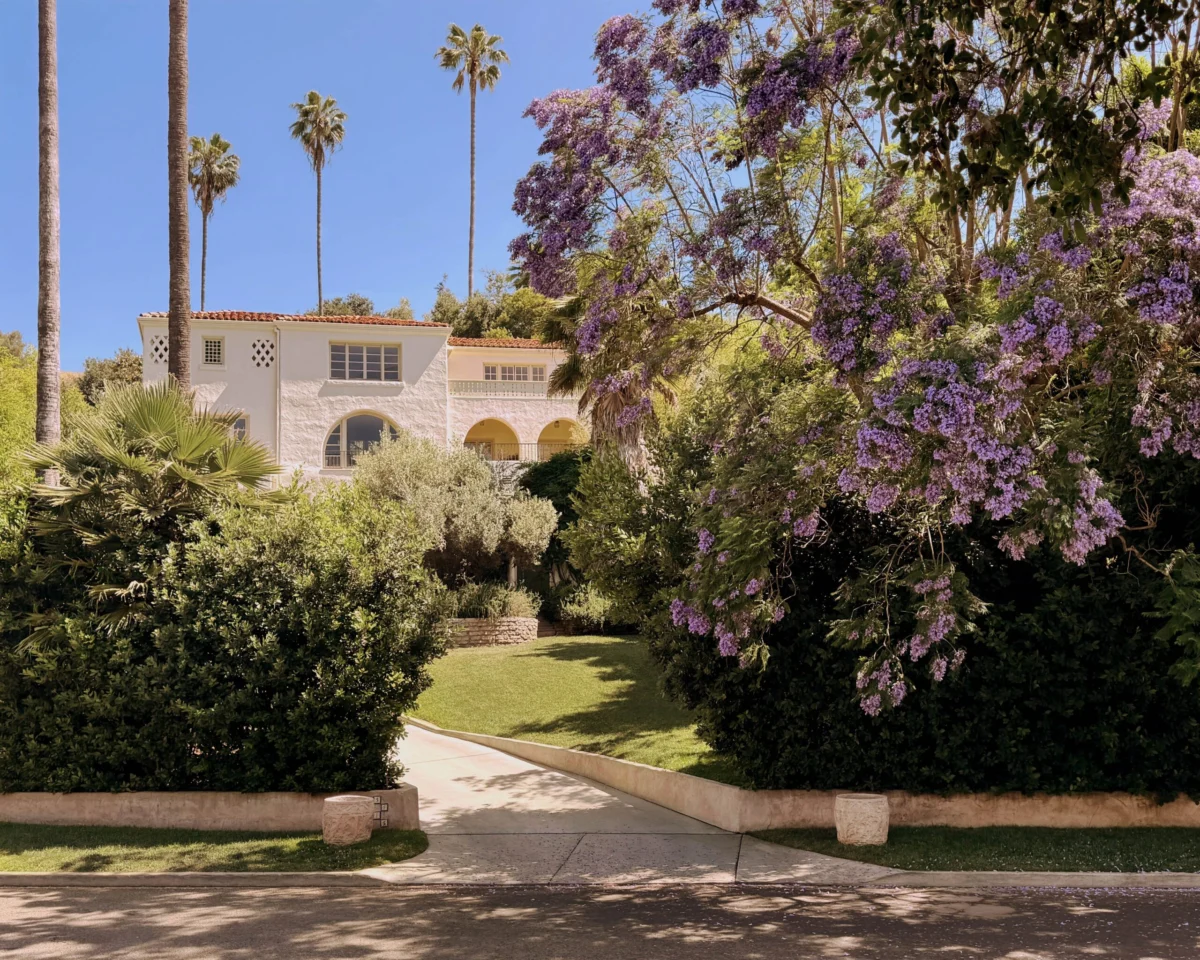
In the landscape of Southern California real estate, a persistent myth suggests that Los Angeles is a city devoid of deep historical roots, often overshadowed by the ephemeral nature of the entertainment industry and the rapid pace of contemporary development. However, for Michael Breland and Peter Harper, the principals of the Los Angeles-based design and architecture firm Breland-Harper, the city’s history is not only present but serves as a foundational element of their professional practice. The couple’s recent restoration of a historic Mediterranean Revival home in the Los Angeles hills serves as a definitive rebuttal to the notion of a rootless city, offering a case study in the "do no harm" philosophy of architectural conservation.

The residence, which had remained within the same family for nearly seven decades before its acquisition by Breland and Harper, represents a rare specimen of early 20th-century California architecture. Its preservation comes at a time when many historic properties in the region are being razed to make way for "spec-built" modern mansions. By choosing to restore rather than replace, Breland and Harper have positioned themselves as key figures in a growing movement that values the patina of age and the continuity of local architectural narratives.
Chronology of the Acquisition and Firm Evolution
The story of the home’s restoration is inextricably linked to the professional trajectory of its owners. Michael Breland and Peter Harper first met while attending architecture school at the University of Southern California (USC). Following their education, their career paths diverged before eventually converging into their current partnership. Breland moved to New York City, where he worked with the influential Storefront for Art and Architecture, a non-profit organization known for its commitment to innovative design and urbanism. Harper, meanwhile, sought expertise abroad, focusing his studies and practice on the rigorous discipline of architectural conservation.

Upon returning to Los Angeles, the duo continued to hone their respective crafts. Breland established an independent studio, while Harper joined the AD100 firm Atelier AM, a practice renowned for its high-end residential work and sophisticated use of historical elements. In 2019, the two formally combined their talents to launch Breland-Harper. The firm quickly gained recognition for its ability to blend classical sensibilities with modern living, eventually earning a spot on Architectural Digest’s prestigious list of "New American Voices."
The acquisition of their current residence occurred serendipitously. At the time, the couple was already in the advanced stages of planning and building a contemporary home. However, a real estate agent urged them to view a hillside property that was coming onto the market for the first time in 68 years. Despite their initial commitment to a new build, the historical significance of the Mediterranean Revival house proved irresistible. Within five minutes of entering the foyer, Breland and Harper recognized the property as a "postcard for Los Angeles," embodying the quintessential Spanish styling and palm-fringed vistas that define the city’s romanticized architectural identity.

Provenance and Architectural Context
The home’s pedigree was a significant factor in the couple’s decision to purchase. The previous owner, Patricia Adler-Ingram, was a formidable figure in California’s preservationist community. As the long-time executive director of the Historical Society of Southern California and an avid gardener, Adler-Ingram had maintained the property with a degree of care that is increasingly rare in the fast-moving Los Angeles market. She left behind a meticulously terraced garden featuring old-growth oaks, climbing white roses, and a functioning vineyard producing Grenache and Mourvèdre grapes.
Mediterranean Revival architecture emerged as a dominant style in California during the 1920s and 30s, inspired by the coastal villas of Spain, Italy, and France. Characterized by stucco walls, red-tiled roofs, and an emphasis on indoor-outdoor living, the style was a response to the region’s climate and a desire to create a cohesive regional identity. The Breland-Harper residence features many of the hallmarks of this era, including soaring ceilings, chalky white walls, and a layout designed to maximize natural light.

Technical Restoration and the "Do No Harm" Ethos
The restoration process was guided by a "do no harm" mandate, a conservative approach that prioritizes the retention of original materials and spatial configurations. Breland and Harper began by "peeling back the layers" of subsequent renovations to reveal the home’s original character. This process led to several significant architectural discoveries:
- Terrazzo Recovery: Beneath a layer of pink carpeting in the entry hall, the designers found a patinated indigo terrazzo floor with inlaid mother-of-pearl. Similarly, removing 1980s-era white tile in the breakfast room revealed original terrazzo in a classic diamond pattern.
- Light Management: The removal of heavy drapes and dark awnings transformed the interior environment. By allowing natural light to flood the spaces, the designers emphasized the "warm, flattering glow" inherent to the building’s original design.
- Preservation of Layout: Unlike many modern renovations that opt for "open-concept" living by removing internal walls, Breland and Harper maintained the original floor plan. They argued that excessive alteration can cause the architectural integrity of a house to "unravel."
- Material Retention: In the bathrooms, the couple chose to keep the original basket-weave tile floors rather than replacing them with the large-scale marble slabs currently favored in luxury real estate.
While maintaining the historical aesthetic, the project did involve necessary modernization. This included a complete overhaul of the electrical systems and the installation of air conditioning. To accommodate contemporary lifestyles and the couple’s penchant for entertaining, they also added modern amenities such as a second dishwasher, integrated seamlessly into the existing kitchen footprint.

Curated Interiors and Material Culture
The interior design of the home reflects a sophisticated dialogue between various historical periods and cultural influences. Breland-Harper utilized the space to showcase their own line of custom furniture alongside a curated collection of antiques and indigenous art.
In the living room, the "Henry Sofa"—a custom Breland-Harper design named after their standard poodle—sits alongside 18th-century Mexican silver altar candlesticks and a 17th-century Italian lyre strut table. This juxtaposition of the new and the ancient is a hallmark of the firm’s aesthetic. The library serves as a "soothing cocoon," featuring a wall of bookshelves and a neoclassical Danish writing desk, offering a space for quiet reflection overlooking the distant Los Angeles skyline.

The couple’s collection of baskets from California’s original inhabitants—including pieces from the Yokuts, Pomo, Pima, Mono, and Kumeyaay peoples—serves as a poignant acknowledgment of the region’s indigenous history. By integrating these artifacts with 20th-century modernist pieces, such as a metal Donald Judd corner chair and Charlotte Perriand seating, the designers create a narrative that spans centuries of human habitation and creativity in the Americas.
Landscape Integration and Environmental Stewardship
The exterior of the property received as much attention as the interior. Building upon the foundation laid by Patricia Adler-Ingram, Breland and Harper transitioned the garden toward a more sustainable, drought-tolerant model. They introduced California native plants and perennials that require minimal irrigation, reflecting current best practices in Southern California landscaping.

The terrace, paved in flagstone, serves as an outdoor living room. It is furnished with a mix of custom teak daybeds, 1940s American wrought-iron armchairs, and Moroccan tables. This space exemplifies the Mediterranean Revival ideal of the "loggia," a sheltered area that provides a transition between the domestic interior and the natural world.
Broader Impact and Inferred Implications
The restoration of the Breland-Harper residence carries implications that extend beyond the boundaries of a single property. It serves as a model for how the design community can approach the tension between preservation and modernization.

- Market Analysis: The success of this project suggests a robust appetite among high-end homeowners for properties with "soul" and history. In a market saturated with "white-box" modernism, homes that offer a sense of continuity and craftsmanship are becoming increasingly valuable.
- Cultural Preservation: By honoring the legacy of Patricia Adler-Ingram and the original architects, Breland and Harper have contributed to the preservation of Los Angeles’s cultural fabric. This approach fosters a greater public appreciation for the city’s built heritage.
- Design Trends: The firm’s ability to mix high-modernism (Judd, Opie) with classical European and indigenous American elements signals a shift toward a more eclectic, "globally-informed" California style. This "complex milieu," as Harper describes it, reflects the diverse cultural crossroads that define modern Los Angeles.
In conclusion, the Breland-Harper Mediterranean Revival project is more than a successful renovation; it is a testament to the enduring relevance of classical design principles and the importance of architectural stewardship. By treating their home as a living document of Los Angeles history, Breland and Harper have created a space that is both a personal sanctuary and a professional manifesto, proving that in the City of Angels, the past is never truly gone—it is simply waiting to be rediscovered.