Layla Zulfa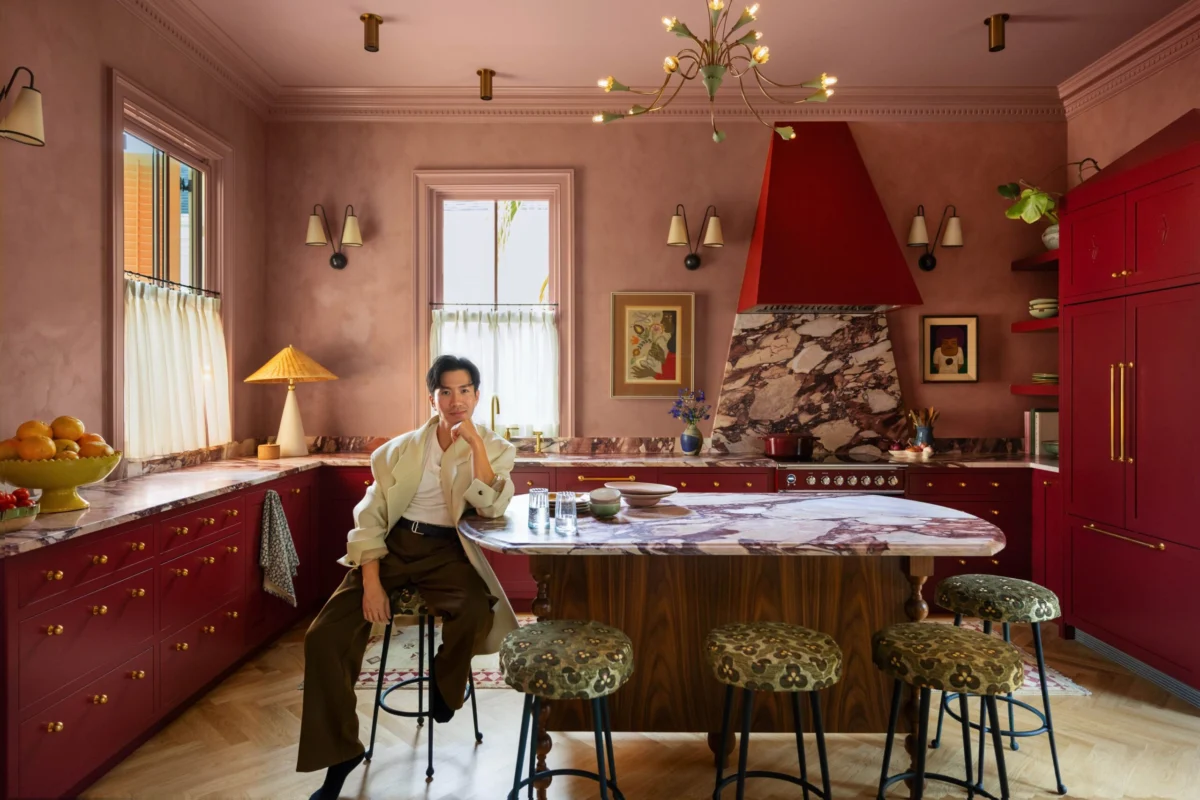
In the heart of New Orleans’ historic Faubourg Marigny district, a new architectural landmark has emerged that challenges the traditional boundaries between historic preservation and contemporary self-expression. The residence, belonging to the influential interior designer and author known as Dabito, serves as a masterclass in "maximalist" design, blending an unapologetic use of color with a structural integrity that respects the city’s complex aesthetic heritage. By constructing a ground-up residence on a previously vacant lot, Dabito—born to Vietnamese immigrants and raised in the suburbs of Los Angeles—has transitioned from an Instagram-era DIY enthusiast to a significant voice in modern American interior architecture.

The house is a bold departure from the muted palettes often associated with new constructions in historic zones. Its exterior is finished in a vibrant marigold hue, accented by peach-pink shutters, a combination that Dabito notes was designed to contribute to the "rainbow" of the Marigny, a neighborhood long recognized as a hub for the city’s LGBTQ+ community and creative class. This project represents more than just a personal residence; it is a case study in how modern homeowners can navigate the stringent requirements of landmarks commissions while still injecting personal narrative and cultural history into their living spaces.
The Evolution of a Design Philosophy: From DIY to "Old Brand New"
Dabito’s journey to this New Orleans build is rooted in a childhood shaped by the transient nature of immigrant life. Growing up in rental apartments and motels in Southern California, he shared a single bedroom with his parents and sister. His early exposure to design came from his father, a contractor who would bring leftover paint from job sites to add decorative borders to their modest living quarters. This early realization—that small, color-based interventions could transform the psychology of a space—became the foundation for his professional career.

In 2010, he launched the design blog Old Brand New, which focused on high-impact, low-cost DIY projects. Over the next decade, Dabito’s aesthetic evolved into a sophisticated blend of vintage eclecticism and modern luxury. His 2023 book, also titled Old Brand New, codified his approach: a rejection of the "beige" minimalism that dominated the 2010s in favor of "dopamine decor," a movement that prioritizes joy, color, and personal history.
The New Orleans project is the culmination of this evolution. After moving to the city in 2014, then returning to Los Angeles to renovate a 1950s bungalow, Dabito and his husband, an educator, decided to return to the Crescent City permanently in 2022. While they initially sought a renovation project, the discovery of a vacant lot across from the Marigny Opera House—the site of Solange Knowles’ high-profile 2014 wedding—shifted their focus toward a ground-up build.

Architectural Strategy and Historic Integration
Building in New Orleans requires navigating the city’s unique architectural vernacular and the oversight of the New Orleans Historic District Landmarks Commission (HDLC). To bridge the gap between historic reverence and modern functionality, Dabito collaborated with architectural designer Marcie Banks of Clementine Construction.
The design team adopted a "brand new old" strategy. The goal was to create a structure that felt as though it had occupied the site for a century, despite being a 21st-century insertion. This was achieved through the careful application of period-appropriate details:

- Structural Elements: The inclusion of dentil moldings, elliptical-arched doorways, and traditional Creole cottage proportions.
- Exterior Compliance: Working within the HDLC guidelines, the team ensured the house mirrored the scale and rhythm of the surrounding Victorian row houses and Eastlake-style homes.
- The Color Exception: Despite the rigorous structural requirements, the HDLC granted significant leeway regarding the exterior color palette, allowing for the marigold and peach-pink combination that has since become a local point of interest.
Inside, the home spans several thousand square feet, featuring high ceilings and a layout optimized for both private living and large-scale entertaining—a necessity in a city where social life is a primary cultural pillar.
Chronology of the Project
The development of the residence followed a precise timeline that mirrored the broader recovery and growth of the New Orleans real estate market:

- 2014: Dabito first moves to New Orleans, beginning a long-term engagement with the city’s aesthetic and social traditions.
- 2014–2021: A period of professional expansion, including the renovation of a Los Angeles bungalow and the launch of multiple product collaborations (Mitzi, Brooklinen, York Wallcoverings).
- Late 2021: The couple identifies the vacant lot in Faubourg Marigny and secures the land.
- 2022: Marriage of Dabito and his husband; formal commencement of architectural planning and HDLC approvals.
- 2023: Launch of the book Old Brand New as construction reaches its peak.
- 2024: Completion of the residence and final interior staging.
Interior Design Analysis: A Study in Saturation
The interior of the home serves as a live-in showroom for Dabito’s signature style. Each room is treated as a distinct color environment, moving away from the "open concept" trend where one color must flow into the next.
The Kitchen: Often described as the "showstopper" of the home, the kitchen features walls of hand-applied Venetian plaster and countertops crafted from Calacatta Breccia marble. The cabinetry is finished in a "borscht-red" (Sherwin-Williams SW 7578), a deep, earthy tone that provides a grounded contrast to the more ethereal plaster finishes.

The Dining Room: Drenched in "peacock blue" (Sherwin-Williams Green Bay), the dining room utilizes color to create an intimate, "jewel-box" atmosphere. The space is anchored by a burl-wood table and a set of vintage Italian Savonarola chairs, demonstrating Dabito’s ability to mix high-end contemporary furniture with historic European silhouettes.
The Primary Suite: The bedroom reflects a softer but no less intentional approach. A Chinese Art Deco rug provides a foundation for a mix of flea-market art and contemporary pieces from Castlery. The lighting—a mix of custom designs for Mitzi and high-end fixtures from Hudson Valley Lighting—acts as the "jewelry" of the rooms, providing sculptural interest even when the lights are off.

Market Context and Supporting Data
Dabito’s project arrives at a time when the U.S. interior design market is experiencing a significant shift toward personalization. According to data from IBISWorld, the interior design industry in the U.S. has grown to a market size of over $17 billion as of 2024, with a notable increase in "full-service" residential projects that prioritize unique, non-standardized finishes.
Furthermore, the New Orleans real estate market, particularly in historic districts like the Marigny, has seen a steady appreciation in value. Real estate data for the 70117 zip code indicates that property values have risen by approximately 45% over the last decade. This appreciation is driven largely by the "creative class" and professionals who are willing to invest in high-cost, high-detail renovations and new builds that preserve the city’s character.

The "maximalist" trend, of which Dabito is a leading proponent, is also reflected in consumer behavior. A 2023 report by Pinterest noted a 325% increase in searches for "maximalist decor" and a 120% increase in "eclectic interior design," suggesting that the "millennial gray" era is being replaced by a desire for color and texture.
Broader Impact and Implications
The completion of this New Orleans residence has broader implications for the field of interior design and urban development. First, it challenges the notion that "new" is synonymous with "characterless." By utilizing traditional craftsmanship—such as Venetian plaster and custom millwork—Dabito has demonstrated that new constructions can possess the soul of historic homes.

Second, the project highlights the importance of cultural identity in design. As a first-generation American, Dabito’s use of color and texture is a direct homage to his family’s history and his father’s work as a contractor. This narrative-driven approach to design is increasingly favored by a younger generation of homeowners who view their living spaces as extensions of their personal and cultural identities.
Finally, the home serves as an anchor for the Faubourg Marigny. In a city that relies heavily on its visual charm to drive tourism and local pride, the "marigold house" contributes to the neighborhood’s reputation as a vibrant, living museum. While Dabito jokingly refers to it as his "forever home—until the next one," the residence stands as a permanent testament to the power of gumption, color, and the belief that a home should be as bright and cheerful as the community it inhabits.