Danny Garick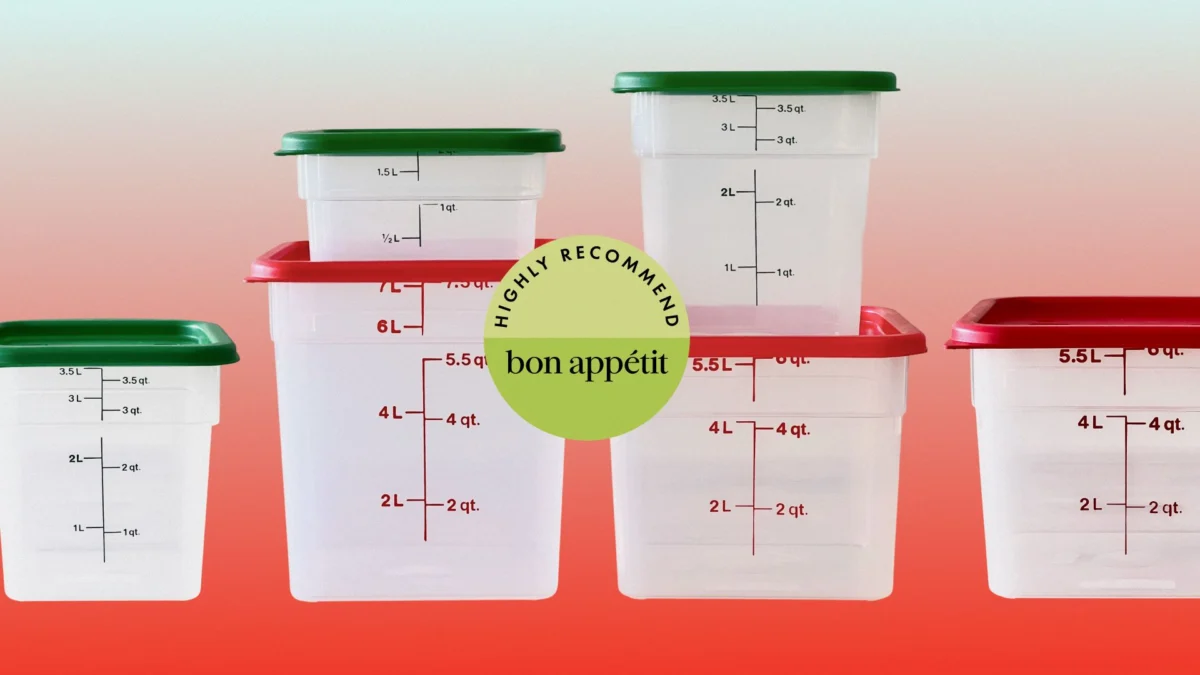
The transition of professional-grade culinary equipment from industrial kitchens to the residential sector has accelerated significantly over the last decade, driven by a growing consumer demand for durability, efficiency, and food safety. Among the most ubiquitous tools found in high-volume food service environments is the Cambro container—a line of heavy-duty, stackable storage solutions that has become the industry standard for chefs, bakers, and prep cooks worldwide. While originally designed to withstand the rigorous demands of commercial restaurants, these containers are increasingly being recognized as essential assets for home cooks seeking to optimize their kitchen workflows and long-term food preservation strategies.
The Engineering and Utility of Professional Food Storage
The Cambro Manufacturing Company, founded in 1951 by brothers Argyle and William Campbell, initially focused on creating high-quality hospital meal trays. Over the subsequent seven decades, the company expanded its repertoire to include the polycarbonate and polypropylene storage bins that now define the modern commercial kitchen. These containers, often referred to simply as "Cambros" in the industry, are engineered with specific technical requirements in mind: durability, thermal resistance, and standardized volume measurements.
In a professional setting, such as the Brooklyn-based bakeries and restaurants where many culinary professionals begin their careers, these containers serve as the backbone of daily operations. They are utilized for a wide spectrum of tasks, including the proofing of high-hydration doughs like focaccia, the bulk storage of dry ingredients, and the marinating of large proteins. The containers are typically available in sizes ranging from 2-quart "bins" to 22-quart "tubs," allowing for a modular system that maximizes vertical space in walk-in refrigerators and dry pantries.
Technical Specifications and Material Science
The primary appeal of professional-grade containers lies in their material composition. Most industrial storage units are manufactured from one of two materials:
- Polycarbonate (Camwear): Known for its crystal-clear clarity and extreme durability, polycarbonate is virtually unbreakable. It is resistant to food acids and oils, ensuring that the container does not retain odors or stains from pungent ingredients like garlic or turmeric.
- Polypropylene: These translucent containers offer a more flexible, cost-effective alternative. While they lack the absolute clarity of polycarbonate, they are highly resistant to chemical erosion and are often preferred for high-temperature dishwashing environments.
Both materials are designed to operate within a broad temperature spectrum, typically from -40°F to 210°F (-40°C to 99°C). This thermal range allows a single vessel to move from a deep-freeze environment to a prep table and then into a high-heat commercial dishwasher without risk of warping or structural failure. For the home cook, this eliminates the common frustration associated with "mismatched Tupperware" or flimsy plastic containers that degrade after repeated exposure to heat and cold.
The Chronology of Kitchen Integration: From Prep to Service
The lifecycle of a Cambro container in a professional kitchen follows a logical progression that home cooks are now beginning to replicate. This chronology highlights why professional tools often outperform consumer-grade alternatives.
Phase 1: Receiving and Bulk Storage
Upon the arrival of raw ingredients, professional kitchens immediately transfer goods from their original packaging—which can be porous or unhygienic—into sanitized Cambro units. This practice, known as "decanting," prevents pests and moisture from compromising expensive inventory. In a residential context, this translates to storing five-pound bags of flour, rice, or coffee beans in airtight, square containers that fit more efficiently on pantry shelves than rounded canisters.
Phase 2: High-Volume Preparation
During the preparation phase, containers act as mixing bowls and marinating vessels. In a restaurant environment, a prep cook might mix four batches of zucchini bread batter in an 8-quart container or crack dozens of eggs for a brunch service. The square design of the containers is particularly advantageous here, as it allows for easier pouring from the corners compared to traditional round bowls.
Phase 3: Fermentation and Proofing
For bakers, the Cambro is an indispensable tool for monitoring dough development. Because the containers are transparent and feature printed graduations (quarts and liters) on the side, a baker can precisely measure when a dough has doubled in volume. This removes the guesswork from the proofing process, a benefit that is equally valuable for home sourdough enthusiasts.
Phase 4: Long-Term Preservation and Organization
The final phase involves the organization of the "walk-in" or refrigerator. Professional containers are designed to stack securely, utilizing every inch of available space. This "Mise en Place" philosophy—everything in its place—reduces the time spent searching for ingredients and ensures that older stock is used before newer stock, a principle known as First In, First Out (FIFO).
Data-Driven Benefits for the Home Environment
Market analysis suggests that the "prosumer" (professional-consumer) market for kitchenware has grown as home cooks seek to reduce food waste and save money through bulk purchasing. According to industry estimates, organized food storage can reduce household food waste by up to 15-20% by providing better visibility and maintaining ingredient freshness for longer periods.
Furthermore, the longevity of professional-grade plastic offers a significant return on investment. While a set of grocery-store plastic containers may need replacement every 12 to 24 months due to staining, cracking, or lost lids, professional containers are designed for years of daily use. The lids for these containers are often standardized across multiple sizes; for example, a single lid size often fits 2-quart, 4-quart, 6-quart, and 8-quart square containers, drastically simplifying the "lid-matching" struggle common in many households.
Industry Perspectives and Official Standards
The National Sanitation Foundation (NSF) provides the certification that most professional kitchens require for their equipment. Cambro products carry the NSF seal, which guarantees that the item is easy to clean, made of food-safe materials, and designed to prevent the harbor of bacteria.
Culinary educators frequently cite the psychological impact of professional organization. "When a kitchen is organized like a professional line, the cook’s efficiency increases," says one culinary instructor. "Using standardized containers reduces the ‘cognitive load’ of cooking. You aren’t fighting your equipment; you are using it to facilitate the process."
While some health advocates have raised concerns regarding Bisphenol A (BPA) in older polycarbonate plastics, the industry has largely pivoted to BPA-free alternatives. Modern professional containers are now predominantly manufactured in BPA-free versions to meet the safety standards of both commercial and residential sectors.
Broader Implications: The Professionalization of the Home Kitchen
The shift toward industrial tools like Cambros reflects a broader trend in domestic life: the professionalization of the home kitchen. As consumers gain access to professional-grade ovens, sous-vide immersion circulators, and high-powered blenders, the demand for the logistical tools to support these appliances has naturally followed.
The implications of this shift extend beyond mere convenience. By adopting the storage methods of the hospitality industry, home cooks are better equipped to:
- Manage Large-Scale Events: Preparing chili for a neighborhood gathering or stock for a holiday meal becomes manageable when using 12-quart or 22-quart vessels.
- Implement Advanced Techniques: Sous-vide cooking requires a deep, heat-resistant vessel to hold the water bath; professional containers are the preferred choice for this method due to their insulation properties and depth.
- Economic Efficiency: Buying grains, legumes, and spices in bulk reduces the cost per unit and minimizes the environmental impact of excess packaging.
Conclusion
The evidence from professional kitchen operations suggests that the tools used to manage high-volume food production are not just "nice to have" for the home cook—they are fundamental to a functional kitchen. The durability, stackability, and standardized measurements of Cambro containers provide a level of logic and efficiency that consumer-grade products rarely achieve. Whether for a former restaurant worker returning to a home kitchen or a dedicated hobbyist, the integration of professional storage solutions represents a permanent upgrade in how food is prepared, stored, and respected. In the modern culinary landscape, one does not need to be a professional baker to benefit from the tools that make professional baking possible.