Jono Maryono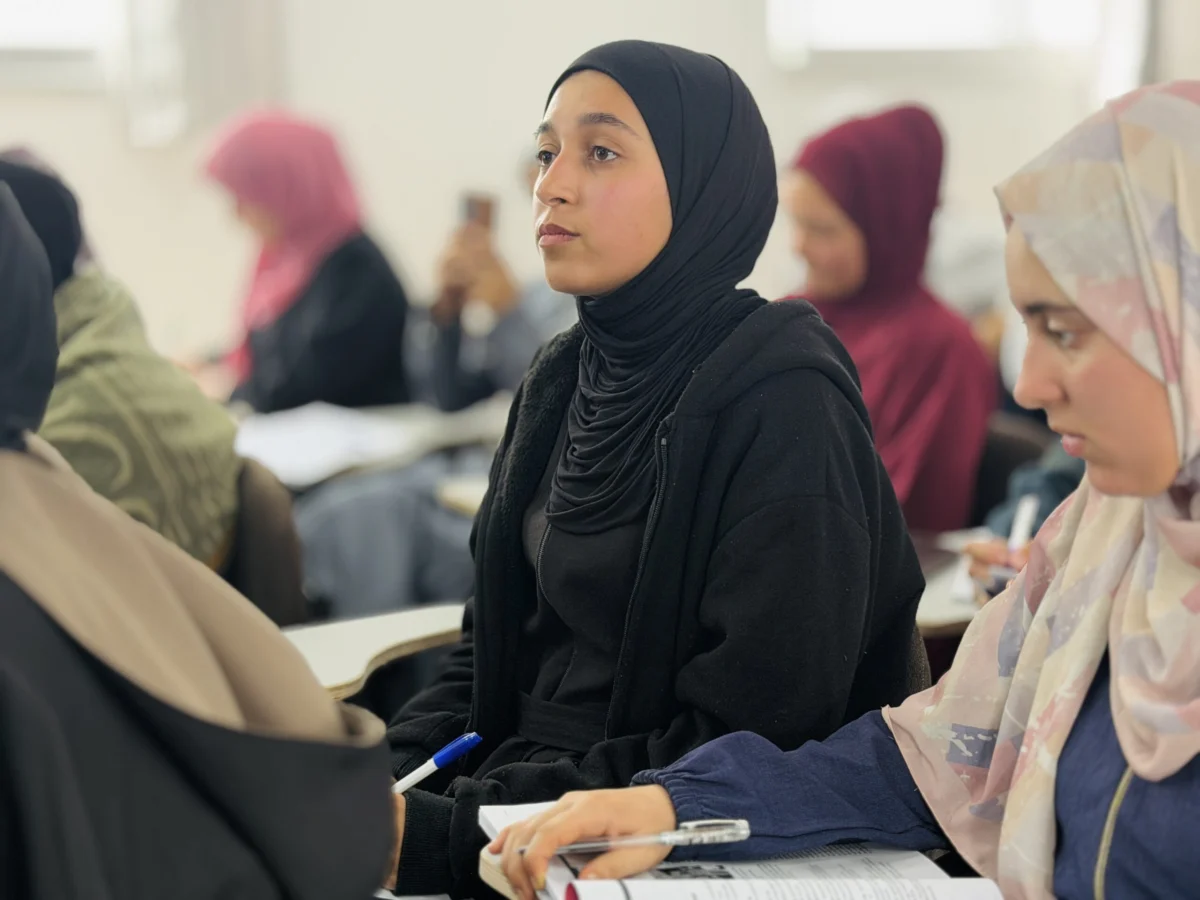
The new academic semester in Gaza commenced in late March, a period usually marked by the vibrant energy of students converging on universities and colleges. However, this year, the familiar hum of youthful anticipation has been drowned out by the harsh realities of displacement and loss. The physical destruction of Gaza’s educational infrastructure has rendered traditional learning environments inaccessible for countless students, forcing a shift towards online education that remains a distant privilege for many struggling for basic survival. Yet, amidst this profound crisis, a remarkable initiative by the US non-governmental organization Scholars Without Borders has emerged, offering a tangible lifeline: "University City," a makeshift academic hub constructed from salvaged materials in al-Mawasi, Khan Younis.
The Scars of Conflict on Gaza’s Academic Landscape
The Israeli military campaign, which began in October 2023, has inflicted widespread devastation across Gaza, leaving a significant portion of its academic institutions in ruins. These once-thriving centers of learning have been reduced to rubble, with many now repurposed as overcrowded shelters for internally displaced persons. The physical destruction has effectively halted in-person education, pushing universities to pivot to online learning models. However, for students living in tents, grappling with severe shortages of food, water, electricity, and reliable internet access, the concept of attending an online lecture is a luxury they cannot afford. This dire situation highlights a systematic dismantling of education, a phenomenon described by UN experts as "scholasticide," characterized by the targeting of institutions, students, and academic life itself.
According to reports from the Euro-Med Human Rights Monitor and Palestinian officials, over 7,000 university students and academics have been killed or injured by Israeli attacks. Furthermore, more than 60 university buildings have been completely demolished. This catastrophic loss has severed access to formal education for hundreds of thousands of students, forcing them into precarious alternatives that fall far short of their previous academic experiences.
"University City": A Testament to Perseverance
In response to this educational vacuum, Scholars Without Borders has established "University City" in al-Mawasi, a densely populated area in southern Gaza. This initiative represents a modest yet powerful reconstruction of Gaza’s academic life, built from wood, metal sheets, and locally sourced materials. Hamza Abu Daqqa, the organization’s representative in Gaza, articulated the mission: "Despite the hardships, our mission is to bring education closer to students in a better environment." He further explained the vision behind the project, stating, "We designed this space to serve multiple academic institutions and as many students as possible. There are six halls here, accommodating up to 600 students a day. It may look simple, but it creates a sense of normal academic life, something students have been deprived of."
The facility is equipped with solar panels providing internet access, improvised green spaces, and even a small business incubator aimed at fostering entrepreneurial skills among students. Operating on a rotating weekly schedule, "University City" allocates each day to a different academic institution, enabling multiple universities to utilize the limited space and maximize student access. Priority is given to courses requiring in-person instruction, such as practical labs and discussion-based classes. Prominent institutions like the Islamic University and Al-Azhar University, along with colleges such as the Palestine College of Nursing, have begun utilizing the site, signaling a crucial step towards restoring a semblance of academic continuity.

A Glimpse of What Was Lost: The Erasure of Academic Life
The systematic destruction of Gaza’s universities dates back to the commencement of the current conflict in October 2023. In the southern Gaza Strip, all academic institutions have been rendered inoperable. While a limited number of campuses in the north have seen partial restoration, their capacity remains severely restricted. The Palestine College of Nursing, for instance, now finds itself surrounded by ruins, its location within a restricted zone effectively cutting off students from their classrooms.
For an entire generation of students in Gaza, the university experience has been an abstract concept, overshadowed by the daily struggle for survival. The usual milestones of academic life – the excitement of freshman year, the pursuit of knowledge, and the development of independence – have been supplanted by an ongoing fight for existence. For two consecutive years, thousands of Gaza’s students have been denied the fundamental right to education, a right now being cautiously rediscovered within the confines of "University City."
"It Feels Like a Real University": The Student Experience
The impact of "University City" on students is profound. Mariam Nasr, a 20-year-old first-year nursing student displaced from Rafah, shared her emotions upon entering the makeshift lecture halls. "Before the genocide, everything we needed to study was available; our homes, electricity, materials, and most importantly, safety," she recalled. "But for more than two years, our lives have been completely disrupted." Mariam’s academic journey began amidst the chaos of war; she completed her final year of high school under difficult conditions, enduring over a year to finalize her exams before enrolling in university.
"I always dreamed of studying medicine," Mariam confessed, "But the circumstances affected my results. My late grandfather told me that healing people isn’t limited to one path, so I chose nursing." Her degree requires practical, in-person courses, an experience she had never encountered until now. "When I saw this place, I was amazed," she exclaimed. "It was the first time I attended classes in a space that actually feels like a university. We are all excited. It feels different; it feels real." For students like Mariam, their initial year of university was spent behind screens, provided they had access to a device in their tents, disconnected from the academic environment they had envisioned.
Amr Muhammad, a 20-year-old first-year nursing student from al-Magahzi Camp in central Gaza, echoed this sentiment. "I expected something much simpler, just tents and basic setups," he admitted. "But this was different. Being here with other students, discussing and engaging in class makes a huge difference." The shared experience of learning, even in a rudimentary setting, fosters a sense of community and normalcy that has been tragically absent.
Academia Under Fire and Siege: Broader Implications
The challenges faced by students within "University City" are emblematic of a larger tragedy unfolding in Gaza. The systematic destruction of its educational sector represents a deliberate act of scholasticide. The consequences extend beyond the immediate loss of infrastructure; they threaten the intellectual capital and future potential of an entire generation. The impediment of reconstruction efforts, coupled with the ongoing restrictions on essential materials, exacerbates the already dire situation.

The obligation under the October ceasefire to allow reconstruction materials for shelters and essential services has not been met by Israel, which continues to impose restrictions and carry out attacks. This blockade severely hampers any efforts to rebuild and restore normalcy, including the educational sector.
The Arduous Journey to Education
Reaching "University City" itself presents a formidable obstacle for many students. Mariam described the daily struggle for transportation: "I am displaced in al-Mawasi, so I’m supposed to be relatively close, but even getting here is difficult. My classes start at 9 am, and I wake up at 5 just to find transportation." The damage to roads and the scarcity of fuel limit options to worn-out vehicles and animal-drawn carts. "Getting cash is frustrating. Taxis and carts only accept coins. My father barely got me eight shekels [$2.64] today, but I couldn’t find a ride. So I walked nearly four kilometers [2.5 miles] with my friends."
Amr’s journey is even more arduous. "I left at 6 am and waited for two hours before finding a crowded vehicle. It was the only way to get here." Once the academic day concludes, the challenges resurface. "This space is only for a few hours," Amr added. "The rest of the week, we go back to struggling with electricity, internet, and basic needs. We can’t even print materials or access online lectures properly." Students rely on shared or damaged devices, unstable internet connections, and limited resources, making consistent learning an uphill battle. Mariam relies on her father’s old phone for lectures when possible, often hampered by the lack of stable internet or power. "I try to hold on and keep going, but I often wish for something as simple as a steady power source and a better device like an iPad to study properly and not fall behind," she expressed.
Holding On to Education: A Resilient Spirit
Despite the overwhelming obstacles, a scene of remarkable resilience unfolds within the makeshift halls of "University City." Discussions resume, notes are meticulously taken, and a fragile sense of academic life begins to re-emerge. Dr. Essam Mughari, a professor at the Palestine College of Nursing, emphasized the critical importance of in-person learning for medical education, stating, "It’s quite hard for online education to replace practical engagement." He spoke of the profound emotional significance of reconnecting with his students. "After everything they’ve been through, being able to gather, interact, and learn together, it restores something vital," he said. "We have a responsibility to support them, despite the circumstances, because tomorrow they will be in our place."
For Mariam, this determination is deeply personal. "Some people might think it’s impossible to study in these conditions," she said. "But I want to continue. My cousin was a nurse. An Israeli air strike levelled her family’s three-storey house in Gaza City, killing her and several others. I remember her to remind myself why I hold onto this path to heal others and serve my people."
"University City" currently serves hundreds of students daily, a vital but insufficient intervention given the scale of the need. Scholars Without Borders views this initiative as merely the beginning of a larger mission, one that remains severely constrained by the ongoing Israeli siege. "Our work is ongoing," Abu Daqqa stated. "We have established dozens of makeshift schools and established this university city, but the need is far greater. This is what we were able to build under blockade. Imagine what could be done if the truly needed resources are allowed." The initiative stands as a powerful symbol of human resilience and the unwavering pursuit of education, even in the face of unimaginable adversity.