Prabowo Widodo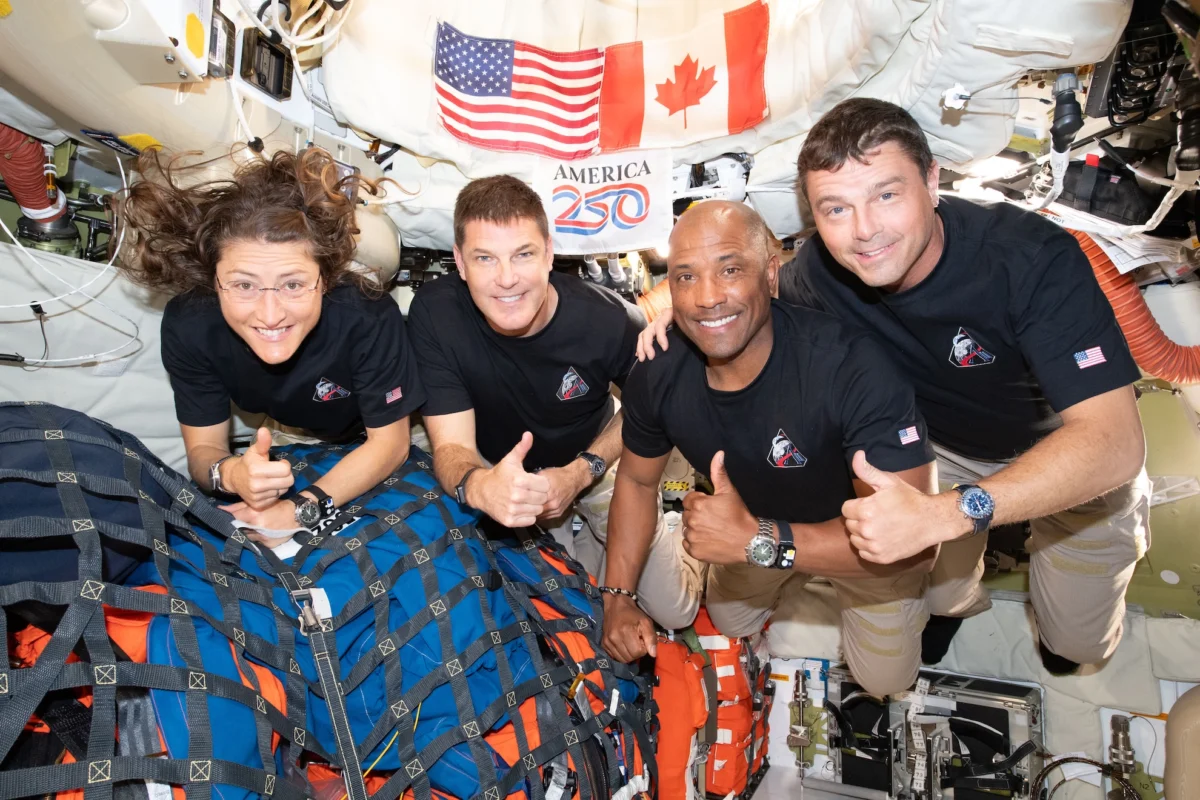
After an exhilarating and meticulously executed ten-day journey around the Moon, the four astronauts aboard NASA’s Orion spacecraft, christened ‘Integrity,’ successfully returned to Earth, splashing down in the Pacific Ocean off the coast of San Diego, California, at 5:07 p.m. Pacific Time. The conclusion of the Artemis II mission marks a monumental triumph for NASA and its international partners, validating critical systems for human deep space travel and reigniting humanity’s direct pursuit of lunar exploration after a hiatus of more than five decades. All four crew members—Commander Reid Wiseman, pilot Victor Glover, and mission specialists Christina Koch and Jeremy Hansen—were reported to be in "green," or safe and healthy, condition following what NASA officials described as a "perfect" landing, a testament to the rigorous planning and flawless execution of the mission.
The Journey Home: A Precise Splashdown
The descent of the Orion capsule was a choreographed ballet of engineering and physics, commencing with a deorbit burn that precisely aligned the spacecraft for its re-entry trajectory. Traveling at speeds exceeding 25,000 miles per hour, Orion entered Earth’s atmosphere, enduring temperatures reaching nearly 5,000 degrees Fahrenheit. The spacecraft’s advanced heat shield, a critical component tested extensively during the uncrewed Artemis I mission, performed flawlessly, protecting the crew and vital systems from the extreme heat generated by atmospheric friction.
A series of drogue parachutes deployed first, slowing the capsule’s blistering speed, followed by the main parachutes, which gently lowered ‘Integrity’ into the Pacific. Recovery teams from the U.S. Navy and NASA were on standby, swiftly moving to secure the capsule and assist the astronauts. This precision splashdown, a hallmark of past Apollo missions, demonstrated the robustness of Orion’s design and the effectiveness of its re-entry and recovery systems, crucial for the safety of future lunar and potentially Martian crews. The successful recovery operation underscores the intricate logistical and technological capabilities required for human spaceflight beyond low-Earth orbit.
A Diverse Crew’s Historic Voyage
The quartet of astronauts aboard Artemis II represented a significant step forward in human space exploration, embodying a spirit of international collaboration and inclusion. Commander Reid Wiseman, a seasoned NASA astronaut and former chief of the astronaut office, led the mission with calm authority. Pilot Victor Glover made history as the first person of color to venture beyond low-Earth orbit, building on his previous experience as a crew member on SpaceX’s Crew-1 mission to the International Space Station. Christina Koch, renowned for holding the record for the longest single spaceflight by a woman, became the first woman to travel around the Moon. Completing the crew was Jeremy Hansen, a veteran fighter pilot and the first Canadian astronaut to embark on a lunar mission, highlighting the strong partnership between NASA and the Canadian Space Agency (CSA).
Their combined expertise and diverse backgrounds were instrumental in the success of this complex test flight. Each crew member played a vital role in monitoring the spacecraft’s systems, conducting in-flight tests, and performing observations, contributing invaluable human insight to the mission’s objectives. Their presence added a new dimension to the mission, transforming it from a purely technical endeavor into a profoundly human experience, observed by millions globally.
A Mission of Milestones: The Artemis II Chronology
The Artemis II mission, originally designated as a ten-day flight, spanned just over nine days from liftoff to splashdown, packed with critical objectives and groundbreaking achievements.
- Launch (Day 1): The mission began with the thunderous launch of the Space Launch System (SLS) rocket, the most powerful rocket ever built, from NASA’s Kennedy Space Center in Florida. The sheer power of the SLS was on full display as it propelled the Orion spacecraft and its crew towards the Moon.
- Trans-Lunar Injection (Day 2): After orbiting Earth for several hours to conduct initial systems checks, the Orion spacecraft executed a crucial Trans-Lunar Injection (TLI) burn, firing its engines to accelerate out of Earth’s orbit and set a course for the Moon. This maneuver was a critical demonstration of Orion’s propulsion capabilities for deep space travel.
- Deep Space Operations and Distance Record (Days 3-5): As Orion journeyed towards the Moon, the crew meticulously tested the spacecraft’s life support systems, communications, navigation, and environmental controls. They ventured farther from Earth than any human before, reaching an estimated maximum distance of 252,760 miles (approximately 406,600 kilometers) from our home planet. This record-breaking distance surpassed the Apollo 13 mission’s furthest point, showcasing the capabilities of the Orion spacecraft for extended deep-space exploration.
- Lunar Flyby and Observations (Days 6-7): The spacecraft performed a lunar flyby, executing a trajectory that took it around the far side of the Moon. During this phase, the crew conducted vital observations, taking high-resolution photographs of previously uncharted or underexplored lunar surface features. These images provide valuable data for future landing sites and scientific investigations. It was during this period that the crew experienced a rare and awe-inspiring total solar eclipse, viewed from the unique vantage point of deep space, an unparalleled astronomical event.
- Crater Naming and Personal Touches: In a poignant moment, Commander Reid Wiseman proposed naming a newly identified lunar crater after his late wife, Carroll, who passed away from cancer in 2020. This personal gesture, approved by the International Astronomical Union, added a deeply human element to the scientific exploration, connecting the vastness of space with personal remembrance.
- Return Trajectory and Re-entry (Days 8-10): Following the lunar flyby, Orion began its journey back to Earth, executing a series of precise trajectory correction maneuvers. The final days were focused on preparing the spacecraft and crew for the demanding re-entry sequence, meticulously checking all systems and ensuring the crew was ready for the high-G forces of atmospheric braking.
The Artemis Program: A New Era of Lunar Exploration
Artemis II was not just a standalone mission; it was a pivotal chapter in NASA’s ambitious Artemis program, which aims to return humans to the Moon, establish a sustainable lunar presence, and ultimately use the Moon as a stepping stone for human missions to Mars. The program is structured around a series of increasingly complex missions:
- Artemis I (Uncrewed Test Flight): Successfully completed in late 2022, Artemis I sent an uncrewed Orion spacecraft on a similar trajectory around the Moon, validating the SLS rocket and Orion’s systems for deep space flight without human risk. Its success laid the groundwork for Artemis II.
- Artemis II (Crewed Lunar Flyby): The mission just completed, focused on testing Orion’s human-rated systems, life support, and crew operations in deep space. It demonstrated that humans can safely travel to and from the lunar vicinity.
- Artemis III (Crewed Lunar Landing): The highly anticipated next phase, scheduled for the mid-2020s, aims to land astronauts on the lunar south pole. This mission will mark the first human landing on the Moon since Apollo 17 in 1972 and will include the first woman and first person of color to walk on the lunar surface.
- Gateway Lunar Outpost: Future Artemis missions will involve building and maintaining the Gateway, a small space station in orbit around the Moon. Gateway will serve as a multi-purpose outpost for astronauts, providing a staging point for lunar surface missions, a science laboratory, and a potential refueling station for deeper space travel.
The success of Artemis II is a resounding affirmation of the capabilities of the SLS rocket, a super heavy-lift launch vehicle that stands as the backbone of the Artemis program, and the Orion spacecraft, designed to be the safest and most advanced human-rated capsule ever built for deep space. These technological marvels are not merely vehicles; they are the instruments of humanity’s renewed ambition in space.
Scientific Endeavors and Human Experience
Beyond the engineering validations, Artemis II provided invaluable opportunities for scientific observation and human adaptation studies. The crew’s direct visual observations of the lunar surface, combined with high-resolution imaging, will contribute to detailed geological mapping and site selection for future lunar bases. The experience of witnessing a total solar eclipse from deep space offered a unique perspective for studying solar phenomena and atmospheric effects, data that terrestrial observatories cannot replicate.
Moreover, the mission gathered crucial data on the physiological and psychological effects of a ten-day deep space mission on humans. Monitoring the astronauts’ health, sleep patterns, radiation exposure, and cognitive performance provided essential insights that will inform longer-duration missions to the Moon and beyond. The ability of the crew to live, work, and operate complex systems autonomously for an extended period in the unforgiving environment of space is a testament to human resilience and ingenuity. The personal moments, like naming a crater, underscored the profound emotional connection humans forge with exploration.
Official Acclaim and Future Horizons
The successful return of Artemis II was met with widespread celebration and commendation from NASA leadership and government officials. NASA Administrator Jared Isaacman, a commercial astronaut himself, lauded the mission’s flawless execution and the exceptional performance of the crew. "These were the ambassadors to the stars that we sent out there," Isaacman stated with pride. "I can’t imagine a better crew. It was a perfect mission."
Isaacman further emphasized the broader significance of the mission on X (formerly Twitter), declaring, "America is back in the business of sending astronauts to the Moon and bringing them home safely." He acknowledged the inherent risks of such pioneering endeavors, particularly for a test mission involving the first crewed flight of SLS and Orion, pushing boundaries farther than ever before. "They accepted that risk for all we stood to learn and for the exciting missions that follow, as we return to the lunar surface, build a Moon base, and prepare for what comes next," he wrote, extending credit to the entire NASA workforce whose dedication made the mission possible. This sentiment reflects a renewed national commitment to leadership in space exploration and a strategic vision that extends far beyond the Moon.
Implications for Deep Space Exploration
The success of Artemis II carries profound implications for the future of deep space exploration. Firstly, it provides critical validation for the human-rated systems of the Orion spacecraft and the operational procedures for crewed missions beyond Earth orbit. This success significantly de-risks future missions, including the highly anticipated Artemis III lunar landing.
Secondly, it reinforces international collaboration in space. The participation of a Canadian astronaut, Jeremy Hansen, underscores the global nature of the Artemis program and sets a precedent for broader international involvement in future lunar and Martian endeavors. Partners like the European Space Agency (ESA) also contribute vital components to the Orion service module, demonstrating a shared vision for humanity’s expansion into the cosmos.
Thirdly, Artemis II represents a crucial step towards establishing a sustainable human presence on the Moon. The data gathered, the systems validated, and the experience gained are foundational for building the Gateway lunar outpost and eventual lunar surface habitats. These developments are not ends in themselves but serve as vital preparation for the ultimate goal: sending humans to Mars. The Moon acts as a proving ground for technologies, life support systems, and human adaptation strategies that will be essential for the much longer and more challenging journey to the Red Planet.
Finally, the mission serves as a powerful source of inspiration. It captures the imagination of a new generation, encouraging pursuits in STEM fields and reaffirming humanity’s innate drive to explore the unknown. The successful return of Artemis II is more than just a technical achievement; it is a declaration that humanity’s reach extends to the stars, with the Moon now firmly back in our sights as a stepping stone to an even grander future in space.