Jono Maryono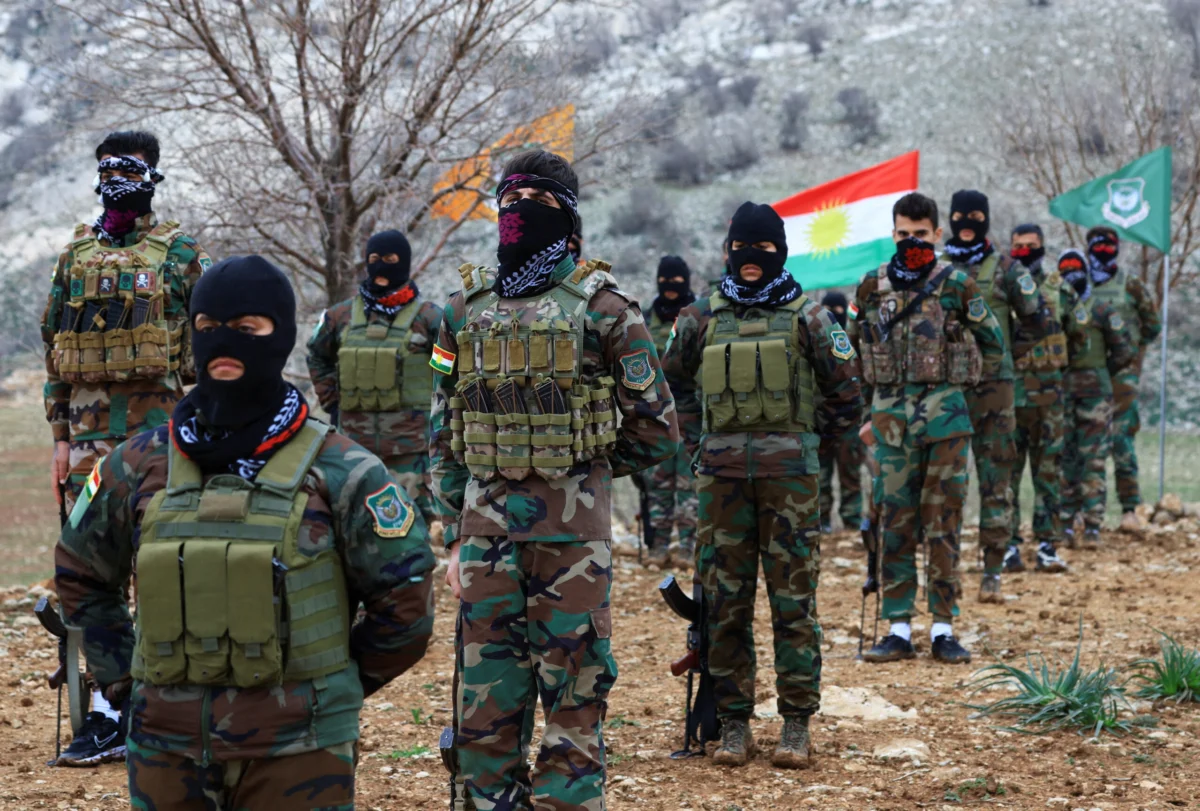
In a significant and potentially destabilizing revelation, United States President Donald Trump has asserted that Washington actively supplied arms to Iranian opposition groups and protesters during the widespread anti-government demonstrations that swept across Iran in December and January. These protests, which saw thousands of lives tragically lost amidst brutal crackdowns by government forces, have now taken on a new dimension with the President’s claims of direct American involvement in arming dissenters. Speaking in a phone interview with Trey Yingst of Fox News on Sunday morning, President Trump stated that the U.S. had been involved in efforts to destabilize and potentially overthrow the Iranian government for weeks prior to the commencement of U.S. and Israeli airstrikes across Iran on February 28. This period also coincided with diplomatic engagements between American negotiators and senior Iranian officials in Europe, adding a complex layer of international intrigue to the escalating crisis.
As the U.S.-Israel military campaign against Iran entered its 38th day, the human cost continued to mount. Official reports indicate at least 2,076 fatalities and 26,000 injuries within Iran as a direct consequence of the ongoing conflict. President Trump’s direct quote to Fox News stated, "President Trump told me the United States sent guns to the Iranian protesters." He further elaborated, "He told me, ‘We sent them a lot of guns. We sent them to the Kurds.’ And the president says he thinks the Kurds kept them. He went on to say, ‘We sent guns to the protesters, a lot of them.’"
These statements from the U.S. President could lend considerable weight to Tehran’s long-standing assertions that the recent protests were not spontaneous uprisings but rather were instigated and orchestrated by "foreign-backed terrorists." However, analysts caution that President Trump’s history of shifting statements regarding Iran makes it difficult to ascertain the definitive extent of U.S. involvement in the protests with absolute certainty.
The Unfolding of the Protests: From Economic Grievances to Calls for Regime Change
The widespread demonstrations, which began on December 28, were initially sparked by shopkeepers in Tehran protesting a deepening economic crisis and the alarming depreciation of the Iranian rial. What started as localized economic discontent quickly escalated into nationwide unrest. Within days, hundreds of thousands of Iranians from all walks of life took to the streets in cities and towns across the country. The initial economic grievances evolved, with many protesters beginning to explicitly call for a fundamental change in the government’s leadership.
The Iranian authorities responded with a severe crackdown, particularly on January 8 and 9. Human rights organizations reported that thousands of individuals, predominantly young Iranians, were killed by gunfire and stab wounds, while tens of thousands more were arrested. In an effort to suppress information and conceal the extent of the violence, Iranian authorities imposed a near-total internet blackout, plunging the country into an information void for several days, according to Amnesty International. The United Nations Special Rapporteur on Iran, Mai Soto, has estimated that at least 5,000 people lost their lives, with the actual death toll potentially as high as 20,000. Since the initial crackdown, Amnesty International has confirmed that at least four individuals have been executed in connection with the protests, with numerous others facing the death penalty.

These December and January protests marked the most significant eruption of dissent since the nationwide demonstrations in September 2022, which were ignited by the death of Mahsa Amini while in police custody. Amini had been arrested for allegedly failing to properly cover her hair, and her death triggered widespread outrage and protests that bore striking similarities to the recent unrest, including accusations of authorities firing on protesters and subsequent arrests and executions.
Tehran’s Official Narrative: Blaming External Forces for Domestic Unrest
In a rare public acknowledgement of the scale of the violence, then-Supreme Leader Ali Khamenei stated on January 17 that "several thousands" of people had been killed during the protests. However, Khamenei conspicuously avoided attributing responsibility to Iranian security forces, instead pointing fingers at U.S. and Israeli-backed groups that he claimed had hijacked the economic grievances of the populace. Khamenei explicitly accused President Trump of being a "criminal" and personally involved in instigating the unrest.
For years, the Iranian government has consistently blamed its adversaries, primarily the United States and Israel, for fomenting internal crises. However, the narrative surrounding the recent protests suggested a deeper and more direct level of U.S. involvement than in previous instances. State media quoted Khamenei as saying, "Those linked to Israel and the US caused massive damage and killed several thousands during the protests that shook Iran for more than two weeks." He further asserted, "The latest anti-Iran sedition was different in that the US president personally became involved."
Following these initial statements, Iranian officials later revised the estimated death toll to approximately 5,000, including at least 500 members of the security forces who they claimed were killed by "terrorists and armed rioters." An unnamed Iranian official speaking to Reuters suggested that the majority of the violence and fatalities occurred in the northwestern region of Iran, specifically in Kurdish territories. This area has historically been a hub for Kurdish separatists and has frequently experienced unrest.
U.S. Government Stance: Warnings, Rhetoric, and Military Action
In the initial stages of the crisis, President Trump issued stern warnings to Iran against suppressing its citizens. In a post on his Truth Social platform, he declared, "If Iran shoots and violently kills peaceful protesters, which is their custom, the United States of America will come to their rescue." He added, "We are locked and loaded and ready to go," though he offered no specific details about the nature of this promised "rescue." On January 13, he continued this rhetoric, posting, "Help is on its way," seemingly addressing the Iranian demonstrators. He urged them to "take over your institutions" and simultaneously issued threats to Iranian authorities if protesters were harmed.
These pronouncements from President Trump followed a period of heightened tension, including the U.S. bombing of three key Iranian nuclear sites during Israel’s 12-day war against Iran in June. At that time, President Trump claimed the strikes had "obliterated" Iran’s nuclear capabilities, prompting retaliatory strikes by Iran against U.S. military assets stationed at a base in Qatar.

Upon confirming the U.S. and Israeli airstrikes on Iran on February 28, President Trump reiterated that the primary objective of the military action was to neutralize Iran’s nuclear weapons program. He also drew a direct link between the strikes and the January protests, stating that Tehran had "killed tens of thousands of its own citizens on the street as they protested." He positioned the U.S. action as fulfilling the desires of Iranians who, he claimed, had been calling for U.S. intervention.
Iranian Kurdish Groups Deny U.S. Arms Claims, Analysts Offer Skeptical Perspective
In the wake of President Trump’s assertions, several Iranian Kurdish opposition groups have vehemently denied receiving any weapons from the United States during the December and January protests. Iranian Kurdish groups have a long history of opposition to the government in Tehran, advocating for self-determination and maintaining close ties with their Iraqi Kurdish counterparts, who achieved semi-autonomous status decades ago. These groups often operate along the volatile Iraq-Iran border and in northern Iraq. While historically fractured, a coalition of several Iranian Kurdish groups was reportedly formed days before the U.S. and Israeli military operations commenced.
Early in the conflict, Tehran began targeting Kurdish positions in Iraq, following reports in U.S. media that some Kurdish opposition leaders had been in communication with President Trump. At the time, analysts speculated that the U.S. might be attempting to bolster Iranian Kurds to seize territory bordering Iraq, potentially creating a buffer zone to facilitate the movement of invading Israeli or U.S. ground forces. However, to date, neither Israel nor the U.S. has initiated ground incursions into Iran. Within the U.S., opposition Democrats in Congress have voiced strong opposition to the war, particularly against the deployment of U.S. ground troops in Iran, although the Trump administration has not entirely ruled out such a possibility.
On Sunday, a senior official from the Democratic Party of Iranian Kurdistan (KDPI), a group reportedly among those that Trump had spoken with, told the Iraqi broadcaster Rudaw that the President’s statements to Fox News were "baseless." Mohammed Nazif Qaderi was quoted as saying, "We haven’t received any weapons. The weapons we have are from 47 years ago, and we obtained them on the Islamic Republic’s battlefield, and we bought some from the market." Qaderi further emphasized that the KDPI’s policy is to "make demonstrations peaceful and civil, without weapons," and not to engage in violent methods. Similar denials have also been issued by the Komala Party, another prominent opposition group.
Neil Quilliam, an Iran analyst at the United Kingdom’s Chatham House think tank, told Al Jazeera that President Trump’s claims carry limited weight due to the often contradictory nature of statements emanating from him and his administration. "I don’t think it would be a surprise if it were later revealed that the U.S. had lent support to protesters to try to encourage a revolt. In fact, I would expect them to do so," Quilliam stated. He further characterized Trump’s remark about the Kurds keeping the weapons as potentially reflecting "sour grapes" over their refusal to initiate an immediate revolt, rather than a factual account of arms distribution.
Despite the denials and the skepticism surrounding the veracity of Trump’s claims, the analyst acknowledged that even such offhand remarks from the U.S. President are likely to have an impact on the internal cohesion of Iranian opposition groups and their broader objectives of challenging the Iranian government. The implications of such public declarations, particularly concerning the potential for foreign sponsorship of dissent, remain a critical factor in the complex geopolitical landscape surrounding Iran.