Ronny Sianturi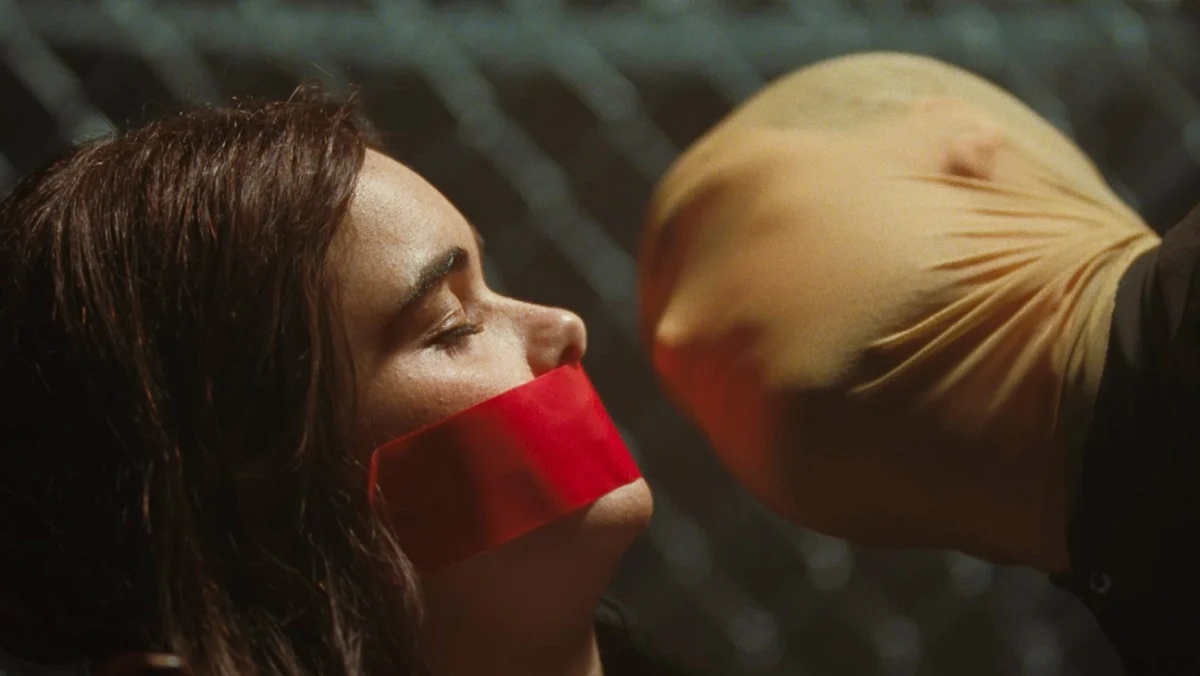
The creators of the new film Faces of Death have embarked on a publicity campaign filled with ambitious claims, suggesting their movie delves into profound societal issues such as our escalating desensitization to violence, the ethical implications of consuming violent imagery, and humanity’s seemingly insatiable appetite for real-life carnage. They articulate their artistic intent as an effort to "hold a mirror up to the toxic media ecosystem we live inside of." This lofty pronouncement, while intellectually appealing, is subtly undermined by their own candid description of the film: "It is an exploitation of an iconic exploitation film." This statement, rather than bolstering their claims of intellectual depth, inadvertently reveals the project’s core nature as a product capitalizing on established notoriety. The film’s critical reception reflects this dichotomy, with one assessment stating, "Not nearly as thoughtful as it thinks it is."
Film Details and Production Context
Faces of Death, directed by Daniel Goldhaber and co-written by Goldhaber and Isa Mazzei, was released on Friday, April 10th. The film, rated R and with a runtime of 1 hour and 38 minutes, features a cast including Barbie Ferreira, Dacre Montgomery, Josie Totah, Aaron Holliday, Jermaine Fowler, Charlie XCX, Kurt Yue, Ash Maeda, Sam Malone, Tiffany Colin, Tadasy Young, and Jared Bankens. Goldhaber’s previous directorial work includes Cam and How to Blow Up a Pipeline, films that have explored contemporary themes through a lens of digital culture and societal unrest. Mazzei’s background also includes work within the digital sphere, lending an apparent authenticity to the film’s thematic concerns.
Historical Precedent: The Original Faces of Death
To understand the context of this new iteration, it is crucial to recall the original Faces of Death, released in 1978. This film emerged from the "mondo horror" genre, a cinematic movement that found its genesis in the 1962 Italian documentary Mondo Cane (A Dog’s World). The original Faces of Death purported to be a faux documentary, presented through the lens of a fictional "pathologist Frances B. Gross," who guided audiences through a series of graphic and disturbing depictions of death. While a significant portion of the footage was indeed sourced from real-life incidents, a considerable amount was also fabricated with varying degrees of believability.
Despite its low-budget origins, the original Faces of Death proved to be an exceptionally profitable venture. It cultivated a significant cult following, particularly upon its widespread distribution on VHS, a format that allowed for easier access to its taboo subject matter. This success spawned a veritable cottage industry of morbid entertainment, leading to numerous direct-to-video sequels and spin-offs, both official and unofficial, solidifying its status as a cultural phenomenon of macabre fascination.
The Contemporary Reimagining: A Digital Age Update
The contemporary Faces of Death positions itself not as a direct remake but as an "exploration" of the original, firmly rooted in the digital landscape of the 21st century. The narrative centers on Margo, portrayed by Barbie Ferreira (known for her role in the HBO series Euphoria). Margo works as a content moderator for Kino, a fictional video-sharing platform reminiscent of YouTube. Her daily responsibilities involve the arduous task of reviewing and making split-second decisions on a constant influx of user-uploaded content, much of which is deeply disturbing. Margo’s personal history is marked by a traumatic encounter with internet notoriety, lending a personal weight to her professional challenges.
The film posits a stark contrast between Margo’s conscientious approach and that of her supervisor, played by Jermaine Fowler (Coming 2 America). The supervisor embodies a more pragmatic, profit-driven ethos, advising Margo with the cynical directive, "Give the people what they want!" This sentiment highlights the prevailing commercial pressures within the digital media landscape, where engagement often trumps ethical considerations. The examples of content Margo is tasked with moderating – a man graphically executed by electrocution and a dinner party where participants consume human brains – underscore the extreme nature of the material viewers are increasingly exposed to, and that platforms are expected to host.
Unraveling the Conspiracy: The Digital Echo and Real-World Horror
The plot thickens when Margo begins to notice an unsettling familiarity in some of the uploaded videos. She observes that several clips bear an uncanny resemblance to sequences from the original 1978 Faces of Death. A crucial turning point occurs when a commenter on the platform explicitly draws a parallel, stating, "This reminds me of Faces of Death." This observation, coupled with Margo’s discovery of a VHS tape of the original film within the company’s extensive office library, prompts her to engage in a gruesome comparison, allowing the filmmakers to incorporate footage from the original into the new narrative.
Her investigation leads to the chilling revelation that the videos are not merely recycled content but are the work of a serial killer, identified as Arthur, played by Dacre Montgomery (Stranger Things). Montgomery’s portrayal depicts Arthur gleefully pursuing his murderous avocation, characterized by a series of ultra-violent scenes. His appearance is deliberately unsettling, featuring red contact lenses that lend him a demonic visage and a mask and stocking to obscure his features. The basement of his dwelling serves as a macabre prison, housing multiple captives in cages. As Arthur becomes aware of Margo’s growing suspicions and her proximity to uncovering his modus operandi, he identifies her as a threat that must be eliminated.
The eventual confrontation between Margo and Arthur is fraught with tension. In a scene that leans into meta-commentary, Arthur, reveling in the attention his violent acts have garnered, inquires, "Are you a fan of my work?" This dialogue serves as a vehicle for the film to articulate its thematic concerns through the villain’s perspective. Arthur expounds on the concept of the "attention economy," boasting, "It’s the attention economy… And baby, business is booming!"
His pronouncements further echo the self-referential nature of modern horror cinema, drawing parallels to franchises like Scream and its numerous sequels. Arthur articulates his perverse methodology by invoking the principles of digital consumption: "The algorithm loves remakes… people love remakes. If it’s a remake, you can get away with murder." This statement directly addresses the film’s own existence as a reimagining of a notorious predecessor, questioning whether the allure of familiarity and the perceived safety of revisiting established narratives can indeed be exploited to mask underlying brutality.
Critical Assessment and Broader Implications
Despite the filmmakers’ aspirations to engage in a profound social critique, the consensus from critics suggests that Faces of Death falls short of its intellectual ambitions. The film, while featuring a compelling performance from Ferreira as the protagonist and a genuinely unsettling portrayal of the killer by Montgomery, ultimately devolves into a familiar horror narrative. The climax involves the archetypal "plucky young heroine" battling a deranged antagonist, a trope that, while executed with reasonable effectiveness, does not transcend the genre’s established conventions. Montgomery’s performance is particularly noted, with the reviewer suggesting his character "would have benefited from a more wholesome media diet," a subtle jab at the film’s own thematic concerns.
The decision by IFC Films to grant Faces of Death its widest release ever, especially given its controversial subject matter and derivative nature, has also drawn attention. This strategic distribution choice, alongside the film’s thematic exploration of public appetite for extreme content, prompts a consideration of the enduring commercial viability of shock value and the public’s fascination with the morbid. The original film’s profitability, built on a foundation of exploitation and morbid curiosity, serves as a historical precedent. The critical sentiment that the filmmakers "haven’t gotten away with this remake" suggests that while the film may capitalize on its infamous title and the public’s enduring, if often subconscious, taste for the grotesque, its artistic merit and thematic depth are questionable. The inclusion of artist Charlie XCX in a supporting role also highlights the film’s attempt to align with contemporary cultural trends, though its overall impact remains subject to debate. The inherent paradox of a film critiquing media consumption while simultaneously engaging in it remains a central point of discussion for audiences and critics alike.