Jono Maryono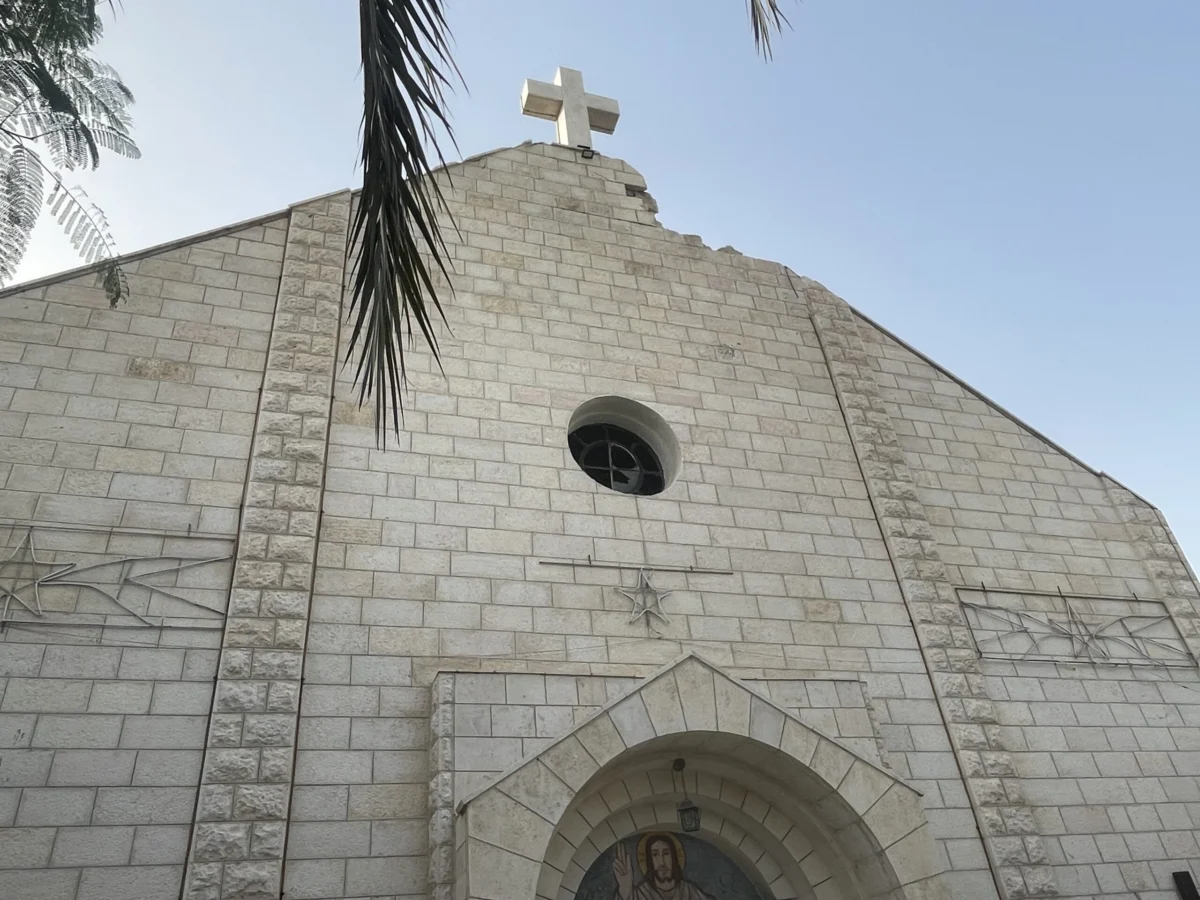
Easter, a global beacon of hope and resurrection, was observed with profound solemnity by Gaza’s minuscule Christian population this year. For the fewer than 1,000 adherents of Christianity remaining in the besieged Gaza Strip, the holiest of holidays became another somber occasion, overshadowed by the ongoing conflict and what many international bodies and human rights organizations have described as a genocide. The resurrection of Jesus Christ was commemorated amidst widespread displacement, dire shortages of essential goods, and the pervasive grief of loss, a stark contrast to the vibrant celebrations of years past.
The community, already diminished prior to the current hostilities, has suffered significant casualties. Members have been killed in attacks on their homes and places of worship. These losses are part of the tragically high Palestinian death toll, exceeding 72,000 since October 7, 2023, the date Israel launched its extensive military operation in Gaza following Hamas-led attacks inside Israel. The ongoing conflict has been a catalyst for immense suffering, leading a United Nations commission and numerous human rights advocates to label Israel’s actions as genocidal against the Palestinian population.
Within the sanctuaries of Gaza’s churches, prayers, services, and quiet gatherings held profound significance. Families marked Easter while clinging to the fragile hope of survival and a longed-for peace. For many, this observance is deeply rooted in a history stretching back over two millennia, with Christians having resided in Gaza uninterrupted for more than 2,000 years. However, the current reality has forced many to flee the Strip, severing long-held connections to their ancestral homeland and spiritual sites.
The pervasive scarcity of basic necessities has cast a long shadow over the holiday. Essential items such as electricity, clean water, and food, including eggs – a traditional symbol of Easter celebrations – are in critically short supply. This scarcity is exacerbated by decades of Israeli restrictions on the movement of goods into and out of Gaza, restrictions that have been intensified during the current conflict. Despite a declared "ceasefire" since October, Israel’s continued control and military actions have maintained a stranglehold on the territory, which is home to over two million Palestinians, the vast majority of whom are currently displaced.
Fouad Ayad, a bioenergy trainer who was displaced from his home near al-Rantisi Children’s Hospital in western Gaza, recounted his futile search for eggs across Gaza City. "We decorate eggs for the young children, and sometimes young Muslim children would visit us to get colorful eggs," he told Al Jazeera, highlighting a tradition now rendered impossible. The absence of this simple, joyful custom underscores the broader deprivations faced by the community.
Loss of Tradition and Communal Joy
The absence of communal lunches, a cherished Easter tradition, has become a painful reality for families like Fouad’s. The scarcity and prohibitive cost of meat have made this gathering impossible. Ayad, 31, reminisced about Easters past, a time filled with visits to relatives and friends, a palpable festive atmosphere, and the performance of cherished traditions. "We used to have a communal lunch together, and we would color eggs. It was a beautiful holiday filled with joy," he said, his voice tinged with nostalgia for the pre-war era. "We used to visit the elderly and prayed for them and visited some Muslim neighbors." This interfaith and intergenerational sharing of joy is now a distant memory.

The Church of the Holy Family, a place of worship for Ayad and many others, has been subjected to repeated attacks during the ongoing conflict. "In this church, three of my relatives were killed, and in another attack, more than 20 Christians were killed," he stated, detailing the devastating impact on his community. This year, attendance at Easter services at the only Catholic church in Gaza has significantly decreased due to the displacement and loss of members. "Although we are a small minority, we will continue praying in our church," he affirmed, underscoring the community’s resilience.
Ayad articulated the prevailing sentiment of profound grief: "We only performed the prayers, refusing to celebrate because of our martyrs." He emphasized the shared suffering of Christians with the wider Palestinian population: "We, the Christians, are part of this land and suffered along with everyone in Gaza." His sentiment reflects a broader understanding of solidarity: "No matter what your political agenda or religion is, all of us Palestinians are targeted by the occupation."
Restrictions on Pilgrimage and Spiritual Access
For decades, Israel has maintained stringent control over Gaza’s borders, dictating the flow of people and goods. These restrictions have become even more severe amidst the current conflict. A significant consequence of these limitations is the inability of Gaza’s Christians to travel to the Old City in occupied East Jerusalem to attend services at the Church of the Holy Sepulchre, a pilgrimage they have been unable to undertake for the past two years. This denial of access to one of Christianity’s holiest sites further isolates the community and curtails their religious freedom.
The political climate has also impacted access to other significant religious sites. Last week, Israeli police initially prevented Cardinal Pierbattista Pizzaballa, the Latin patriarch of Jerusalem, from entering the Church of the Holy Sepulchre. The decision was eventually reversed following international condemnation, highlighting the sensitivity surrounding religious access in the region. Similarly, the Al-Aqsa Mosque, Islam’s third holiest site, has faced closures to Muslim worshippers, further underscoring the broader challenges to religious freedom and access.
Displacement and the Echoes of Lost Celebrations
Elias al-Jelda, a resident of the Tal al-Hawa neighborhood in Gaza City, was forced to evacuate his home with his five-member family after it was destroyed. "I sought shelter in the Church of the Holy Family during the genocide, and since the ceasefire, I have been renting an apartment in the Sabra neighborhood," the 60-year-old recounted. He noted that many Christians, like himself, chose to remain in Gaza, staying in churches despite the dangers, rather than evacuating to southern Gaza. Some found refuge in the Church of Saint Porphyrius, while the majority congregated at the Church of the Holy Family.
Al-Jelda, an active member of the Orthodox Church council of trustees and the workers’ union, spoke of the church being struck multiple times. "I lost friends, neighbors, and relatives, many of them killed while trying to stay close to their homes and faith," he stated, underscoring the personal toll of the conflict.
For Elias, Easter was traditionally a time of immense celebration and happiness. "Families celebrated at home, visiting relatives and welcoming friends. The church and houses were filled with traditions like colored eggs, kahk [a locally baked biscuit], maamoul [date-filled biscuits], and Eidiya [a traditional gift]," he recalled. He also mentioned that for some families, celebrations extended to the West Bank, where larger festivities were held.

This year, however, celebrations are severely curtailed. Like Fouad, Elias laments the loss of the festive atmosphere of the past. "Traditional customs are incomplete; there are no eggs at all in the whole Strip. For children, there is nowhere to entertain, no amusement parks, no playgrounds, no gardens, and no restaurants at affordable prices," he lamented. The lack of basic amenities for children’s entertainment further compounds the sense of loss and deprivation.
Al-Jelda also highlighted the acute power crisis affecting Gaza. "Electricity continues to be a major problem for Palestinians. The soaring cost of diesel and generator oil has made it worse," he explained. The ongoing power outages disrupt daily life, hinder access to essential services, and cast a pall over any attempts at communal gathering or celebration.
A Legacy of Joy Faded by Conflict
Amal al-Masri, a 74-year-old woman and part of a six-member family, previously resided in the Remal neighborhood, one of the areas that experienced intense Israeli bombardment early in the conflict. Amal has been displaced three times, evacuating south first to az-Zahra, then to Rafah, and subsequently to Khan Younis. "For two years in the south, there was no holiday at all," Amal stated, her voice heavy with weariness. "Even on Christmas, there was no celebration of any kind. We did not even have chairs and had to sit on mattresses during prayers."
Amal vividly recalled the special spirit of celebrations before the current conflict. Families would invite each other for meals, exchange sweets, and enjoy each other’s company. "We used to spend the whole day together, eating, talking, and celebrating." This year, Amal and her community are striving to observe the basic rituals of Easter, but many of the traditions that once brought joy, particularly to children, remain absent, with the absence of colored eggs being a prominent symbol of this loss. "I looked for eggs everywhere, but couldn’t find any across the whole Strip," she reiterated, echoing the sentiment of widespread scarcity.
Broader Context and Implications
The plight of Gaza’s Christian community during Easter serves as a stark microcosm of the broader humanitarian crisis unfolding in the Gaza Strip. The conflict, characterized by extensive destruction, mass displacement, and severe shortages, has impacted all aspects of life for Palestinians, irrespective of their religious affiliation. The enduring restrictions on movement and access, coupled with the ongoing military operations, have created an environment where even the most fundamental aspects of life, let alone cultural and religious observances, are severely compromised.
The international community’s response to the conflict, including calls for accountability and humanitarian aid, has been ongoing. However, the persistent suffering and the erosion of traditional life for communities like Gaza’s Christians highlight the urgent need for a lasting resolution that prioritizes civilian protection and addresses the root causes of the conflict. The inability to freely observe religious holidays, practice cultural traditions, and access sacred sites has profound implications for the preservation of identity and heritage within besieged communities. The current situation in Gaza raises critical questions about religious freedom, cultural survival, and the long-term viability of minority communities in areas experiencing protracted conflict and occupation. The echoes of past Easters, filled with joy and community, now serve as a poignant reminder of what has been lost, and a desperate plea for a future where such celebrations can be observed in peace and dignity.