Reynand Wu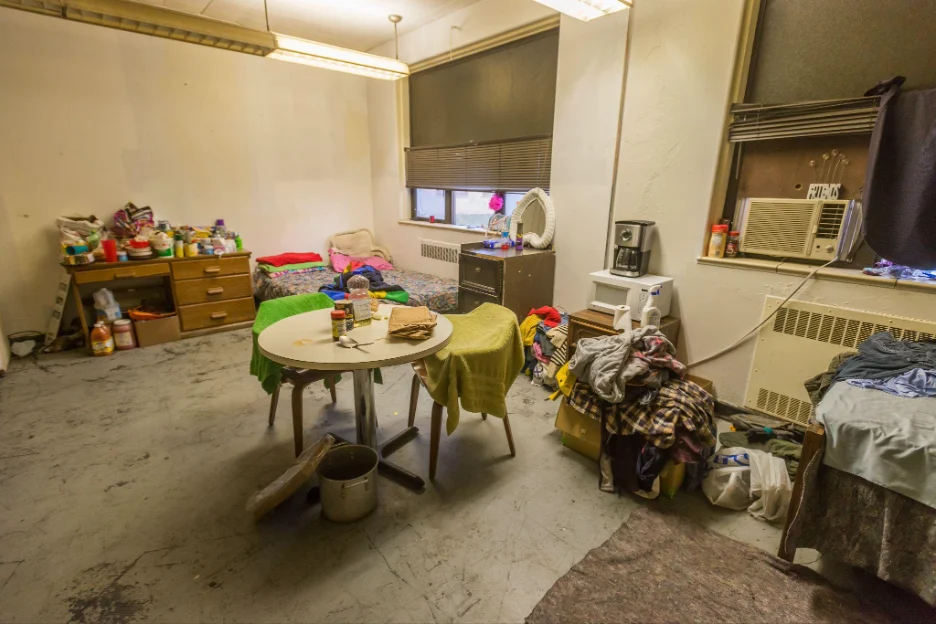
Migrant labor is the bedrock of American agriculture, an indispensable and constant force that ensures the nation’s food supply. Despite their critical contribution, the individuals performing this arduous work often remain largely unseen, their lives and living conditions hidden from public view. This invisibility is not merely social; it is deeply spatial, orchestrated through housing arrangements that strategically place workers out of sight and often out of reach. Employers frequently situate worker housing behind dense groves, far from main roads, or on private land secured by locked gates, creating sites that are difficult to access and, crucially, equally difficult for residents to leave.
The Spatial Segregation: Housing as a Tool of Control
The deliberate placement of migrant housing is a critical component of a broader system designed to manage and control a vital yet vulnerable workforce. These secluded dormitories and cabins, often located many miles from towns or services, contribute to a pervasive sense of isolation. Workers, who routinely endure grueling shifts in fields and orchards—frequently six or seven days a week, often under extreme heat—return to shared living spaces that offer minimal privacy, comfort, or dignity. Accounts from numerous migrant workers describe overcrowded dormitories with shared beds, cramped quarters, communal bathrooms, and often sparsely equipped kitchens. These conditions starkly contrast with the immense value their labor provides to the agricultural sector and the broader economy.
Visual documentation, though scarce, powerfully underscores these realities. Photographs from agricultural regions in states like North Carolina, California, and Illinois reveal rows of near-identical cabins, each containing narrow beds, small windows, and insufficient space for personal comfort. Such images serve as more than mere documentation; they are compelling evidence of a system intentionally designed to marginalize and effectively erase the human beings who are indispensable to its operation. The bedroom for migrant farmworkers at the Nightingale facility in Rantoul, Illinois, photographed in July 2014, and the poignant image of a migrant agricultural worker’s family in Nipomo, California, from 1936, both illustrate the enduring nature of these challenging living conditions across different eras. While the former shows structured, albeit inadequate, housing, the latter depicts a temporary shelter during the Great Depression, highlighting a historical continuity of precarity for agricultural laborers.
Historical Context and Regulatory Frameworks
The reliance on migrant labor in American agriculture has deep historical roots, dating back to the early 20th century and intensifying with events like the Dust Bowl, which displaced millions and created a desperate pool of farmworkers. Programs like the Bracero Program (1942-1964) formalized the importation of temporary agricultural workers from Mexico, often under conditions that, while providing employment, also exposed workers to exploitation and substandard housing. Over the decades, legislative efforts have attempted to address these issues, notably with the passage of the Migrant and Seasonal Agricultural Worker Protection Act (MSPA) in 1983. MSPA sets forth requirements for agricultural employers and farm labor contractors regarding wages, housing, transportation, disclosures, and recordkeeping.
Under MSPA, employers who provide housing to migrant workers must ensure it meets federal and state safety and health standards. These standards often include requirements related to space, sanitation, water supply, and structural integrity. However, enforcement remains a significant challenge. The U.S. Department of Labor (DOL) conducts inspections, but the sheer number of agricultural operations, the remote locations of many housing sites, and the transient nature of the workforce make comprehensive oversight difficult. Furthermore, "minimum legal standards" often translate to conditions that, while technically compliant, are barely above what might be considered acceptable for institutional settings, rather than homes for families or individuals who spend their days in demanding physical labor.
The H-2A Visa Program and Housing Standards
A significant portion of today’s migrant agricultural workforce enters the U.S. through the H-2A temporary agricultural worker visa program. This program, which allows U.S. employers to bring foreign nationals to the United States to fill temporary agricultural jobs, includes specific provisions for housing. Employers are generally required to provide free housing to H-2A workers and to ensure it meets federal and state safety and health standards. The DOL’s Employment and Training Administration (ETA) and Wage and Hour Division (WHD) are responsible for overseeing these requirements.
Despite these regulations, issues persist. Reports from advocacy groups and investigative journalists frequently detail instances of overcrowded housing, unsanitary conditions, lack of privacy, and inadequate facilities even within the H-2A framework. For example, a 2021 report by the Economic Policy Institute highlighted widespread violations in the H-2A program, including issues related to housing. Workers often face the dilemma that complaining about substandard housing could jeopardize their employment, their visa status, and their ability to remain in the country, effectively silencing dissent and perpetuating the cycle of inadequate living conditions.
Sociological Dimensions: Space, Power, and Discipline
From a sociological perspective, the organization of migrant housing transcends mere structural inadequacy; it represents a profound structural problem rooted in power dynamics. When employers control not only employment but also housing, every complaint becomes a direct risk. Speaking up can lead not only to job loss but also to the immediate loss of shelter, potentially escalating into the threat of forcible deportation for non-citizens. This design intentionally limits worker autonomy and fosters an environment of fear and quiet compliance. The fewer choices an individual possesses, the more susceptible they become to control.
Conflict theory, a foundational sociological framework, posits that societal development and change are driven by ongoing struggles over power and resources. In the context of migrant labor, this struggle is overtly manifest in the very organization of their living spaces. As articulated by Henri Lefebvre in "The Production of Space," space is not a neutral backdrop but is socially produced—shaped by those who hold the authority to determine how people live, work, and interact within it. This production is rarely guided by principles of comfort, fairness, or optimal function for the inhabitants. Instead, the arrangement and social production of space reflect the interests of those in power and control. The dimensions of a room, the proximity of structures, or the overall layout of a dwelling are not arbitrary; they embody and reinforce existing power relationships.
Similarly, Michel Foucault, in "Discipline and Punish: The Birth of the Prison," illuminates how institutions utilize architecture to enforce discipline and control. In migrant housing, the design of space itself serves as a signal of control, often without the need for overt bars or guards. These dormitories are frequently constructed to meet only the bare minimum legal standards for shelter, a standard that, as noted, is often barely distinguishable from what is permitted for a prison cell in terms of space and amenities. This architecture, in its starkness and lack of personalization, serves to dehumanize residents, and in doing so, it effectively controls their behavior and agency. The deliberate lack of personal space, the communal nature of essential facilities, and the enforced rules regarding visitors, meals, and noise all contribute to an environment where workers feel constantly monitored and inhibited from expressing dissent. Such living arrangements ensure that these "homes" are not truly theirs, but rather extensions of their workplace, subject to the employer’s rules and reinforcing the system’s control.
Health, Safety, and Human Dignity: Broader Implications
The implications of substandard migrant housing extend far beyond issues of comfort and privacy; they pose significant public health risks and infringe upon basic human dignity. Overcrowding facilitates the rapid spread of infectious diseases, a concern that became acutely evident during the COVID-19 pandemic, where farmworkers often faced disproportionate infection rates due to their living and working conditions. Inadequate sanitation, lack of access to clean water, and poor ventilation further exacerbate these health vulnerabilities.
Moreover, the psychological toll of living in such conditions cannot be overstated. The constant lack of privacy, the inability to establish a personal space, and the feeling of being monitored contribute to stress, anxiety, and a diminished sense of self-worth. For families, the impact is particularly severe, as children grow up in environments that lack the stability and nurturing necessary for healthy development. The inability for married couples to live together, as recounted by some workers, strips away fundamental aspects of family life and personal relationships.
The Economic and Social Costs of Invisibility
The invisibility of migrant labor and their housing has profound economic and social costs, not just for the workers themselves but for society as a whole. For workers, these conditions often perpetuate a cycle of poverty and vulnerability. Low wages, combined with potential deductions for housing (even if legally restricted for H-2A workers, other charges can apply), limit their ability to save or improve their circumstances. The lack of autonomy and fear of retaliation can also lead to underreporting of wage theft or other labor violations.
For the broader society, the acceptance of substandard housing for essential workers reflects a devaluation of their contributions. This systemic neglect can lead to higher public health costs, as preventable illnesses go untreated or spread. It also undermines the principles of fairness and equity that are foundational to democratic societies. When a critical segment of the workforce is denied basic human rights and dignity, it erodes social cohesion and creates a shadow economy that operates outside mainstream norms.
Calls for Transparency and Reform
Recognizing and addressing this systemic issue requires a concerted effort from scholars, policymakers, employers, and citizens. Advocacy groups consistently call for stronger enforcement of existing labor and housing laws, increased funding for inspections, and penalties for non-compliant employers that serve as genuine deterrents. There is also a push for higher housing standards that go beyond minimal requirements to ensure truly safe, comfortable, and dignified living conditions.
Furthermore, increasing transparency around migrant housing locations and conditions is crucial. Making these sites visible—through public databases, community outreach, and independent monitoring—can help shed light on practices that thrive in obscurity. Educating consumers about the human cost embedded in their food supply can also create pressure for change, driving demand for ethically sourced produce where workers are treated with respect and provided humane living conditions. Some agricultural certifications are beginning to incorporate worker welfare standards, offering a potential path forward for market-driven improvements.
Conclusion: Acknowledging the Unseen
What appears on the surface as merely a "housing crisis" for agricultural workers is, at its core, a sophisticated and deeply entrenched labor strategy. The isolated camps and minimal dwellings are not temporary accidents but rather long-term, calculated solutions to a problem that many stakeholders have chosen not to fundamentally resolve. As scholars and engaged citizens, it is incumbent upon us to bring these designs, their implications, and the lives they affect, into full public light. True change cannot begin until the invisible becomes visible, and until the systemic nature of these living conditions is acknowledged as a deliberate part of the agricultural production model. Only by recognizing and challenging the spatial and social erasure of migrant workers can we begin to build a more just and equitable food system for all.