Ferry Irwandi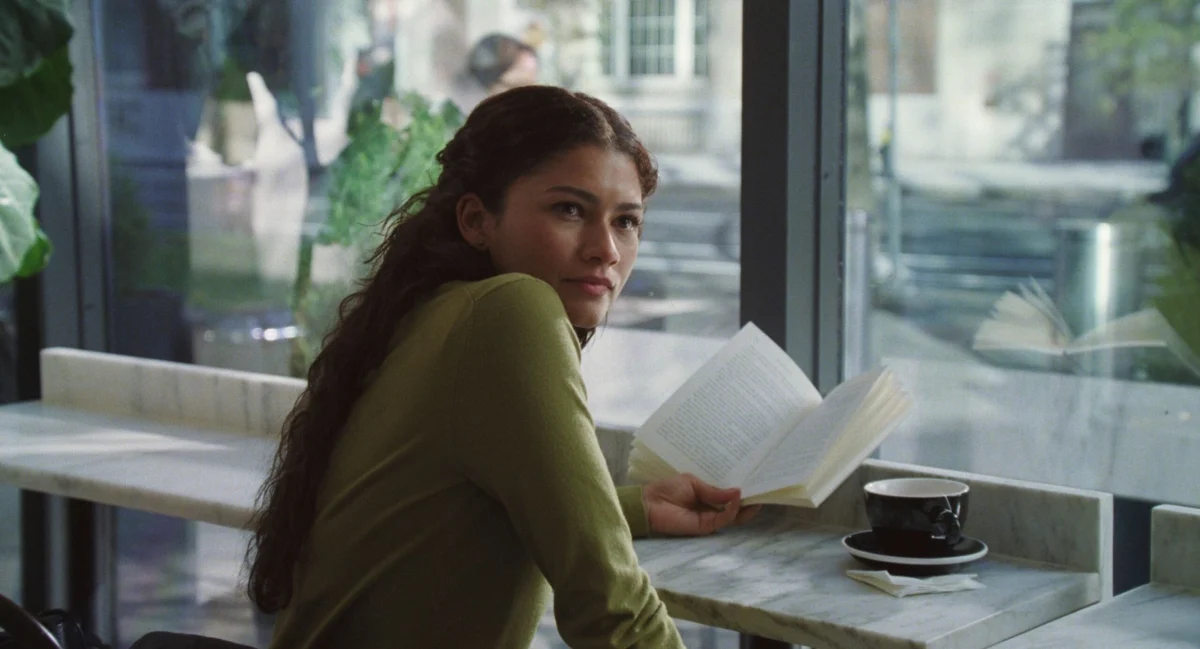
The Boston-Cambridge metropolitan area, defined by its prestigious academic institutions, historic brownstone architecture, and the winding Charles River, has long served as a prestigious backdrop for American cinema. From the gritty streets of Martin Scorsese’s The Departed to the intellectual corridors of Good Will Hunting, the region’s distinct New England aesthetic provides a specific cultural shorthand for intelligence, history, and social tension. The latest addition to this cinematic lineage is The Drama, a high-stakes project from director Kristoffer Borgli. Starring Zendaya and Robert Pattinson, the film marks a significant tonal shift in modern independent cinema, beginning as a sophisticated romantic comedy before pivoting into a psychological thriller.
Produced by A24, The Drama follows Emma (Zendaya), a literary editor, and Charlie (Robert Pattinson), a museum curator. The narrative captures the couple during a period of extreme vulnerability: the week preceding their wedding. While they initially appear as the archetype of the modern erudite couple—rehearsing vows, selecting wines, and practicing their first dance—the stability of their relationship is shattered during a social gathering. A drinking game involving a "worst-deed" confession leads Emma to reveal a secret that fundamentally alters their future, setting the stage for the film’s titular conflict. To ground this narrative, production designer Zosia Mackenzie, who previously collaborated with Borgli on Dream Scenario, meticulously selected locations across Massachusetts and Louisiana that reflect the characters’ intellectual status and the film’s evolving tension.

The Architectural Identity of the South End and Back Bay
The visual foundation of The Drama is built upon the contrast between Boston’s historic charm and its modern corporate landscape. One of the film’s early "meet-cute" scenes takes place at a Tatte Bakery & Cafe location. While Tatte is a ubiquitous and beloved chain within the Boston area, the production team specifically targeted the branch situated at the base of the John Hancock Tower (now officially known as 200 Clarendon Street). The choice of this location was deliberate, juxtaposing the cozy, artisanal aesthetic of the cafe with the looming, minimalist glass facade of New England’s tallest building. Designed by Henry N. Cobb of I.M. Pei & Partners and completed in 1976, the tower represents the pinnacle of late-modernist architecture, providing a sharp, cold contrast to the warmth of the couple’s early romance.
The residence of Emma and Charlie is equally significant to their characterization. The production utilized an authentic 19th-century brownstone located in Boston’s South End. This neighborhood is home to the largest intact Victorian row house district in the United States. The apartment featured in the film includes a variety of period-accurate details, such as a spiral staircase, ornate molding, and floor-to-ceiling bookshelves that reflect the couple’s literary and artistic careers. Director Kristoffer Borgli’s preference for shooting on location rather than on a soundstage allowed the production to leverage the natural light and authentic textures of the South End, grounding the characters in a world of established wealth and intellectual history.
The Academic and Artistic Corridors of Cambridge
As a museum curator, Robert Pattinson’s character, Charlie, operates within the world of high art. While the film refers to his place of employment as the "Cambridge Art Museum," the scenes were actually filmed at the Addison Gallery of American Art in Andover, Massachusetts. Located on the campus of Phillips Academy, the Addison Gallery is one of the most prestigious small art museums in the country. Its collection includes more than 17,000 works, and for the film, the production was granted access to feature masterpieces by Man Ray, Georgia O’Keeffe, and Mark Rothko.

The use of the Addison Gallery provided a consistent visual thread for Charlie’s professional life. To augment the gallery’s permanent collection, the production’s graphics and set decoration teams created replicas of contemporary works, such as those by artist Lucy Bull. This blend of historic American art and modern experimental pieces mirrors the film’s own structure—a traditional romantic premise that is gradually overtaken by modern, chaotic elements.
Further emphasizing the academic atmosphere of the film is a scene set in Seven Stars, a real-world used bookstore located in Cambridge. This shop is a staple of the local community, known for attracting a diverse clientele of university students and local intellectuals. By filming in an established, cluttered, and historically rich space, the production reinforced the "erudite" branding of the lead characters, making their eventual psychological unraveling feel more jarring against such a grounded, thoughtful environment.
The Masonic Influence and The Dance Complex
One of the more unique locations featured in The Drama is The Dance Complex in Cambridge. In the film, Emma and Charlie are seen practicing their wedding dance in a top-floor studio. This building has a storied history, originally serving as a Masonic Temple. The specific room used for filming is historically significant, as it was the site where secretive Masonic rituals and meetings were allegedly conducted.

The architectural energy of the space—characterized by its high ceilings and sense of seclusion—adds a layer of subtextual mystery to the film. The logistical challenge of moving production equipment to the top floor of the historic building was a conscious choice by the creative team to capture the "energy" of the space. In a film where secrets are the primary catalyst for the plot, using a location defined by historical secrecy provides a subtle, thematic resonance.
The Wedding Venue and Cinematic Heritage
The climax of the couple’s social preparations takes place at the Turner Hill Golf Club in Ipswich, Massachusetts, approximately 30 miles north of Boston. The estate, originally known as the Rice Estate, features an Elizabethan-style mansion completed in 1903. The venue’s grand architecture and sprawling grounds serve as the setting for the wedding and wine-tasting scenes.
Interestingly, Turner Hill has a notable cinematic history, having previously served as a primary location for Martin Scorsese’s Shutter Island (2010). By choosing a location with a precedent in the psychological thriller genre, Borgli and Mackenzie subtly signal the film’s transition away from romantic comedy. The "re-introduction" of the characters in such a grand, imposing setting emphasizes the weight of the social expectations they are failing to meet.

Regional Contrast: The New Orleans Flashbacks
To provide context for Emma’s character and the secret she eventually reveals, the production moved to Louisiana to film flashback sequences. These scenes, featuring a younger version of Zendaya’s character, were shot in and around New Orleans and Jefferson Parish.
The primary location for these sequences was Riverdale High School. The production team chose this site for its mid-century modern architecture, which provides a stark visual contrast to the Victorian and Federalist styles of Boston. This shift in geography and architectural era serves to differentiate Emma’s past from her present, suggesting that the "worst thing" she has ever done is rooted in a world far removed from her current life as a literary editor in the South End.
Cultural and Industry Implications
The production of The Drama reflects several ongoing trends in the film industry. First, it highlights the continued viability of Massachusetts as a premier filming hub. The state’s film tax credit, which offers a 25% production credit, a 25% payroll credit, and a sales tax exemption, has successfully attracted high-profile A24 projects. In 2023 and 2024, the region saw a significant uptick in production activity, bolstered by the presence of stars like Zendaya and Pattinson, who command massive global audiences.

Furthermore, the film represents a growing interest in "genre-fluid" storytelling. By marketing a film that begins as a romantic comedy but evolves into a thriller, A24 is targeting a sophisticated demographic that values subversion of tropes. This strategy has proven successful for Borgli in the past; his 2023 film Dream Scenario explored similar themes of social reputation and psychological collapse, earning critical acclaim and a Golden Globe nomination for Nicolas Cage.
The inclusion of authentic local haunts like Cafe Bonjour and Andy’s Diner also speaks to a move toward "hyper-localism" in cinema. Audiences increasingly respond to films that feel geographically grounded. For Bostonians, seeing a high-stakes drama unfold in familiar locations like a WeWork office with views of the Charles River or a specific Tatte Bakery adds a layer of relatability and immersion that soundstage-bound productions often lack.
Conclusion
The Drama is more than a vehicle for two of Hollywood’s most prominent stars; it is a meticulously designed exploration of how environment reflects internal state. From the high-minded galleries of Andover to the secret-filled rooms of a former Masonic Temple, every location in the film was chosen to reinforce the intellectual and emotional stakes of Emma and Charlie’s relationship. As the film moves toward its release, the detailed production design by Zosia Mackenzie and the visionary direction of Kristoffer Borgli stand as a testament to the power of place in storytelling. By utilizing the authentic textures of Boston and New Orleans, The Drama creates a world that is as beautiful as it is brittle, mirroring the fragile nuptials of its protagonists.