Jono Maryono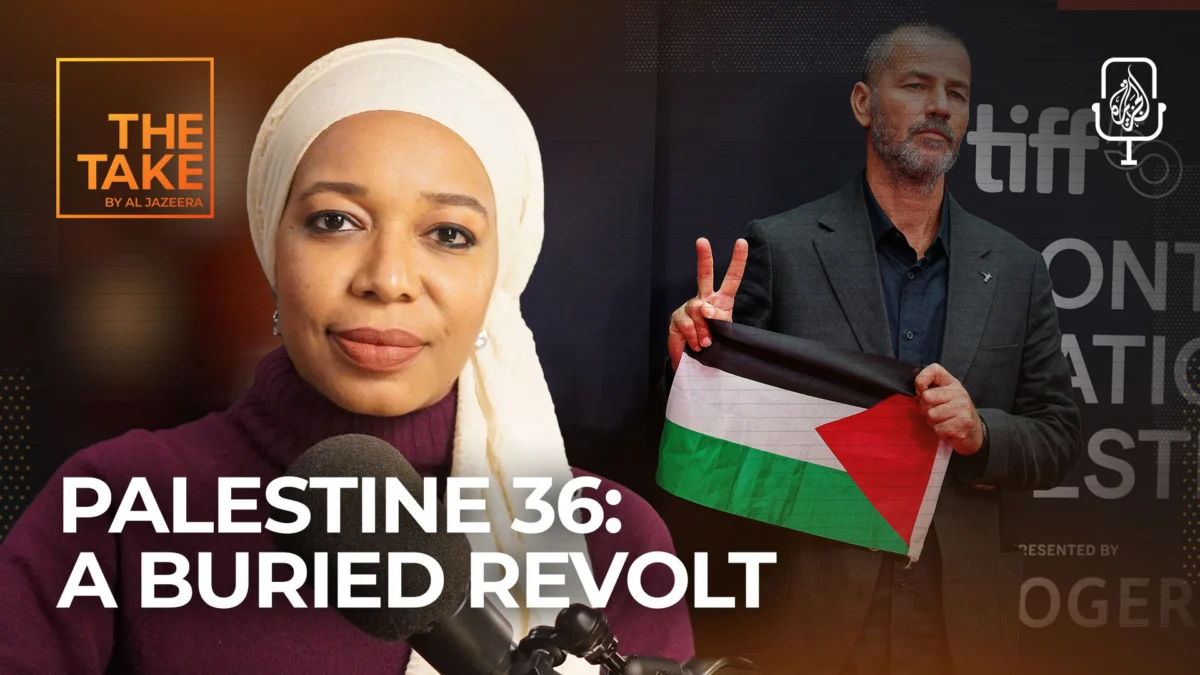
Palestinian filmmaker Annemarie Jacir’s latest project, "Palestine 36," delves into the profound and often overlooked history of the 1936 Palestinian revolt, drawing a direct line from the era of British colonial rule to the current protracted crisis in the region. The film, which Jacir discussed in a recent interview, aims to illuminate how the decisions and policies enacted during the British Mandate period laid the groundwork for the enduring conflict, a narrative she argues is frequently absent from contemporary discussions.
"Before Israeli occupation, there was British colonialism," Jacir stated, emphasizing the crucial historical context that precedes the establishment of the State of Israel. Her film meticulously reconstructs the events of 1936, a pivotal moment when Palestinian Arabs rose up against both the ruling British authorities and the escalating Zionist immigration, which they perceived as a threat to their land and identity. The revolt, though ultimately suppressed, was a significant expression of Palestinian national aspirations and a stark warning about the impending displacement and dispossession that would follow.
The 1936 Revolt: A Cry for Self-Determination
The Great Revolt of 1936-1939, also known as the Arab Revolt or the Palestinian Uprising, was a complex and multifaceted movement. It began as a general strike in April 1936, called by the Arab Higher Committee, a body representing Palestinian Arab political factions. The strike quickly escalated into widespread armed resistance against British rule and Jewish settlements. The primary grievances stemmed from the Balfour Declaration of 1917, issued by the British government, which expressed support for the establishment of a "national home for the Jewish people" in Palestine. This declaration, made without consultation with the indigenous Arab population, was seen by Palestinians as a betrayal of promises made during World War I, when Arab leaders were encouraged to revolt against the Ottoman Empire with the implicit understanding that independent Arab states would be formed.
The revolt was fueled by a potent mix of nationalistic fervor, economic grievances, and deep-seated fears about the demographic and territorial implications of unchecked Jewish immigration, which was largely facilitated by the British Mandate authorities. The influx of Jewish immigrants increased significantly in the 1930s, particularly with the rise of Nazism in Europe, leading to a rapid expansion of Jewish land ownership and the establishment of new settlements. This expansion was viewed by the Palestinian Arab majority as an existential threat to their land, livelihoods, and national future.
Key Events and Timeline of the 1936 Revolt
The revolt unfolded over several years, marked by periods of intense violence and subsequent British crackdowns.
- April 1936: The revolt commences with a general strike called by the Arab Higher Committee. Initial protests and clashes erupt in cities like Jaffa and Jerusalem.
- May 1936: The strike intensifies, leading to widespread unrest across Palestine. Armed groups begin to form and launch attacks on British infrastructure, military patrols, and Jewish settlements.
- Summer 1936: The revolt gains momentum, with rural and urban populations actively participating. The British administration struggles to regain control, deploying additional troops and implementing martial law in certain areas.
- October 1936: The Arab Higher Committee calls for a cessation of the strike, influenced by mediation efforts from neighboring Arab leaders and the perceived futility of continued unarmed protest against a powerful colonial force. However, armed resistance continues.
- 1937-1939: The revolt transforms into a more decentralized and protracted guerrilla campaign. The British respond with increasingly brutal measures, including collective punishment, demolition of homes, and executions. The Peel Commission, established by the British in 1937, proposes a partition of Palestine, suggesting a small Jewish state, a larger Arab state, and a British-administered zone. This proposal is rejected by the Arab leadership and welcomed by Zionist leaders with reservations. The Arab revolt is finally suppressed by 1939, with significant casualties and widespread destruction.
The British Colonial Legacy: Policies of Division and Control
Jacir’s film highlights how British policies during the Mandate period were instrumental in shaping the conflict’s trajectory. The British administration, while officially tasked with preparing Palestine for eventual independence, often pursued a strategy of managing competing nationalisms that, intentionally or not, exacerbated tensions.
The issuance of the Balfour Declaration itself, a political promise made by a foreign power to a nascent Zionist movement regarding territory already inhabited by a majority population, is central to Jacir’s argument. This declaration, coupled with the subsequent Mandate document granted by the League of Nations, effectively legitimized Zionist aspirations in the eyes of the international community and provided a framework for British policy that favored Jewish immigration and land acquisition.
Data from the period illustrates the dramatic demographic shifts that occurred under British rule. Before World War I and the British Mandate, Jews constituted a minority in Palestine, estimated at around 10-15% of the population. By the eve of Israel’s establishment in 1948, the Jewish population had grown to approximately 30-35% of the total, largely due to immigration facilitated by British policies. Land ownership patterns also shifted significantly, with Jewish organizations acquiring substantial tracts of land, often from absentee landlords, further dispossessing Palestinian farmers. According to historical records, by the late 1940s, Jewish-owned land constituted about 7% of the total land area of Palestine, though this percentage varied regionally and was concentrated in more fertile areas.
"Palestine 36": Unearthing Forgotten Narratives
"Palestine 36" seeks to bring to the forefront the voices and experiences of those who participated in or were affected by the 1936 revolt. Jacir emphasizes the agency and aspirations of the Palestinian people, who were not merely passive recipients of colonial dictates but active agents in their own history. The film aims to counter a historical narrative that often marginalizes or misrepresents Palestinian resistance, portraying it as mere fanaticism or external incitement rather than a legitimate struggle for self-determination against colonial occupation.
The director’s approach involves meticulous research, drawing on archival footage, historical documents, and oral testimonies to reconstruct the events with fidelity and empathy. The film explores the various facets of the revolt, including the organization of popular committees, the role of women in the resistance, the challenges faced by Palestinian leadership, and the brutal response from the British forces.
The Echoes of 1936 in Today’s Crisis
Jacir’s central thesis is that the unresolved issues from the British Mandate era and the 1936 revolt continue to resonate powerfully in the present-day conflict. The displacement of Palestinians, the ongoing occupation of Palestinian territories, the blockade of Gaza, and the recurrent cycles of violence can all be traced back to the foundational injustices that emerged during the period of British rule and the subsequent creation of Israel.
The film’s relevance is amplified by the current geopolitical landscape, where the Palestinian question remains a central and volatile issue in the Middle East. The lack of a just and lasting resolution, Jacir suggests, is a direct consequence of the failure to address the root causes of the conflict stemming from the colonial era. The film serves as a potent reminder that historical context is not an academic exercise but a vital determinant of contemporary realities.
The implications of ignoring this historical lineage are profound. Without understanding the origins of the conflict, solutions proposed are often superficial and fail to address the underlying grievances. The ongoing cycle of violence and suffering, Jacir implies, will persist as long as the foundational injustices are not acknowledged and rectified.
Broader Impact and Call for Historical Reckoning
The production of "Palestine 36" signifies a broader trend in Palestinian cinema and scholarship to reclaim and re-center historical narratives. By focusing on a pivotal moment of resistance, Jacir’s film not only educates audiences about a crucial chapter in Palestinian history but also challenges dominant historical accounts that often omit or distort the Palestinian experience.
The film’s potential impact extends beyond academic or cultural circles. It aims to foster a deeper understanding among international audiences, encouraging a more nuanced and informed perspective on the Israeli-Palestinian conflict. By presenting the revolt as a struggle against colonialism, Jacir positions the Palestinian cause within a global context of anti-colonial movements, underscoring its legitimacy as a fight for national liberation.
The episode credits reveal a collaborative effort, with a team of producers, editors, and sound designers contributing to the project. This multidisciplinary approach underscores the commitment to producing a comprehensive and impactful work. The inclusion of host Malika Bilal and executive producer Alexandra Locke, alongside a host of other contributors, highlights the significant resources and expertise dedicated to this endeavor.
The film’s message, as articulated by Jacir, is a call for historical reckoning. It argues that a genuine path towards peace and justice in Palestine requires a clear-eyed understanding of the past, particularly the enduring legacy of British colonialism and the systematic dispossession of the Palestinian people. "Palestine 36" is not merely a historical documentary; it is a vital intervention in the ongoing narrative of the conflict, urging a re-examination of its origins to pave the way for a more equitable future. The film, and Jacir’s insights, serve as a crucial reminder that the present crisis is deeply rooted in decisions made generations ago, and that a comprehensive understanding of that history is indispensable for any meaningful resolution.