Prabowo Widodo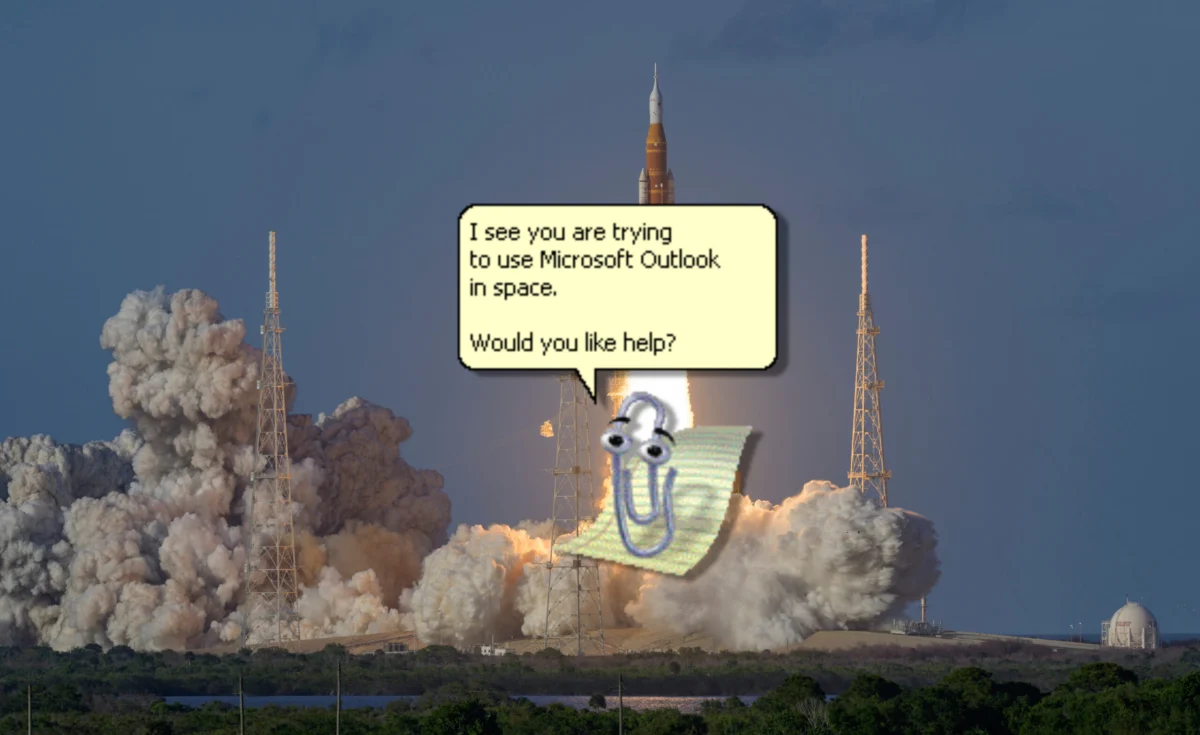
The Artemis II mission, poised to make history as the first crewed lunar voyage in over half a century, has already demonstrated the inherent complexities of deep-space exploration, confronting a series of significant challenges both before and during its initial days in orbit. From critical pre-launch technical malfunctions to more mundane, yet persistent, in-flight issues like hydrogen and helium leaks, a faulty heat shield, and problems with its safety system, the mission has tested the resolve and ingenuity of NASA’s engineers and astronauts. Now in space, the four-member crew has encountered an unexpected adversary: the ubiquitous office software, Microsoft Outlook, alongside a more historically troublesome space-travel concern: a malfunctioning toilet.
A Mission Decades in the Making: The Artemis Program Context
The Artemis program represents humanity’s ambitious return to the Moon, aiming not just for fleeting visits but for a sustainable lunar presence as a stepping stone for future crewed missions to Mars. Artemis II is a pivotal step in this grand vision. Following the uncrewed Artemis I mission, which successfully orbited the Moon and returned to Earth in late 2022, Artemis II marks the first time humans will venture beyond low Earth orbit since Apollo 17 in 1972. This mission is designed to thoroughly test the Orion spacecraft’s systems with a crew aboard, evaluate life support capabilities, and practice critical maneuvers required for future lunar landings.
The crew of Artemis II comprises NASA astronauts Commander Reid Wiseman, Pilot Victor Glover, Mission Specialist Christina Koch, and Canadian Space Agency (CSA) astronaut Jeremy Hansen. Their 10-day journey will take them on a lunar flyby, demonstrating Orion’s performance, heat shield integrity during high-speed re-entry, and communications systems in the deep space environment. The stakes are immensely high, not only for the crew’s safety but for the future trajectory of human space exploration. The development of the Space Launch System (SLS) rocket and the Orion spacecraft has involved thousands of engineers, scientists, and technicians across multiple nations, representing a monumental investment in time, resources, and innovation.
Pre-Launch Hurdles: A Testament to Rigorous Testing
Before the SLS rocket even roared to life, propelling the Orion spacecraft into orbit, the Artemis II mission faced a gauntlet of technical hurdles that underscore the extreme precision and reliability required for deep-space missions. These challenges necessitated significant delays and meticulous engineering solutions, pushing back the mission’s original timeline.
One of the most critical issues involved persistent hydrogen and helium leaks within the ground support equipment and potentially the SLS rocket itself. Hydrogen, a cryogenic propellant, is notoriously difficult to contain, and even minor leaks can pose significant safety risks, particularly in proximity to powerful engines. Helium is often used for pressurization and purging systems. Detecting, isolating, and rectifying these leaks required extensive troubleshooting, re-testing, and sometimes even component replacement, adding months to the pre-launch preparations. The integrity of propellant lines is paramount for launch vehicle performance and safety, demanding zero-tolerance for such anomalies.
Another major concern centered on a faulty heat shield on the Orion spacecraft. The heat shield is arguably one of the most vital components for any returning spacecraft, designed to withstand the searing temperatures of atmospheric re-entry, which can exceed 2,700 degrees Celsius (5,000 degrees Fahrenheit). Anomalies detected during post-flight analysis of Artemis I’s heat shield performance raised alarms, prompting NASA to undertake detailed investigations. These probes sought to understand whether the issues were inherent to the design, manufacturing process, or specific to the Artemis I flight conditions. Remedial actions likely involved extensive analysis, potentially redesigns, and rigorous testing to ensure the heat shield’s integrity for a crewed mission. The successful re-entry and splashdown are contingent on this critical component functioning perfectly.
Furthermore, technical issues with the safety system added another layer of complexity. The Launch Abort System (LAS) is a crucial emergency escape mechanism designed to pull the crew capsule away from the rocket in the event of a catastrophic failure during launch. Any doubt about its operational readiness would inherently ground the mission. Ensuring the LAS is fully functional and reliable requires exhaustive testing of its motors, guidance systems, and separation mechanisms. Addressing these issues involved intricate diagnostics and potentially hardware or software modifications, highlighting NASA’s unwavering commitment to crew safety above all else. These cumulative pre-launch challenges pushed the target launch date, illustrating the iterative and often challenging nature of developing cutting-edge space technology.
The Mundane Meets the Monumental: In-Flight Technical Glitches
Even after successfully navigating the complex launch sequence and entering orbit, the Artemis II crew encountered unexpected technical difficulties that, while not immediately life-threatening, underscored the persistent challenges of operating advanced technology in the unforgiving environment of space. The irony was palpable: after overcoming hydrogen leaks and heat shield concerns, the astronauts found themselves grappling with issues more commonly associated with an office worker’s Monday morning.
On their first of ten planned days in space, Commander Reid Wiseman reported trouble using Microsoft Outlook on his Personal Computing Device (PCD), a Microsoft Surface Pro tablet. According to the livestream of launch communications, Wiseman initially flagged issues related to "Optimus software" before identifying a more relatable problem: "I also see that I have two Microsoft Outlooks, and neither one of those are working. If you want to remote in and check Optimus and those two Outlooks, that would be awesome," he calmly communicated to Mission Control.
This seemingly trivial glitch offers a fascinating glimpse into the operational realities of modern spaceflight. Astronauts rely on PCDs for a multitude of tasks, including accessing mission procedures, schedules, scientific data, and potentially even communication beyond critical voice loops. While primary communication with Earth is handled via dedicated voice and data channels, applications like Outlook likely serve for internal crew communication, detailed daily schedules, contingency procedures, and non-critical data transfer. The presence of "Optimus software" suggests a custom application for mission-specific data management or operational control, integrated with standard software like Outlook. The request for Mission Control to "remote in" highlights the advanced connectivity and technical support available to astronauts, effectively extending the ground support network directly to the spacecraft.
Mission Control’s swift response demonstrated the seamless integration of ground and in-flight operations. Soon after Wiseman’s report, a controller confirmed, "We wanted to let Reid know we are done remoting into his PCD 1. We were able to resolve the issue for Optimus, and for Outlook, we were able to get it open. It will show offline, which is expected." The "offline, which is expected" status is crucial context. In a deep-space environment, continuous high-bandwidth internet connectivity, as experienced on Earth, is not a given. Communication windows are often limited, and data is frequently buffered or transmitted in batches. Outlook functioning offline likely means it’s accessing cached data, allowing astronauts to view schedules, emails, and documents without a live connection, syncing when a connection becomes available. This incident, while minor, showcases the blend of cutting-edge space engineering with commercial off-the-shelf (COTS) technology and the ever-present need for IT support, even billions of miles away.
A Recurring Challenge: Waste Management in Microgravity
Adding to the crew’s initial in-flight inconveniences, a more traditionally space-related issue emerged: a toilet malfunction. Soon after takeoff, the spacecraft’s waste management system experienced a hitch. NASA spokesperson Gary Jordan confirmed the issue, stating, "The toilet fan is reported to be jammed. Now the ground teams are coming up with instructions on how to get into the fan and clear that area to revive the toilet for the mission."
Waste management in microgravity has been a persistent engineering challenge since the dawn of human spaceflight. Without gravity, human waste does not simply flush away; it needs to be actively suctioned and processed to prevent it from floating freely, which would create an unsanitary and hazardous environment. Fans are critical components of these systems, providing the necessary airflow to direct waste into storage or processing units. A jammed fan effectively cripples the system.
The historical context here is particularly relevant. The Apollo 10 mission in 1969 famously encountered a "turd floating through the air" incident, a stark reminder of the primitive waste management systems of early space programs. While modern spacecraft like Orion are equipped with significantly more advanced and contained systems, the fundamental challenges remain. The good news for the Artemis II crew was the availability of "backup waste management capabilities," as confirmed by Jordan. These backups typically involve disposable bags and other temporary solutions designed to maintain hygiene until the primary system can be repaired. The quick action by ground teams to develop repair instructions highlights the critical role of real-time engineering support in ensuring crew comfort and mission success. The ability to resolve both the Outlook and toilet issues swiftly underscores the robust support infrastructure NASA provides.
NASA’s Resilience and the Role of Mission Control
These in-flight incidents, while individually minor, collectively paint a picture of the constant vigilance and problem-solving inherent in human spaceflight. NASA’s Mission Control, a highly specialized team of engineers, flight directors, and support personnel, serves as the nerve center for all operations. Their ability to remotely diagnose, troubleshoot, and provide real-time solutions for issues ranging from complex software glitches to mechanical failures is paramount. This level of support ensures that astronauts, despite their extensive training, are never truly alone in facing unexpected challenges.
The incidents also highlight NASA’s philosophy of redundancy and robust design. While the primary systems are engineered for extreme reliability, backups and contingency plans are always in place. The availability of "backup waste management capabilities" is a prime example. Furthermore, the use of commercial technology like Microsoft Surface Pro tablets and Outlook, while offering familiar interfaces and potentially cost savings, also introduces the kind of common IT issues that even the most advanced space missions are not immune to. The decision to use such COTS technology is often a calculated risk, balancing cost and familiarity against potential unique space environment challenges.
Broader Implications for the Future of Space Exploration
The initial days of the Artemis II mission, marked by both monumental success and relatable technical hiccups, offer several key implications for the future of human space exploration:
- The Human Element and Relatability: The struggles with Outlook and a jammed toilet humanize the mission. While astronauts are highly trained professionals, they are still reliant on technology that can fail in unexpected ways. This relatability can foster greater public engagement and understanding of the challenges and triumphs of space travel.
- Continuous Problem-Solving: Space exploration is not a flawless endeavor; it’s a continuous process of innovation, testing, and problem-solving. Every mission, regardless of its scale, generates new data and uncovers unforeseen challenges, leading to improved designs, procedures, and training for subsequent missions. The lessons learned from Artemis II’s minor glitches will undoubtedly inform Artemis III and future deep-space voyages.
- The Indispensable Role of Ground Support: The incidents underscore the critical and often unsung role of Mission Control. The vast expertise, real-time diagnostic capabilities, and unwavering support from Earth are as vital to mission success as the spacecraft and crew themselves.
- Resilience of Modern Spacecraft: Despite the challenges, the Orion spacecraft and its crew continue their mission. The ability to quickly identify, communicate, and resolve issues without compromising the primary mission objectives speaks volumes about the robust design of the spacecraft and the efficiency of the support infrastructure.
- The Irony of Progress: As humanity reaches for the stars, the basic necessities and digital tools of everyday life continue to present their unique set of challenges, reminding us that even the most ambitious endeavors are built upon a foundation of countless small, intricate systems.
Neither NASA nor Microsoft provided specific comments on the Outlook issue to TechCrunch, which is standard practice for minor operational glitches during ongoing missions, as their focus remains entirely on mission success and crew safety.
As the Artemis II crew continues its historic journey around the Moon, the successful navigation of these initial technical hurdles serves as a powerful testament to the resilience of human ingenuity and the collaborative spirit of space exploration. From addressing critical pre-launch leaks and heat shield concerns to troubleshooting a common email client and a space toilet, the mission epitomizes the complex dance between groundbreaking ambition and the meticulous management of myriad technical details, ensuring that humanity’s return to the Moon is not just possible, but safe and sustainable.