Danny Garick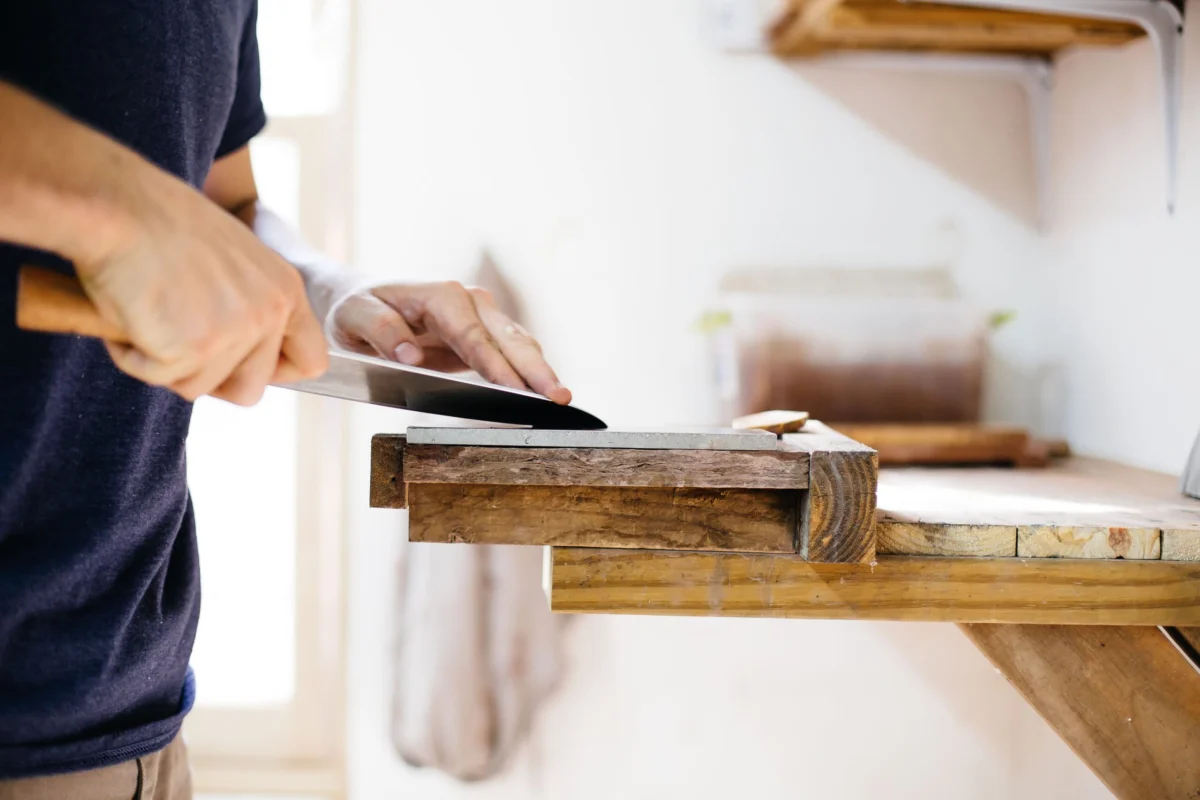
The maintenance of culinary cutlery is a fundamental aspect of kitchen safety and efficiency, yet it remains one of the most misunderstood tasks for the average home cook. While a dull blade is often perceived as less dangerous than a sharp one, statistical data from occupational safety reports suggests the opposite: dull knives require significantly more force to penetrate food, increasing the likelihood of the blade glancing off a surface and causing traumatic injury. For those preparing for labor-intensive culinary tasks, such as processing ten pounds of onions for a French onion soup, the state of the blade determines not only the speed of the work but also the physical strain on the chef.
The Distinction Between Honing and Sharpening
A critical starting point in tool maintenance is understanding the mechanical difference between honing and sharpening. Honing is a maintenance procedure that involves realigning the existing edge of a blade without removing a significant amount of metal. Over time and through repeated contact with cutting boards, the microscopic "teeth" of a knife’s edge begin to fold or curl. A honing rod—typically made of textured steel or ceramic—pushes these teeth back into a straight line, restoring the "bite" of the blade.
Sharpening, conversely, is a reductive process. It involves the use of abrasives to grind away steel from the blade’s edge, creating a brand-new "apex" or point of contact. Expert Vincent Lau, a specialist at the New York-based cutlery firm Korin, notes that honing should be a frequent practice, while sharpening is a restorative event triggered when honing no longer yields a functional edge. In professional environments, chefs may hone their knives several times a day, whereas a home cook might only require sharpening once or twice a year depending on the frequency of use and the hardness of the steel.
Metallurgy and Blade Geometry
To select the correct sharpening method, one must understand the geometry of the tool. Most kitchen knives fall into two primary categories: Western-style and Japanese-style. Western knives, such as those produced by German manufacturers like Wüsthof or Zwilling, are generally forged from softer steel that is more durable and resistant to chipping. These typically feature a 20-degree angle on each side of the blade, totaling a 40-degree inclusive angle. This wider angle is designed for heavy-duty tasks like disjointing poultry or chopping through fibrous vegetables.
Japanese-style knives often utilize harder, high-carbon steels that can be sharpened to a much finer 15-degree angle. This "aggressive" edge allows for extreme precision and effortless slicing of delicate proteins or vegetables. However, the harder steel is more brittle. Using a high-speed electric sharpener or a coarse pull-through device on a high-end Japanese blade can result in micro-chipping or the removal of excessive material, effectively shortening the lifespan of the tool.
Manual Pull-Through Sharpeners: The Entry-Level Solution
For the casual cook or those utilizing budget-friendly cutlery in the $20 to $40 range, the manual pull-through sharpener offers the most accessible entry point. These devices typically feature V-shaped notches containing carbide or ceramic abrasives. The user simply draws the knife through the notch, and the fixed angle of the abrasive material grinds the edge.
While highly convenient and inexpensive—often costing less than $15—these sharpeners are considered a "sledgehammer" approach to a task that often requires a "scalpel." Because they rely on a fixed 20-degree angle, they are incompatible with many high-performance knives. Furthermore, they tend to remove a substantial amount of metal in a jagged fashion. Over several years of use, a wide chef’s knife can be whittled down to a thin, needle-like profile. However, for a home cook facing a time-sensitive meal preparation, these tools provide a rapid, functional edge that is superior to a dull, dangerous blade.
The Rise of Electric Sharpening Systems
Electric sharpeners represent a middle ground between manual convenience and professional results. These motorized units use spinning abrasive disks—often coated in diamond dust—to grind the edge. Higher-end models, such as those from Chef’s Choice or Tormek, include multi-stage slots that guide the knife through various levels of coarseness, ending with a polishing or "stropping" stage.

The primary advantage of electric systems is consistency. Built-in angle guides remove the guesswork that plagues beginners. Modern professional-grade electric sharpeners, such as the Tormek T-1, utilize large wheels and adjustable guides that allow the user to select specific angles, mimicking the results of a professional service. Despite their efficiency, these units require a careful touch. Excessive pressure or repeated passes can overheat the steel, potentially ruining the "temper" (the hardness) of the blade. Industry experts recommend reading manufacturer manuals thoroughly, as the mechanics of these machines vary significantly between brands.
The Whetstone: The Professional Standard
For culinary enthusiasts and professional chefs, the whetstone remains the gold standard for blade maintenance. This method, which dates back centuries, involves manually gliding the knife across a flat block of abrasive material. Modern whetstones are typically synthetic, made from ceramic or aluminum oxide, and are categorized by "grit" numbers.
A standard sharpening progression involves at least two stones:
- Low Grit (400–1,000): Used for repairing chips or thinning a blade that has become excessively thick.
- Medium Grit (1,000–3,000): The primary sharpening phase that creates the functional edge.
- High Grit (6,000–10,000): Used for polishing the edge to a mirror finish, providing a level of "scary sharp" performance required for sushi or fine garnishes.
The difficulty of whetstone sharpening lies in maintaining a consistent angle by hand. A deviation of just a few degrees can result in a rounded edge that fails to cut. However, the benefits are significant: whetstones remove the least amount of metal possible, preserving the knife’s geometry for decades. Vincent Lau emphasizes that while intimidating, it is a skill that can be mastered with practice. Beginners often utilize "angle guides"—small clips that attach to the back of the knife—to maintain the correct orientation until muscle memory is developed.
Economic and Safety Implications
The decision to maintain a sharp knife has broader implications than simple kitchen convenience. From an economic perspective, high-quality knives are long-term investments. A premium chef’s knife costing $200 can last a lifetime if maintained with a whetstone or professional service. Conversely, a knife subjected to improper sharpening may need replacement within five to ten years.
Furthermore, the professional sharpening industry has seen a resurgence as consumers move away from "disposable" kitchenware. Services like Korin in New York or mail-in outfits like Knife Aid provide expert-level restoration, often including rust removal and tip repair. These services utilize water-cooled grinding wheels that prevent the steel from overheating, ensuring the structural integrity of the blade remains intact.
From a safety standpoint, a sharp knife requires less downward pressure, which reduces the risk of the blade slipping. In professional kitchens, "knife skills" are a prerequisite for employment not just for speed, but for the reduction of workplace accidents. A sharp blade creates clean cellular cuts in food, which also has a direct impact on the quality of the meal; for example, a sharp knife slices through an onion without crushing the cells that release the gases responsible for eye irritation.
Chronology of Tool Maintenance
The lifecycle of a high-quality knife typically follows a predictable timeline:
- Daily/Weekly: Honing with a ceramic or steel rod to maintain the edge’s alignment.
- Quarterly/Bi-Annually: Sharpening via whetstone or high-quality electric sharpener to reset the apex.
- Every 2–5 Years: Professional thinning or "re-profiling" to correct the thickness of the blade behind the edge, which naturally increases as the knife is sharpened over time.
In conclusion, whether a cook chooses the high-tech precision of an electric system, the traditional mastery of a whetstone, or the rapid utility of a pull-through sharpener, the act of sharpening is a vital component of the culinary craft. By matching the sharpening method to the quality and type of the knife, home cooks can ensure their tools remain safe, effective, and durable for years to come. As Vincent Lau suggests, the fear of damaging a knife should not prevent maintenance; most errors made by beginners can be corrected by a professional, but the danger of a dull knife is a risk no cook should accept.