Ferry Irwandi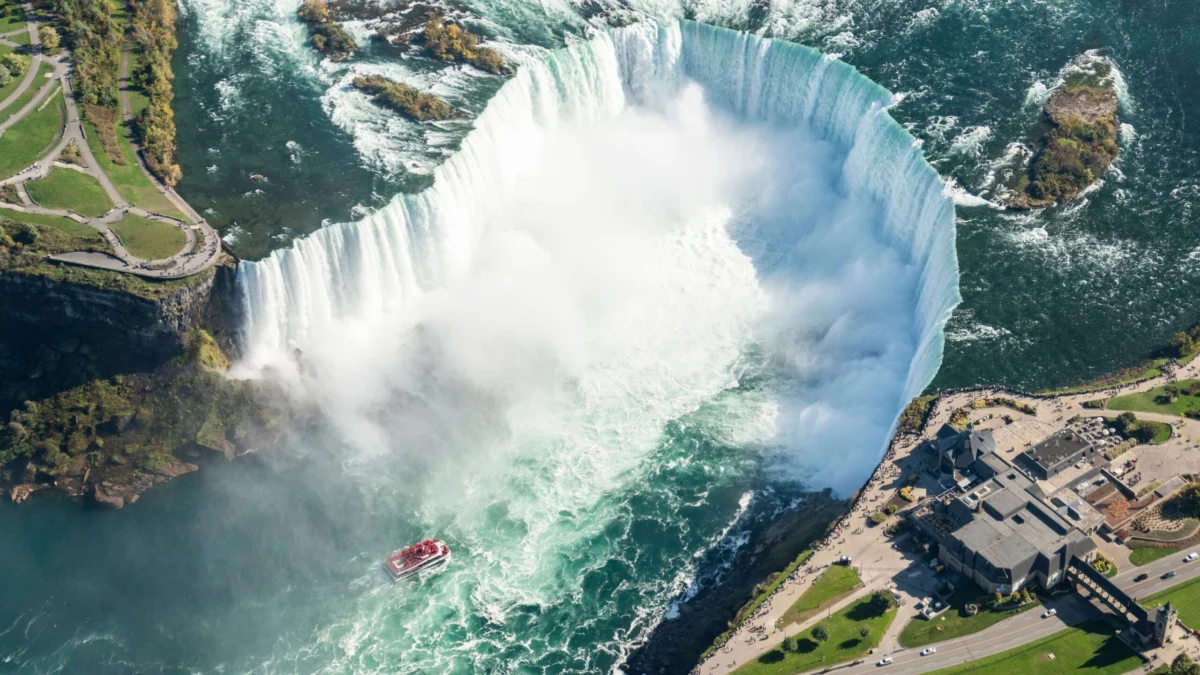
Niagara Falls remains a cornerstone of North American tourism and a vital geographical landmark straddling the international border between the United States and Canada. Comprising three distinct cascades—the Horseshoe Falls, the American Falls, and the Bridal Veil Falls—this natural wonder facilitates a complex ecosystem of international commerce, environmental conservation, and cross-border logistics. While the American side is distinguished as the oldest state park in the U.S. system, the Canadian side is managed as protected parkland under the Niagara Parks Commission. Together, these jurisdictions oversee an area that draws millions of international visitors annually, supporting a multi-billion-dollar hospitality industry that spans from the city of Buffalo, New York, to the metropolitan hub of Toronto, Ontario.
Historical Context and Geological Significance
The formation of Niagara Falls dates back approximately 12,000 years to the end of the Wisconsin glaciation. The falls were created when water from the newly formed Great Lakes carved a path through the Niagara Escarpment en route to the Atlantic Ocean. Historically, the falls served as a focal point for Indigenous peoples and later became a site of intense industrial interest during the 19th century.

The establishment of the Niagara Falls State Park in 1885 represented a landmark victory for the "Free Niagara" movement, which sought to reclaim the natural beauty of the area from industrial exploitation. This move set a precedent for the American conservation movement. Simultaneously, the Ontario government established the Queen Victoria Niagara Falls Park, ensuring that the Canadian side would also remain accessible to the public. This dual commitment to preservation has allowed the region to evolve into a premier global destination while maintaining the integrity of its geological features.
Cross-Border Logistics and Infrastructure
Navigating the Niagara Falls region requires an understanding of the international infrastructure connecting New York and Ontario. The region is served by two primary aviation hubs: Buffalo Niagara International Airport (BUF) in the United States and Toronto Pearson International Airport (YYZ) in Canada. BUF is situated approximately 30 to 40 minutes from the falls, while YYZ is located roughly 90 minutes away, depending on traffic conditions at the Queen Elizabeth Way (QEW).
The physical connection between the two nations is maintained through several key bridges:

- The Rainbow Bridge: Connecting the tourist districts of Niagara Falls, NY, and Niagara Falls, ON. It is a primary route for both vehicles and pedestrians.
- The Peace Bridge: Located between Buffalo and Fort Erie, handling significant commercial and passenger traffic.
- The Queenston-Lewiston Bridge: A major artery for long-haul trucking and travelers looking to bypass the central tourist core.
- The Whirlpool Rapids Bridge: Reserved for NEXUS pass holders, facilitating faster transit for frequent border crossers.
Regional transit authorities have implemented specialized systems to manage visitor flow. In Ontario, the WEGO bus system provides a seamless link between attractions, hotels, and the local rail station. On the American side, the Discover Niagara Shuttle and the Niagara Scenic Trolley offer eco-friendly transportation options that reduce congestion within the historic state park boundaries.
A Comparative Analysis of the American and Canadian Experiences
The two sides of the Niagara River offer divergent approaches to tourism management. The American side, centered on the Niagara Falls State Park, prioritizes a "nature-first" philosophy. The park features over 400 acres of lush terrain, including hiking trails such as the Great Gorge Scenic Overlook and the Whirlpool Rapids Adventure Trail. Attractions here, such as the Cave of the Winds, are designed to bring visitors into direct contact with the elements.
Conversely, the Canadian side is characterized by its high-density "entertainment-first" infrastructure. The skyline is dominated by high-rise hotels and observation towers, such as the Skylon Tower, which offer panoramic views of the entire falls complex. Clifton Hill serves as the primary entertainment artery, featuring wax museums, Ferris wheels, and themed attractions. This area caters to a demographic seeking a vibrant, high-energy tourist experience, contrasting with the more tranquil, park-centric atmosphere found in New York.
.jpg)
Economic Impact and Seasonal Chronology
The economic vitality of the Niagara region is heavily dependent on its seasonal chronology. Peak season occurs during the summer months (June through August), characterized by maximum water flow, daily firework displays, and the full operation of maritime tours. Tourism officials report that this period accounts for the vast majority of annual revenue.
- Spring and Fall: These shoulder seasons are favored by travelers seeking milder temperatures and lower crowd density. The regional foliage in October provides a significant draw for "leaf-peeping" tourism, particularly along the Niagara Parkway.
- Winter: Although temperatures often drop below freezing, the winter season has seen a rise in "niche" tourism. The Festival of Lights in Ontario and the unique visual of the "frozen falls"—where mist creates massive ice formations—maintain a steady, albeit smaller, stream of visitors.
Supporting data indicates that the region attracts approximately 12 to 14 million visitors per year in aggregate. The hospitality sector has responded with a diverse array of accommodations and culinary options designed to capture various market segments.
Regional Development: Hospitality and Gastronomy
The development of the hospitality sector has increasingly moved beyond the immediate vicinity of the waterfalls, integrating the broader economies of Buffalo and Toronto.

The New York Sector (Buffalo and Niagara Falls, NY)
Buffalo has undergone a significant urban resurgence, positioning itself as a luxury hub for visitors to the falls. High-end establishments like the Curtiss Hotel and The Mansion on Delaware Avenue—a 19th-century French-inspired estate—cater to travelers seeking historical and architectural depth. The culinary scene in the U.S. sector remains anchored by iconic institutions like the Anchor Bar, the progenitor of the Buffalo chicken wing, and the Red Coach Inn, which offers a traditional fine-dining experience. Notable future developments include the scheduled 2026 reopening of the Top of the Falls Restaurant, which is expected to enhance the state park’s internal service offerings.
The Ontario Sector (Niagara Falls and Toronto, ON)
In Canada, the hospitality model focuses on "Fallsview" properties. Major international chains, including Hyatt Regency and Hilton, have constructed towers specifically oriented to provide guest-room views of the Horseshoe Falls. The gastronomic landscape is equally vertical, with the Skylon Tower’s Revolving Dining Room and Table Rock House Restaurant leveraging their proximity to the precipice. For those seeking more authentic local flavors, the Tide & Vine Oyster House highlights the region’s access to fresh Atlantic seafood and Niagara-on-the-Lake wines.
Environmental Stewardship and Safety Protocols
As a major hydroelectric power source, Niagara Falls is subject to strict international regulations managed by the International Joint Commission (IJC). The flow of water is diverted for power generation during the night and the off-peak season, a process that must be balanced with the aesthetic requirements of the tourism industry.
-2.jpg)
Safety remains a paramount concern for regional authorities. The Cave of the Winds and the various boat tours (Maid of the Mist on the U.S. side and Niagara City Cruises in Canada) operate under rigorous maritime and structural safety standards. The "Hurricane Deck" at the base of the Bridal Veil Falls is rebuilt annually to ensure structural integrity against the immense hydraulic pressure of the falls. Official statements from park rangers and tourism boards emphasize that while the falls are a site of recreation, the natural forces at play require constant vigilance and adherence to designated pathways.
Broader Implications and Future Outlook
The continued success of Niagara Falls as a global destination depends on bilateral cooperation between the U.S. and Canada. Recent trends suggest a move toward more sustainable tourism, with increased investment in electric shuttle fleets and the preservation of the Niagara River Corridor as an Important Bird Area (IBA).
Industry analysts suggest that the "Buffalo 2026" initiative, which highlights the city as a top global destination, will likely drive a new wave of domestic and international interest in the American side of the falls. Meanwhile, the Canadian side continues to expand its "Journey Behind the Falls" and "Power Station" attractions, repurposing historical industrial infrastructure for educational and recreational use.

In conclusion, Niagara Falls is not merely a scenic vista but a complex, multi-jurisdictional engine of economic and environmental significance. Whether through the lens of conservation in New York or the lens of grand-scale entertainment in Ontario, the region remains a definitive example of how natural wonders can be managed to serve both the public interest and the global economy. As infrastructure improves and the hospitality sector evolves, the falls are poised to remain a primary fixture of North American travel for the foreseeable future.