Layla Zulfa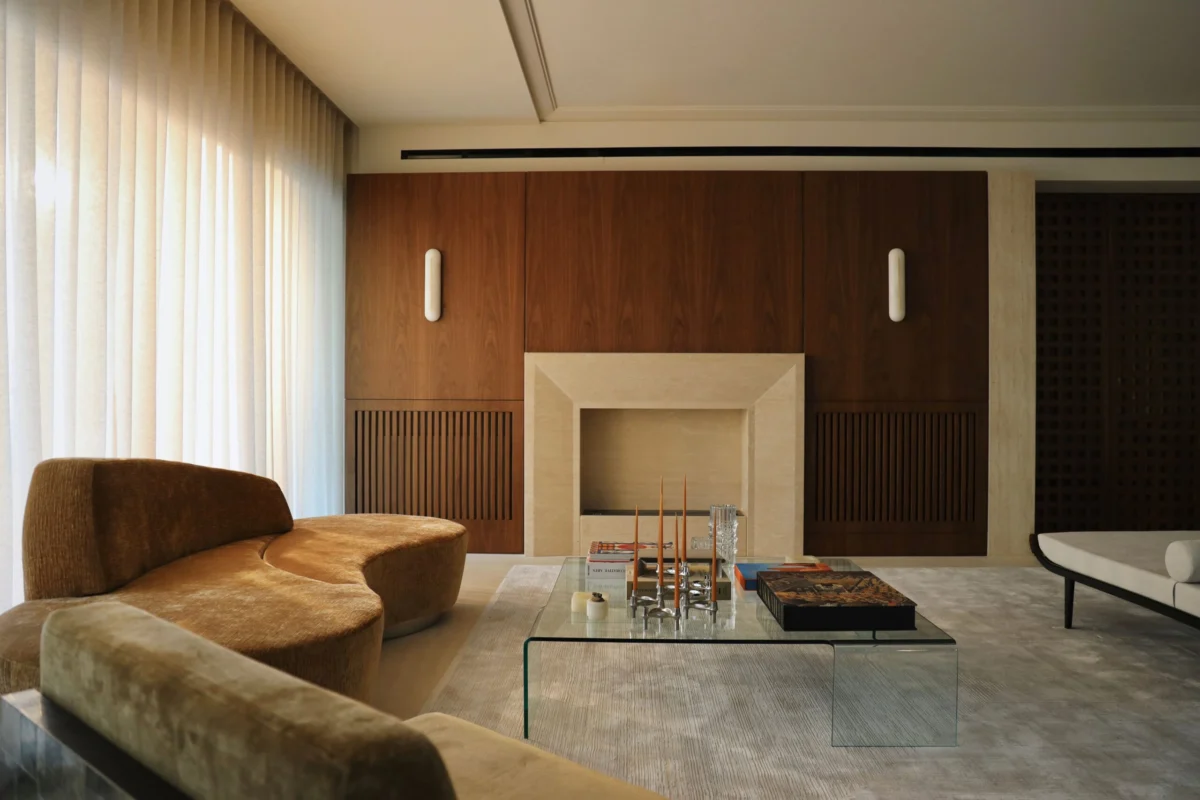
In the heart of Beirut’s historic Clemenceau district, a residential renovation has emerged as a definitive study in the architectural principle of chiaroscuro—the calculated interplay between light and shadow. Designed by architect Elie Riachi, who maintains practices in both Beirut and London, the four-bedroom apartment serves as a pied-à-terre for a prominent businessman in the oil industry. The project represents a sophisticated convergence of Middle Eastern heritage and midcentury modernism, anchored by a contemporary reinterpretation of the traditional mashrabiya screen.

The Clemenceau neighborhood, known for its proximity to the American University of Beirut and the city’s iconic Corniche waterfront, provides a backdrop of urban vitality and Mediterranean serenity. Within this context, Riachi’s intervention transforms a standard luxury unit from the early 2000s into a curated sanctuary that prioritizes material integrity and cultural resonance over transient design trends.
The Architectural Vision: A Study in Layered Contrast
Elie Riachi’s transition from pure architecture to interior design is evident in the structural rigor of the apartment’s layout. The design philosophy was dictated by the client’s lifestyle—one characterized by frequent international travel and a deep-seated appreciation for regional artistry. The objective was not a total structural reconfiguration but a "facelift" that would strip away the aesthetic excesses of the previous decade to reveal a neutral, timeless canvas.

"He appreciates design and has a large collection of artworks by regional artists," Riachi noted during the project’s unveiling. The client’s requirement for a "layered, lived-in interior" necessitated a design language that could accommodate a rotating gallery of contemporary art while maintaining a cohesive domestic atmosphere.
The renovation process followed a meticulous timeline of removal and refinement. Riachi’s team began by stripping out outdated joinery, original bathrooms, and the ubiquitous false ceilings that characterized early-aughts luxury developments. By removing these dropped ceilings, the architect was able to reclaim vertical space, though he strategically kept the ceiling lower in the entrance hall to create a sense of compression before releasing the inhabitant into the expansive, high-ceilinged living areas.

The Modern Mashrabiya: Bridging Tradition and Functionality
The defining feature of the residence is the bespoke woodwork that pays homage to the mashrabiya—a traditional Arabic architectural element characterized by latticework. Historically, mashrabiya screens served dual purposes: providing shade and reducing the temperature of interior spaces through evaporative cooling, while simultaneously ensuring privacy for the inhabitants without obstructing their view of the street.
In Riachi’s hands, the mashrabiya is distilled into a minimalist geometric pattern. Utilizing American walnut for its rich grain and enduring quality, the architect installed perforated screens and paneling throughout the darker, more enclosed entrance hall. These screens are edged in travertine, creating a material dialogue between the warmth of the wood and the cool, porous nature of the stone.

When sunlight penetrates these screens, it creates "dappled patterns" that shift throughout the day, a phenomenon Riachi describes as a "dance" of light. This functional art installation serves to intrigue visitors, hinting at the spaces beyond while maintaining the seclusion required of a private residence. The use of walnut—a timber synonymous with midcentury sophistication—further bridges the gap between local cultural motifs and international design history.
Materiality and Technical Specifications
A critical component of the renovation was the preservation of the original tiled limestone floors. Riachi identified these as a foundational neutral element that could ground his more assertive material choices. The palette is strictly limited to earthy neutrals: ivory, "greige," charcoal, and the deep browns of natural timber.

To ensure the apartment could withstand the rigors of a high-profile lifestyle, Riachi specified matte finishes for all stone and wood surfaces. This choice emphasizes the tactile quality of the materials while enhancing their durability. Key material features include:
- American Walnut: Used for wall paneling, bespoke screens, the fireplace surround, and furniture bases.
- Travertine: Featured in the custom-built fireplace, the wet bar, and the framing of the entrance screens.
- Alabaster: Utilized in linear wall sconces to provide a soft, diffused glow that complements the natural light.
- French Linen: Employed as a cladding for wardrobe doors in the private quarters to soften the acoustic and visual profile of the rooms.
The living area features a custom-designed sofa upholstered in ivory fabric, set upon a ribbed walnut base. This is paired with a silk-and-wool rug by Nalbandian, which features a subtle striated pattern designed to echo the verticality of the apartment’s architectural lines.

The Curator’s Collection: Midcentury Rarities and Contemporary Art
The apartment serves as a vessel for a highly specialized collection of furniture and sculpture. Riachi, acting as both architect and curator, sourced rare pieces from galleries and flea markets in London and Paris to populate the home. This "layered narrative" is achieved through the juxtaposition of iconic 20th-century design and avant-garde contemporary pieces.
Notable items in the collection include:

- The Cleopatra Daybed (1950s): Designed by Dick Cordemeijer for Auping, this Dutch midcentury classic provides a minimalist sculptural presence in the living area.
- Bernini Walnut Desk (1960s): A Silvio Coppola design that exemplifies the functional elegance of Italian modernism.
- Sedia Tonda Chair: Designed by Edoardo Lietti, this contemporary piece features circular cut-outs that mimic the geometric language of the mashrabiya screens.
- Marko Coffee Table: A brass-and-zinc creation by the French-Serbian artist, providing a metallic counterpoint to the dominant wood and stone textures.
The art collection is anchored by Léo Pacha’s The Hiker, a patinated metal sculpture that embodies the theme of the global traveler. By maintaining a neutral architectural backdrop, Riachi ensures that the art remains the focal point, allowing the homeowner to rotate pieces without disrupting the room’s aesthetic equilibrium.
Spatial Chronology and Private Sanctuaries
The apartment’s layout follows a logical progression from public social spaces to private retreats. The entrance hall, with its walnut-clad walls and lower ceilings, acts as a sensory palate cleanser. Moving into the primary living and dining area, the space opens up both horizontally and vertically. Large windows look out toward the gardens of the building, which Riachi notes allows the "energy of the city" to pass by like a cinematic display.

In the private quarters, the design language shifts toward softer textures and subtle color variations. The bedrooms feature bespoke curved headboards, a design choice inspired by the organic forms of the foliage visible from the apartment’s balconies. This connection to the exterior environment is a recurring theme in Riachi’s work, which often seeks to blur the boundaries between the built environment and the natural world.
The bathrooms were completely overhauled to align with the apartment’s minimalist luxury. By removing the previous fixtures and replacing them with streamlined stone surfaces and modern joinery, Riachi transformed these utilitarian spaces into spa-like environments that mirror the "comfort and ease" of the rest of the home.

Broader Implications and Design Context
The completion of this Clemenceau apartment comes at a time when Beirut’s design community is increasingly focused on the preservation and reinterpretation of local identity. In the wake of the city’s recent challenges, projects like Riachi’s represent a commitment to the "Beirut School" of design—a movement characterized by a sophisticated blend of Levantine heritage, French colonial influence, and forward-thinking modernism.
By leaning into the "chiaroscuro beauty" of the space, Riachi has rejected the "more is more" philosophy often associated with high-end real estate in the region. Instead, he has produced an interior that values the essence of materials and the quality of light.

Architectural analysts suggest that the success of this project lies in its restraint. "The use of the mashrabiya is not merely decorative; it is a structural dialogue with the past," says one regional design critic. "By stripping away the false ceilings and focusing on the core materials of walnut and travertine, Riachi has created a space that feels grounded in its location while remaining entirely international in its appeal."
As Beirut continues to navigate its complex architectural future, the Clemenceau apartment stands as a testament to the enduring power of thoughtful, culturally-informed design. It is a space that does not merely house a collection of art but is, in itself, a meticulously crafted object of design. Under Riachi’s guidance, the apartment has moved beyond its early-aughts origins to become a timeless reflection of the modern Middle Eastern experience—one that is global, curated, and deeply rooted in the interplay of light and shade.