Johny Marice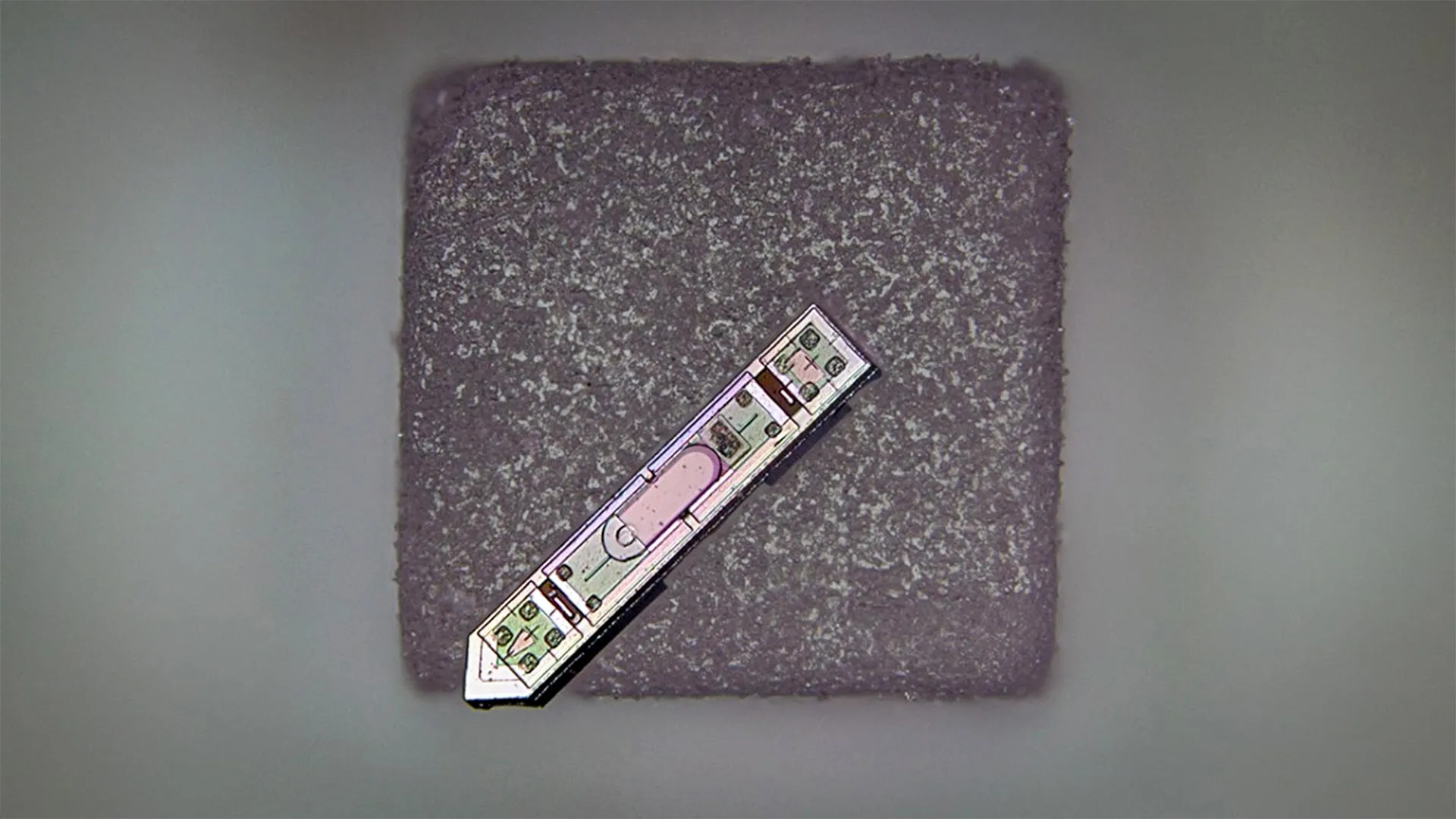
Researchers at Cornell University, in collaboration with international partners, have achieved a significant breakthrough in neural interface technology with the development of an ultra-small neural implant capable of wirelessly transmitting brain activity data from a living animal for over a year. This groundbreaking device, measuring a mere fraction of a millimeter and comparable in size to a grain of salt, represents a leap forward in microelectronic systems and holds profound implications for the future of brain monitoring, bio-integrated sensors, and a wide array of medical and technological applications. The findings were recently published in the prestigious journal Nature Electronics.
The Dawn of the MOTE: A Paradigm Shift in Neural Recording
The newly developed implant, officially designated as a microscale optoelectronic tetherless electrode, or MOTE, is the culmination of years of research and development. The project was spearheaded by Alyosha Molnar, a distinguished professor in the School of Electrical and Computer Engineering at Cornell University. Sunwoo Lee, now an assistant professor at Nanyang Technological University, played a pivotal role, initiating the core technology development as a postdoctoral researcher within Professor Molnar’s lab. This collaborative effort underscores the growing interconnectedness of global research institutions in pushing the boundaries of scientific innovation.
The MOTE’s remarkable capabilities stem from its ingenious design, which utilizes light to both power the device and transmit vital neurological data. Unlike conventional wired implants, which can be cumbersome, prone to infection, and limited in their mobility, the MOTE offers unprecedented freedom and longevity in neural monitoring. Its diminutive size and wireless functionality promise to revolutionize how scientists and clinicians understand and interact with the intricate workings of the brain.
The Science Behind the Signal: Harnessing Light for Brain Communication
The MOTE operates on a sophisticated principle that leverages safe, non-invasive light signals. The device is powered by external red and infrared laser beams that are capable of penetrating brain tissue without causing harm. In return, the MOTE transmits recorded brain activity by emitting tiny, precisely timed pulses of infrared light. These pulses are encoded with the electrical signals captured directly from the brain, effectively translating neural impulses into a wireless optical communication stream.
At the heart of this miniaturized marvel is a semiconductor diode constructed from aluminum gallium arsenide. This crucial component serves a dual purpose: it absorbs the incoming laser light, thereby powering the entire system, and simultaneously emits light signals to transmit the collected neural data. Complementing this core element are a low-noise amplifier and an optical encoder. These components, remarkably, are fabricated using the same advanced semiconductor technology that underpins the microchips found in everyday electronic devices, highlighting the scalability and maturity of modern microfabrication techniques.
The physical dimensions of the MOTE are astonishingly small, measuring approximately 300 microns in length and 70 microns in width. To put this into perspective, a human hair is typically between 50 and 100 microns in diameter. This level of miniaturization allows the implant to be virtually imperceptible within the neural environment, minimizing potential tissue damage and immune responses.
"As far as we know, this is the smallest neural implant that will measure electrical activity in the brain and then report it out wirelessly," stated Professor Molnar. He further elaborated on the efficiency of the communication protocol: "By using pulse position modulation for the code — the same code used in optical communications for satellites, for example — we can use very, very little power to communicate and still successfully get the data back out optically." This efficient coding scheme is critical for the device’s extended operational lifespan and its ability to function without an internal power source.
A Chronology of Innovation: From Concept to Lifelong Monitoring
The journey to the MOTE’s realization likely began with foundational research into microfabrication techniques and optoelectronic principles. While specific dates for the project’s inception are not publicly detailed, the publication in Nature Electronics suggests a rigorous validation and testing phase preceding its announcement.
Early Stages: The initial conceptualization and development of the core optoelectronic technology likely occurred within Professor Molnar’s lab at Cornell. Sunwoo Lee’s contribution as a postdoctoral researcher during this formative period was instrumental in translating theoretical designs into functional prototypes. This phase would have involved extensive experimentation with semiconductor materials, optical encoding mechanisms, and low-power amplification circuits.
Prototype Development and Miniaturization: Over subsequent years, the focus would have shifted towards miniaturizing the components and integrating them into a single, functional unit. Challenges would have included achieving high signal-to-noise ratios in amplified neural signals, ensuring the reliability of optical transmission over extended periods, and developing methods for safe and precise implantation. The selection of aluminum gallium arsenide, known for its efficiency in light emission and detection, would have been a critical decision made during this stage.
Wireless Powering and Data Transmission Optimization: A significant hurdle in creating a tetherless implant is the requirement for an external power source and a robust wireless communication system. The successful implementation of external laser beams for powering and optical pulses for data transmission, as described, represents a major engineering feat. The adoption of pulse position modulation, a technique commonly used in high-bandwidth, low-power optical communication, demonstrates a sophisticated approach to maximizing data throughput while minimizing energy expenditure.
In Vivo Testing and Longevity Validation: The crucial step of demonstrating the MOTE’s functionality in a living organism would have followed. The report highlights the device’s ability to transmit data for "more than a year," indicating extensive preclinical trials were conducted to validate its long-term efficacy and biocompatibility. These trials would have involved implanting the MOTE in animal models and continuously monitoring brain activity, assessing data integrity, and evaluating any potential adverse effects.
Publication and Dissemination: The culmination of this research is the publication in Nature Electronics, a leading journal in the field, which signifies peer-reviewed validation of the technology’s novelty and significance. This step makes the findings accessible to the wider scientific community, fostering further research and development.
Supporting Data and Technical Specifications
The MOTE’s diminutive size is not its only remarkable attribute. The ability to wirelessly transmit brain activity data for over a year points to exceptional power efficiency and data integrity. While specific data transmission rates and the precise types of brain activity recorded (e.g., single-unit activity, local field potentials) are not detailed in the initial report, the mention of "electrical signals from the brain" suggests a broad spectrum of neural information can be captured.
The use of aluminum gallium arsenide is a key technical detail. This semiconductor material is known for its direct bandgap, which makes it highly efficient for both light emission (as in LEDs and lasers) and light absorption (as in photodiodes). This property is essential for the MOTE’s dual function of receiving power and transmitting data optically. The low-noise amplifier is critical for detecting the subtle electrical signals generated by neurons, and the optical encoder translates these signals into the coded light pulses.
The choice of pulse position modulation is also significant. This modulation scheme encodes information by varying the position of a pulse within a defined time window. It is known for its robustness against noise and its relatively low power consumption, making it ideal for battery-less or wirelessly powered devices.
Broader Impact and Future Horizons
The implications of the MOTE technology extend far beyond basic neuroscience research. Its ultra-small size, wireless operation, and extended lifespan open up a vista of potential applications across medicine and technology.
Advancing Brain-Computer Interfaces (BCIs)
The development of smaller, more discreet, and long-lasting neural implants is a critical step towards more sophisticated and less invasive brain-computer interfaces. Such interfaces could revolutionize the lives of individuals with paralysis, allowing them to control prosthetic limbs, communicate more effectively, or interact with their environment through thought alone. The MOTE’s ability to wirelessly transmit data for an extended period significantly reduces the need for frequent surgeries or cumbersome external hardware, making BCIs more practical for everyday use.
Revolutionizing Neurological Disorder Monitoring
For patients suffering from neurological conditions such as epilepsy, Parkinson’s disease, or chronic pain, continuous and unobtrusive monitoring of brain activity is essential for diagnosis, treatment optimization, and personalized therapy. The MOTE could enable long-term, in-situ monitoring of neural correlates of these disorders, providing clinicians with unprecedented insights into disease progression and treatment response. This could lead to earlier diagnosis, more targeted interventions, and improved patient outcomes.
Enabling Novel Imaging and Sensing Technologies
Professor Molnar highlighted a particularly exciting potential application: recording brain activity during MRI scans. Current neural implants, often made of metallic components, can interfere with MRI imaging or pose safety risks. The MOTE, being largely non-metallic and operating optically, could circumvent these limitations. This would allow researchers to correlate detailed neural activity with the structural and functional information provided by MRI, opening new avenues for understanding brain function and dysfunction.
Furthermore, the underlying optoelectronic technology could be adapted for sensing applications in other parts of the body. Implants along the spinal cord could provide insights into neurological signals related to movement or sensory perception, potentially aiding in the rehabilitation of spinal cord injuries. The modular nature of the technology also suggests future integration with other advanced biomedical devices, such as opto-electronic components embedded in artificial skull plates or other biocompatible materials.
Expanding the Frontiers of Bio-Integrated Electronics
The MOTE represents a significant stride in the field of bio-integrated electronics, where electronic devices are seamlessly integrated with biological systems. This miniaturization and wireless capability are key to creating a new generation of "smart" implants that can interact with the body in highly sophisticated ways. The success of the MOTE could inspire the development of similar micro-scale devices for monitoring other physiological parameters, delivering targeted therapies, or even augmenting biological functions.
The successful long-term wireless transmission of neural data by the MOTE is a testament to the power of interdisciplinary research and advanced microfabrication. As this technology matures, it promises to unlock new levels of understanding of the brain and pave the way for transformative medical and technological advancements. The ability to observe the brain’s intricate symphony of electrical signals with such unprecedented precision and duration marks a new era in neurotechnology.