Ferry Irwandi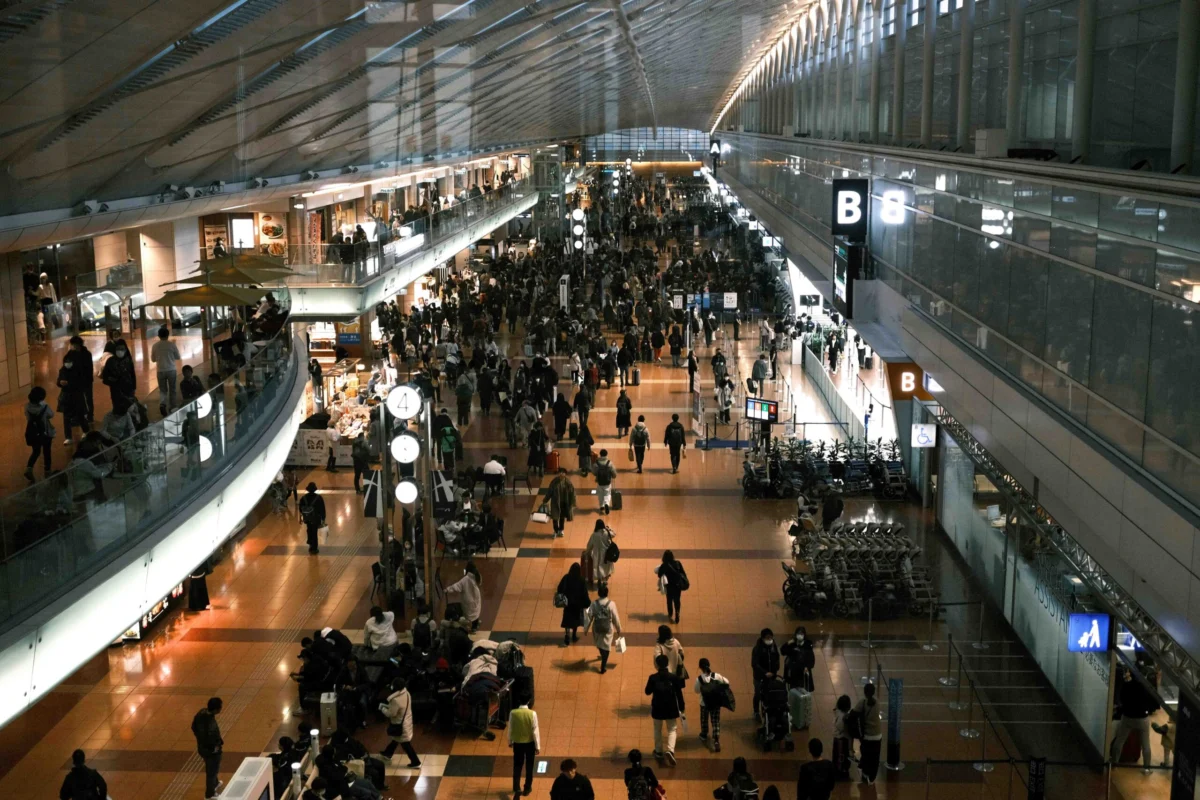
The landscape of American domestic air travel underwent a significant shift on Monday as President Donald Trump authorized the deployment of approximately 150 Immigration and Customs Enforcement (ICE) agents to more than a dozen major airports across the United States. This move follows a weekend defined by logistical paralysis and mounting security concerns, precipitated by an ongoing partial government shutdown that has left federal agencies—most notably the Transportation Security Administration (TSA)—severely understaffed. While the administration initially presented the deployment as a necessary measure to alleviate the "hours-long security lines and air travel chaos" caused by unpaid TSA agents calling out of work, the first full day of ICE presence has raised profound questions regarding the scope of their authority and the long-term implications for civil liberties within the nation’s transit hubs.
The deployment marks an unprecedented intersection of domestic travel security and immigration enforcement. As TSA agents, who are currently working without pay, resign or utilize sick leave by the hundreds, the administration has turned to ICE to fill the void. However, the lack of clarity regarding the specific duties these immigration agents are tasked to perform has created a sense of uncertainty for both travelers and airport administrators. While some agents have been observed shadowing TSA personnel, others have been documented engaging in direct immigration enforcement actions, signaling a shift in the traditional function of airport security checkpoints.
A Chronology of the Crisis and Deployment
The current situation is the culmination of a weeks-long budgetary impasse in Washington, D.C. As the partial government shutdown entered its third week, the Department of Homeland Security (DHS) faced a critical shortage of frontline personnel. By the preceding Friday, TSA reported a significant spike in unscheduled absences, colloquially known as the "blue flu," as agents struggled with the financial burden of working without a paycheck.
Over the weekend, the impact on the National Airspace System became undeniable. Major hubs reported wait times exceeding three hours, leading to missed flights and crowded terminals. In response, the White House announced late Sunday that ICE personnel would be redirected to assist with "aviation security and operational support." By Monday morning, agents were on the ground at 14 confirmed locations.
The airports identified as receiving ICE reinforcements include:
- Chicago-O’Hare International Airport (ORD)
- Cleveland Hopkins International Airport (CLE)
- Hartsfield-Jackson Atlanta International Airport (ATL)
- William P. Hobby Airport (HOU) and George Bush Intercontinental Airport (IAH) in Houston
- John F. Kennedy International Airport (JFK) and LaGuardia Airport (LGA) in New York
- Louis Armstrong New Orleans International Airport (MSY)
- San Francisco International Airport (SFO)
- Luis Muñoz Marín International Airport (SJU) in San Juan
- Newark Liberty International Airport (EWR)
- Philadelphia International Airport (PHL)
- Phoenix Sky Harbor International Airport (PHX)
- Pittsburgh International Airport (PIT)
- Southwest Florida International Airport (RSW) in Fort Myers
Documented Incidents and the SFO Controversy
Public reaction to the deployment has been swift, fueled by social media documentation of ICE agents’ activities. Travelers have reported seeing groups of agents, many unmasked, standing behind TSA podiums or patrolling terminals in small units. While their presence was framed as "support," an incident at San Francisco International Airport (SFO) on Sunday night highlighted the potential for more aggressive enforcement.
A viral video captured ICE agents arresting a Guatemalan woman in the presence of her child after she was reportedly unable to provide proof of citizenship. While SFO spokesperson Doug Yakel characterized the arrest as an "isolated incident" unrelated to the broader TSA support mission, the event has amplified fears among immigrant communities. Yakel emphasized that airport management was not notified in advance of the arrest and maintained that the facility’s primary role remains the "safe and efficient operation" for all passengers. Despite these assurances, the proximity of the arrest to the official deployment of ICE agents at security checkpoints has blurred the lines between travel safety and border enforcement.
The Executive Mandate and Legal Framework
President Trump defended the deployment in a series of statements on Monday, linking the presence of ICE to the broader political struggle over DHS funding. The President indicated that the agents would remain stationed at airports until Congress agrees to a funding package that includes comprehensive support for ICE and border security measures.
Furthermore, the President did not shy away from the enforcement aspect of the deployment. "ICE loves it because they’re able to now arrest illegals as they come into the country," he told reporters, describing the nation’s airports as "very fertile territory" for immigration enforcement. This rhetoric suggests that the deployment is not merely a temporary fix for staffing shortages but a strategic utilization of a crisis to expand the reach of immigration authorities.
The legal authority for such actions is rooted in the Immigration and Nationality Act (INA), which grants ICE agents the power to arrest individuals they believe to be undocumented or deportable. Victoria Slatton, an immigration attorney at Slatton & Hass and a former asylum officer, notes that the integration of ICE into TSA lines creates a "dual-role" agent that has no modern precedent in domestic airport security.
"The agent checking your ID at the security line today is simultaneously an immigration enforcement officer," Slatton explained. This overlap means that standard security procedures, such as ID verification and physical screenings, can instantaneously transition into immigration interrogations.
Diminished Rights at the Security Checkpoint
A critical aspect of this deployment is the legal environment of the airport itself. Under U.S. law, the "reasonable expectation of privacy" that citizens enjoy in most public spaces is significantly curtailed at airport security checkpoints. These areas are governed by the "Administrative Search Doctrine," which allows for searches without a warrant or individualized suspicion, provided the search is limited in scope to the purpose of ensuring aviation safety.
However, the presence of ICE agents introduces a new layer of complexity. Slatton warns that while travelers have a constitutional right to remain silent, asserting that right in a TSA line staffed by ICE can lead to immediate practical consequences, including detention and secondary screening. Furthermore, agents may request to search electronic devices. While travelers can verbally withhold consent for a phone search, agents may still seize and detain the device for further analysis under broad federal authorities.
"As a general rule, all individuals have limited rights at airports," Slatton says. "This is the legal baseline before ICE even enters the picture. Now, with immigration enforcement directly involved in the screening process, the risks for non-citizens and even legal residents are heightened."
Supporting Data: The Cost of the Shutdown
The reliance on ICE agents is a direct result of the financial strain placed on the TSA workforce. Data from the TSA indicates that during the first week of the shutdown, the national rate of unscheduled absences rose to 5.5%, compared to 3.3% during the same period the previous year. In certain high-traffic hubs like JFK and Dallas/Fort Worth, the rate was reportedly even higher.
The financial reality for TSA agents is stark. As some of the lowest-paid federal law enforcement officers, many live paycheck to paycheck. The average TSA officer earns between $35,000 and $45,000 annually. Without a confirmed pay date, many agents have reported an inability to afford childcare or commuting costs, leading to the current staffing crisis. The deployment of 150 ICE agents, while a significant symbolic gesture, represents only a fraction of the thousands of TSA agents currently absent from their posts.
Broader Implications and Industry Reactions
The aviation industry has expressed concern over the potential for long-term damage to traveler confidence. Airline trade groups and pilot unions have warned that the combination of staffing shortages and the introduction of immigration enforcement into the travel experience could deter both domestic and international tourism.
Civil rights organizations have also signaled their intent to monitor the situation closely. The American Civil Liberties Union (ACLU) and other advocacy groups are reviewing the legality of using immigration agents to perform TSA duties, particularly regarding whether such actions exceed the scope of administrative searches allowed under the Fourth Amendment.
For non-citizens, the advice from legal experts is clear: avoid air travel within the U.S. unless it is an absolute emergency. For those who must travel, attorneys recommend carrying all relevant immigration documentation, including green cards or valid visa paperwork, and being prepared for increased scrutiny.
Analysis: An Unsettled Legal Frontier
The deployment of ICE to American airports represents a "brand new and actively unsettled" legal framework, according to Slatton. It challenges the traditional separation between domestic administrative safety (TSA) and national security/immigration enforcement (ICE/CBP). By placing ICE agents in a position where they interact with every domestic traveler, the administration has effectively turned the interior of the country’s transportation network into a border-like environment.
As the shutdown continues, the presence of these agents is likely to become a permanent fixture of the current political and social landscape. Whether this move will successfully alleviate travel delays or merely add a new layer of "chaos" remains to be seen. What is certain is that the legal challenges arising from this deployment will likely head to the courts, as advocates and travelers alike grapple with the shifting boundaries of privacy and enforcement in the sky.
The bottom line for the American traveler is a reality of increased surveillance and decreased certainty. With the government remains divided, the "fertile territory" of the nation’s airports has become the latest front in the ongoing debate over immigration, security, and the limits of executive power. For now, the public is left to navigate a security apparatus that is rapidly evolving, with little transparency regarding where the duty to protect ends and the mandate to deport begins.