Danny Garick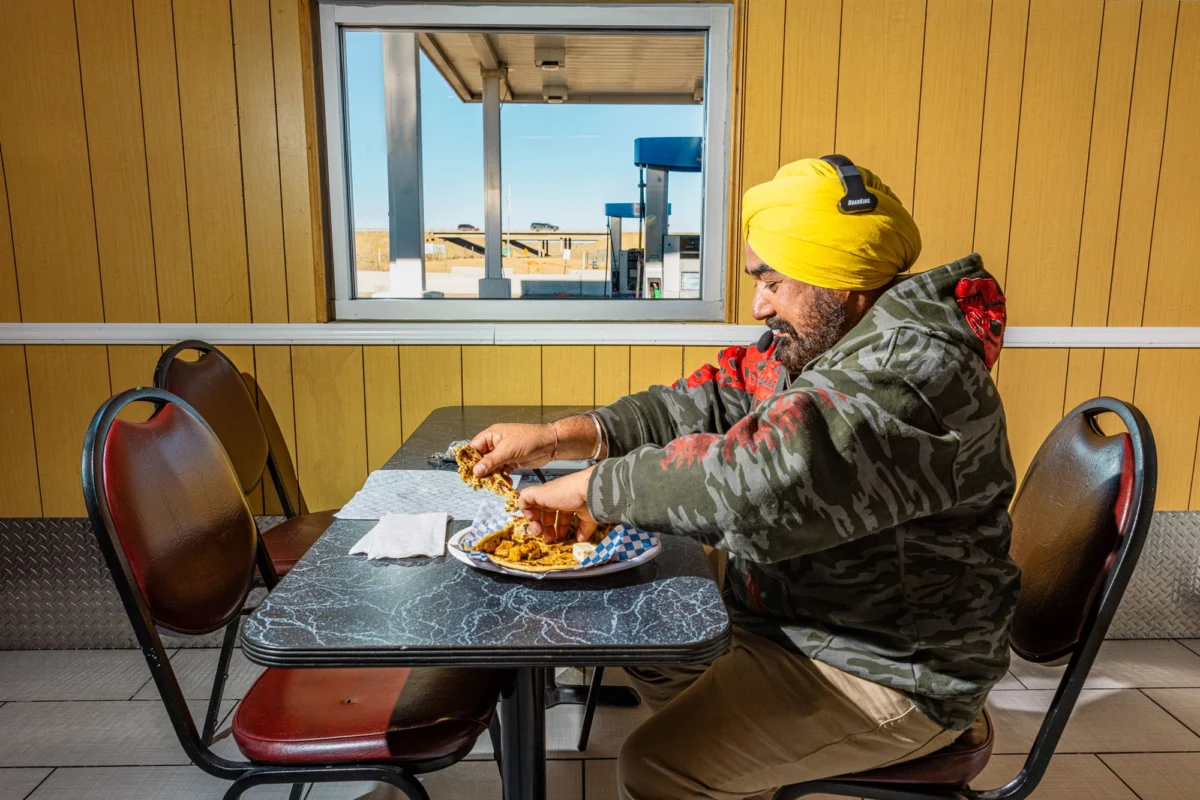
Along the wind-swept corridor of Interstate 80, roughly 20 miles outside of Laramie, Wyoming, a unique culinary and cultural landmark has emerged within the traditional infrastructure of the American trucking industry. The Akal Travel Center, a 24-hour truck stop situated on the high plains, has become a focal point for long-haul drivers and locals alike, offering an authentic Punjabi experience in a region where such cultural markers are rare. In a state where less than 2% of the population identifies as Asian, the center serves as a vital hub for Indian cooking, Sikh religious practice, and community for the growing number of South Asian drivers entering the logistics workforce.
The facility, which blends the utility of a diesel fuel station with the aromatic complexities of North Indian cuisine, represents a broader shift in the American interstate landscape. As the trucking industry faces demographic changes and drivers increasingly seek healthier, more diverse food options, establishments like Akal Travel Center are filling a critical niche. Inside the wood-paneled dining area, the scent of sizzling garlic and earthy curry powder provides a stark contrast to the harsh, gray January winds of the Wyoming plateau, signaling a transformation in how the American "roadside" is defined.
The Evolution of the Akal Travel Center
The history of the Akal Travel Center is a narrative of immigrant entrepreneurship and strategic adaptation. The property was purchased in 2012 by Mintu Pandher and his wife, Amandeep, who saw potential in the isolated stretch of I-80. Two years later, in 2014, Gurjot Singh was appointed as the manager, overseeing the transition of the stop from a standard convenience store into a specialized culinary destination.
Under the Pandhers’ leadership, the center underwent a significant cultural integration. All ten current employees relocated to Laramie from the Punjab state in northwest India, a region known for its rich agricultural heritage and robust culinary traditions. To support this workforce, the owners developed a housing complex directly behind the gas station, creating a self-sustaining community in the rural West. This model of co-located living and working has allowed the staff to maintain their cultural identity while providing 24-hour service to the thousands of motorists who traverse the interstate weekly.
The center’s growth coincided with a period of significant demographic shifts in the American trucking industry. Over the last decade, there has been a notable influx of Sikh and Punjabi drivers into the long-haul sector. Industry estimates suggest that in certain regions, particularly along the West Coast and the Midwest, South Asian drivers now make up a substantial percentage of the independent owner-operator workforce. This demographic shift has created a high demand for "dhabas"—traditional Indian roadside eateries—reimagined for the American highway system.
Culinary Logistics: Tandoors and Trucking Schedules
For drivers like Ediquis Brown, who operates out of Fort Lauderdale, Florida, the Akal Travel Center is a scheduled necessity rather than a random stop. Brown, like many modern long-haulers, manages a rigorous schedule that often includes 11-hour driving shifts. The traditional fast-food options that dominate the I-80 landscape—chains such as Wendy’s or McDonald’s—are increasingly viewed by drivers as detrimental to long-term health and job performance.
"I don’t like Wendy’s," Brown noted during a recent stop. "This is my spot. A place to get good fresh food." His typical order—tandoori chicken, garlic naan, mango lassi, and chai—reflects a desire for nutrient-dense, freshly prepared meals that provide more sustained energy than processed alternatives.
The kitchen at Akal operates with a focus on traditional techniques. The menu, often displayed on a faded whiteboard, features house-made batches of blistered naan, butter chicken, and vegetable-heavy biryani. This focus on "slow simmering" in a "fast-moving" industry is a primary draw. According to manager Gurjot Singh, the business model relies on a dual-attraction strategy: competitive diesel prices to bring the trucks to the pumps, and high-quality, authentic food to bring the drivers inside.
Data and Demographic Context: The New Face of the Highway
The success of the Akal Travel Center is supported by broader economic and demographic data within the logistics sector. According to the American Trucking Associations (ATA), the industry faces a chronic shortage of drivers, requiring tens of thousands of new recruits annually to maintain supply chains. This vacuum has been increasingly filled by immigrant communities.
In the Punjab region of India, trucking is a prestigious and traditional profession. When members of these communities migrate to the United States, they often bring expertise in logistics and a willingness to handle the demanding "over-the-road" (OTR) lifestyle. Research indicates that Punjabi-Americans now own and operate thousands of trucking companies in California’s Central Valley and across the northern Tier of the U.S.
The presence of the Akal Travel Center in Wyoming is particularly significant given the state’s demographic profile. U.S. Census Bureau data shows that Wyoming remains one of the least diverse states in the nation. The establishment of a Sikh gurdwara (a place of worship) on the truck stop property is a landmark development for the region. The gurdwara is open not only to the staff but also to any visiting drivers or members of the public who wish to worship or learn about the faith. This inclusion of religious infrastructure alongside commercial services highlights the holistic approach the Pandhers have taken toward their business and community.
Operational Strategy and Staffing
The operational success of Akal is rooted in its staffing model. By recruiting directly from Punjab and providing on-site housing, the Pandhers have mitigated the labor shortages that plague many rural service businesses. This arrangement creates a stable, dedicated workforce that shares a common language and cultural background, which is essential for maintaining the authenticity of the food and the communal atmosphere of the stop.
The staff’s presence has turned the truck stop into a cultural embassy of sorts. Interactions between the Punjabi staff and the diverse array of truckers—ranging from East Coast long-haulers like Anthony Masonar to local Wyoming ranchers—foster a unique form of rural integration. Masonar, who stops at Akal multiple times a month, emphasizes that the quality of the meal is a rare find so close to the highway, where "food deserts" often limit drivers to pre-packaged snacks and fried foods.
Broader Implications for the American Roadside
The Akal Travel Center serves as a case study for the future of the American truck stop. As the industry moves toward more sustainable and health-conscious practices, the demand for "home-cooked" style meals is expected to rise. Furthermore, the integration of religious and community spaces into commercial hubs suggests a move toward more "human-centric" logistics infrastructure.
The implications of this shift are several-fold:
- Health and Safety: Improved nutrition for long-haul drivers can lead to better health outcomes and increased safety on the roads, as drivers are less prone to the "sugar crashes" associated with high-carbohydrate fast food.
- Economic Resilience: By diversifying their offerings (fuel, high-end food, and cultural services), independent truck stops can better compete with large national chains like Pilot Flying J or Love’s.
- Cultural Pluralism: The presence of a gurdwara and an Indian kitchen in a rural Wyoming setting challenges traditional perceptions of the American West, showcasing the region as a space of evolving cultural intersections.
Conclusion: A Bastion of Slow Simmering
As the sun sets over the Wyoming high plains, the lights of the Akal Travel Center remain a beacon for those navigating the "Snow Chi Minh Trail," a nickname truckers have given to the treacherous, wind-battered stretches of I-80. The facility stands as a testament to the changing demographics of the American workforce and the enduring power of traditional culinary practices to bridge cultural divides.
For the drivers who frequent Akal, the stop is more than a refueling point; it is a ritual of comfort in a demanding profession. For the state of Wyoming, it is a rare and vital pocket of diversity. As Mintu and Amandeep Pandher continue to operate this Punjabi kitchen beside the fuel pumps, they are not just feeding drivers—they are redefining the cultural fabric of the American highway, one plate of butter chicken at a time. The Akal Travel Center proves that even in the most isolated reaches of the country, the scents of home and the traditions of a distant land can find a permanent and welcoming place.