
 Prabowo Widodo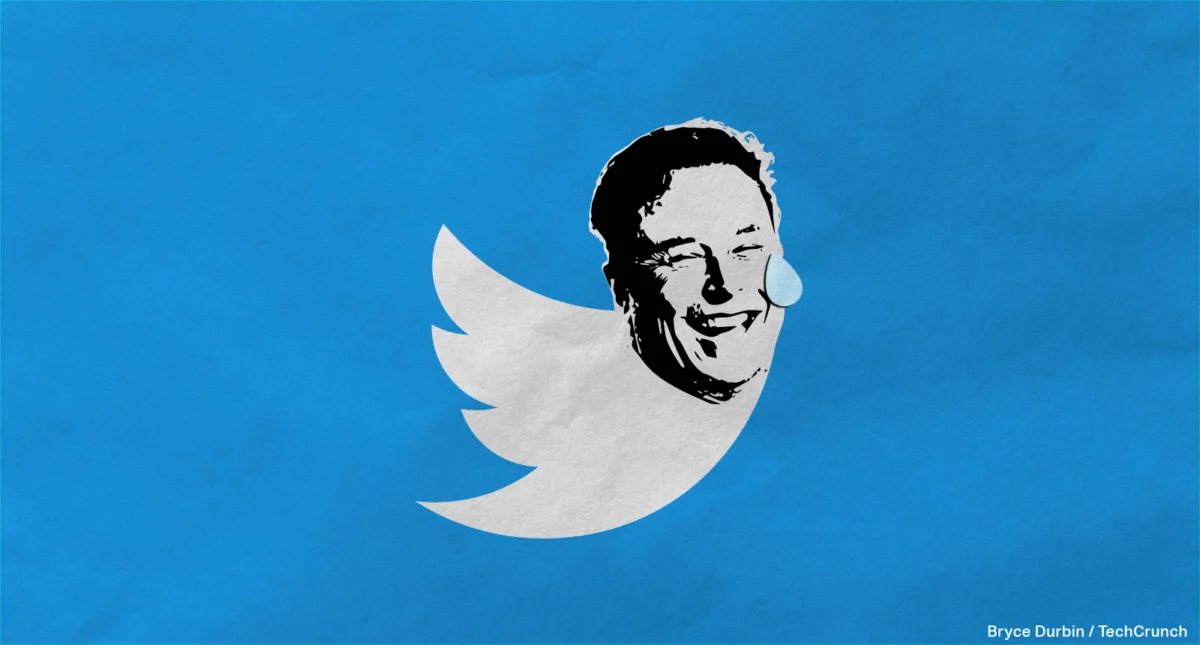
A civil jury in California on Friday ruled that Elon Musk intentionally misled Twitter investors when he attempted to back out of his monumental $44 billion acquisition of the social media platform in 2022. The verdict marks a significant legal setback for the billionaire entrepreneur, affirming the plaintiff’s argument that Musk’s public statements, particularly a pivotal tweet, were designed to create market instability and drive down Twitter’s stock price. While the exact financial penalty remains to be determined, the ruling opens the door for potential damages reaching billions of dollars, sending a clear message about the legal ramifications of public statements by influential figures involved in high-stakes corporate transactions.
The Genesis of the Dispute: The Twitter Acquisition Saga
The saga surrounding Elon Musk’s acquisition of Twitter, now rebranded as X, was one of the most tumultuous and closely watched corporate takeovers in recent history. It began in early 2022 when Musk, CEO of Tesla and SpaceX, started accumulating a significant stake in Twitter, eventually becoming its largest shareholder. His initial engagement was seemingly benign, leading to an offer of a board seat, which he ultimately declined.
The narrative dramatically shifted in April 2022, when Musk made an unsolicited, all-cash offer to buy Twitter for $44 billion, or $54.20 per share. This offer represented a substantial premium over Twitter’s stock price at the time, positioning it as a move to take the company private and "unlock its extraordinary potential." Initially, Twitter’s board adopted a "poison pill" defense to thwart the hostile takeover bid, but after a week of intense negotiations and pressure from shareholders, they ultimately accepted Musk’s offer, paving the way for one of the largest leveraged buyouts in tech history.
However, the path to closing was anything but smooth. Just weeks after the agreement, Musk began to express public reservations, primarily through his own Twitter account. On May 13, 2022, he posted the tweet that became central to the recent lawsuit: "Twitter deal temporarily on hold pending details supporting calculation that spam/fake accounts do indeed represent less than 5% of users." This single statement ignited a firestorm, questioning the veracity of Twitter’s long-standing claims about its user base and sowing widespread doubt about the deal’s future.
Chronology of a Contentious Takeover
The timeline of events highlights the escalating tensions and Musk’s shifting stance:
- Early 2022: Elon Musk begins acquiring Twitter shares, eventually becoming the largest individual shareholder.
- April 14, 2022: Musk offers to buy Twitter outright for $44 billion ($54.20 per share), stating his intent to take the company private.
- April 25, 2022: Twitter’s board accepts Musk’s offer, setting the stage for the acquisition.
- May 13, 2022: Musk tweets that the Twitter deal is "temporarily on hold" pending data on spam/fake accounts, specifically challenging the company’s claim that bots constitute less than 5% of its monetizable daily active users (mDAU).
- May 16, 2022: Following Musk’s tweet, Twitter shares decline by 8%, wiping out billions in market value and triggering concerns among investors.
- June 2022: Musk escalates his demands, accusing Twitter of "material breach" of the merger agreement by allegedly withholding data related to spam accounts. He threatens to walk away from the deal.
- July 8, 2022: Musk formally attempts to terminate the acquisition agreement, asserting that Twitter had failed to provide adequate information about fake accounts and had made "false and misleading representations."
- July 12, 2022: Twitter sues Elon Musk in the Delaware Court of Chancery to compel him to complete the acquisition. The lawsuit argued that Musk was legally obligated to honor the agreement and sought "specific performance" – a legal remedy forcing him to close the deal at the agreed price.
- August-September 2022: Legal battles intensify, with both sides preparing for a high-stakes trial in October. Depositions are taken, and a trove of internal communications is revealed, shedding light on Musk’s motivations and interactions with Twitter executives.
- October 4, 2022: Just days before the scheduled Delaware trial, Musk unexpectedly reverses course, informing Twitter that he intended to proceed with the acquisition at the original $44 billion price. This decision avoided a potentially damaging public trial and likely an unfavorable ruling given the strength of Twitter’s legal position under Delaware contract law.
- October 27, 2022: The $44 billion acquisition is finalized, with Musk taking control of Twitter and almost immediately initiating significant changes, including mass layoffs and leadership restructuring.
The Class-Action Lawsuit: Pampena v. Musk
While the Delaware court case focused on enforcing the acquisition, a separate legal battle was brewing, centered on the financial impact of Musk’s May 13 tweet on individual investors. Investor Giuseppe Pampena filed a class-action lawsuit against Musk on behalf of former Twitter shareholders who had sold their shares between May 13, 2022, and October 4, 2022. This period encompassed the peak uncertainty surrounding the deal, directly following Musk’s critical tweet and concluding just before he agreed to finalize the acquisition.
The core of Pampena’s lawsuit argued that Musk’s tweet about the bot issue was not a genuine expression of concern or a legitimate exercise of due diligence. Instead, the plaintiff contended that Musk intentionally posted these statements to create uncertainty about Twitter’s stability and future, thereby artificially driving down its stock price. This alleged manipulation, according to the lawsuit, caused significant financial losses for those shareholders who sold their stock during the specified window, often out of fear or a belief that the deal would collapse entirely, leading to a much lower stock valuation.
Supporting Data and Market Impact: The market reaction immediately following Musk’s May 13 tweet provided crucial evidence for the plaintiff’s case. Twitter shares, which had been trading robustly following the acquisition announcement, plummeted by 8% in the days after the tweet. This decline translated into a substantial loss of market capitalization, amounting to billions of dollars. For individual investors who had bought shares in anticipation of the $54.20 per share acquisition price, or who simply held stock, the sudden drop represented a direct financial hit. The lawsuit claimed that this 8% drop was a direct consequence of Musk’s intentionally misleading statement, designed to gain leverage in renegotiating the deal or to find a pretext to exit it without penalty.
Musk’s Defense and the Jury’s Verdict: Musk’s legal team argued that his concerns about the number of spam and fake accounts on Twitter were legitimate and a valid part of his due diligence process for such a massive acquisition. They maintained that Musk was genuinely seeking transparency and accurate data from Twitter regarding its user base, which he viewed as fundamental to the platform’s value. His attorneys presented his tweets as honest expressions of concern rather than deliberate attempts at market manipulation.
However, the civil jury in California ultimately sided with the plaintiff. After hearing arguments and reviewing evidence, the jury concluded that Musk had indeed acted with intent to mislead investors. This finding implies that the jury believed Musk’s public statements were not merely exploratory or investigative but were calculated to manipulate market perceptions and, by extension, the stock price for his own strategic advantage in the acquisition process.
Financial Implications and Broader Context
While the verdict has been rendered, the exact amount of money Musk will have to pay to the former Twitter shareholders remains undetermined. Pampena’s attorney has indicated that the damages could reach up to $2.6 billion. This figure would likely be calculated based on the difference between the stock price at which shareholders sold their shares during the affected period and what the price would have been had Musk not issued his allegedly misleading tweet, multiplied by the total number of shares sold by the class.
For Elon Musk, whose net worth is estimated by Bloomberg to be over $660 billion, a $2.6 billion payout, while substantial, may not represent a "huge blow" in terms of his overall financial standing. However, the significance of this ruling extends far beyond the monetary amount.
Legal Precedent: This verdict sets a powerful legal precedent, particularly in the digital age where corporate leaders frequently use social media platforms to communicate with the public and investors. It reinforces the idea that tweets and other informal online statements from highly influential figures, especially those involved in market-moving transactions, can carry the same legal weight and consequences as formal corporate disclosures. This could lead to increased scrutiny of executive social media use and potentially prompt companies to implement stricter policies regarding public statements during merger and acquisition processes.
Impact on Corporate Governance and Transparency: The ruling underscores the importance of transparency and ethical conduct in corporate deal-making. It suggests that parties involved in acquisitions cannot use public statements, even on personal social media accounts, to create artificial market conditions to their benefit. This could encourage more meticulous adherence to regulatory guidelines and foster greater accountability for public communications that have the potential to impact stock prices and investor confidence. Investor advocacy groups are likely to view this verdict as a significant victory for shareholder protection and market integrity.
A Pattern of Tweet-Related Legal Battles
This is not Elon Musk’s first encounter with the legal system over his tweets. In 2018, he faced significant scrutiny and legal action for a tweet related to Tesla. On August 7, 2018, Musk famously tweeted that he had "funding secured" to take Tesla private at $420 per share. This statement sent Tesla’s stock soaring, as it implied a substantial premium for public shareholders.
The U.S. Securities and Exchange Commission (SEC) quickly intervened, charging Musk with securities fraud. The SEC alleged that his tweet was false and misleading, as he had not, in fact, secured funding for such a transaction. The ensuing legal battle resulted in a settlement where Musk and Tesla each paid $20 million in fines, and Musk was required to step down as Tesla’s chairman for three years. Critically, the settlement also mandated that certain of Musk’s tweets, particularly those related to Tesla’s financials or operations, would need to be pre-approved by a "Tesla communications lawyer." This agreement became a source of ongoing contention between Musk and the SEC.
Separately, a class-action lawsuit was filed by Tesla shareholders who claimed they were misled by the "funding secured" tweet. In this particular case, however, Musk emerged victorious in 2023. A San Francisco jury found that Musk did not act with actual malice or intent to defraud investors when he posted the tweet. The jury’s decision in the Tesla case hinged on their belief that Musk genuinely believed, at the time of the tweet, that he could take the company private at that price, even if the funding wasn’t definitively secured in a formal sense.
Distinction Between Cases: The differing outcomes in the Tesla and Twitter shareholder lawsuits are crucial. In the Tesla case, Musk successfully argued that his intentions were not malicious, and he genuinely thought funding was secured. In the Twitter case, the California civil jury found that he intentionally misled investors. This distinction highlights that while Musk has often pushed the boundaries of public communication, the legal system will scrutinize the intent behind his statements, especially when those statements directly impact market values during critical corporate transactions. The evidence presented in the Twitter case evidently convinced the jury that Musk’s "bot" concerns were a pretext for market manipulation rather than genuine due diligence.
The Transformed Landscape: X, xAI, and SpaceX
Following the turbulent acquisition, Musk wasted no time in reshaping Twitter. In July 2023, he officially rebranded the company to X, signaling his ambition to transform it into an "everything app" encompassing various services beyond social media. This rebranding was part of a broader vision to integrate his diverse technological ventures.
In a move to further expand his empire and capitalize on the burgeoning artificial intelligence sector, Musk merged X with his newer AI company, xAI. This integration, announced earlier this year, aimed to leverage Twitter’s vast data resources for xAI’s development of advanced AI models. Musk stated that the combined company, X Holdings, was valued at an impressive $113 billion, reflecting the potential synergies and ambitious scope of his AI and social media endeavors.
Most recently, in a surprising development last month, SpaceX, Musk’s aerospace manufacturing and space transport services company, also merged with xAI. Musk explained that this merger was motivated by his desire to build data centers in space, a futuristic concept that would potentially provide unparalleled computational power and connectivity for xAI’s operations, free from terrestrial limitations. These continuous corporate realignments demonstrate Musk’s relentless pursuit of interconnected technological frontiers, even as he navigates significant legal challenges.
Conclusion
The California civil jury’s finding that Elon Musk intentionally misled Twitter investors marks a watershed moment, underscoring the legal accountability for powerful figures whose public statements can sway markets. While the financial ramifications for Musk are yet to be fully determined, the verdict establishes a significant precedent for corporate transparency, investor protection, and the responsible use of social media by influential executives. As Musk continues to reshape his vast corporate empire, this ruling serves as a potent reminder that even the most innovative and disruptive leaders are subject to the legal frameworks designed to maintain fair and honest financial markets. The coming months will likely see further legal proceedings to finalize the damages, solidifying the long-term impact of this landmark decision.








