Layla Zulfa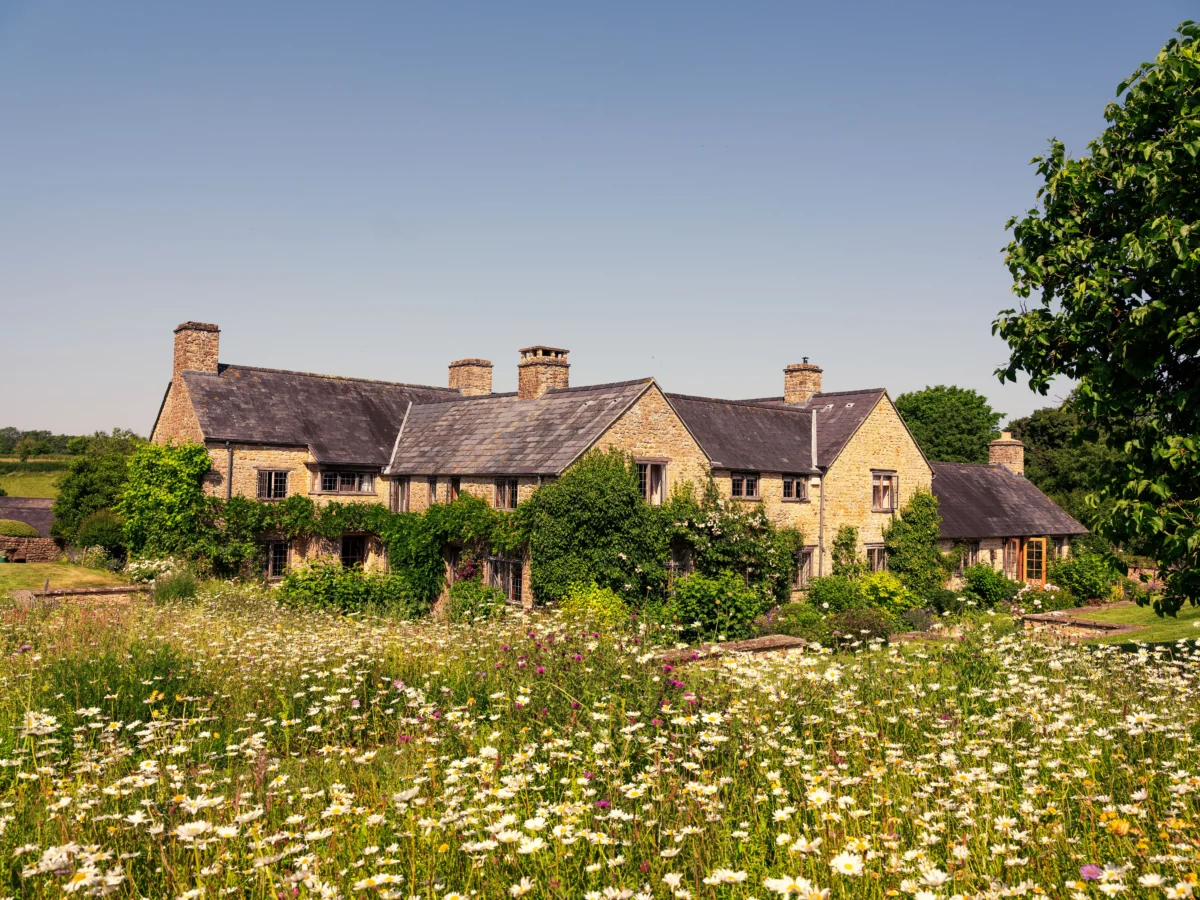
In the rolling landscapes of Dorset, southwest England, a region famously immortalized by the prose of Thomas Hardy, a distinct boundary exists between the domestic and the wild. For Johnnie Boden, the founder of the eponymous British clothing brand, and his wife Sophie, this line is physically manifested at the summit of the wide stone steps that rise from the terraces of their country home. Beyond this threshold lies Johnnie’s expansive wildflower meadows—a vast project of ecological restoration where the entrepreneur is free to experiment with the uncurbed growth of the English countryside. Below the steps, the territory shifts to Sophie’s meticulously curated gardens, characterized by a romantic profusion of perennials, climbing roses, and billowing shrubs. This 500-acre estate, purchased by the couple in 2005, serves as both a private sanctuary and a living testament to the aesthetic values that have defined the Boden brand for over three decades.

A Legacy of British Style and Entrepreneurship
To understand the meticulous nature of the estate’s management, one must look at the history of the Boden brand. Johnnie Boden founded his company in 1991, initially launching with a hand-drawn catalog featuring just eight menswear items. Over the ensuing 33 years, Boden has evolved into a global fashion powerhouse, epitomizing a specific vision of British life: one of vibrant colors, high-quality fabrics, and a relentless optimism. The "Boden look"—often associated with the British middle class—features models who appear genuinely joyful, set against backdrops of idyllic gardens and sun-drenched coastlines.
Now in his mid-60s, Johnnie Boden remains a central figure in the business, maintaining a level of energy that colleagues describe as "Tiggerish." His professional office is housed within the estate’s 18th-century former threshing room, a space that bridges the gap between his commercial empire and his rural life. The attention to detail that transformed a small mail-order business into a multi-million-pound enterprise is evident throughout the Dorset property. From the specific Bauer Bodoni font used to label the saddles in the tack room to the bespoke "Boden Blue" paint—a custom Farrow & Ball mixture designed to sit precisely between the hues of Eton College and the University of Cambridge—nothing is left to chance.

Chronology of the Estate’s Restoration
The history of the site stretches back significantly further than the Bodens’ tenure, with archaeological evidence suggesting a settlement has existed on the grounds since Roman times. The current farmhouse features architectural elements dating to the 17th century. When the Bodens acquired the property in 2005, it was a functioning farm with a collection of historic but aging outbuildings, including 16th-century barns and traditional cottages.
The restoration project, overseen by renowned architect Stuart Martin, focused on historical authenticity and the removal of modern visual clutter. A primary goal was the preservation of the "Far from the Madding Crowd" atmosphere that originally drew the couple to the location.

- 2005–2007: Initial acquisition and structural assessment. The couple prioritized the setting over the house itself, citing the total absence of road noise and light pollution as the primary draw.
- 2008–2012: Major architectural interventions. Architect Stuart Martin led the renovation of the main farmhouse and the restoration of several agricultural buildings. This included reverting many structures to traditional thatched roofs to maintain the vernacular integrity of the Dorset landscape.
- 2010–Present: The ongoing rewilding and horticultural development phase. This period saw the transition from traditional, unprofitable farming to the establishment of the wildflower meadows and the refinement of Sophie Boden’s domestic gardens.
The Science and Struggle of Wildflower Restoration
The transition from a working farm to a "big garden" was not without its technical challenges. Johnnie Boden initially assumed that creating wildflower meadows would be as simple as scattering seeds across the existing fields. However, he quickly discovered that centuries of intensive agriculture had left the soil too nutrient-rich. In high-fertility soil, aggressive grasses outcompete delicate wildflowers, leading to a monochromatic green expanse rather than a diverse floral tapestry.
To rectify this, Boden enlisted the expertise of Charles Flower of Flower Farms, a specialist in landscape restoration. The process required radical intervention:

- Soil Stripping: The nutrient-heavy topsoil was scraped off and relocated to other parts of the farm.
- Chalk Introduction: To simulate the low-fertility conditions of traditional British downland, chalk was introduced to the area. This provided the necessary drainage and pH balance for native species to thrive.
- Species Reintroduction: Once the soil was prepared, a variety of native species were planted, including Lady’s Bedstraw, Bladder Campion, Bird’s-foot Trefoil, and Oxeye Daisies.
Today, the meadows are a biodiversity success story. They are home to rare marsh and bee orchids and provide a habitat for an array of pollinators, birds, and small mammals. This shift from commercial farming to ecological stewardship reflects a broader trend among large landowners in the United Kingdom toward "rewilding"—the practice of returning land to its natural state to combat biodiversity loss.
The Domestic Sphere: Sophie Boden’s "Blowsy" Aesthetic
While Johnnie manages the "wild" half of the estate, Sophie Boden’s influence is felt in the immediate vicinity of the house. Her approach to gardening is intentionally "unruly," aiming for a look she describes as "blowsy and filled with soft things." This aesthetic serves as a counterpoint to the rigid structure of the historic stone buildings.

The east side of the house features a riot of blooms, including climbing roses, wisteria, and nepeta. The kitchen garden is equally productive and aesthetic, featuring raised beds containing:
- Vegetables: Beets, lettuce, sorrel, Hamburg parsley, parsnips, and zucchini.
- Legumes: Sugar snap peas, French climbing beans, and runner beans.
- Ornamentals: Sweet peas and clematis.
The tension between the two gardening philosophies—Johnnie’s rewilding and Sophie’s cultivation—occasionally results in what Sophie calls "the return of the natives." Wildflowers from Johnnie’s meadows frequently "invade" Sophie’s borders. In a horticultural sense, these uninvited guests are viewed as weeds, particularly as they tend to revert to their hardier, natural colors and sizes, displacing the more delicate cultivated varieties.

Broader Impact and Regional Significance
The Boden estate stands as a significant example of the modern English country house. It represents a move away from the "manor house" as a center of local industry and toward its role as a vessel for heritage conservation and environmentalism. The choice to hide modern utilities, such as electricity and phone wires, reinforces the property’s role as a time capsule of the Thomas Hardy era.
From a business perspective, the estate acts as a physical manifestation of the Boden brand’s DNA. The use of vibrant, natural colors and the emphasis on the "jolly" outdoors align perfectly with the marketing imagery that has made the clothing line a staple in both the UK and the United States. Furthermore, the successful restoration of the 16th-century Tithe Barn and other thatched structures contributes to the preservation of Dorset’s architectural heritage, which is vital for the region’s tourism and cultural identity.

Fact-Based Analysis of Implications
The management of the Boden estate highlights several key issues currently facing the British rural landscape:
- Agricultural Profitability: Johnnie Boden’s admission that farming the stony, difficult soil of the estate was not profitable mirrors the struggles of many small-to-medium-scale farmers in the UK. This has led to a significant increase in land being diverted toward environmental schemes and private leisure estates.
- Environmental Stewardship: The success of the wildflower meadows provides a blueprint for how private wealth can be used to restore lost habitats. With the UK being one of the most nature-depleted countries in the world, such private initiatives are increasingly necessary to meet national biodiversity targets.
- Heritage Conservation: The collaboration with Stuart Martin and the use of traditional materials like hamstone and thatch demonstrate the high cost and high value of maintaining Grade-listed or historically significant structures. It underscores the reality that the survival of Britain’s architectural history is often dependent on the patronage of successful entrepreneurs.
In conclusion, the Boden estate in Dorset is more than just a home; it is a complex intersection of personal passion, professional branding, and environmental responsibility. Through the "fiercely guarded" borders of Sophie Boden and the "pathetically driven" restoration efforts of Johnnie Boden, the property remains a vibrant, evolving piece of the English countryside, balancing the refined elegance of the past with a wilder, more sustainable future.