
 Jono Maryono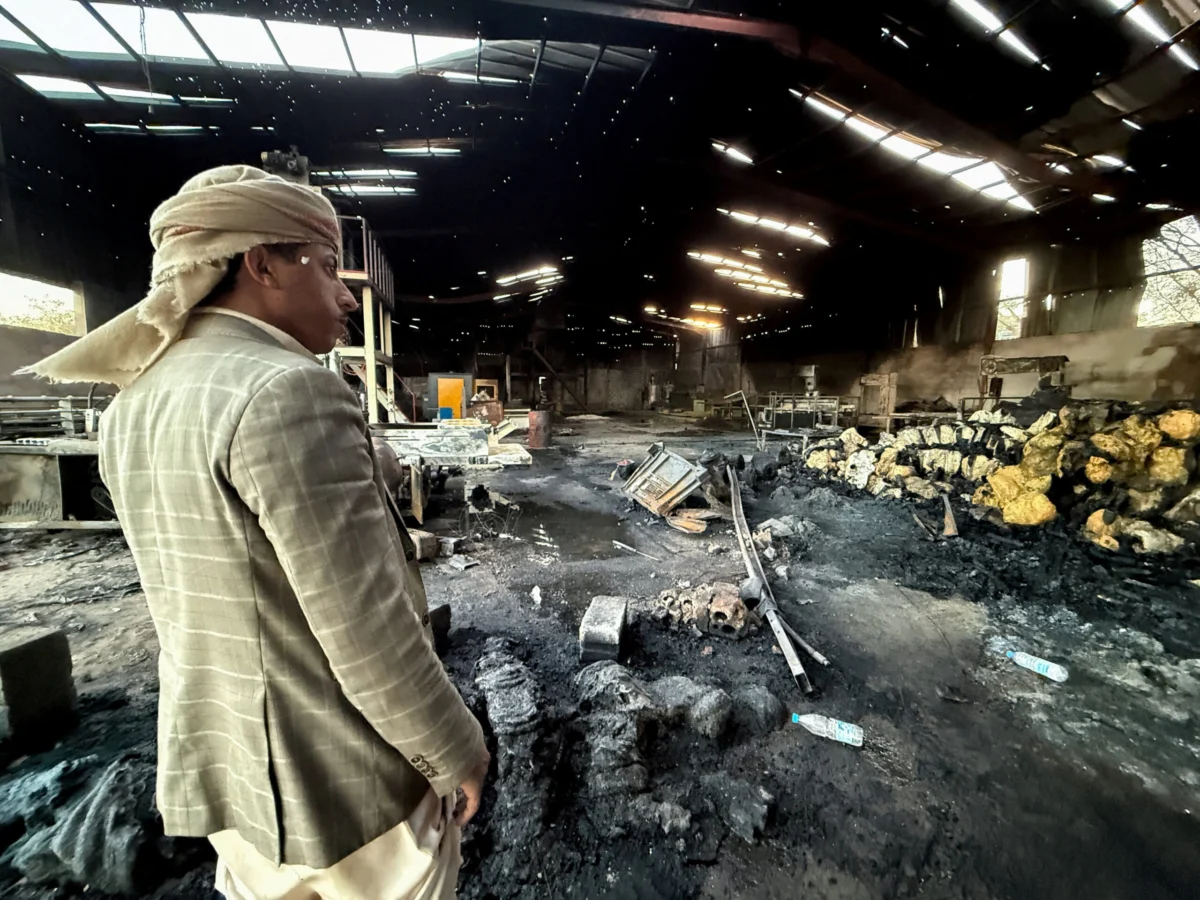
The geopolitical landscape of the Middle East has entered a highly volatile and precarious phase as the ongoing crisis involving Iran, its regional proxies, and the United States continues to escalate on multiple fronts. In Yemen, the internationally recognized government has officially announced a sweeping military offensive aimed at reclaiming vital territories controlled by the Houthi movement, a primary ally of Tehran. This localized escalation coincides with defiant statements emerging from the Iranian capital, where high-ranking officials have declared that the Islamic Republic is fully prepared to absorb and retaliate against any potential military strikes launched by the United States. The convergence of these developments signals a dangerous expansion of hostilities, transforming what was once a series of localized conflicts and maritime skirmishes into a broader, interconnected theater of war.
As fighting intensifies across the rugged terrain of Yemen, humanitarian agencies are sounding the alarm over the potential civilian toll, while international diplomats scramble to prevent a total breakdown of regional stability. The intensification of ground operations in Yemen not only challenges the long-standing stalemate between the Houthis and the government coalition but also directly tests the resolve of Iran’s regional network. Meanwhile, Tehran’s rhetoric underscores a hardening stance within the Iranian political and military establishment, leaving little room for immediate diplomatic de-escalation as Washington and its allies weigh their next strategic moves.
Escalating Ground Operations and the New Yemeni Offensive
The newly announced military campaign by Yemen’s government represents one of the most significant shifts in the domestic conflict in recent years. Backed by regional partners, government forces have mobilized along several key contested lines, aiming to dislodge Houthi fighters from strategic strongholds that have remained under insurgent control for over a decade. The offensive involves heavy artillery exchanges, intensified airstrikes targeting military infrastructure, and coordinated ground maneuvers designed to sever supply lines utilized by the Houthi movement.
Local reports from frontline areas indicate that the fighting has already displaced thousands of civilians, compounding an already catastrophic humanitarian crisis in the war-torn nation. Infrastructure, including roads, bridges, and industrial facilities in regions like Sanaa and surrounding governorates, has sustained severe damage from continuous aerial bombardments. The Yemeni leadership has defended the offensive as a necessary step to restore national sovereignty and secure critical trade corridors, particularly along the Red Sea coast, which has been heavily disrupted by Houthi maritime attacks over the past several years.
Tehran’s Strategic Posture and Direct Warnings to Washington
Parallel to the flare-up in Yemen, Tehran has adopted an increasingly uncompromising posture regarding its confrontation with the United States. Senior military and political figures in Iran have stated publicly that the country is fully prepared for any hostile actions or direct attacks initiated by Washington. Iranian state media and official spokespersons have emphasized that "there is no military solution" to the underlying political grievances, while simultaneously warning that any aggression against Iranian territory or its strategic interests will be met with a decisive and crushing response.
This rhetoric reflects a calculated deterrence strategy by Tehran. By signaling readiness for a prolonged or direct confrontation, the Iranian government aims to raise the political and military costs for the United States and its regional allies. Military analysts note that Iran has spent decades developing asymmetric warfare capabilities, including advanced ballistic missile arsenals, an extensive drone manufacturing infrastructure, and a network of allied militias spread across Iraq, Syria, Lebanon, and Yemen. Consequently, any U.S. military intervention risks triggering a cascading chain reaction across the entire Middle East, threatening global energy supplies and vital maritime shipping lanes.
Background Context and Historical Chronology of the Crisis
To understand the gravity of the current situation, it is essential to examine the historical trajectory that has led to this dangerous juncture. The roots of the multi-layered crisis extend back through years of civil war, proxy competition, and escalating geopolitical rivalries.
- Late 2014 to 2015: The Houthi movement captures the Yemeni capital of Sanaa, prompting the internationally recognized government to flee and triggering a military intervention by a Saudi-led coalition.
- 2019 to 2022: The conflict sees a significant expansion in cross-border drone and missile attacks targeting critical energy infrastructure in the Gulf, alongside periodic ceasefires brokered by the United Nations.
- Late 2023 to 2024: Following the outbreak of the Israel-Hamas war, the Houthis begin launching sustained missile and drone attacks against commercial shipping in the Red Sea and Gulf of Aden, declaring solidarity with Palestinians in Gaza. This prompts the U.S. and its allies to establish Operation Prosperity Guardian and conduct retaliatory strikes against Houthi targets in Yemen.
- 2025: Tensions between the United States and Iran reach new heights following a series of cyberattacks, naval skirmishes, and stalled diplomatic efforts to revive the Iran nuclear deal (JCPOA). Regional proxy networks step up coordination under what Tehran terms the "Axis of Resistance."
- October 2026: The current phase unfolds as Yemen’s government launches a major offensive to reclaim Houthi-held territory, while Iran officially declares its readiness to face direct U.S. military action.
Supporting Data and Strategic Metrics
The military and economic dimensions of the current escalation involve substantial stakes and high-volume resource commitments. According to international monitoring groups and defense intelligence estimates:
- Geographic Scope: The Houthi movement currently controls densely populated areas encompassing roughly 30 to 40 percent of Yemen’s territory, but these regions account for over 70 percent of the country’s population centers.
- Maritime Impact: Prior to the current offensive, Houthi maritime disruptions in the Bab el-Mandeb strait affected nearly 12 percent of global trade volume, forcing major shipping companies to reroute vessels around the Cape of Good Hope, adding an average of 10 to 14 days to transit times between Asia and Europe.
- Military Readiness: U.S. Central Command (CENTCOM) maintains a robust posture in the region, including carrier strike groups, land-based tactical aviation squadrons, and integrated air defense systems spread across allied Gulf nations. Meanwhile, defense reports estimate Iran’s missile inventory to be among the largest and most diverse in the Middle East, featuring precision-guided munitions capable of striking targets across the Persian Gulf and beyond.
- Humanitarian Toll: The broader Yemeni conflict has resulted in one of the worst humanitarian crises globally, with the United Nations estimating that over 21 million people require humanitarian assistance and protection services.
Official Responses and International Reactions
The international community has responded to the escalating crisis with a mixture of deep concern and diplomatic maneuvering. Western capitals, led by Washington, have reiterated their commitment to freedom of navigation and the defense of regional partners. U.S. officials have emphasized that while they prefer a diplomatic resolution, all options remain on the table to protect American personnel and deter Houthi aggression supported by Iranian logistics and intelligence.
Conversely, regional actors such as Saudi Arabia and the United Arab Emirates have tread carefully, balancing their desire to see the Houthi movement neutralized with the acute economic imperative to maintain regional calm and protect their national development projects. Riyadh has expressed cautious support for the Yemeni government’s sovereign right to defend its territory, while simultaneously maintaining open diplomatic backchannels with Tehran to prevent the local conflict from spiraling into a direct war between Saudi Arabia and Iran.
Meanwhile, global powers outside the region, including China and Russia, have called for immediate restraint and a return to inclusive political dialogue under the auspices of the United Nations. Beijing and Moscow have consistently criticized unilateral military actions by Western powers, arguing that sustainable peace in Yemen and the broader Middle East can only be achieved through negotiated settlements that address the root causes of regional instability rather than military escalation.
Broader Impact and Geopolitical Implications
The unfolding events in Yemen and the sharpening rhetoric between Washington and Tehran carry profound implications for global security and economic stability. First and foremost, the intensification of fighting threatens to shatter the fragile, unformalized truces that have held parts of Yemen relatively quiet over recent years. A protracted ground campaign risks deepening the fragmentation of the Yemeni state, making future reunification or a comprehensive political settlement exponentially more difficult to achieve.
From a global economic perspective, the entanglement of the Yemen conflict with direct U.S.-Iran tensions poses a continuous threat to energy markets. Any military miscalculation in the Red Sea, the Persian Gulf, or the Strait of Hormuz could result in sudden spikes in global oil prices, disrupting supply chains that are vital to the post-pandemic global economic recovery. Insurance rates for commercial shipping traversing the region remain exceptionally high, reflecting the enduring risk profile of the maritime corridors.
Ultimately, the current crisis serves as a stark reminder of the interconnected nature of modern security dilemmas. What begins as a localized domestic power struggle in the Arabian Peninsula can rapidly draw in global superpowers and regional hegemons, creating a nexus of conflict where the margin for error is razor-thin. As military commanders on the ground execute their offensives and political leaders in Tehran and Washington exchange warnings, the international community watches anxiously, hoping that deterrence mechanisms and diplomatic channels can ultimately prevail over open warfare.









