
 Ronny Sianturi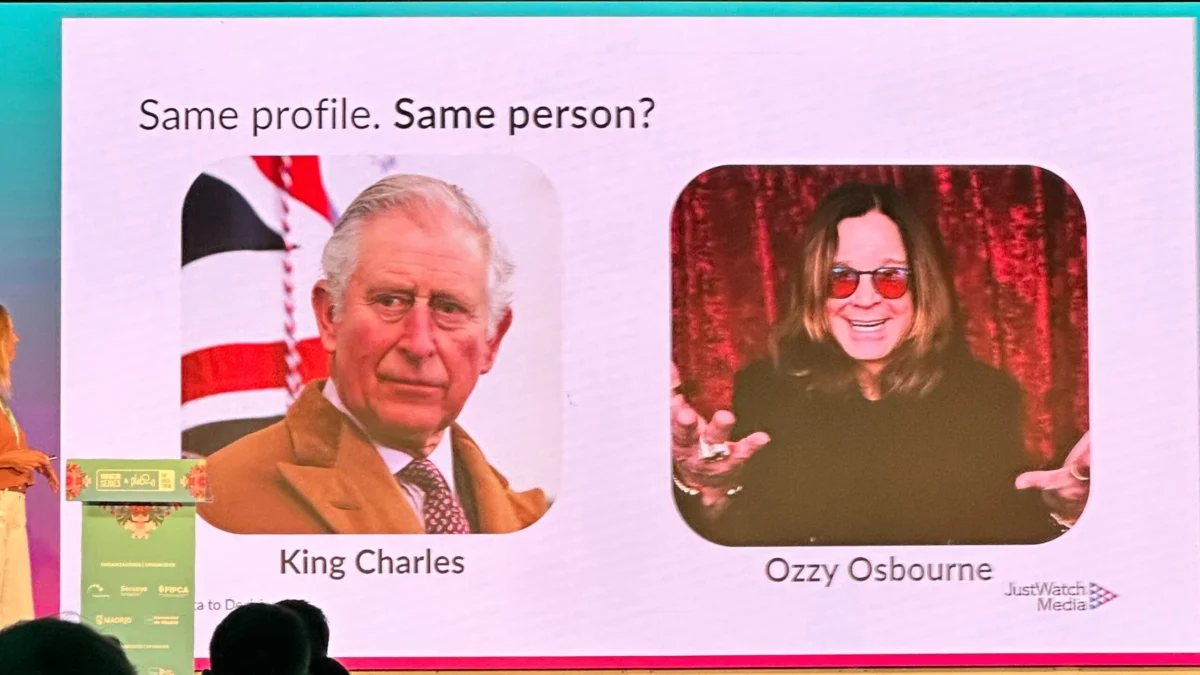
The sixth edition of Iberseries & Platino Industria brought together thousands of international audiovisual executives, producers, creators, and platform directors in Madrid, Spain, solidifying the capital’s status as a premier global hub for Spanish- and Portuguese-language content. Staged at Matadero Madrid—a sprawling municipal cultural center housed in a historic former slaughterhouse—the multi-day business and networking summit served as a critical barometer for an entertainment landscape undergoing rapid structural and technological shifts. Throughout the week, industry stakeholders unpacked the commercial implications of industry-wide consolidation, the explosive rise of vertical microdramas, the shifting economics of international co-productions, and the multifaceted disruption of artificial intelligence.
Background context surrounding the summit underscores its growing stature within the global entertainment ecosystem. Established to foster commercial ties primarily across the Iberian, Latin American, and broader European markets, Iberseries has evolved into a high-stakes marketplace for project financing, regulatory debates, and strategic partnerships. The 2026 iteration carried heightened urgency, arriving against a backdrop of sweeping corporate mergers, tightening production budgets, and an insatiable global appetite for agile, platform-agnostic content formats.
The Rise of Vertical Microdramas and Evolving Viewer Habits
Among the most heavily discussed phenomena at the Madrid gathering was the relentless upward trajectory of microdramas—short-form, vertically formatted series designed for mobile consumption. Industry panels dissecting the format highlighted a shifting operational consensus: while major international studios are entering the vertical space at an accelerated pace, foundational creative principles remain unchanged.
During the panel “Vertical & Viral: The Rise of Microdrama,” DramaBox head of communications Marcela Kartaszewicz welcomed Hollywood’s aggressive pivot into vertical storytelling. Asserting that corporate scale within the sector benefits all market participants, Kartaszewicz maintained that artistic execution continues to dictate commercial viability. “A lot of studios are jumping into the vertical space,” she noted, advocating for a collaborative market approach. Emphasizing the enduring primacy of narrative quality, she added, “Content is king. It has been. It is. It will always be.”
Genre diversification within the vertical space has widened significantly. While romance, age-gap love stories, and LGBTQ+ narratives initially drove microdrama viewership, executives indicated that audience fatigue with monolithic storytelling is prompting a pivot toward thriller tropes and multi-genre hybrids.
Production economics for microdramas vary considerably by geography and scale. Sasha Tkachenko, head of studio at My Drama by Holywater Tech, outlined distinct regional budgetary tiers during the conference. Producing a standard microdrama package in Eastern Europe typically ranges from $80,000 to $120,000, factoring in minimum runtimes of 55 episodes averaging roughly 60 seconds per segment, with occasional talent procurement from the United Kingdom or the United States. Conversely, production costs in the United States escalate notably, with budgets spanning $120,000 to $250,000, driven largely by Los Angeles-based overhead.
Complementing these figures, SPi director general of content Pedro Lopes offered behavioral insights regarding platform engagement, noting that typical microdrama consumers frequently sample the initial five episodes before migrating to alternative titles. Despite these high churn rates, executive consensus at Iberseries pointed toward sustained profitability and audience expansion for vertical platforms.
The Co-Production Gap: Bridging Europe and Latin America
Cross-border financing models occupied a prominent place on the agenda, specifically concerning Spain’s strategic positioning within the transatlantic axis. Research presented by GECA analysts Gloria Saló and Lucía Gómez highlighted a persistent structural paradox: while Spain functions geographically and culturally as a bridge between Europe and Latin America, its actual co-production volume within that corridor remains disproportionately low.
Data spanning 2023 to 2026 revealed that intra-European collaborations dominate the international landscape, accounting for 134 co-productions (roughly 41 percent of the global total tracked), heavily anchored by French-Belgian partnerships. In stark contrast, Europe-Latin America co-productions represented a mere 6 percent (18 projects), led primarily by Spanish-Mexican and Spanish-Argentinian ventures. GECA analysts emphasized that unexplored bilateral pipelines, particularly between Spain and Portugal, offer fertile ground for future development.
This sentiment echoed during the panel “Breaking Rules: The Co-Production Landscape,” moderated by industry experts and featuring executives from Quad Drama, Beta Film, Atlantique Productions, Submarine, and Secuoya Studios. Quad Drama CEO and producer Iris Bucher articulated a shared desire among continental European companies to expand their creative partnerships beyond merely utilizing Spain as a picturesque shooting location. “We wish we would do more with the Spanish broadcasters as well,” Bucher stated. “As Europe, we need to have a voice. So for now, big countries for co-productions are France, Germany, Italy, but I think we all wish we could work more with Spain, not just shoot there.”
Data Analytics, Demographics, and Global Content Flows
Data-driven decision-making dominated several keynotes, challenging conventional audience measurement models. Ingke Purrmann, co-founder and chief revenue officer of JustWatch Media, used a vivid comparative example to illustrate the limitations of traditional demographic profiling. Displaying demographic data for two wealthy, prominent British men born in 1948 who have been married twice and reside in castles—subsequently revealing them to be King Charles III and the late Ozzy Osbourne—Purrmann underscored that standard age and socioeconomic metrics fail to capture consumer intent. “Demo tells you who someone is, but not what they watch,” she argued, advocating for behavioral streaming analytics over legacy metrics.
Further expanding on international content consumption, Parrot Analytics vice president of partnerships Jaime Otero presented striking figures regarding the cross-pollination of Spanish- and Portuguese-language (SPLATAM) content and Asian markets. Otero reported that demand for SPLATAM series in South Korea surged by 243 percent between 2024 and 2026, signaling a reciprocal cultural exchange where Latin and Iberian content finds rapidly expanding audiences in East Asia, mirroring the global ubiquity of Korean dramas.
Additional baseline market research presented by GECA, drawing on Teleformat metrics, mapped 323 international fiction co-productions across 50 countries between 2023 and 2026. The United States led international participation in 125 productions, followed by Germany (85), the United Kingdom (76), France (69), and Belgium (65), with Spain ranking sixth globally with involvement in 38 projects.
Corporate Consolidation and the Quest for Scale
The overarching theme of corporate consolidation loomed large over Iberseries 2026, coinciding with judicial clearance of Paramount’s acquisition of Warner Bros. Discovery and Banijay’s recent integration of All3Media. Executives from major independent and studio-backed production groups addressed the commercial imperative of achieving scale to successfully negotiate with increasingly centralized global platforms.
Elisabeth d’Arvieu, global content officer of Mediawan Pictures—whose production network includes Brad Pitt’s Plan B Entertainment—addressed the operational realities of mega-mergers. In an ecosystem where primary distribution clients are concentrating market power, d’Arvieu stressed that independent producers must scale up defensively and proactively. “In an environment, in a world where big clients are getting bigger and bigger by concentration, we need to be stronger and stronger,” she noted, emphasizing Mediawan’s reliance on cross-border co-production history and flexible distribution strategies.
Conversely, Banijay Entertainment head of scripted creative Steve Matthews minimized potential disruption to creatives resulting from corporate consolidation. Addressing the integration of All3Media, Matthews expressed confidence that the volume of active production banners in key territories like the United Kingdom would insulate creative talent from systemic restructuring, maintaining that day-to-day artistic operations remain insulated from macro-level financial transactions.
Artificial Intelligence: Disruption, Democratization, and Craft
Artificial intelligence occupied a central position in formal panels and informal discussions alike, generating robust debate regarding workforce impacts, production models, and the limits of automated content generation.
Erik Barmack, CEO and founder of Wild Sheep Content, characterized AI as a far more disruptive force than historical technological shifts such as the commercialization of cable television, projecting that it will ultimately centralize greater leverage within Big Tech platforms while introducing widespread labor efficiencies. However, Barmack conceded that initial fears regarding automated text-to-video platforms generating endless streams of low-cost, algorithmic filler—colloquially termed "AI slop"—have hit economic roadblocks.
“When Sora started taking all this stuff that could be automated, I was sort of convinced that it was over and that we’d be stuck on these loops of watching 15-second generated clips that would be targeted to your algorithm,” Barmack remarked. “That turned out to be wrong because it was too expensive, basically, to make these videos, and there wasn’t a big enough audience for what’s called AI slop.” Emphasizing the enduring value of human authorship, he added, “There’s craft to what we’re doing. You can’t just manufacture a ton of crap and expect an okay outcome. Humans have to be involved.” At the same time, Barmack noted that lower production barriers democratize sci-fi and speculative filmmaking for independent creators operating outside traditional studio systems.
Sasha Tkachenko offered a measured outlook on AI integration within the microdrama sector, predicting a hybrid operational future rather than a total industry replacement. “AI is not going to kill anyone. It will only transform the industry,” Tkachenko stated, estimating a future production equilibrium of 50:50 or 60:40 split between automated tools and traditional methods, driven by ultimate consumer demand for authentic human faces. SPi’s Pedro Lopes echoed this sentiment, observing that while AI serves as an efficient tool for catalog expansion, audience connection ultimately relies on human star power.
The Madrid Effect and Woody Allen’s Local Production
Capitalizing on local momentum, Madrid Film Office director Raúl Torquemada detailed the operational and cultural impact of high-profile international productions choosing the Spanish capital. Highlighting the impending principal photography of Woody Allen’s upcoming feature film in Madrid, Torquemada emphasized the strategic value of cinematic urban branding.
“Woody Allen has a distinctive ability to make cities part of his cinematic legacy,” Torquemada told industry press. “New York, Paris or Rome have become integral to his stories, leaving images that stay with audiences long after the film ends. For Madrid, the opportunity lies in that lasting cultural presence, bringing the city’s character to international audiences while showcasing the talent and professional capacity of our audiovisual industry.”
The production was further scrutinized during a dedicated panel entitled “The Madrid Effect,” moderated by Torquemada and featuring Diagonal TV CEO Jaume Banacolocha, LaZona managing director Merche Herranz, and filmmaker Manuel Gómez Pereira. Participants contrasted Madrid’s historical trajectory as a functional, neutral backdrop for international crews with cities like Barcelona or Seville, which traditionally anchor culturally specific local narratives. Concluding the panel with characteristic wit, Gómez Pereira observed the financial and cultural gravity of the incoming American production: “Woody Allen has to come, since he’s so smart, to talk about Madrid, just like he did about Barcelona. And on top of that, they are paying him a lot of money.”








