
 Reynand Wu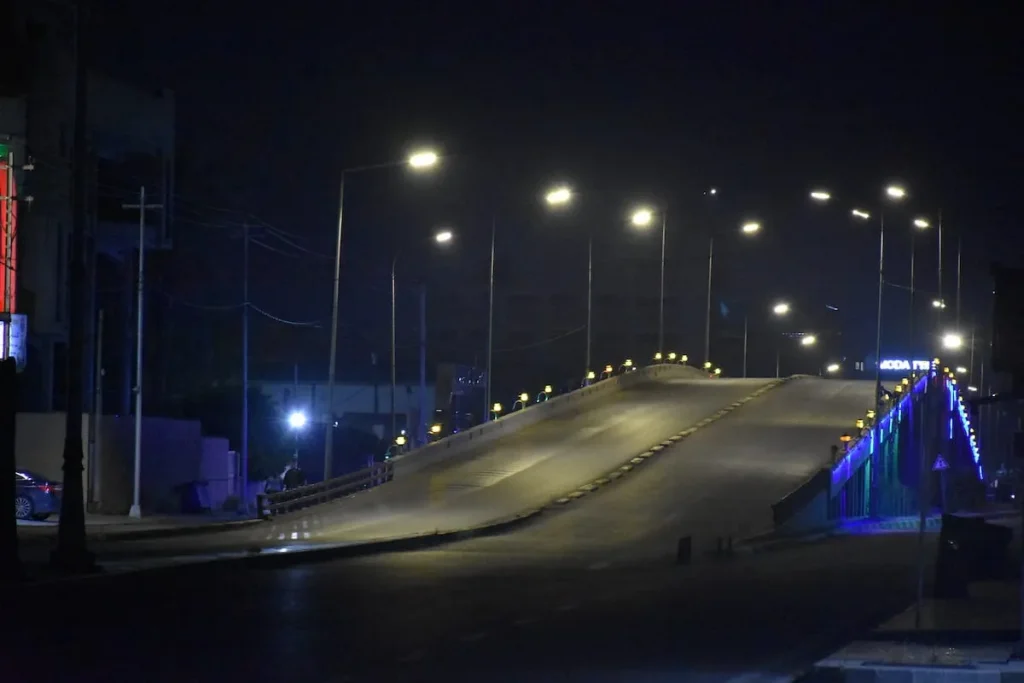
The COVID-19 pandemic served as a global stress test, forcing governments to reallocate resources, impose unprecedented restrictions on movement, and pivot military and intelligence assets toward domestic health crises. While public health officials and world leaders grappled with the invisible threat of a pathogen, international security analysts watched with concern as extremist organizations—most notably the Islamic State of Iraq and Syria (ISIS)—attempted to weaponize the global instability. ISIS propaganda famously characterized the novel coronavirus as the "smallest soldier of Allah," signaling an opportunistic intent to exploit the chaos. However, empirical analysis suggests that the pandemic’s restrictive measures, ironically, acted as a significant suppressant on the operational capacity of non-state armed actors.
A Strategic Calculus of Chaos
In the early months of 2020, as the World Health Organization (WHO) declared a global pandemic, the security landscape underwent a seismic shift. Armed groups globally interpreted the ensuing state-mandated lockdowns and curfews as a window of opportunity. The logic was rooted in the assumption that if state security forces were preoccupied with enforcing public health mandates—or if health systems collapsed under the weight of the virus—insurgents would face fewer obstacles in executing attacks.
For ISIS, the pandemic presented a dual-front opportunity. First, it offered a propaganda windfall, allowing the group to frame the virus as divine retribution against Western-aligned states. Second, it suggested that the diversion of national budgets toward medical supplies and emergency logistics would leave critical infrastructure vulnerable. Yet, as recent research published in the American Political Science Review indicates, the reality on the ground was far more complex. Rather than an uptick in violence, the imposition of strict lockdown measures in key theaters—specifically Egypt, Iraq, and Syria—led to a measurable decline in terrorist activity.
Chronology of Conflict During the Pandemic
The trajectory of violence during the pandemic can be segmented into distinct phases. In early 2020, as the virus spread from East Asia to the Middle East, extremist groups initially attempted to maintain their operational tempo. By March and April 2020, most nations in the Middle East had instituted stringent curfew regimes, effectively clearing the streets of civilians.
- Phase One (Q1 2020): High-level uncertainty. Extremist organizations pivot to digital recruitment, leveraging the increased time populations spent online during isolation.
- Phase Two (Q2-Q3 2020): Operational contraction. State-mandated lockdowns limit the physical mobility of insurgent cells. Data from these regions indicates that the "physical cover" usually afforded by crowded urban centers vanished as markets, schools, and transit hubs closed.
- Phase Three (Q4 2020 and Beyond): Adaptation and attrition. As lockdowns persisted, the financial strain on groups that relied on illicit commerce, extortion, and local taxation intensified. While ISIS retained significant reserves compared to smaller, decentralized militias, the operational cost of maintaining a campaign under restricted mobility proved prohibitive for many.
The Dynamics of Physical Cover
Central to the research conducted by Dr. Dawn Brancati and her colleagues is the concept of "physical cover." In urban warfare, insurgent groups depend on the density of civilian populations to mask their movements, cache weapons, and evade surveillance. When lockdowns were enforced, the sudden vacuum of human activity in public spaces turned cities into "fishbowls." An insurgent moving through an empty street in Kirkuk or Baghdad became immediately visible to state security patrols and aerial surveillance.
Furthermore, the cessation of commercial activity disrupted the logistics of terror. Many armed groups rely on the "taxation" of local businesses and illicit cross-border trade. With the economy stalled, the revenue streams that sustain cell logistics, weapon procurement, and fighter payrolls were choked. This created a paradoxical scenario: while the state was weakened by the pandemic, the insurgent groups operating within those states were simultaneously stripped of the social and economic infrastructure necessary to conduct effective attacks.
Comparative Resilience Among Armed Actors
It is essential to differentiate between the operational capabilities of ISIS and smaller regional armed groups. The research underscores that ISIS maintained a level of structural resilience that many other non-state actors lacked. ISIS’s historical transition from a strictly urban-based insurgent force to a rural-based insurgency meant that it was less susceptible to urban lockdowns than groups operating solely in metropolitan environments.
Furthermore, the financial depth of ISIS—built through years of illicit resource extraction—allowed it to weather the temporary loss of revenue that devastated smaller organizations. Smaller, more decentralized groups, which rely heavily on immediate civilian extortion or sporadic raids on markets, faced an existential threat when those targets were removed or heavily guarded. Consequently, while the pandemic was a nuisance for ISIS, it was a systemic shock for more fragile insurgent entities, potentially forcing a long-term consolidation of power toward larger, wealthier organizations at the expense of smaller, more localized militants.
Broader Security Implications
The implications of these findings extend far beyond the specific timeframe of 2020. They challenge the traditional security assumption that state weakness automatically translates into insurgent strength. Instead, the pandemic demonstrated that the effectiveness of non-state actors is inextricably linked to the social and economic activity of the civilian population. When society stops, the ecosystem of violence is also forced into a state of suspended animation.
From a policy perspective, this suggests that security strategies should place a higher premium on the "connectivity" of a population. If an insurgent group’s strength is proportional to the density and mobility of the civilian environment, then security policies that promote stability, normalcy, and robust commerce actually serve as a double-edged sword—they facilitate life but also provide the camouflage that insurgents exploit.
Official Perspectives and Intelligence Analysis
International bodies, including the United Nations Counter-Terrorism Committee, noted during the pandemic that while physical attacks saw a decline in certain high-conflict zones, there was a compensatory shift toward cyber-extremism. Security agencies across the Middle East reported that while kinetic operations were hampered by lockdowns, the digital footprint of radicalization expanded. The inability to organize physical meetings led to a reliance on encrypted messaging platforms, which, while useful for propaganda, proved less effective for the coordination of complex, multi-stage terror plots.
Intelligence assessments from the period consistently highlighted that the most effective counter-terrorism strategy during the pandemic was not necessarily direct military confrontation, but the maintenance of social order and the containment of the virus itself. By ensuring that the state remained the primary provider of stability, governments were able to indirectly deny space to extremist elements.
Conclusion: The Future of Asymmetric Warfare
The COVID-19 pandemic served as a massive, unplanned experiment in social control. For extremist groups, the results were a strategic setback. The findings provided by Dr. Brancati and her peers underscore a fundamental truth in political science: violence is not an abstract force that exists in a vacuum. It is a social phenomenon that relies on the very infrastructure—markets, transportation, and human density—that the pandemic sought to regulate.
As the world emerges from the shadow of the pandemic, the lessons learned remain critical for future national security planning. The resilience of an insurgent group is not just a measure of its ideological fervor or its stockpile of weapons, but of its integration into the daily rhythms of the population it seeks to subvert. If the pandemic proved anything, it is that even the most determined non-state actors are ultimately beholden to the same social and environmental constraints as the states they aim to dismantle. For security planners, the focus must remain on the nexus between state stability and the ability of extremist organizations to leverage civilian activity for their own destructive ends. As global threats continue to evolve, understanding the physical and social dependencies of terror will remain a cornerstone of effective counter-insurgency and regional stability.







