
 Ana Megawati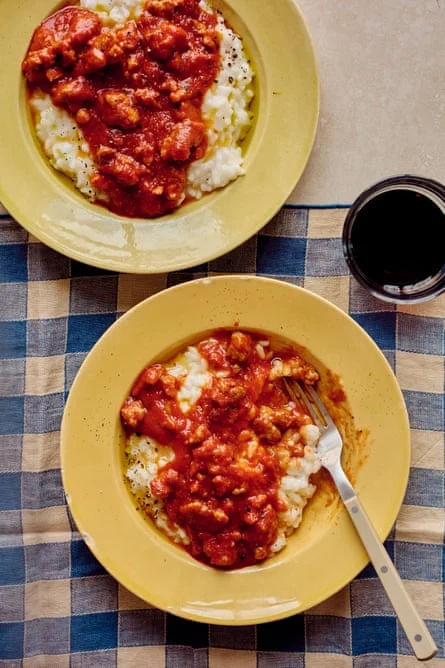
When culinary conversations turn to Italian rice, the immediate association is almost universally the Po Valley, the flat, fog-shrouded northern expanse that yields the arborio, carnaroli, and vialone nano varieties essential for classic, slow-stirred risottos. Yet, Italy’s relationship with rice extends far beyond northern traditions, finding unique expressions in the Mediterranean island of Sardinia and the central region of Le Marche. Recent culinary documentation spearheaded by cultural preservation initiatives, such as the widely followed "Pasta Grannies" project, has shifted the spotlight onto lesser-known, rule-bending rice preparations that have sustained rural Italian communities for centuries.
These dishes—specifically Maria’s riso con maiale e zafferano from Oristano and Rita, Adriana, and Brunhilde’s frascarelli from Cingoli—offer a distinct perspective on Italian domestic gastronomy. Rather than adhering to the stringent chemical and procedural demands of a northern risotto, these regional recipes prioritize resourcefulness, local agricultural yields, and communal dining heritage.
The Agricultural and Historical Context of Italian Rice
While Northern Italy dominates commercial rice production, accounting for the vast majority of the country’s output, rice cultivation in Sardinia holds deep historical roots. The Oristano plain, situated on the island’s west coast, has long served as Sardinia’s agricultural heartland. Irrigation projects developed over the 20th century transformed marshy zones into productive rice paddies, integrating the grain into a pastoral diet heavily reliant on pork, sheep cheese, and locally harvested aromatics like wild saffron.
Similarly, the hill town of Cingoli in the central region of Le Marche boasts culinary traditions shaped by economic necessity and frugality. Historically, rural Italian households relied on grains that could be stretched to feed large families or utilized for medicinal and restorative purposes. Frascarelli, a hybrid preparation often described as a rice "polenta," exemplifies this history of adaptation.
Maria’s Riso con Maiale e Zafferano: A Sardinian Departure from Northern Rules
In Sardinia’s Oristano province, eighty-three-year-old Maria—who established a home-based agriturismo following her early widowhood—maintains a culinary philosophy far removed from urban gastronomic pretension. Her signature dish, riso con maiale e zafferano (rice with pork and saffron), bypasses the traditional rules of risotto-making in favor of a rustic, stew-based methodology.
The preparation involves simmering pork shoulder or stewing cuts with soffritto, rosemary, passata, and a touch of minced sun-dried tomato—a regional technique used to amplify umami without relying on commercial stock cubes. Unlike standard risotto, where rice is toasted in fat and progressively infused with broth from the outset, Maria’s method requires the pork stew to reach near-completion before the arborio rice is introduced. The rice absorbs the preexisting rich sauce before hot meat stock is gradually added, resulting in a finished dish closer in texture to a pilaf than a creamy northern risotto.
The dish is elevated by two regional staples: local Vernaccia or dry white wine, and the island’s prized saffron, combined with a sharp finishing note of grated and julienned lemon zest and pecorino cheese. Culinary historians note that this technique reflects a pragmatic approach to cooking, where slow-cooked meats and grains are merged into a single, cohesive, and highly nourishing pot.

Frascarelli: The Nutritional History of Le Marche’s Rice Polenta
Moving from the islands to the mainland, the culinary traditions of Cingoli, Le Marche, present another unconventional application of rice. Perpetuated by local culinary figures Rita, Adriana, and Brunhilde—who organize the town’s annual sagra (food festival)—frascarelli represents a centuries-old survival food that has transitioned from a medicinal staple to a celebrated cultural artifact.
Historically, frascarelli was prepared as a plain, highly digestible porridge served to invalids, convalescents, and new mothers due to its perceived restorative properties. The dish’s baseline involves boiling arborio rice in lightly salted water before gradually whisking in plain flour during the final stages of cooking. This dual-starch method transforms the liquid-heavy rice base into a soft, creamy consistency resembling traditional cornmeal polenta.
When paired with a robust, spicy sauce of crumbled Italian sausages, wild fennel fronds, chilli flakes, passata, and white wine, the dish transforms into a hearty meal designed to sustain agricultural laborers.
Digital Virality and the Evolution of Rural Gastronomy
The preservation of these recipes has increasingly relied on digital media platforms, bridging the gap between isolated rural traditions and a global audience. A notable example occurred when a video featuring Rita, Adriana, and Brunhilde demonstrating the preparation of frascarelli went viral on social media platforms, including Instagram.
The recording captured the women serving the steaming rice polenta directly onto a traditional communal wooden board—a historical practice originating from eras when individual plates and cutlery were scarce in rural households. While the display generated widespread fascination, it also elicited polarized reactions from online viewers unfamiliar with historical domestic practices. Culinary anthropologists noted that such digital interactions highlight a broader tension between modern sanitary expectations and the romanticized authenticity of peasant traditions. Nevertheless, local organizers emphasized that contemporary households invariably consume the dish from individual plates and bowls, viewing the communal board demonstration as a celebration of historical heritage rather than a mandatory modern protocol.
Broader Economic and Cultural Implications
The visibility of Sardinian and Marchegiano rice dishes points to a broader shift in Italian food culture toward regional diversification. As culinary tourism expands beyond major urban centers like Rome, Florence, and Milan, travelers increasingly seek out hyper-local specialties tied to specific geographic microclimates.
Agriturismos and local food festivals (sagras) play a vital economic role in sustaining these rural traditions. By commercializing heritage recipes through hospitality, communities like Oristano and Cingoli generate sustainable rural employment while safeguarding intangible cultural heritage against homogenization.
Ultimately, recipes such as Maria’s pork and saffron rice and Rita’s frascarelli challenge the monolithic perception of Italian cuisine. They demonstrate that culinary excellence in Italy is defined not by rigid adherence to a single regional template, but by a diverse mosaic of local ingenuity, historical resilience, and deep-seated respect for regional ingredients.








