
 Jono Maryono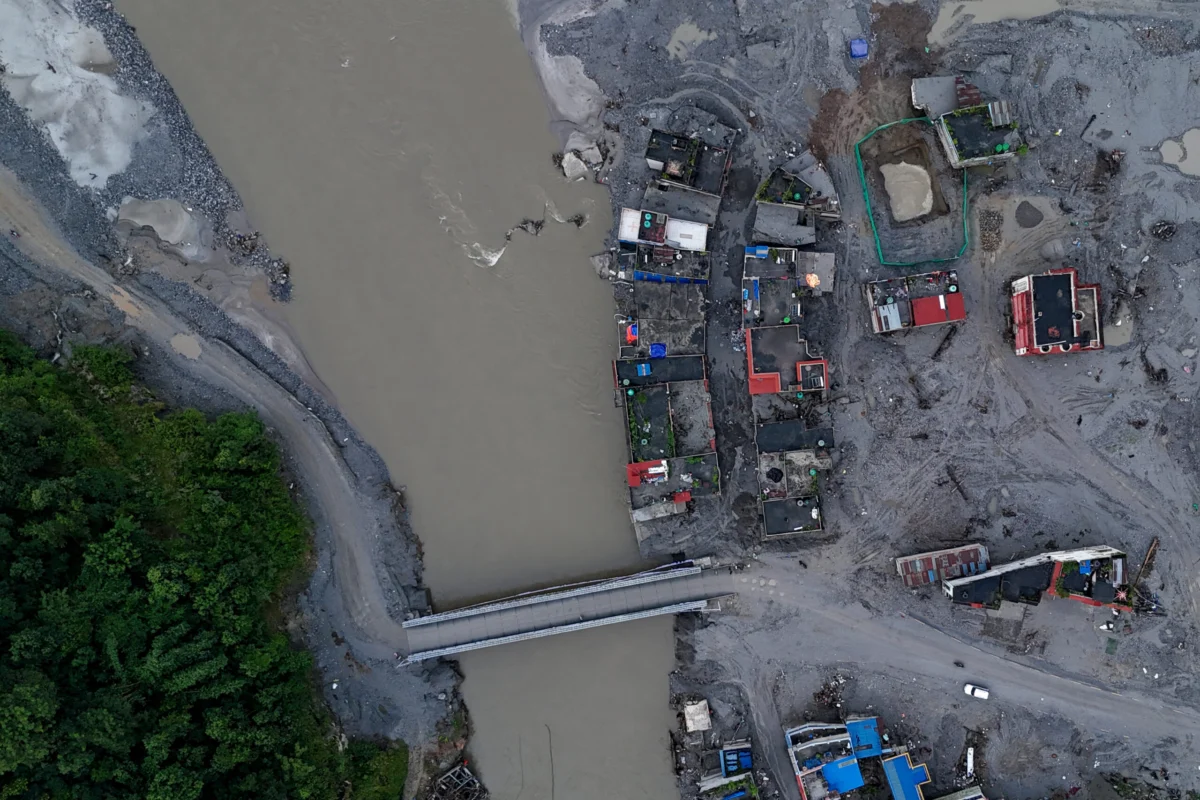
Relentless and unprecedented heavy rainfall across South Asia has triggered catastrophic floods and devastating landslides, claiming at least 68 lives across the northern Indian state of Uttar Pradesh and neighboring Nepal over a punishing three-day span. The extreme weather events, supercharged by a depression over the Bay of Bengal moving inland, have caused severe infrastructural damage, displaced tens of thousands of residents, and pushed critical river networks well past their danger thresholds. Emergency response teams, disaster management agencies, and local authorities are currently scrambling to rescue trapped citizens, reinforce vulnerable embankments, and restore vital services in regions already battered by earlier seasonal disasters.
The situation remains deeply precarious as meteorological departments forecast continued precipitation, raising fears of secondary hazards, including localized mudslides, widespread waterborne illnesses, and long-term agricultural devastation. Governments on both sides of the border are facing mounting pressure to enhance early warning systems, accelerate structural adaptation measures, and fortify infrastructure against the backdrop of increasingly volatile climate patterns impacting the Himalayan and Gangetic river basins.
Escalating Crisis in India: Uttar Pradesh Bear the Brunt of Torrential Downpours
In Uttar Pradesh, India’s most populous state home to more than 240 million people, the weekend downpour proved catastrophic. According to Hrishikesh Bhaskar Yashod, the state’s relief commissioner, the region recorded an astonishing 66.5 millimeters (2.6 inches) of rain between Friday and Sunday morning. This figure dwarfs the historical average of just 7.6 millimeters (a quarter of an inch) typically expected for this specific window in the monsoon calendar.
The commissioner’s office confirmed that the death toll in the state had climbed to at least 56, accompanied by 46 reported injuries. The casualties stem from an exceptionally heavy spell of rain that systematically swept across multiple districts, compromising structural integrity, collapsing mud-brick walls, and triggering flash floods in low-lying rural and semi-urban settlements. More than 1,000 houses have sustained major structural damage or have been completely washed away, leaving thousands homeless and seeking temporary shelter in makeshift government camps.
Meteorologists attribute this anomaly to a deep depression that formed over the Bay of Bengal and tracked steadily inland. As the moisture-laden system collided with regional weather patterns, it stalled over northern India, dumping relentless sheets of water over saturated soils. Because Uttar Pradesh is traditionally accustomed to heavy rain and thunderstorms during the standard monsoon season running from June to September, the region possesses established drainage channels and flood protocols. However, the sheer volume and velocity of the rainfall outpaced existing infrastructural capacities, rendering standard flood-defense mechanisms ineffective in several districts.
Beyond Uttar Pradesh, neighboring Odisha has also felt the severe pinch of the extreme weather system. State disaster management agencies reported that more than 70,000 residents living in low-lying, flood-prone areas were urgently evacuated as swollen rivers breached their banks. The downpours heavily damaged regional infrastructure, including vital bridges and rural culverts, cutting off remote communities. Officials were compelled to shut down Devkund, a popular tourist destination in the state, to prevent casualties among sightseers trapped by sudden torrents.
Widespread River Swells and Severe Hydrological Alerts
The broader hydrological situation across northern and central India has grown increasingly critical. India’s Central Water Commission (CWC) issued high-level warnings after confirming that at least 30 river-monitoring stations spanning seven distinct states had entered a "severe situation."
Major transboundary and regional river systems—including the iconic Ganga, along with the Gandak, Kosi, Bagmati, and Narmada rivers—have risen dangerously above their designated danger levels. These surging water bodies threaten downstream settlements, agricultural expanses, and critical transport networks. The rapid accumulation of runoff from upper catchment areas guarantees that flood crests will continue to travel downstream for several days, keeping emergency personnel on high alert across multiple jurisdictions.
Environmental scientists and hydrologists note that the synchronization of heavy localized rainfall with elevated upstream river discharges creates a compounding hazard. When major rivers swell simultaneously, tributary drainage is blocked, causing water to back up into populated zones and agricultural plains that might not have experienced direct, heavy downpours. This backwater effect has significantly expanded the geographical footprint of the current disaster, complicating evacuation and relief logistics.

Nepal Struggles with a Resurgence of Flooding and Landslide Disasters
Meanwhile, just across the northern border, Nepal is grappling with a agonizing resurgence of flooding and landslides less than two months after enduring one of the worst climate-related catastrophes in its modern history. Officials report that at least 12 people have been killed since Thursday in this latest wave of adverse weather, with several others remaining missing as rescue workers comb through debris fields.
The psychological toll on the Himalayan nation remains palpable. In late August, a massive, tsunami-like flash flood swept down the Trishuli and surrounding river valleys near the Nepal-China border, triggered by a high-altitude glacial mountain collapse. That disaster claimed more than 1,400 lives and left nearly 5,000 people unaccounted for, leaving deep infrastructural scars across mountain communities.
The current meteorological disturbance has pushed authorities to issue urgent flash flood warnings across 49 of Nepal’s 77 districts. More than half of these districts are currently categorized as facing high or severe risks for sudden inundation and destructive mudslides as river levels continue an aggressive upward trajectory.
The country’s fragile energy grid has also taken a severe hit. Officials at the Ministry of Energy, Water Resources and Irrigation reported widespread power supply disruptions in the mountainous districts of Manang, Mustang, Myagdi, and Baglung. Engineering teams have been deployed to clear blocked access roads and restore electricity, though continuous rain and unstable terrain are severely hampering repair operations.
Particularly hard hit is the Rahuganga River basin, where surging floodwaters severely damaged the structural integrity and transmission-line towers of an ongoing 40-megawatt hydropower project. Water Resources and Energy Minister Biraj Bhakta Shrestha acknowledged the significant setback to the nation’s renewable energy infrastructure, noting that rebuilding damaged power assets in remote gorges presents formidable logistical challenges.
Addressing the anxiety of residents in districts previously devastated by August’s glacial outburst, Shanti Mahat, a spokesperson for the National Disaster Risk Reduction and Management Authority (NDRRMA), urged communities in Rasuwa and Nuwakot to remain vigilant. While Mahat clarified that these districts are not currently classified as immediate high-risk zones under the present weather system, the collective trauma from the previous disaster has left populations acutely sensitive to any rise in river levels.
Chronology of the Weather Event and Emergency Response
The unfolding disaster follows a rapid and intense meteorological sequence that caught regional emergency systems in a state of heightened preparedness following earlier monsoon alerts:
- Late August: A catastrophic glacial collapse along the Nepal-China border triggers a massive flash flood, killing over 1,400 people and displacing thousands.
- Thursday: Heavy and persistent rainfall commences across parts of Nepal and northern India, prompting initial weather warnings from meteorological departments.
- Friday: A deep depression over the Bay of Bengal moves inland, significantly intensifying precipitation levels across Uttar Pradesh and neighboring states.
- Saturday: Water levels in major river systems—including the Ganga, Gandak, Kosi, Bagmati, and Narmada—surpass danger marks. The Central Water Commission places 30 monitoring stations across seven states under severe flood alerts.
- Sunday Morning: Official figures from Uttar Pradesh confirm the death toll has reached 56, with cumulative rainfall over the preceding 48 hours hitting 66.5mm against a normal 7.6mm. In Nepal, the death toll from the new wave of rain-induced disasters climbs to 12.
- Ongoing: Emergency evacuations exceed 70,000 people in Odisha, while infrastructure restoration efforts commence in Nepal’s power-deprived northern districts.
Socio-Economic Implications and Policy Challenges
The recurrence of severe flooding and landslides across northern India and Nepal highlights deep-seated vulnerabilities in regional development, land-use planning, and disaster risk reduction frameworks. The economic implications of these recurring disasters are profound. Millions of dollars in agricultural crops—particularly pre-harvest paddy rice in the fertile plains of Uttar Pradesh—risk total destruction, threatening regional food security and rural livelihoods. Furthermore, the recurring devastation of transport arteries, bridges, and energy transmission lines diverts crucial public funds away from developmental initiatives toward emergency relief and reconstruction.
Experts argue that traditional flood-management paradigms, which rely heavily on reactive emergency responses and physical embankments, are increasingly inadequate in the face of shifting climatic baselines. The rapid melting of Himalayan glaciers, combined with erratic monsoon patterns driven by oceanic and atmospheric warming, demands a paradigm shift toward integrated watershed management, climate-resilient infrastructure, and community-based early warning systems.
As international climate bodies continue to study South Asia’s monsoon volatility, regional governments face an urgent imperative to enhance cross-border hydrological data sharing. Because major river systems originate in the Himalayas before flowing through the densely populated plains of India, real-time coordination between upstream and downstream nations is vital for mitigating loss of life. For now, federal and state agencies remain entirely focused on immediate rescue operations, medical deployments, and providing relief supplies to displaced populations bracing for further inclement weather in the days ahead.









