
 Jono Maryono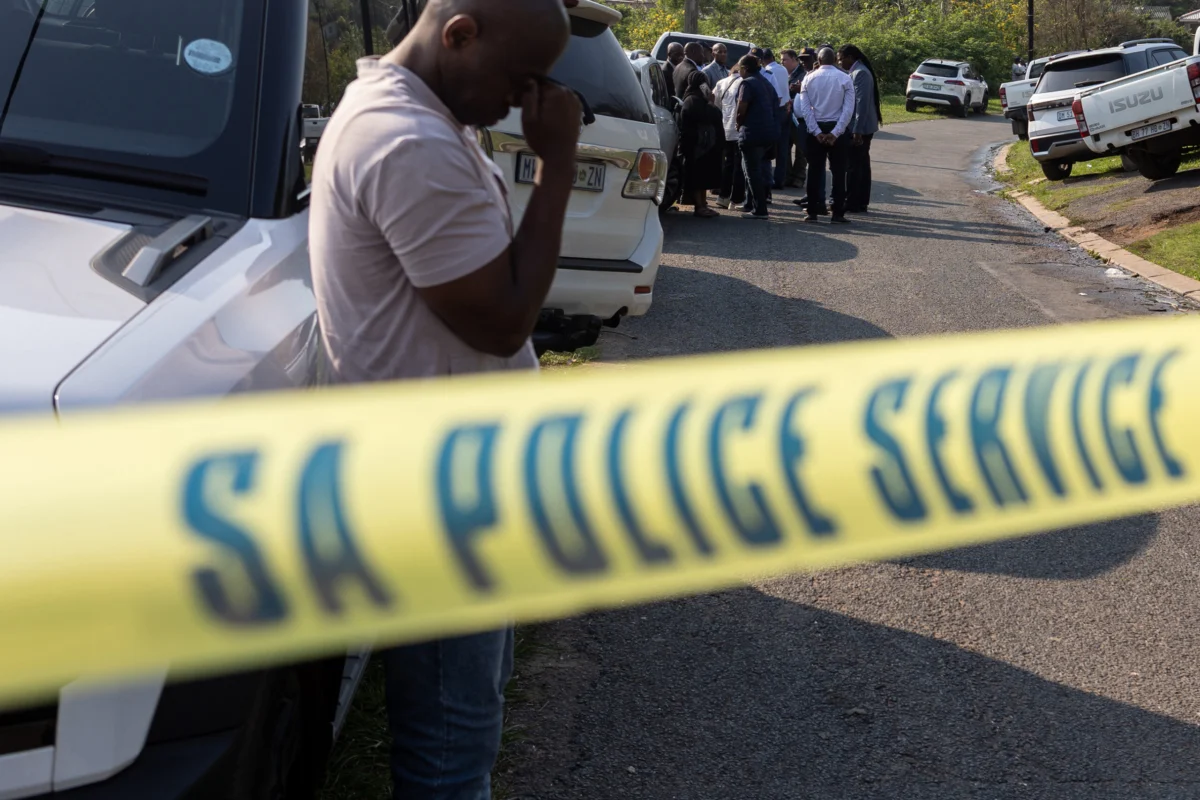
A devastating mass shooting at a local tavern in the township of Wedela, located southwest of Johannesburg in South Africa’s Gauteng province, has left at least 17 people dead and 15 others hospitalized with varying degrees of injuries. The violent incident, which occurred late Saturday evening, has sent shockwaves through the local community and intensified national anxieties regarding escalating gun violence and organized crime across the country. According to preliminary reports from the South African Police Service (SAPS), a heavily armed criminal squad descended upon the establishment, turning a routine weekend gathering into a scene of mass carnage.
Emergency medical services, alongside local law enforcement units, rushed to the scene following distress calls from terrified survivors and nearby residents. Upon arrival, medical personnel were confronted with a chaotic and harrowing environment. Despite immediate triage and life-saving efforts, paramedics confirmed that 17 victims had succumbed to their catastrophic injuries directly at the scene. An additional 15 individuals sustained severe gunshot wounds and were swiftly transported to various regional medical facilities for urgent surgical intervention. As the investigation enters its crucial early phases, authorities are working tirelessly to piece together the sequence of events that led to one of the deadliest mass shootings in recent provincial history.
Chronology of the Attack and Immediate Aftermath
The tragic events in Wedela unfolded rapidly under the cover of darkness late Saturday night. Patrons at the popular township tavern were socializing, unaware that a coordinated and heavily armed assault was imminent. According to eyewitness accounts and initial police intelligence, a group of approximately eight unidentified suspects approached the establishment on foot before launching their coordinated attack.
The assailants, reportedly armed with high-powered military-grade weaponry including AK-47 assault rifles and handguns, stormed the premises without warning. Witnesses stated that the gunmen immediately opened fire indiscriminately, targeting patrons inside the crowded venue. The sheer volume of gunfire created immediate panic, leaving individuals with minimal opportunity to escape or seek adequate cover. The assault lasted only a matter of minutes, after which the suspects fled the scene into the surrounding dark streets, presumably using getaway vehicles waiting nearby.
Law enforcement agencies received emergency alerts shortly after the shooting stopped. By the time the first police patrols and ambulance crews arrived, the attackers had vanished. The immediate priority for first responders was securing the perimeter, establishing triage stations for the wounded, and preserving forensic evidence left behind at the crime scene. By early Sunday morning, the SAPS had cordoned off the entire tavern block, initiating a massive manhunt across Gauteng province to track down the eight heavily armed fugitives.
Growing Epidemic of Mass Shootings in South Africa
This latest tragedy in Wedela is not an isolated incident, but rather part of a deeply concerning nationwide trend of mass shootings that has plagued South Africa over recent years. South Africa maintains some of the strictest firearm control legislation on the continent through the Firearms Control Act, yet illegal weapons—particularly smuggled military-grade firearms left over from regional historical conflicts or diverted from state stockpiles—remain widely accessible to criminal syndicates.
Criminologists and law enforcement analysts note that taverns, shebeens, and public social venues have increasingly become primary targets for retaliatory violence, extortion rackets, and gang-related turf wars. These establishments often house crowded environments where rival factions or targeted individuals can be easily cornered. Similar high-casualty tavern massacres have previously been recorded in other provinces, including Gauteng and KwaZulu-Natal, highlighting systemic vulnerabilities in local community safety and intelligence gathering.
In September 2026, a similarly devastating mass shooting occurred in KwaMakhutha, south of Durban in KwaZulu-Natal, where 11 people were killed after gunmen stormed a residential property and opened fire on 14 individuals. The recurring nature of these multi-casualty attacks underscores a pervasive crisis of violent crime that continues to defy conventional policing strategies. The proliferation of illegal automatic weapons has transformed localized disputes into military-style executions, posing an unprecedented challenge to the nation’s security apparatus.
Official Responses and Government Condemnations
In the wake of the Wedela massacre, local and national government officials have expressed profound shock and outrage, vowing to bring the perpetrators to justice swiftly. Provincial leadership and safety MECs have visited the crime scene to assess the situation firsthand and offer condolences to the grieving families of the victims.
The South African Police Service has mobilized specialized tactical response teams, the Directorate for Priority Crime Investigation (known as the Hawks), and intelligence units to spearhead the manhunt for the eight suspects. National police commissioners have appealed to the public for assistance, urging anyone with information regarding the identity or whereabouts of the gunmen to come forward anonymously through crime-reporting hotlines. Authorities have emphasized that community cooperation is vital in dismantling the criminal networks responsible for supplying and deploying military-grade weaponry in residential townships.
Furthermore, community safety advocacy groups and local civil society organizations have renewed their calls for intensified police visibility, targeted disarmament operations, and comprehensive socio-economic interventions in townships like Wedela. Activists argue that long-term solutions must address the root causes of systemic poverty, youth unemployment, and illegal arms trafficking that continue to fuel the cycle of violence.
Socio-Economic and Security Implications
The massacre in Wedela carries profound socio-economic and psychological implications for South Africa. Beyond the immediate grief and trauma inflicted upon the families of the 17 deceased and the 15 wounded, incidents of this magnitude severely undermine public confidence in the state’s ability to guarantee basic safety and security.
Economically, townships like Wedela rely heavily on small businesses, including local taverns and entertainment venues, to drive local commerce and employment. Mass shootings severely disrupt these fragile local economies, instilling an atmosphere of fear that deters patronage and investment. Moreover, the psychological toll on Wedela residents is immense; survivors and community members often face prolonged post-traumatic stress, requiring specialized psychological support services that are frequently under-resourced in marginalized areas.
From a policy perspective, the shooting is expected to reignite intense parliamentary and public debates regarding the efficacy of current policing frameworks, border security measures to stem the flow of illegal firearms, and the operational capacity of local police stations. As investigators sift through ballistic evidence and interview traumatized survivors, the nation watches closely, demanding accountability and structural reforms to halt the escalating bloodshed that threatens the social fabric of South African communities.









