Danny Garick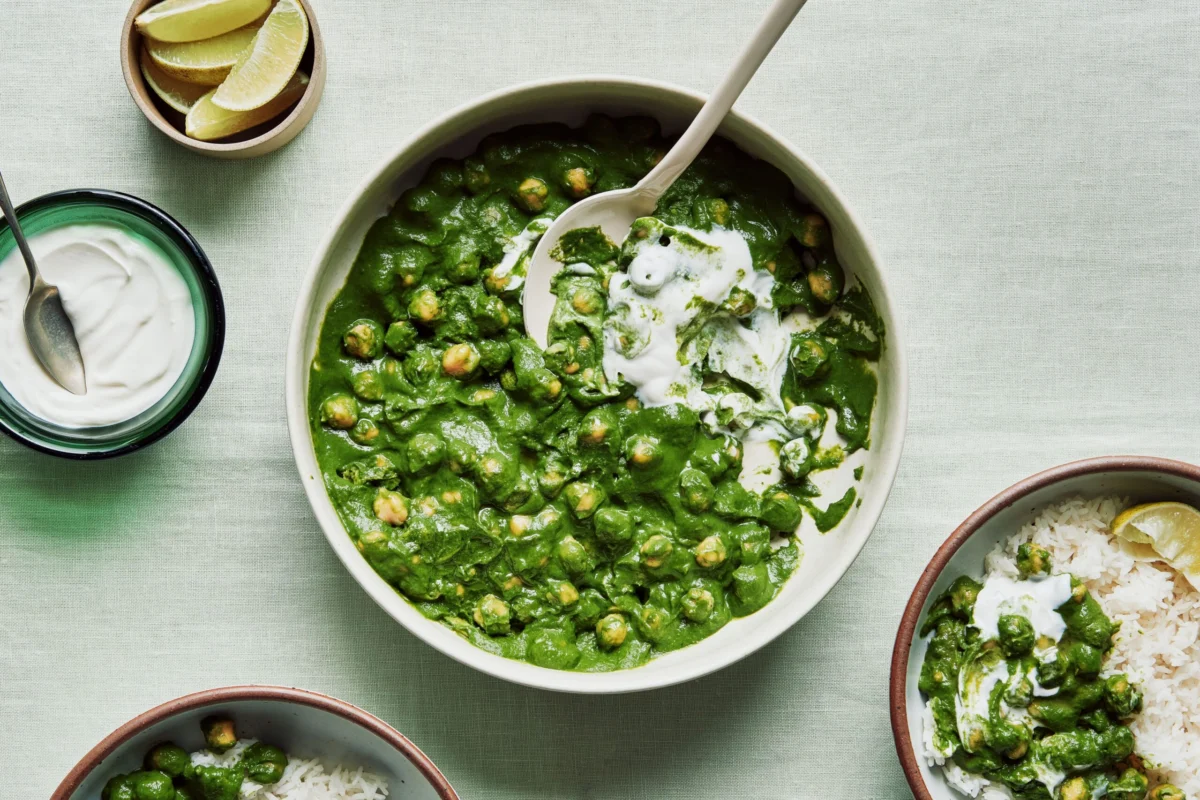
The classic preparation of saag—a staple dish originating from the Punjab region of India and Pakistan—has undergone significant transformations as it has transitioned into global home kitchens. While traditional saag often utilizes mustard greens, broccoli, or various combinations of leafy vegetables, the contemporary iteration known as Chickpea Saag has emerged as a globally recognized vegetarian staple. This dish, which centers on the marriage of earthy chickpeas with a vibrantly spiced spinach base, represents a broader trend in culinary fusion where nutrient-dense legumes are elevated through traditional aromatics and tempering techniques.
The Historical and Cultural Context of Saag
Saag, derived from the Sanskrit word "śāka," refers to a category of leaf-based dishes. Historically, the dish was a quintessential peasant meal, relying on seasonal greens harvested from fields. In the northern Indian subcontinent, the consumption of saag is deeply intertwined with the agrarian cycle. The traditional preparation, known as Sarson ka Saag, relies heavily on mustard greens (sarson), which are cooked for extended periods to break down fibers and concentrate the flavors of ginger, garlic, and chilies.
The adaptation of this dish to include chickpeas (chana) reflects a modern pivot toward pantry-friendly, high-protein ingredients. Chickpeas, which are a cornerstone of South Asian cuisine, offer a texture that contrasts with the silky, puréed spinach, providing both nutritional substance and structural integrity to the meal. The integration of Greek yogurt into the base—as seen in modern recipes—adds a level of creaminess and acidity that balances the bitterness of the greens, a hallmark of North Indian restaurant-style cooking that has become standard in international culinary circles.
Ingredient Profile and Nutritional Analysis
The standard preparation of Chickpea Saag relies on a specific sequence of flavor layering. The base begins with unsalted butter, which acts as a fat medium to bloom cumin seeds and toast the aromatics. White onions provide a subtle sweetness, while a generous inclusion of garlic and ginger forms the "trinity" of South Asian flavor profiles.
The nutritional profile of this dish is significant. Spinach, a rich source of vitamins A, C, and K, as well as folate and iron, serves as the primary vegetable component. When paired with chickpeas, the dish becomes a comprehensive source of plant-based protein and dietary fiber. Research from the International Food Policy Research Institute suggests that the increased global consumption of legumes like chickpeas is directly linked to more sustainable dietary patterns. A 15-ounce can of chickpeas typically provides approximately 21 grams of protein and 24 grams of fiber, making the dish a staple for those seeking heart-healthy, cholesterol-free meal options.
Culinary Methodology: A Step-by-Step Breakdown
The transformation of the raw components into the final dish follows a logical culinary progression. First, the aromatics—onions, garlic, ginger, and serrano chilies—are sautéed until soft. The addition of turmeric and garam masala introduces a complex spice profile that is essential for the characteristic flavor of the dish.
The incorporation of frozen spinach, once thawed, requires careful moisture management. By blending the spinach into a purée, the cook achieves the classic "saag" texture. The addition of plain whole-milk Greek yogurt at this stage is a critical technical step; the yogurt must be integrated at a controlled temperature to prevent curdling, ensuring a smooth, emulsified sauce. Finally, the rinsed chickpeas are folded in and simmered to absorb the spice infusion. The dish is traditionally served with basmati rice or warm naan, both of which serve as neutral vehicles for the potent, flavorful sauce.

Chronology of Global Adoption
The globalization of Chickpea Saag can be traced back to the late 20th century, coinciding with the rise of South Asian diaspora communities in the United Kingdom, Canada, and the United States. During the 1980s and 1990s, Indian restaurant owners began modifying traditional recipes to accommodate the availability of local ingredients.
- 1980s: Indian restaurants in metropolitan centers began standardizing "saag" as a spinach-based dish, moving away from more niche regional greens to ensure consistency for international palates.
- 2000s: The rise of the home-cooking movement and the popularity of food blogging brought professional techniques into the domestic sphere, with the "chickpea" variation gaining prominence for its simplicity and affordability.
- 2010s to Present: Dietary trends such as the "Meatless Monday" campaign and a surge in vegetarianism accelerated the popularity of Chickpea Saag. Social media platforms and digital recipe repositories further standardized the recipe, cementing it as a "weeknight staple" for busy households.
Economic and Supply Chain Implications
The ingredients required for Chickpea Saag are largely recession-proof, which explains the dish’s enduring popularity during periods of economic volatility. Canned chickpeas, frozen spinach, and staple aromatics like onions and ginger are among the most stable commodities in global grocery retail.
According to data from the Bureau of Labor Statistics, the price point for these specific pantry staples has remained relatively accessible compared to animal-based proteins. This economic efficiency has positioned Chickpea Saag as a solution to the "cost-of-living" challenge, providing a gourmet-level flavor experience at a fraction of the cost of dining out. Furthermore, the reliance on frozen spinach—which is often flash-frozen at the point of harvest—ensures a level of nutrient retention that rivals fresh produce, making it an efficient choice for supply chain stability.
Expert Perspectives on Flavor Chemistry
Food scientists and culinary experts often cite the "Maillard reaction" that occurs during the initial sautéing of the onions and ginger as the primary driver of the dish’s success. When these ingredients are cooked in butter, the sugars and amino acids undergo chemical changes that produce the deep, savory "umami" profile associated with high-end cooking.
The serrano chile provides a precise level of capsaicin, which stimulates the palate and enhances the perception of flavor complexity. Unlike dried cayenne or chili powder, fresh serrano chilies introduce a vegetal heat that integrates seamlessly with the spinach. The addition of garam masala—a blend typically consisting of cinnamon, cardamom, cloves, and black pepper—at the end of the cooking process ensures that the volatile aromatic compounds are not dissipated by prolonged heat, preserving the fragrance of the spice blend.
Broader Impact and Future Outlook
As global culinary trends continue to shift toward plant-forward diets, the importance of dishes like Chickpea Saag will only increase. Beyond its role as a meal, the dish serves as a bridge between cultures. It encourages home cooks to experiment with tempering (the process of adding whole spices to hot fat), a fundamental technique in Indian cooking that transforms the profile of any vegetable.
The implications for the food industry are clear: there is a growing demand for "simple, authentic, and healthy" recipes that utilize pantry staples. Retailers and food manufacturers have noted this trend, with an increase in the shelf-space allocated to legumes and exotic spices. As the culinary landscape evolves, the Chickpea Saag stands as a testament to the power of adaptation. It is a dish that honors its roots in the agrarian traditions of the Punjab while evolving to meet the demands of a modern, fast-paced global society.
By prioritizing accessible ingredients and refined preparation methods, the dish remains a cornerstone of the modern kitchen. Whether prepared by an amateur cook or a professional chef, the fundamentals remain the same: patience in the sautéing of aromatics, precision in the balancing of acidity and spice, and respect for the quality of the base ingredients. As the dialogue between tradition and innovation continues, Chickpea Saag is poised to remain a permanent fixture in the repertoire of global cuisine.