Prabowo Widodo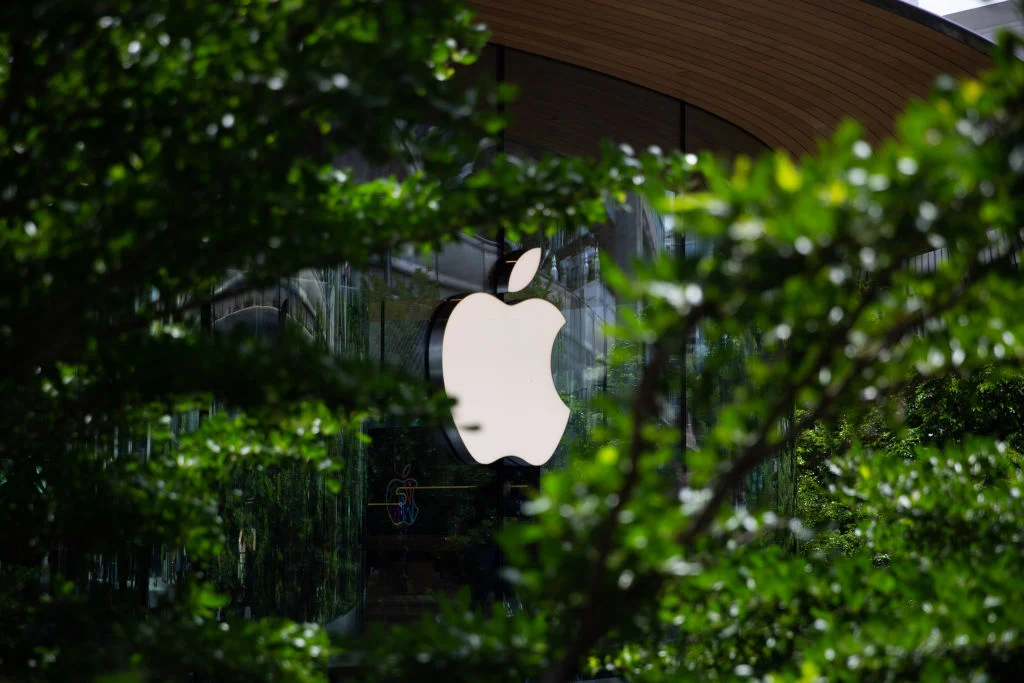
Silicon Valley is currently pouring billions of dollars into the development of autonomous artificial intelligence systems designed to shop on behalf of consumers. Yet, Ron Johnson, the retail visionary who spearheaded the creation of Apple’s iconic brick-and-mortar stores alongside Steve Jobs, remains profoundly unconvinced. As major technology conglomerates race to redefine commerce through automated purchasing protocols, Johnson argues that the tech industry is severely overestimating the extent to which human beings are willing to surrender tactile, experiential purchasing decisions to machines. While he acknowledges that artificial intelligence will undoubtedly streamline product discovery and consumer research, he maintains that physical retail stores are positioned not only to survive but to thrive in an increasingly digitized economy.
The Rise of Agentic Commerce and Silicon Valley’s Big Bet
The skepticism voiced by the 66-year-old retail veteran arrives at a critical juncture for the technology sector. Leading tech giants are aggressively pushing artificial intelligence deeper into the consumer purchasing journey, introducing concepts broadly classified as "agentic commerce." Under this paradigm, autonomous AI agents are engineered to automate end-to-end shopping experiences, seamlessly guiding consumers from initial product discovery to final checkout without requiring human intervention at every step of the transaction.
Prominent industry players are already laying the foundational infrastructure for this shift. Google has introduced the Universal Commerce Protocol, an open standard specifically engineered to facilitate seamless transactions executed by AI agents. Simultaneously, OpenAI has systematically integrated advanced shopping capabilities directly into ChatGPT, transforming the conversational interface into a direct destination where users can research, compare, and execute purchases for various consumer goods without ever navigating away from the chat window.
Despite these technological leaps, Johnson remains fundamentally dismissive of the notion that consumers will universally adopt automated purchasing for high-value or highly personal items. When confronted with the hypothetical scenario of a consumer allowing an algorithm to select and purchase a $1,000 or $2,000 laptop without ever visiting a physical storefront or a manufacturer’s website, Johnson’s response is unequivocal. Purchasing a high-end personal computer, he argues, is an inherently tactile and deeply personal investment. Buyers naturally want to evaluate the physical weight of the device, assess the caliber of the display, and physically test the keyboard ergonomics before committing capital.
While Johnson concedes that advanced algorithms can successfully narrow down a consumer’s options by filtering specifications and pricing, he stresses that artificial intelligence fundamentally lacks the capacity to provide a physical product experience. Rather than replacing the brick-and-mortar trip, Johnson projects that AI agents will simply empower consumers to arrive at physical stores as vastly more informed shoppers.
A Legacy Shaped by Apple and Steve Jobs
Johnson’s steadfast faith in physical retail is rooted in a massive gamble undertaken more than two decades ago. When he joined Apple in 2000, the digital retail landscape was in its infancy, and online shopping was rapidly accelerating, prompting widespread predictions regarding the imminent death of traditional storefronts. Working closely with Apple co-founder Steve Jobs, Johnson helped design a retail network that fundamentally transformed how consumer electronics were marketed, sold, and supported.
The strategic blueprint behind Apple’s physical locations extended far beyond simple product distribution. The stores were deliberately conceived as immersive environments where consumers could interact freely with Macintosh computers and digital devices, receive comprehensive product education, and secure technical support when complications arose.
These historical retail strategies are meticulously re-examined in Johnson’s book, Shop Different: How Retail Revealed Apple’s Genius, co-authored with Zander Nethercutt. In the text and subsequent interviews, Johnson reflects on how competitors rushed to replicate the superficial elements of Apple’s architectural triumphs—adopting expansive glass facades, minimalist open-concept layouts, and even iterative variations of the famous Genius Bar—while frequently missing the crucial human element that drove customer loyalty.
According to Johnson, the foundational secret behind Apple’s unprecedented retail success has consistently centered on store personnel and their interpersonal approach to consumer service. In a significant departure from traditional retail practices where floor staff operate under commission-based compensation structures, Apple structured its retail compensation independently of sales volumes. This strategic choice effectively eliminated high-pressure sales tactics, empowering employees to prioritize diagnosing and addressing the genuine needs of the customer.
A Storied Career: Triumphs, Missteps, and Entrepreneurial Ventures
Johnson’s extensive career in commerce spans multiple high-profile leadership roles, marked by groundbreaking successes as well as notable operational miscalculations. Following his tenure at Apple, Johnson accepted a high-stakes position in June 2011 as the Chief Executive Officer of J.C. Penney, stepping in to spearhead an ambitious, comprehensive turnaround of the legacy department store chain.
His tenure at J.C. Penney, however, proved notoriously turbulent. Attempting to modernize the traditional retailer rapidly, Johnson introduced sweeping structural changes to pricing, branding, and store layouts without securing adequate buy-in from the existing corporate workforce or loyal customer base. Facing a catastrophic plunge in sales and plummeting consumer traffic, Johnson was ousted from the company in April 2013, less than two years after taking the helm.
Reflecting on the episode in hindsight, Johnson acknowledges a fundamental strategic miscalculation regarding organizational psychology and corporate scale. While Apple’s retail division operated organically as an innovative startup that evolved synchronously alongside the company’s hardware offerings, J.C. Penney demanded a measured, deliberate turnaround strategy rather than radical upheaval. In his own words, Johnson attempted to apply a startup mentality to an institutional turnaround transformation.
Demonstrating enduring entrepreneurial resilience, Johnson subsequently pivoted back to the emerging startup ecosystem. In 2019, he founded Enjoy Technology, an innovative e-commerce and logistics startup designed to bring consumer electronics products and professional setup services directly to customers’ residences. Despite initial capital injections and expansion into international markets like the United Kingdom, macroeconomic pressures and operational hurdles ultimately overwhelmed the enterprise. Enjoy Technology filed for Chapter 11 bankruptcy protection in June 2022, subsequently selling the substantial majority of its operational assets to industry service provider Asurion.
Broad Implications for the Future of Retail and Technology
Despite his skepticism regarding the total automation of consumer shopping by algorithms, Johnson maintains an explicitly optimistic outlook on the trajectory of artificial intelligence as an enabling technology. He asserts that Steve Jobs, had he lived to witness the current technological renaissance, would have enthusiastically embraced AI systems, provided they served to augment rather than replace human critical thinking and intuition. Emphasizing a core tenet of the Jobs philosophy, Johnson insists that no amount of computational power can substitute for human intuition and collaborative debate in solving complex structural problems.
As technology developers press forward with agentic commerce protocols and autonomous shopping agents, the retail sector stands at a fascinating crossroads. The friction between digital efficiency and tactile consumer desire will ultimately dictate the evolution of modern commerce. Industry analysts suggest that while automated systems will undoubtedly capture a significant market share in routine, low-involvement purchases—such as household consumables and standardized commodities—high-value, highly personalized retail sectors will continue to rely heavily on experiential storefronts.
Ron Johnson’s enduring thesis suggests that retail real estate is far from obsolete. Instead, the future points toward a symbiotic coexistence where artificial intelligence prepares the modern consumer digitally, while physical stores retain their indispensable role as experiential hubs anchored by human empathy, expertise, and connection.