Johny Marice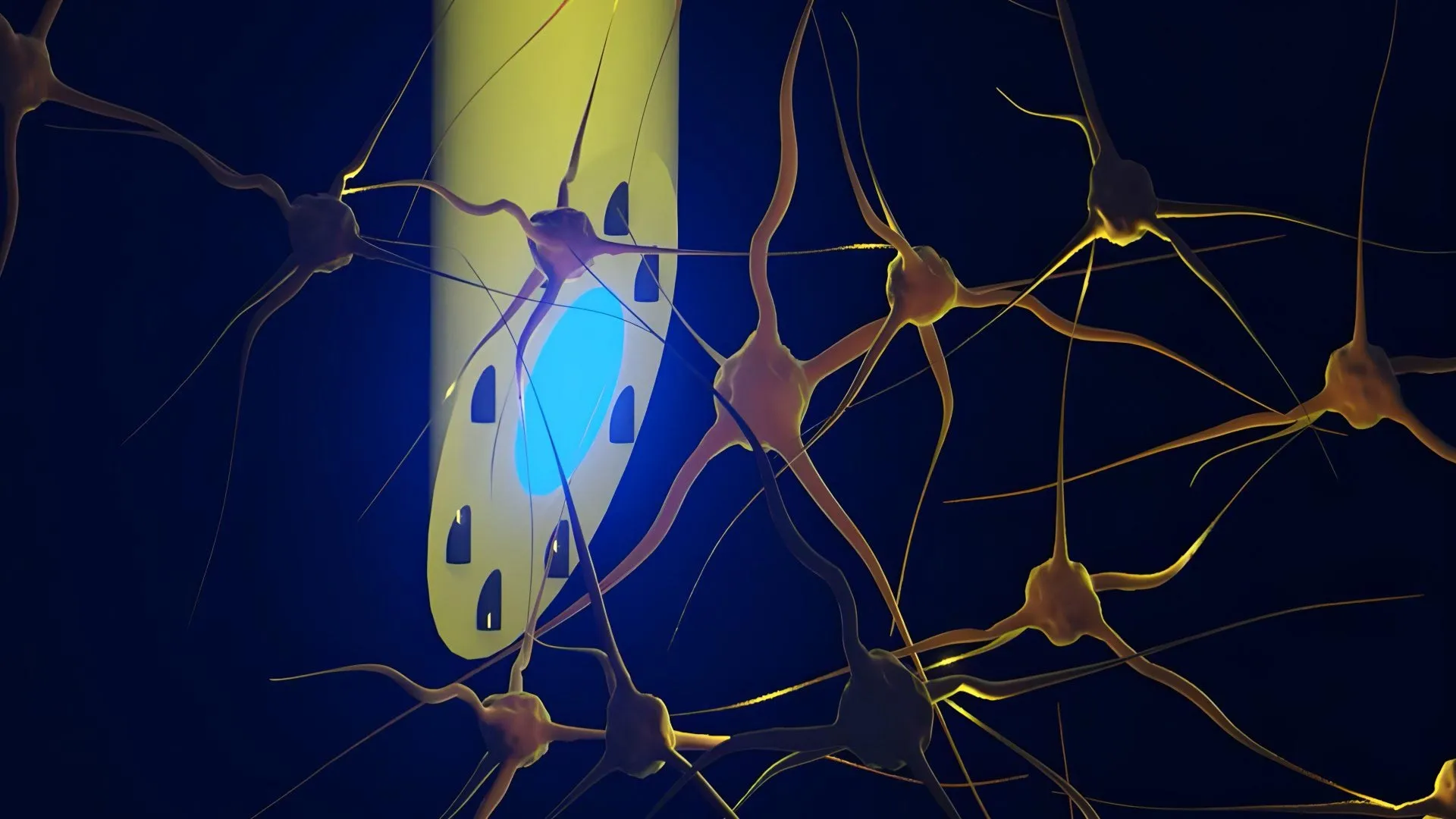
A sophisticated new class of neural interface technology, dubbed the microfluidic Axialtrode (mAxialtrode), has emerged from an international collaboration between the Technical University of Denmark (DTU), the University of Copenhagen, and University College London. Published in the journal Advanced Science, this development represents a significant departure from conventional rigid brain implants. By integrating optical, electrical, and chemical delivery systems into a single, flexible fiber thinner than a human hair, researchers have created a platform capable of unprecedented multi-modal interaction with brain tissue. This innovation holds the potential to transform the treatment landscape for complex neurological disorders, including epilepsy, while offering neuroscientists a high-resolution window into the mechanisms of cognition, memory, and neural signaling.
The Evolution of Neural Interface Technology
The history of neural recording and stimulation is marked by a persistent challenge: the trade-off between the depth of access and the biological damage caused by the physical device. Historically, the field relied on rigid silicon probes or glass-based optical fibers. While these devices provided reliable data, their inherent stiffness relative to the soft, gelatinous nature of brain tissue often triggered a "foreign body response." This biological reaction involves the formation of a glial scar—a barrier of reactive cells that encapsulates the implant, effectively isolating it from the healthy neurons it is intended to study or influence.
The development of the mAxialtrode follows years of refinement in material science and micro-manufacturing. The process begins with a macroscopic polymer rod, which is heated and drawn into an ultra-thin fiber, a technique borrowed from the telecommunications industry but adapted for biological compatibility. The resulting structure, measuring less than 0.5 millimeters in diameter, is remarkably flexible. By mimicking the mechanical compliance of the brain itself, the mAxialtrode minimizes tissue displacement and inflammatory responses, allowing for longer-term, more stable recording sessions.
Technical Composition and Functional Versatility
The ingenuity of the mAxialtrode lies in its internal architecture. Running through the center of the fiber is an optical core capable of conducting light, essential for optogenetic stimulation—a technique where genetically modified neurons are activated or inhibited by specific wavelengths of light. Surrounding this core are eight distinct microfluidic channels. These channels serve a dual purpose: they can transport pharmacological agents directly to targeted brain regions or house micro-thin metal wires that record electrical activity.
This multi-functional design allows the device to overcome the "distal tip" limitation found in traditional optical fibers. In conventional setups, light is emitted only from the "nose" of the fiber, meaning researchers are limited to a single point of interaction. The mAxialtrode, however, provides multiple functional points along its longitudinal axis. This allows for the simultaneous monitoring of disparate brain regions—such as the cerebral cortex and the hippocampus—through a single, minimally invasive entry point.
Chronology of In Vivo Validation
The journey from conceptual design to functional prototype has been rigorous. The research team, led by Postdoc Kunyang Sui and Associate Professor Christos Markos, collaborated with neurophysiology experts Associate Professor Rune W. Berg and Associate Professor Rob C. Wykes to ensure the device met the stringent requirements of biological research.
- Phase I (Conceptualization): Development of the polymer-based fabrication method, focusing on maintaining channel integrity during the fiber-drawing process.
- Phase II (Bench Testing): Verification of electrical conductivity and fluid delivery rates under controlled laboratory conditions to ensure the channels remained unobstructed.
- Phase III (In Vivo Trials): Implementation in living mice to assess biological compatibility and performance. The device was successfully used to deliver drugs, stimulate neurons with blue and red light, and record electrical potential across varying depths—some spanning up to three millimeters apart.
- Phase IV (Validation): Analysis of the neural data confirmed that the device could capture complex signaling patterns without causing significant behavioral discomfort or observable distress to the animal models.
Clinical Implications for Epilepsy and Beyond
The potential for clinical application is perhaps the most compelling aspect of this research. Epilepsy, a condition affecting approximately 50 million people worldwide according to the World Health Organization, is often treated with systemic medications that can cause significant side effects due to their broad distribution throughout the body.
The mAxialtrode offers a pathway toward "closed-loop" localized therapy. In a theoretical clinical scenario, the device could monitor for the electrical signatures of an impending seizure. Upon detection, it could trigger a precise, localized release of an anti-epileptic drug, or provide targeted electrical stimulation to abort the seizure before it spreads to the rest of the brain. Because the device is biocompatible and multi-modal, this approach could theoretically provide years of treatment with fewer systemic side effects than traditional oral medications.
Beyond epilepsy, the ability to manipulate and monitor neural circuits with such precision holds implications for neurodegenerative diseases like Parkinson’s, where deep brain stimulation (DBS) is a standard but currently blunt instrument. By refining the spatial resolution of stimulation, the mAxialtrode could allow for more nuanced treatments that preserve cognitive function while managing motor symptoms.
Challenges and Future Trajectory
Despite the success of the initial trials, the transition from laboratory tool to clinical medical device is a multi-year endeavor. As noted by the development team, the mAxialtrode currently exists in a research-first environment. Moving toward human trials requires a complex regulatory pathway, involving extensive safety testing, biocompatibility certification, and the miniaturization of the external peripheral equipment—such as the fluid pumps and light sources—to ensure they are practical for patient use.
Furthermore, the longevity of the device remains a focus of ongoing study. While the mAxialtrode is designed to be less inflammatory than silicon, the long-term stability of the microfluidic channels within a biological environment must be proven. Researchers are currently working on patenting the technology and assessing the logistical requirements for clinical manufacturing.
Expert Perspective and Scientific Impact
The collaboration between DTU and institutions like University College London highlights a growing trend in interdisciplinary neuroscience. By combining expertise in fiber optics, material engineering, and neural circuitry, the team has bypassed the limitations of single-discipline innovation.
The reaction from the broader scientific community has been one of cautious optimism. The ability to perform complex, multi-point neural modulation with a single, minimally invasive probe could accelerate the pace of neuroscience research. If the technology proves scalable, it could replace a plethora of bulky, rigid probes, thereby reducing the "noise" in data collection and allowing for more accurate mapping of the human brain’s complex communication networks.
As the research team prepares for the next phase of development, the mAxialtrode stands as a testament to the power of miniaturization. By rethinking the physical interface between technology and biology, the researchers have not only provided a new tool for today’s scientists but have also laid the groundwork for a future where neurological conditions are managed with the precision and grace of a localized, high-tech intervention. While the road to the clinic remains long, the technical success achieved in this study marks a significant milestone in the ongoing quest to decipher—and heal—the human brain.