Jono Maryono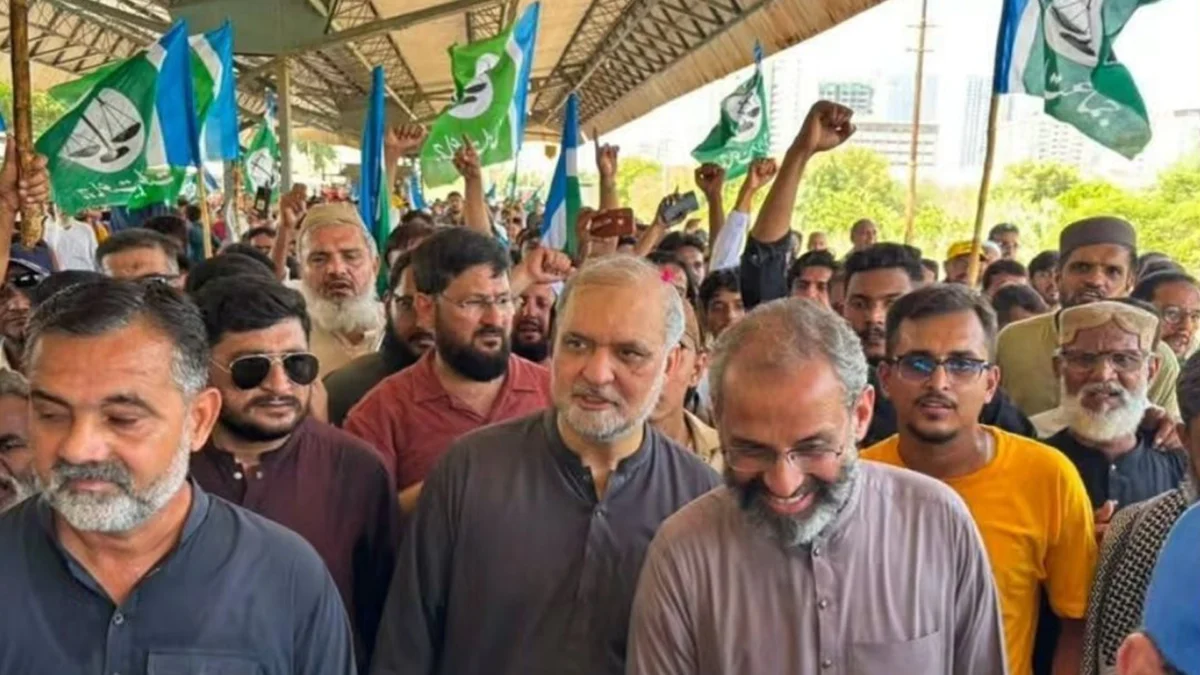
ISLAMABAD — Pakistan’s political landscape entered a volatile new phase on Monday as the Jamaat-e-Islami (JI), one of the country’s most organized religious-political parties, officially launched a sweeping protest march toward the federal capital of Islamabad. The demonstrations, spearheaded by top party leadership, are directly aimed at compelling the coalition government to immediately rescind soaring petroleum levies, slash skyrocketing electricity tariffs, and provide substantial economic relief to a citizenry buckling under persistent inflation.
The march comes at a precarious juncture for the federal administration in Islamabad. Security forces have drastically ramped up their posture, sealing key entry and exit points of the capital with shipping containers, barbed wire, and heavy contingents of anti-riot police. The heightened state of alert is further compounded by overlapping political pressures, notably the impending agitation announced by the Pakistan Tehreek-e-Insaf (PTI), which continues to demand the release of incarcerated former Prime Minister Imran Khan. With multiple opposition factions mobilizing parallel campaigns against the state, authorities find themselves navigating a complex multi-front security and political crisis.
Background Context and Economic Grievances
The genesis of the current protest lies in a prolonged macroeconomic crisis that has gripped Pakistan for years, characterized by a depreciating national currency, dwindling foreign exchange reserves, and stringent structural adjustment programs mandated by international financial institutions such as the International Monetary Fund (IMF).
In recent months, ordinary Pakistanis have experienced an unrelenting escalation in the cost of living. Global commodity fluctuations, coupled with domestic taxation policies required to meet IMF revenue targets, have pushed essential goods, utility bills, and transportation costs to historic highs. Fuel prices, in particular, serve as a critical inflationary trigger in Pakistan, directly impacting the cost of food production, public transit, and freight logistics.
Jamaat-e-Islami, leveraging its grassroots organizational strength and traditional base among the urban middle class, small business owners, and daily wage earners, has positioned itself as the primary champion of the economically disenfranchised. Party emir and central leadership argue that the state’s fiscal consolidation measures disproportionately burden the working class while shielding elite segments of society from taxation. By targeting the petroleum levy—a tax instrument frequently utilized by Islamabad to generate quick domestic revenue—the JI aims to strike at what it characterizes as predatory state extortion.
Chronology of the Mobilization
The escalation leading to the current march unfolded over several weeks through a carefully orchestrated series of political maneuvers and ultimatum deadlines:
- Early August: Jamaat-e-Islami organizes localized sit-ins and rallies in major urban centers, including Lahore, Karachi, and Peshawar, demanding relief from inflated electricity bills and high fuel surcharges.
- Late August: JI leadership issues a formal 15-day ultimatum to the federal government, warning of a nationwide march toward Islamabad if petroleum levies are not rolled back and utility rates are not rationalized.
- Mid-September: Negotiations between government emissaries and JI representatives stall after the administration insists that fiscal adjustments are non-negotiable under current IMF stabilization agreements.
- September 20: JI finalizes routes, security protocols, and logistical support networks for caravans departing from various provincial capitals toward the federal capital territory.
- September 21: The formal protest march commences, with thousands of supporters converging on major arterial highways, prompting immediate government counter-measures and widespread security lockdowns in Islamabad and Rawalpindi.
Supporting Data and Economic Indicators
To fully understand the gravity of the public mobilization, analysts point to a confluence of hard economic data illustrating the depth of Pakistan’s cost-of-living crisis:
- Inflation Trajectory: While headline inflation receded slightly from its peak of nearly 38% recorded in mid-2023, core inflation and the cumulative price index for perishable food items and energy remain punishingly high for households earning median incomes.
- Petroleum Levies: Under ongoing fiscal agreements, the government has incrementally raised the petroleum development levy to its maximum allowable statutory limits to shore up federal revenues, pushing the retail price of both high-speed diesel and motor spirit beyond historical thresholds.
- Utility Tariffs: Electricity base tariffs have seen successive quarterly and annual adjustments, driven by circular debt accumulation in the power sector, capacity payments to independent power producers (IPPs), and the devaluation of the Pakistani rupee against the U.S. dollar.
- Public Debt Burden: Pakistan’s total public and external debt continues to consume a staggering proportion of federal tax revenues, leaving negligible fiscal space for targeted subsidies or developmental spending aimed at poverty alleviation.
Official Responses and Security Measures
The federal government has adopted a two-pronged strategy of defensive security fortification paired with appeals for economic pragmatism. Senior cabinet ministers have repeatedly emphasized that the administration’s hands are tied by binding commitments made to international lenders. According to government spokespersons, unilaterally dismantling the petroleum levy or offering sweeping energy subsidies without alternative revenue offsets would immediately derail the IMF program, risking a sovereign default and catastrophic economic collapse.
In a televised press briefing following the announcement of the JI march, a senior interior ministry official stated that while the right to peaceful assembly is constitutionally guaranteed, the state holds a primary responsibility to maintain public order, protect critical infrastructure, and ensure the uninterrupted flow of commerce.
“The government is acutely aware of the economic hardships faced by our citizens, and we are actively deploying targeted social safety nets, such as the Benazir Income Support Programme and subsidized utility packages, to protect the most vulnerable,” the official noted. “However, blockading the capital and disrupting national stability through aggressive street agitation will not generate revenue or lower global oil prices. We urge leadership across the political spectrum to engage in parliamentary dialogue rather than confrontational politics.”
Concurrently, the security apparatus in Islamabad and Rawalpindi has enacted stringent emergency protocols. Section 144, which bans unauthorized public gatherings and processions, has been strictly enforced across the capital territory. Major highways connecting Punjab and Khyber Pakhtunkhwa to Islamabad have experienced significant disruptions as paramilitary forces, including the Pakistan Rangers and the Frontier Corps, augment local police units to secure diplomatic enclaves and sensitive government installations.
Broader Impact and Implications
The convergence of the Jamaat-e-Islami march with broader political friction highlights the fragile nature of Pakistan’s current political equilibrium. Several key implications emerge from the ongoing confrontation:
Strain on State-Society Relations
The widening chasm between public economic distress and state-mandated fiscal austerity threatens to erode public trust in democratic institutions. When political opposition parties channel widespread economic grievances into sustained street protests, the risk of civil unrest escalates significantly, potentially leading to clashes between demonstrators and law enforcement agencies.
Policy Dilemmas for Economic Managers
The government faces an unenviable policy dilemma. Yielding to populist demands by cutting fuel levies or energy tariffs could appease protesters in the short term but would almost certainly breach performance criteria agreed upon with the IMF. Conversely, maintaining a hardline fiscal stance risks intensifying political instability, deterring foreign investment, and compounding social unrest.
Inter-Party Dynamics and the PTI Factor
The simultaneous presence of the JI protest and the anticipated mobilization by the Pakistan Tehreek-e-Islami creates a compounding challenge for the administration. While JI operates on a distinct ideological and organizational platform focused primarily on socioeconomic grievances, the broader anti-government sentiment catalyzed by these protests creates an environment of synchronized pressure. Observers note that while formal alliances between JI and PTI remain fluid, the overlapping timing of their campaigns amplifies the overall disruptive impact on the federal government.
As the Jamaat-e-Islami caravans press forward toward their destination, the coming days will prove critical in determining whether a compromise can be brokered through backchannel negotiations or if the capital will face prolonged gridlock and confrontation. For millions of Pakistanis watching from the sidelines, the unfolding events represent yet another tense chapter in a protracted struggle between macroeconomic survival and the immediate pressures of daily existence.