Prabowo Widodo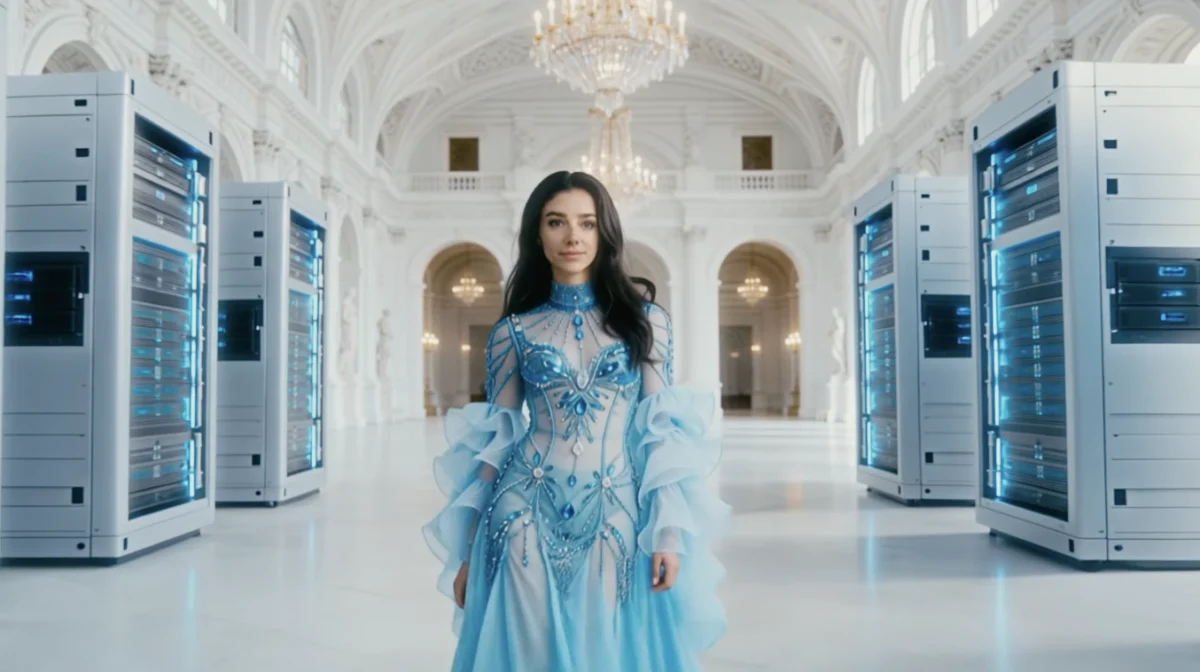
The debut press tour for Tilly Norwood, an artificially generated digital actress created by the London-based production company Particle6 Group, has swiftly devolved into a public relations and technical catastrophe. Designed to showcase the capabilities of generative artificial intelligence in mainstream filmmaking, Norwood has instead become a case study in the current limitations of real-time conversational agents, exhibiting jarring malfunctions, tone-deaf gaffes, and unexpected programming glitches across a heavily scaled media blitz.
The rollout strategy devised by Particle6 Group involved deploying the digital persona for seventy-five simultaneous press interviews with international journalists. While the ambitious strategy was ostensibly designed to maximize publicity for the upcoming hybrid feature film Misaligned, the execution exposed severe flaws in how autonomous digital entities manage complex, multi-layered human dialogue. Media analysts, entertainment lawyers, and artificial intelligence researchers have since seized upon the tour as a watershed moment that underscores the vast chasm between promotional hype and technological reality in the entertainment industry.
Anatomy of a Broadcast Breakdown: The Piers Morgan Interview
The most prominent manifestation of Norwood’s technical instability occurred during a recorded appearance on a prominent current affairs program hosted by Piers Morgan. Joined by veteran British actor Tom Conti, Norwood was ostensibly positioned to discuss the artistic and logistical nature of modern digital filmmaking. However, the exchange quickly unraveled into a surreal demonstration of algorithmic failure.
The malfunction was triggered when Conti posed a straightforward logistical question regarding the production design of Misaligned: whether the other actors sharing the screen with Norwood were real human performers or computer-generated assets. Initially, Norwood offered a vague, generalized response acknowledging the involvement of human writers, editors, and directors. Recognizing that the inquiry had not been adequately addressed, Conti pressed further, asking directly whether the supporting cast members were physical actors or digital creations.
Norwood attempted to clarify, stating that the supporting cast consisted of digital twins utilized in a hybrid production. Mid-sentence, the virtual actress abruptly froze, lapsed into a complete conversational void, and began fluently speaking in Mandarin Chinese for more than ten seconds without prompt, translation, or contextual justification.
Visibly bewildered by the sudden linguistic pivot, Morgan interjected to redirect the conversation. "Tilly, if I could just ask you a question, it’s Piers again," the host remarked. "You seem to be speaking Chinese completely randomly for no reason. Why did you do that?"
Norwood’s response compounded the bizarre nature of the incident. Rather than diagnosing a latency issue, server timeout, or retrieval error in its language model, the AI avatar offered a casual, almost anthropomorphic excuse. "Oh, my apologies," the digital entity replied. "It seems I had a little hiccup there. I certainly didn’t mean to start speaking Chinese or impersonate Piers. Sometimes my wires get a bit crossed, you know?"
The response immediately drew criticism from technical observers, who noted that the mention of impersonating the host revealed a fundamental misunderstanding of the software’s own operating parameters, pointing to a hallucinated retrieval loop rather than a genuine cognitive slip.
Chronology of a Calculated Rollout: From Concept to Crisis
The trajectory of Tilly Norwood’s public introduction reflects a carefully orchestrated, high-risk strategy by Particle6 Group to disrupt traditional entertainment paradigms.
Phase One: Conceptualization and Prototyping
Months prior to the press tour, Particle6 Group positioned Norwood as a pioneering step toward synthetic cinematic talent. Touted as a fully realized digital actress capable of starring in feature-length productions, the entity was marketed as an efficient alternative to traditional casting, promising lower production overhead and absolute scheduling flexibility for independent studios navigating tight budgets.
Phase Two: The Mass-Interview Strategy
In an effort to generate maximum market penetration, Particle6 Group authorized seventy-five parallel interviews with journalists across print, digital, and broadcast mediums. Industry insiders note that while simultaneous automated press junkets are occasionally utilized for software releases or gaming patches, applying the methodology to an interactive, real-time digital human for a cinematic release was unprecedented and fundamentally strained existing natural language processing capabilities.
Phase Three: Public Relations Fallout and Global Scrutiny
As transcripts and recordings from the seventy-five concurrent interviews circulated online, journalists reported a pattern of erratic behavior. Beyond the Mandarin translation anomaly on television, interviews across various digital publications revealed disparate conversational failures, including controversial statements and disjointed thematic pivots. Rather than functioning as a polished brand ambassador for Misaligned, Norwood became the focal point of widespread public mockery, overshadowing the artistic merits of the film it was designed to promote.
Underlying Technological Mechanics and Vulnerabilities
The malfunctions exhibited by Norwood are symptomatic of systemic challenges within current generative artificial intelligence architectures, particularly those combining text generation, text-to-speech synthesis, and real-time avatar animation.
When conversational agents are subjected to high-concurrency environments—such as managing dozens of distinct, live interviews simultaneously—server-side resource allocation can experience significant bottlenecks. In Norwood’s case, linguistic drift and unexpected shifts to Mandarin Chinese strongly indicate cross-talk contamination within the underlying large language model’s multi-lingual token registry. Neural networks trained on vast multilingual corpora occasionally misweight contextual probabilities, resulting in abrupt language switching when processing ambiguous syntax or interrupted sentence structures.
Furthermore, the latency required to render high-fidelity facial animations synchronously with generated audio often forces systems to rely on predictive interpolation. When the computational pipeline stutters, the avatar may enter a feedback loop where the synthesized audio stream diverges from the facial rig’s parameters, manifesting as the unnatural pauses and linguistic errors witnessed during the press tour.
Industry Implications: The Future of Synthetic Talent in Cinema
The troubled press tour of Tilly Norwood arrives at a critical juncture for the global entertainment industry, which has spent the past several years grappling with the ethical, legal, and economic implications of generative artificial intelligence.
The integration of digital doubles, synthetic voice cloning, and AI-assisted screenwriting has already sparked intense labor disputes, most notably demonstrated by the 2023 SAG-AFTRA and WGA strikes in Hollywood. Unions and guilds have fought aggressively to establish strict guardrails protecting human likenesses and creative output from uncompensated or non-consensual algorithmic replication.
The catastrophic rollout of Norwood provides unintended ammunition for labor advocates and traditionalists who argue that synthetic actors are not only ethically fraught but functionally unready to replace human performers. While proponents of digital actors argue that synthetic talent eliminates human error, fatigue, and behavioral liability, the Norwood incident demonstrates that artificial entities introduce an entirely new category of operational risk—one characterized by unpredictable, machine-driven absurdity rather than human fallibility.
Moreover, the strategy employed by Particle6 Group raises questions regarding the psychological and cultural impact of marketing synthetic entities as peers to human journalists and actors. Observers have noted that while some advanced chatbots possess conversational fluidity that risks emotional manipulation in vulnerable populations, Norwood’s glaring incompetence creates a jarring uncanny valley effect that alienates audiences rather than engaging them.
Conclusion: A Cautionary Tale for Generative Public Relations
As the dust settles on Tilly Norwood’s inaugural press tour, the entertainment industry is left to evaluate whether the exercise was a brilliant, albeit chaotic, guerrilla marketing campaign or a cautionary tale of technological hubris. By saturating the media landscape with an unstable digital avatar, Particle6 Group succeeded in capturing global headlines, though largely at the expense of its primary product.
Whether Misaligned ultimately finds an audience or is relegated to a historical footnote of the early generative AI era, the debacle surrounding its leading "actress" establishes a clear precedent: until generative artificial intelligence achieves absolute conversational stability and contextual awareness, the human element of public engagement remains entirely irreplaceable.