Ferry Irwandi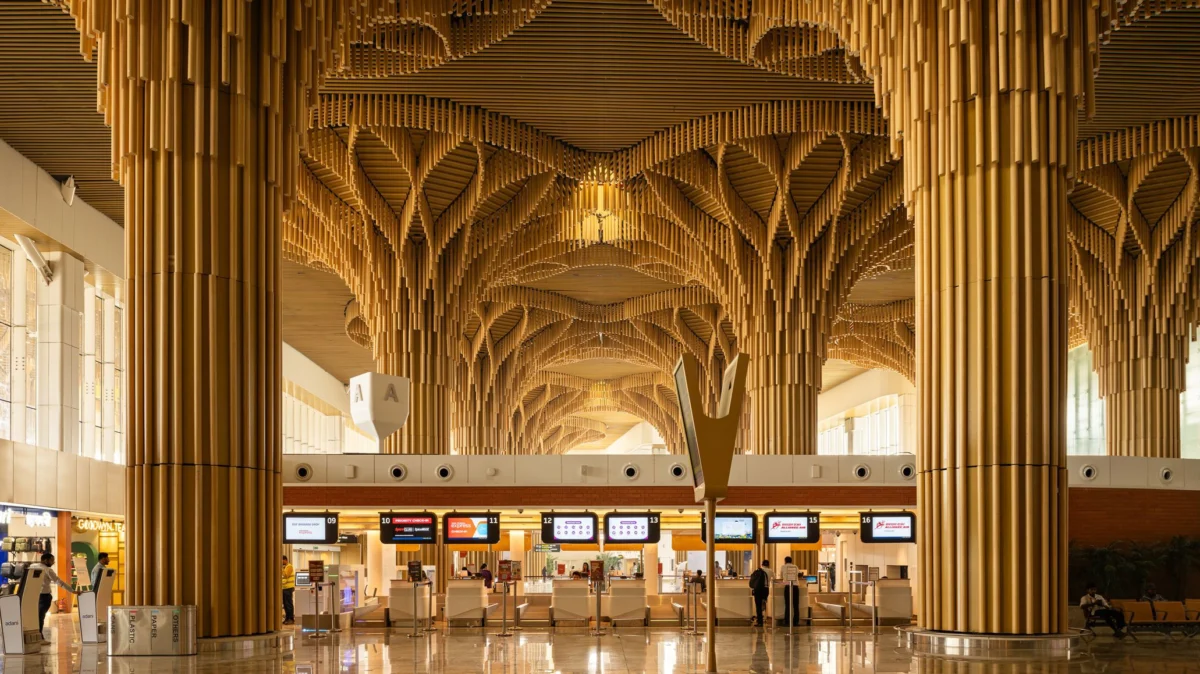
The global landscape of aviation infrastructure is undergoing a profound transformation, moving away from utilitarian "non-places" toward becoming cultural landmarks and destinations in their own right. This evolution was formally recognized on Monday, June 15, in Paris, as the Prix Versailles announced its 2026 World’s Most Beautiful Airports List. Seven airports and terminals across China, Germany, India, Cambodia, and the United States were selected for their exceptional contemporary design, environmental integration, and ability to foster a "sense of place." The annual Prix Versailles, established in 2014 and associated with UNESCO, serves as a premier global award for architecture and design, highlighting projects that successfully harmonize aesthetic beauty with functional efficiency.
The 2026 selection emphasizes a shift in the philosophy of transit. According to the Prix Versailles Secretariat, these winners demonstrate that airports are no longer merely transfer points for high-volume travel; they are becoming "innovative, inescapable hallmarks of their regions." This year’s list features Guangzhou Baiyun International Airport (Terminal 3), Frankfurt Airport (Terminal 3), Lokapriya Gopinath Bardoloi International Airport (Terminal 2) in Guwahati, Navi Mumbai International Airport (Terminal 1), Techo International Airport in Cambodia, Pittsburgh International Airport, and San Diego International Airport (Terminal 1). Later this year, three of these projects will be further honored with world titles for interior and exterior design excellence.

Redefining the Gateway: The 2026 Prix Versailles Selection
The selection process for the Prix Versailles involves an evaluation of multiple criteria, including ecological sustainability, social interaction, and the reflection of local heritage. The 2026 list highlights a diverse array of architectural approaches, ranging from the organic, flower-inspired forms of East Asian hubs to the rugged, landscape-integrated designs of North American terminals.
In China, the Guangzhou Baiyun International Airport Terminal 3 represents the pinnacle of "Lingnan" architectural tradition. Designed by Artelia in collaboration with the Guangdong Architectural Design and Research Institute, the terminal is a monumental structure that integrates clouds, water, and blossoms into its geometry. Guangzhou, long celebrated as China’s "City of Flowers," is reflected in the terminal’s sequence of curves and light-filled atriums. Beyond its aesthetic appeal, the facility features the highest open-air public observation deck in any Chinese airport, a feature designed to reconnect passengers with the act of flight.
In India, two projects made the prestigious list, highlighting the country’s massive investment in aviation infrastructure. The Lokapriya Gopinath Bardoloi International Airport in Guwahati utilizes a "sky forest" concept. Architect Nuru Karim drew inspiration from the bamboo orchid and the regional topography of the Brahmaputra River. The interior functions as an informal gallery for Indigenous art and local craft, effectively turning a transit space into a cultural repository for Northeast India. Meanwhile, the Navi Mumbai International Airport Terminal 1, a project by Zaha Hadid Architects, is characterized by a massive canopy resembling a blooming lotus flower. This terminal, which opened in 2025, required significant engineering feats, including the reclamation of marshland and the redirection of rivers, symbolizing India’s modernization and its reverence for traditional symbols.
.jpg)
European and American Perspectives: Urbanism and Landscape
While Asian projects often focus on monumental scale and cultural symbolism, the European and American selections emphasize modularity, passenger orientation, and environmental harmony. Frankfurt Airport’s Terminal 3, designed by architect Christoph Mäckler, is organized around the concept of "neighborhood squares." By creating spaces that resemble plazas and streets, the design mitigates the stress often associated with Europe’s largest infrastructure projects. The terminal’s modular nature ensures it can adapt to future technological shifts and fluctuating passenger volumes, a critical factor in long-term economic viability.
In the United States, the focus has shifted toward integrating the terminal into the local geography. Pittsburgh International Airport’s new roofline mimics the rolling Allegheny Mountains. Designed by Gensler and HDR, the terminal features 38 steel columns that branch out like trees, creating a man-made forest. This design is not merely for show; it is intended to shorten walking distances and improve the overall passenger flow, addressing a common complaint in American aviation design.
Similarly, San Diego International Airport’s Terminal 1 utilizes an 800-foot-long curved glass facade to capture the city’s abundant natural light. Developed by Gensler and James Carpenter, the design includes a structural system that minimizes the number of columns in the ticketing hall, creating an airy, open environment reminiscent of a waterfront promenade. This project is notable for its environmental impact, successfully reducing the building’s carbon footprint by 30% through innovative materials and lighting strategies.

Chronology of the Prix Versailles and the Selection Process
The announcement of the 2026 list follows a rigorous year-long selection process. The Prix Versailles was founded to promote a better interaction between the economy and culture. Since its inception, the awards have expanded from commercial architecture (shops and malls) to include hotels, restaurants, and eventually, major infrastructure projects like airports and train stations.
- Nomination Phase: Architectural firms and airport authorities submit projects completed or nearing completion that demonstrate a high degree of "architectural intelligence."
- Shortlisting: A committee of experts evaluates hundreds of entries based on criteria including innovation, creativity, reflection of local heritage, and ecological efficiency.
- The World Selection: The final seven airports are chosen by a world jury, which includes renowned architects, designers, and cultural figures.
- Final Awards: Following the announcement of the "Most Beautiful" list, the Prix Versailles holds a formal ceremony at UNESCO headquarters in Paris to award specific titles for "Interior" and "Exterior" design.
The 2026 list is particularly significant as it reflects the first generation of airports designed entirely in the post-pandemic era, where health, air circulation, and outdoor access have become as important as security and retail capacity.
Supporting Data: The Economic and Environmental Stakes
The investment in these "beautiful" airports is backed by significant economic data. Global air passenger traffic is expected to double by 2040, according to the Airports Council International (ACI). In response, nations are investing billions into "Aerotropolises"—airport-centric cities where the terminal serves as the commercial and cultural core.

- Financial Investment: The San Diego Terminal 1 project represents a $3.4 billion investment, while the Navi Mumbai International Airport is part of a larger $2 billion infrastructure development plan.
- Sustainability Metrics: The 2026 winners emphasize green building standards. For instance, Cambodia’s Techo International Airport, designed by Foster + Partners, uses a "basketry" inspired roof that filters natural light to reduce energy consumption for artificial lighting and mechanical ventilation by an estimated 20-25%.
- Operational Efficiency: Despite their artistic designs, these terminals are built for high volume. Guangzhou’s Terminal 3 is part of an expansion aimed at handling 120 million passengers annually, making it one of the most operationally complex buildings in the world.
Official Responses and Philosophical Implications
Jérôme Gouadain, Secretary General of the Prix Versailles, emphasized during the announcement that the selected airports resolve the "apparent conflict between the increasing frequency of travel and the need for speed." He noted that contemporary tourism now values a person’s time, and the airport can no longer be dismissed as a "mere transfer space."
Architectural firms involved in the winning projects have echoed this sentiment. Statements from firms like Foster + Partners and Zaha Hadid Architects suggest that the goal is to create a "seamless transition" between the city and the sky. By using local flora—such as the Rumduol tree in Cambodia or the bamboo in Guwahati—architects are attempting to ground the high-tech reality of aviation in the organic reality of the local environment.
Industry analysts suggest that the aesthetic quality of an airport has a direct impact on regional branding. A "beautiful" airport acts as a powerful marketing tool for tourism and international investment. When a traveler steps off a plane in Navi Mumbai or Frankfurt, the architecture provides an immediate, visceral introduction to the region’s economic ambition and cultural identity.

Broader Impact: The Future of Transit Architecture
The recognition of these seven airports marks a turning point in the history of civil engineering. As the world moves toward 2030, the trend in airport design is clearly leaning toward the "biophilic"—bringing nature indoors to reduce passenger anxiety and improve air quality. The use of outdoor terraces in Pittsburgh and San Diego, and the "sky forest" in Guwahati, are indicative of a future where passengers are no longer trapped in windowless, pressurized boxes.
Furthermore, the emphasis on modularity (as seen in Frankfurt) and carbon reduction (as seen in San Diego) reflects an industry-wide commitment to longevity. As aviation faces increasing scrutiny over its environmental impact, the Prix Versailles winners serve as case studies for how massive infrastructure can be both beautiful and responsible. These airports are becoming emblems of social and cultural dynamics, unifying the societies of tomorrow by turning the "stress of travel" into an "experience of place." The 2026 list serves as a definitive guide for the next decade of global infrastructure development, proving that the sky is no longer the limit for architectural imagination.