Layla Zulfa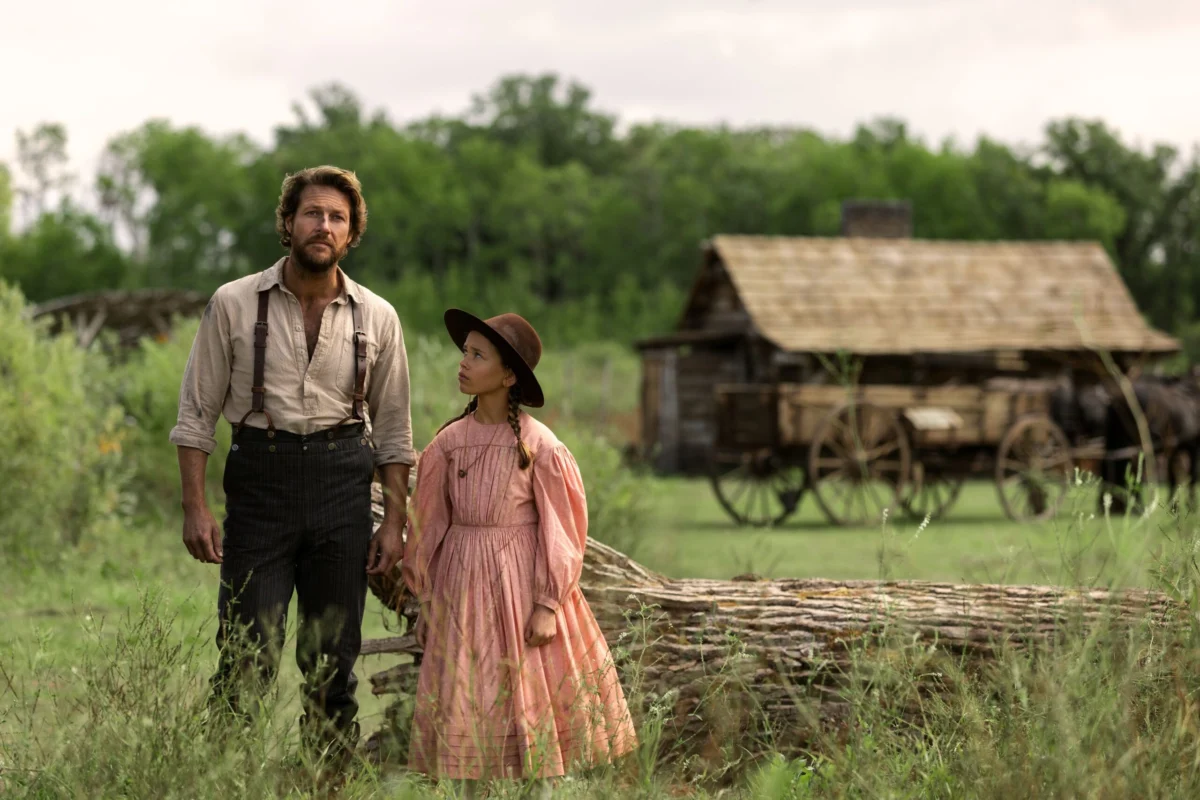
The sprawling vistas and turbulent river crossings that define the opening chapters of Netflix’s new adaptation of Little House on the Prairie may evoke the rugged American Midwest of the late 19th century, but the production found its home significantly further north. While the narrative follows the Ingalls family’s arduous journey from the forests of Wisconsin to the sun-drenched plains of Independence, Kansas, the series was filmed entirely within the Canadian province of Manitoba, utilizing the diverse topography surrounding its capital, Winnipeg. This transition from the historical American frontier to the "Hollywood North" of Canada marks a significant shift in the production strategy for the franchise, which has historically been synonymous with California-based filming locations.
The reboot, based on the classic children’s novels by Laura Ingalls Wilder, arrives decades after the iconic 1970s television series starring Michael Landon. However, showrunner Rebecca Sonnenshine and her creative team have sought to distance this iteration from its predecessor by leaning into a grittier, more historically rigorous aesthetic. This commitment to realism extended to the physical environment, where the production had to contend with the volatile climate of the Canadian prairies. According to Sonnenshine, the production faced initial delays due to Manitoba’s notoriously harsh winters, which presented challenges for a story that relies heavily on the cycles of the seasons and the vulnerability of settlers to the elements.
A New Frontier in Manitoba: Logistics and Locations
The decision to film in Manitoba was driven by a combination of geographic suitability and the province’s robust film infrastructure. Unlike the 1970s NBC series, which was largely shot at Big Sky Ranch in Simi Valley, California—where the arid hills often stood in for the lush Midwest—the Netflix production sought a landscape that could more accurately reflect the "vastness of the prairie."
Winnipeg and its surrounding rural municipalities provided the necessary scale. The production utilized large tracts of undeveloped land to recreate the sense of isolation inherent in Wilder’s writing. Production designer Jonah Markowitz emphasized that the goal was to capture both the macro-scale of the horizon and the micro-scale of the homestead. This required the construction of a massive, fully realized town set for Independence, Kansas, which included 29 standing buildings. Unlike temporary facades often used in television, these structures were designed to be immersive, allowing cameras to move seamlessly from exterior to interior shots.
The economic impact of the production on the region has been substantial. Manitoba offers competitive tax credits for film and television production, ranging from 45% to 65% on eligible labor, which has increasingly attracted high-budget streaming projects. The presence of Little House on the Prairie has provided consistent employment for local crews, blacksmiths, and artisans, many of whom were tasked with recreating 19th-century technology.

Historical Accuracy and the Inclusion of the Osage Nation
One of the most significant departures from previous adaptations is the reboot’s focus on the Indigenous peoples who occupied the lands the Ingalls family settled upon. The narrative of the "frontier" has often been criticized for erasing the presence of Native American tribes, but the Netflix series makes a concerted effort to address this historical reality.
The creative team worked closely with Robert Warrior, a prominent Osage scholar and consultant, to ensure an accurate representation of the Osage families living in Kansas during the 1870s. This collaboration led to the development of the characters William Mitchell and his wife, White Sun. According to Markowitz, these characters were inspired by the records of 19 Osage families who were present in the region at the time of the white settlers’ arrival.
The production design reflects this cultural intersection. The Mitchell home, for instance, features a blend of European and Osage influences, signaling a departure from the "empty wilderness" trope. This focus on historical nuance extends to the casting and dialogue, aiming to provide a more holistic view of the American West—one that acknowledges the displacement of Indigenous populations as a central component of the pioneer story.
The Engineering of Authenticity: Building the Ingalls Homestead
A centerpiece of the production is the Ingalls family’s log cabin, a structure that became a character in its own right in Wilder’s books. To recreate the "Little House," the production team eschewed modern construction shortcuts. The cabin was built using approximately 96,000 pounds of timber, sourced to match the species of wood available to settlers in the 1800s.
In a move toward extreme authenticity, set decorator James V. Kent and the construction crew utilized period-accurate techniques. Instead of industrial nails, the cabin was assembled using wooden pegs. A local blacksmith was commissioned to forge custom iron hooks and hardware, which were hammered directly into the logs.
"We paid particular attention to historic accuracy and detail," Kent noted during a production briefing. "The goal was to make the audience feel the weight and the texture of the world. When you see Charles Ingalls (played by Luke Bracey) or John Edwards (Warren Christie) working on the cabin, they are interacting with materials that behave exactly as they would have in 1870."

This tactile approach extends to the props and interior dressings. Kent sourced authentic American antiques from the era, ensuring that every spinning wheel, cast-iron pot, and hand-woven blanket carried the patina of history. The production’s commitment to "sensory storytelling" is intended to resonate with long-time fans of the books while providing a high-fidelity experience for new viewers.
Casting and Character Dynamics
The new ensemble brings a fresh perspective to the beloved characters. Alice Halsey takes on the role of Laura Ingalls, the observant and spirited narrator, while Skywalker Hughes portrays her older sister, Mary. The parents, Caroline and Charles "Pa" Ingalls, are played by Crosby Fitzgerald and Luke Bracey, respectively.
The chemistry between the actors was tested early in the filming process, particularly during the aforementioned river-crossing sequence. Filmed in the moving waters of Manitoba, the scene involved a real covered wagon and a team of horses, emphasizing the physical danger that defined the pioneer experience.
Executive producer Rebecca Sonnenshine also highlighted the logistical complexity of working with animal actors. The family dog, Jack, is played by several different canine actors, each trained for specific behaviors—ranging from protective barking to quiet domestic scenes. This "multi-Jack" approach allowed the production to maintain continuity despite the demanding outdoor shooting schedule.
Timeline and Future Prospects: The Move to Walnut Grove
The first season of the reboot was completed in late 2023, with Netflix granting an early renewal for a second season in March, well before the show’s official debut on July 9. This early vote of confidence underscores the streamer’s belief in the "Little House" brand as a cornerstone of its family programming.
As of the summer of 2024, production for Season 2 is already underway in Manitoba. While Season 1 focused on the journey to and life in Kansas (based on the book Little House on the Prairie), Season 2 will pivot toward the events of the fourth book in the series, On the Banks of Plum Creek, published in 1937.

This transition marks the family’s move to Walnut Grove, Minnesota. In the literary timeline, this period is characterized by the family’s attempt at wheat farming and their eventual move into a "dugout" home in the side of a creek bank. Production designers are currently tasked with recreating the specific geography of Plum Creek within the Manitoba landscape, suggesting that the province will continue to serve as a versatile stand-in for multiple U.S. states.
Broader Implications for the Streaming Landscape
The success of the Little House on the Prairie reboot reflects a broader trend in the streaming industry: the "prestige" revival of classic intellectual property. By combining a nostalgic brand with high production values and contemporary social awareness, Netflix is attempting to capture a multi-generational audience.
The inclusion of Indigenous perspectives and the rigorous adherence to historical construction methods suggest that the "frontier" genre is being re-evaluated for a modern audience. No longer content with the romanticized, often sanitized versions of the past, viewers are gravitating toward narratives that acknowledge complexity and conflict.
Furthermore, the choice of Manitoba as a filming hub reinforces the province’s growing reputation as a viable alternative to traditional production centers like Vancouver or Atlanta. With the Ingalls family set to remain in the Canadian prairies for the foreseeable future, the local film industry is poised for continued growth, bolstered by one of the most enduring stories in American literature.
As the Ingalls’ wagon rolls toward Walnut Grove in Season 2, the production remains committed to the vision established in its first episodes: a vast, beautiful, and often unforgiving world that honors the spirit of Laura Ingalls Wilder’s original work while grounding it in the hard realities of 19th-century life.