Jono Maryono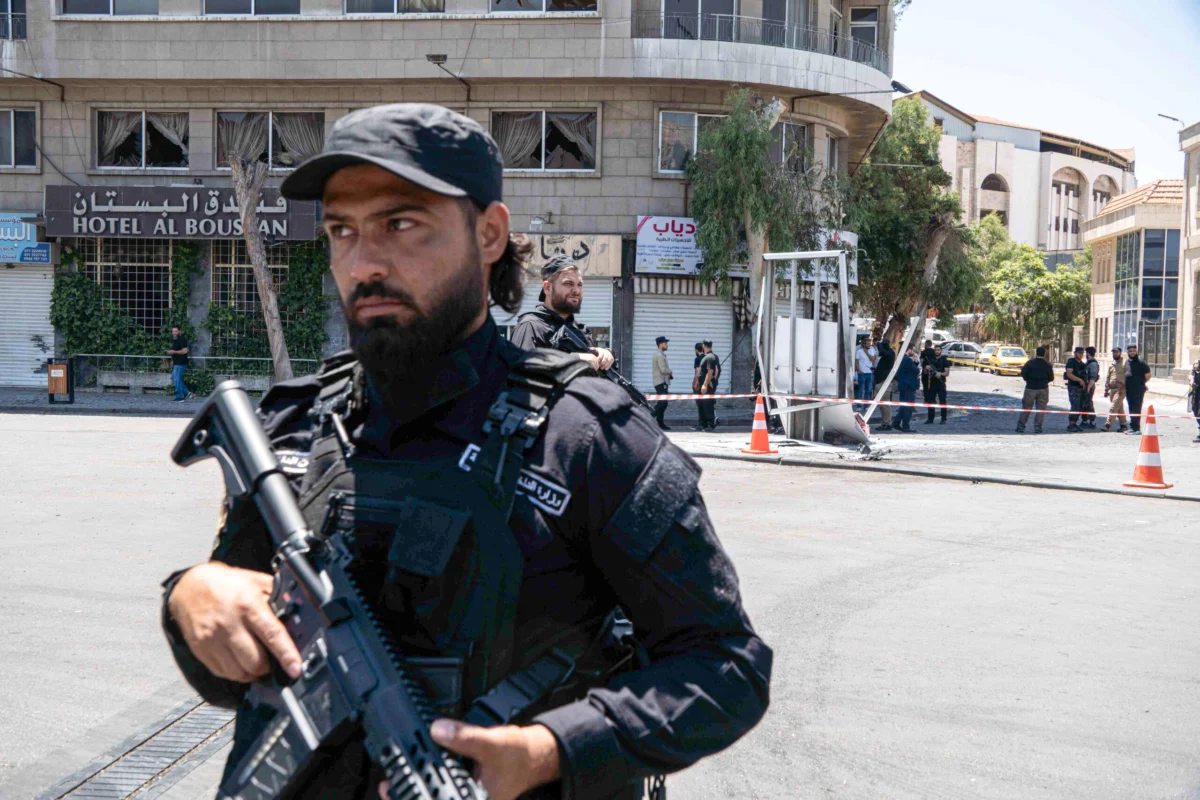
Explosions reverberated through the Syrian capital, Damascus, on Tuesday, a day of significant diplomatic activity as French President Emmanuel Macron commenced a pivotal visit to the city. Syrian authorities announced on Thursday the arrest of a cell implicated in the "terrorist bombings" that struck the capital two days prior, an assertion made by the Interior Minister in the wake of the security incidents that coincided with the high-profile French delegation’s presence.
Security Crisis Unfolds Amidst Diplomatic Overture
The synchronized detonation of two explosive devices near the prestigious Four Seasons hotel, where President Macron was lodged, cast a pall over his landmark visit. The incidents, which occurred on Tuesday, have been officially attributed by the Syrian Ministry of Interior to devices deliberately placed within a parked car and a refuse bin. The ministry further stated that the explosions took place as specialized teams were attempting to neutralize the devices.
In the immediate aftermath of the blasts, President Macron, speaking alongside Syrian President Ahmed al-Sharaa, conveyed a message of solidarity and resilience. "We must at once stand alongside those who have been injured, continue to be uncompromising on security… but not let ourselves be destabilised," he stated, underscoring the dual challenge of addressing the immediate security threat while maintaining diplomatic momentum. The attacks, which resulted in 36 injuries, overshadowed the first visit to Syria by a European Union head of state since the December 2024 overthrow of former President Bashar al-Assad. This event marked a significant turning point in Syria’s protracted political landscape.
Official Statements and Apprehension of Suspects
Syrian Minister of Interior Anas Khattab, in a statement disseminated by the Syrian Arab News Agency (SANA) on Thursday, declared, "The cell responsible for the terrorist bombings that targeted Damascus two days ago is now in our custody." Minister Khattab indicated that a comprehensive disclosure of the apprehended individuals’ identities, their specific roles in the operation, and any associated affiliations would be made public following the conclusion of ongoing investigations.
The arrests were reportedly executed through simultaneous raids conducted across four distinct neighborhoods within Damascus and its adjacent rural areas, suggesting a coordinated effort by Syrian security forces. The Ministry of Interior’s statement emphasized the thoroughness of the operation, aiming to dismantle the network behind the attacks.
Background: A Nation in Transition
The bombings occur against a backdrop of heightened political volatility and ongoing security challenges in Syria. The country has been navigating a complex transition following the ouster of Bashar al-Assad in December 2024, a development that reshaped regional dynamics and ushered in a new leadership. The December 2024 events, characterized by widespread popular dissent and internal security shifts, led to a significant reorientation of the Syrian political order. The subsequent period has been marked by efforts to consolidate the new government’s authority and address lingering security threats.
This recent incident is not an isolated event. Nine fatalities were reported in a separate bomb attack at a bustling cafe in central Damascus just the previous week. While no group has formally claimed responsibility for that attack, Damascus Governor Maher Marwan alluded to the involvement of "bad actors" intent on destabilizing the nation, a sentiment echoed in the official response to the more recent bombings.
Timeline of Events
- Prior to Tuesday: A separate bomb attack occurred at a crowded cafe in central Damascus, resulting in nine fatalities. No group claimed responsibility.
- Tuesday: French President Emmanuel Macron arrives in Damascus for an official visit, lodging at the Four Seasons hotel.
- Tuesday (during Macron’s visit): Two explosions occur near the Four Seasons hotel. One device was in a parked car, the other in a rubbish bin. Both detonated as bomb disposal experts were attempting to defuse them. Thirty-six people were injured in these blasts.
- Tuesday (post-blasts): President Macron holds a joint press conference with Syrian President Ahmed al-Sharaa, emphasizing resilience and security.
- Thursday: Syrian Minister of Interior Anas Khattab announces the arrest of a cell responsible for the bombings that occurred on Tuesday.
Geopolitical Significance and Implications
President Macron’s visit to Damascus was intended to signal a renewed engagement between France and Syria in the post-Assad era. France, a key European player, has historically played a significant role in Middle Eastern affairs. The visit aimed to foster dialogue on regional stability, counter-terrorism efforts, and humanitarian assistance. The timing of the bombings, coinciding with this high-level diplomatic engagement, raises questions about the motives and capabilities of groups seeking to disrupt the country’s nascent political order and undermine international efforts to stabilize the region.
The incidents highlight the persistent security challenges facing the new Syrian administration. The ability of the government to maintain order and provide security for its citizens and visiting dignitaries is crucial for its legitimacy and for attracting international support and investment. The swift announcement of the cell’s apprehension, while potentially a positive indicator of the security forces’ operational capacity, also underscores the ongoing threat posed by extremist or destabilizing elements within the country.
Broader Regional Context
Syria’s internal dynamics are inextricably linked to the broader geopolitical landscape of the Middle East. The country’s transition has implications for regional power balances, counter-terrorism strategies, and the ongoing efforts to rebuild and reintegrate Syria into the international community. The success of the new Syrian government in establishing security and political stability will likely have a ripple effect across the region.
The French President’s visit, despite the unfortunate security incidents, represents an important diplomatic outreach. It signals a willingness on the part of some Western powers to engage with the new Syrian leadership, potentially opening avenues for cooperation on issues of mutual concern, including the fight against terrorism and the management of humanitarian crises. However, the continued threat of violence underscores the delicate and complex nature of Syria’s path forward. The international community will be closely watching the progress of investigations into the bombings and the Syrian government’s ability to effectively address internal security threats while pursuing its political and economic recovery. The focus now shifts to the details of the investigation and the potential impact of these events on the future of French-Syrian relations and broader international engagement with the nation.