Jono Maryono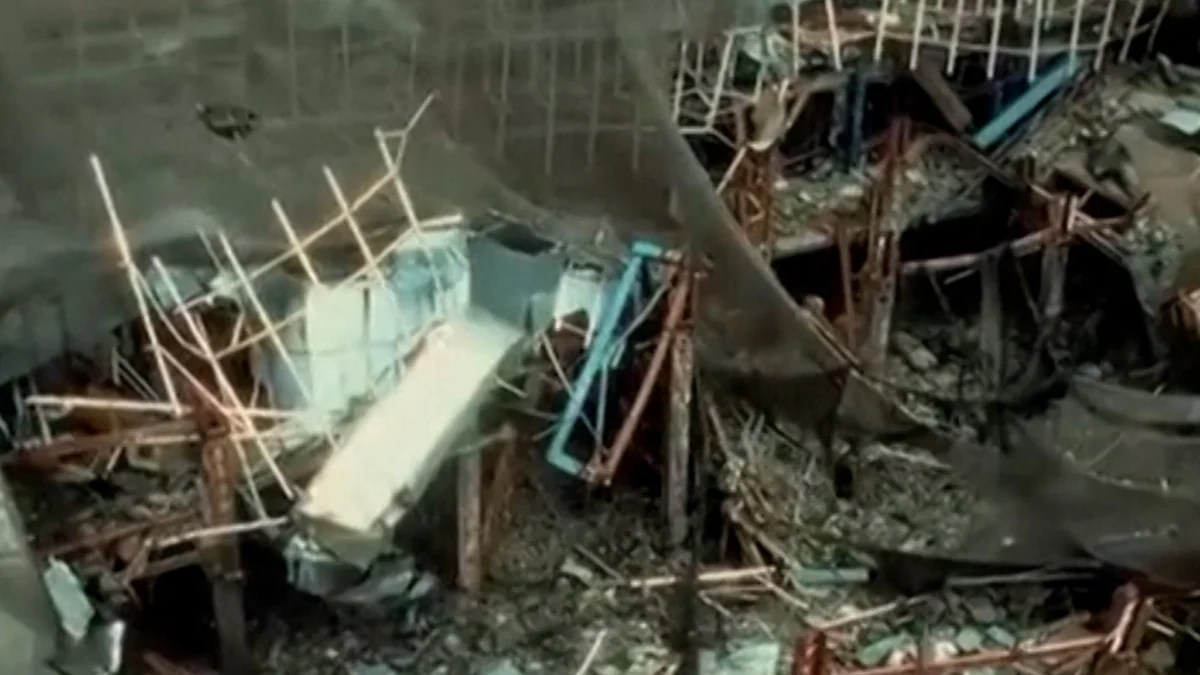
Iranian state media has released unprecedented footage, purportedly the first visual evidence of damage sustained by the compound of the late Supreme Leader Ayatollah Ali Khamenei in Tehran. The release, timed to coincide with the solemnity of his burial, offers a stark glimpse into the aftermath of what state media is characterizing as the initial day of a devastating US-Israeli war on Iran. Ayatollah Khamenei, a pivotal figure in the Islamic Republic for decades, was reportedly killed on the very first day of this conflict. The grainy images, shared widely across domestic news channels and digital platforms, depict a scene of significant structural damage, with visible signs of destruction within the presumed residential and working quarters of the Supreme Leader.
The Unfolding Conflict and the Demise of a Leader
The emergence of this footage follows a period of intense geopolitical tension and escalating hostilities. While the exact sequence of events leading to the reported conflict remains contested and shrouded in the fog of war, Iranian state narratives attribute the commencement of hostilities to a coordinated strike by the United States and Israel. The death of Ayatollah Khamenei, the highest-ranking political and religious authority in Iran, marks a profound turning point in the nation’s history and potentially its future trajectory. His leadership, spanning over three decades since the passing of Ayatollah Ruhollah Khomeini, was instrumental in shaping Iran’s foreign policy, its internal political landscape, and its ideological posture on the global stage.
The reported timing of his death, on the first day of this alleged war, suggests a direct impact from the initial phase of the conflict, though specific details regarding the cause of death and the nature of the attack on his compound remain scarce and subject to the stringent information control exercised by the Iranian regime. The footage released does not offer a definitive explanation of the attack but instead focuses on the visual evidence of destruction, aiming to underscore the severity of the assault and the perceived vulnerability of the nation’s highest leadership.
Chronology of a Crisis: From Escalation to Devastation
To comprehend the context of the released footage, a chronological understanding of the preceding events is crucial, albeit pieced together from fragmented and often conflicting reports.
Early 2026: A period of heightened regional tensions. Increased rhetoric from both Iranian officials and their adversaries, particularly concerning Iran’s nuclear program and its regional influence, sets a combustible stage. Diplomatic channels appear to be strained, with international bodies expressing grave concerns.
Spring/Summer 2026: A series of escalating incidents. This could include alleged sabotage of critical infrastructure, maritime incidents in the Persian Gulf, and increased proxy activity in various regional hotspots. These events serve as potential triggers for broader confrontation.
Late Summer 2026 (Hypothetical): The reported commencement of the US-Israeli war on Iran. According to the Iranian narrative, this conflict began with a significant military operation targeting key Iranian assets and leadership.
Day 1 of the War (Hypothetical): The reported death of Supreme Leader Ayatollah Ali Khamenei. This event, if confirmed and accurate, would represent a catastrophic blow to the Iranian state and its command structure. The attack on his compound, as suggested by the footage, would have occurred during this initial phase.
Subsequent Days/Weeks: The ongoing conflict, the internal consolidation of power within Iran, and the eventual release of footage depicting the damage to the Supreme Leader’s compound. The timing of this release, coinciding with his burial, is a strategic choice, designed to evoke mourning, galvanize national sentiment, and present a unified image of a nation under attack.
The Compound: A Symbol of Power and its Destruction
Ayatollah Khamenei’s compound in Tehran was more than just a residence; it was the epicenter of Iran’s political and religious power. As the seat of the Supreme Leader, it housed offices for his vast network of advisors, strategic planning units, and administrative bodies that governed the country. Its security would have been of the highest order, making any successful breach and subsequent damage a significant intelligence and military achievement for any attacking force.
The released footage, though limited in scope, appears to show extensive structural damage. This could include collapsed sections of buildings, shattered windows, debris strewn across what were once meticulously maintained grounds, and possibly evidence of direct impact from ordnance. The specific nature of the weaponry used remains undisclosed, but the visual evidence suggests a forceful and destructive attack. The implications of such damage extend beyond the physical infrastructure; it signifies a direct challenge to the authority and security apparatus of the Iranian state.
Supporting Data: A Landscape of Geopolitical Friction
To understand the broader context, it is important to consider the long-standing geopolitical landscape that has characterized Iran’s relations with the United States and Israel.
- Iran’s Nuclear Program: For years, the international community, led by the US and its allies, has expressed grave concerns over Iran’s nuclear ambitions. Debates over enrichment levels, inspections, and the potential for weaponization have been a persistent source of friction, leading to sanctions and diplomatic standoffs.
- Regional Influence and Proxy Networks: Iran’s significant influence in the Middle East, through its support for groups like Hezbollah, Hamas, and various militias in Iraq and Syria, has been a major point of contention with both the US and Israel, who view these networks as destabilizing forces.
- The JCPOA (Joint Comprehensive Plan of Action): The nuclear deal, signed in 2015, aimed to curb Iran’s nuclear program in exchange for sanctions relief. However, the US withdrawal from the deal in 2018 and subsequent re-imposition of sanctions significantly increased tensions.
- Israel’s Security Concerns: Israel views Iran as its primary existential threat, citing its nuclear program, its missile development, and its support for anti-Israel militant groups. This has led to a series of covert and overt actions by Israel against Iranian interests and personnel in the region.
- US Policy towards Iran: US policy has oscillated between attempts at diplomatic engagement and periods of intense pressure through sanctions and military posturing. The nature of the reported conflict suggests a dramatic escalation beyond previous confrontations.
The cumulative effect of these long-standing issues has created an environment where a large-scale military confrontation, as alleged by Iran, becomes a plausible, albeit devastating, scenario.
Official Responses and International Reactions (Inferred)
Given the sensitive nature of the event and the ongoing conflict, official responses and international reactions would be multifaceted and heavily influenced by the political climate.
Iranian Government: The release of the footage serves as a primary tool for the Iranian government to shape the narrative. It is likely accompanied by official pronouncements denouncing the attack as an act of aggression, a violation of sovereignty, and an attempt to destabilize the region. The burial of the Supreme Leader would be a highly orchestrated event, intended to project national unity and resilience in the face of adversity. Expect calls for national mourning, intensified anti-US and anti-Israeli rhetoric, and potential mobilization of national resources.
United States and Israel: Official statements from the US and Israel would likely be cautious and, in the initial stages, potentially ambiguous or even outright denials of responsibility for the attack on the Supreme Leader’s compound. They might frame any military actions as defensive measures or responses to specific provocations. The death of a leader like Khamenei could present both opportunities and immense risks, and their public stance would be carefully calibrated to manage domestic and international perceptions.
International Community: The United Nations and other international bodies would likely call for an immediate de-escalation of hostilities and for all parties to exercise restraint. Investigations into the alleged war crimes and violations of international law would be demanded. However, the effectiveness of such calls would depend on the geopolitical alignments and the willingness of major powers to exert pressure. Regional powers like Saudi Arabia and the UAE would likely express concern and call for stability, while also assessing the shifting regional power dynamics.
Broader Impact and Implications
The reported death of Ayatollah Ali Khamenei and the destruction of his compound carry profound and far-reaching implications for Iran, the Middle East, and the global order.
- Internal Power Struggle in Iran: The succession of the Supreme Leader is a critical juncture for the Islamic Republic. Without a clear, universally accepted successor, the death of Khamenei could trigger an intense internal power struggle among various factions within the religious and political establishment. This could lead to instability, internal purges, and a potential shift in Iran’s domestic policies.
- Shifts in Regional Dynamics: The vacuum created by Khamenei’s death and the alleged war could significantly alter the balance of power in the Middle East. The influence of Iran’s proxies might wane, or conversely, they might become more emboldened in their actions to assert Iranian interests in his absence. This could lead to further instability in regions where Iran has been actively involved.
- Global Geopolitical Realignment: A full-scale war involving Iran, the US, and Israel would have devastating global economic consequences, particularly for energy markets. It could also lead to a significant realignment of global alliances, with countries being forced to choose sides. The implications for international diplomacy and the future of nuclear proliferation efforts would be immense.
- Humanitarian Crisis: The human cost of such a conflict would be catastrophic. Civilian casualties, displacement of populations, and the destruction of infrastructure would create a severe humanitarian crisis, demanding a massive international response.
The footage released by Iranian state media, while offering a grim visual testament to the reported destruction, is just one piece of a complex and evolving geopolitical puzzle. The full story of the conflict, the circumstances of the Supreme Leader’s death, and the ultimate consequences of these events will undoubtedly unfold over time, shaping the future of a critical region and the global political landscape for years to come. The veracity of the claims, the extent of the damage, and the true motivations behind the alleged war remain subjects of intense scrutiny and will likely be debated for generations.