
 Reynand Wu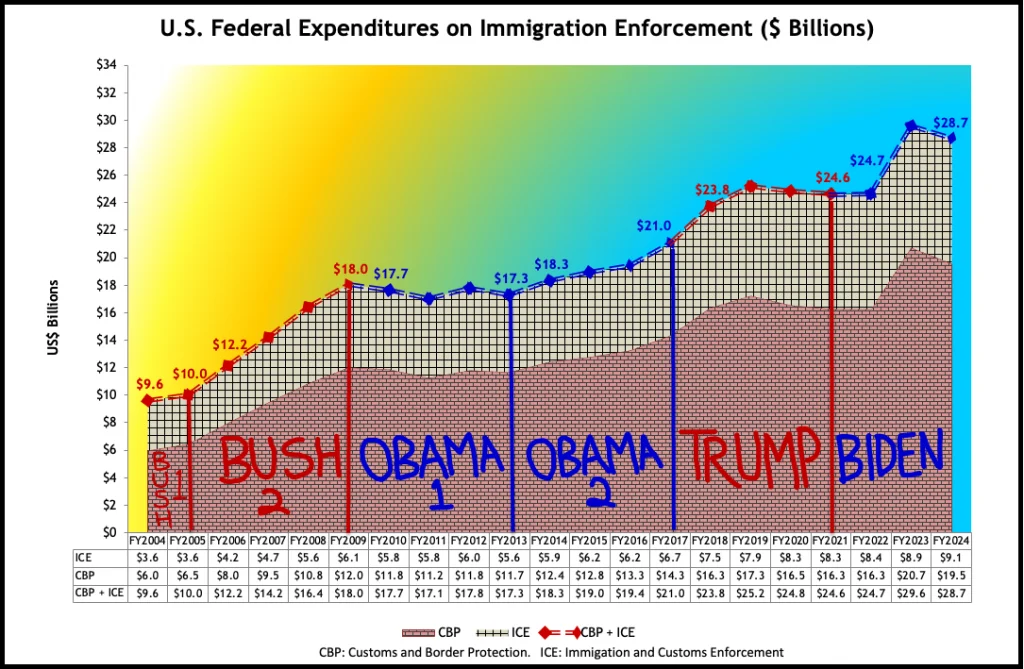
For decades, state borders have been understood as immutable lines on a map, often naturalized by political narratives and public policy. However, a deeper examination reveals them as complex constructs, products of political conflict, nationalist discourse, unequal economic systems, and, crucially, massive public financial investment. Far from being organic phenomena, these divisions are actively created, maintained, and reinforced through the allocation of staggering sums of taxpayer money, often masking their arbitrary and sometimes violent origins. Beyond their role in marking territory after conflict, borders perform vital social functions: they maintain distinct political systems, differentiate between insiders and outsiders, and construct economic difference by sustaining unequal trade relations, national currencies, and disparate value regimes across states and regional zones. The United States offers a compelling case study in this phenomenon, particularly in the post-9/11 era, where an unprecedented financial commitment to border security has reshaped the nation’s boundaries and its relationship with the world.
The Genesis of the Modern Border Apparatus: Post-9/11 Securitization
The events of September 11, 2001, irrevocably altered the landscape of American national security, fundamentally reshaping perceptions of borders from mere lines of demarcation to critical frontiers in the global fight against terrorism. This pivotal moment catalyzed a profound shift in public policy, seamlessly intertwining the discourse of anti-terrorism with that of border regulation. This fusion led directly to the comprehensive securitization of the US-Mexico border, transforming it into a high-priority zone for federal investment and enforcement.
A cornerstone of this transformation was the establishment of the Department of Homeland Security (DHS) through the Homeland Security Act of 2002. This monumental legislative act consolidated 22 disparate federal agencies into a single, cabinet-level department, creating an overarching structure designed to protect the nation from a wide array of threats. Within DHS, two agencies emerged as central pillars of border enforcement: Customs and Border Protection (CBP) and Immigration and Customs Enforcement (ICE). CBP, which proudly declares itself "one of the world’s largest law enforcement organizations" (CBP, 2020), articulates its primary mission as "to detect and prevent the illegal entry of individuals into the United States" and to "maintain borders that work" (CBP, 2021). Its vast responsibilities include safeguarding the nation’s borders at and between ports of entry, monitoring all incoming and outgoing trade, and intercepting contraband. ICE, on the other hand, defines its mission as "to protect America from the cross-border crime and illegal immigration that threaten national security and public safety" (ICE, 2022). Its purview extends to interior enforcement, including the apprehension, detention, and deportation of immigrants, as well as combating human trafficking, drug smuggling, and other transnational criminal activities.
Beyond the creation of these formidable agencies, the post-9/11 era saw a series of legislative milestones that further fortified border enforcement capabilities. The REAL ID Act of 2005, for instance, established federal standards for state-issued driver’s licenses and identification cards, making it harder for undocumented individuals to obtain identity documents. The Secure Fence Act of 2006 authorized the construction of approximately 700 miles of physical barriers along the US-Mexico border, alongside enhanced surveillance technology, marking a significant commitment to physical infrastructure. These legislative and administrative actions collectively laid the groundwork for an unprecedented financial investment in border security, transforming a largely permeable border into an increasingly militarized and technologically sophisticated barrier.
A Financial Deep Dive: Unprecedented Public Investment
The financial commitment to securing the U.S. border since the turn of the millennium has been nothing short of colossal. From fiscal year 2002 to 2024, Democratic and Republican administrations alike have collectively funneled a staggering total of $409.4 billion of public funds into immigration enforcement and border security. This immense sum underscores a sustained, bipartisan dedication to erecting and maintaining the physical and operational infrastructure of the nation’s borders.
Breaking down this monumental expenditure reveals the distribution of resources. Approximately $275 billion has been allocated to Customs and Border Protection (CBP), funding its expansive operations across land, air, and sea borders. This includes the salaries of tens of thousands of agents and officers, the acquisition and maintenance of advanced surveillance technologies—such as drones, ground sensors, and night vision equipment—and the construction and upkeep of physical barriers, patrol roads, and checkpoints. The remaining $134.4 billion has been directed to Immigration and Customs Enforcement (ICE), primarily supporting its interior enforcement activities, including the apprehension, detention, and deportation of immigrants. This budget covers the operational costs of a vast network of detention facilities, transportation for detainees, legal processing, and the salaries of ICE agents and support staff.
The trajectory of this spending illustrates a relentless upward trend. Federal expenditures on immigration enforcement have nearly tripled in nominal dollars, escalating from $9.6 billion in fiscal year 2004 to an estimated $28.7 billion in fiscal year 2024. Even when adjusting for inflation to 2024 dollars, the increase remains substantial, rising from approximately $17.5 billion to $28.7 billion, demonstrating a real and continuous growth in resource allocation. This consistent escalation, irrespective of the economic climate or prevailing political rhetoric, highlights the entrenched nature of border security as a national priority.
This substantial financial outlay has also fostered what some analysts refer to as the "border industrial complex." This ecosystem comprises a vast network of private contractors, technology companies, and defense firms that directly benefit from government spending on border security. From companies supplying surveillance equipment and biometric technology to those managing private detention centers, a powerful economic incentive now exists to maintain and even expand border enforcement operations. This creates a self-perpetuating cycle where investments in border security generate profits, which in turn fuels lobbying efforts for continued or increased funding, further solidifying the financial commitment to these operations.
Presidential Eras: A Bipartisan Consensus Behind the Rhetoric
A granular look at federal spending across different presidential administrations reveals a striking continuity in the commitment to border securitization, often belying the rhetorical differences expressed by political parties.
The Bush Years (FY2002-FY2008): Laying the Foundation
The administration of President George W. Bush initiated the post-9/11 border security surge. With the creation of the Department of Homeland Security in 2002 and subsequent legislation like the Secure Fence Act of 2006, significant funds were allocated to fortify the border. During his two terms, Republican presidents oversaw the expenditure of approximately $178.9 billion on immigration enforcement, averaging about $17.9 billion annually. This period established the modern framework for border operations, investing heavily in technology, personnel, and initial physical barriers. Officials at the time emphasized the imperative of protecting the homeland from terrorist threats, framing border security as a non-negotiable aspect of national defense.
The Obama Years (FY2009-FY2016): Escalation and Enforcement
Despite a more nuanced and often "pro-immigrant" rhetorical stance from Democratic leaders, particularly concerning pathways to citizenship and addressing root causes of migration, the Obama administration oversaw a substantial escalation in border enforcement spending. Democratic presidents during this period spent a total of $230.5 billion, averaging $21.0 billion annually. This figure, notably higher than the Republican average, gives the lie to the perception of significant partisan divergence in actual policy implementation. Under Obama, efforts focused on what was termed "smart enforcement," utilizing technology, increasing deportations, and prioritizing the apprehension of individuals with criminal records. While the rhetoric might have emphasized compassion, the budgetary reality demonstrated a continued, and even accelerated, commitment to robust border control. Then-Secretary of Homeland Security Janet Napolitano frequently highlighted the administration’s "unprecedented resources" dedicated to border security, arguing for a balanced approach that combined enforcement with efforts to reform the immigration system.
The Trump Administration (FY2017-FY2020): Wall and Zero Tolerance
President Donald Trump’s administration brought border security to the forefront of national discourse with aggressive rhetoric, promises of a "big, beautiful wall," and policies like "zero tolerance" at the border. While his administration continued the trend of high funding, its focus was distinctly on physical barriers and increased detention capacity. Annual spending remained robust, and while the total expenditure for his single term would be part of the broader Republican average if considered over multiple terms, the intense focus on wall construction and rapid deployment of resources highlighted a distinct shift in priorities, albeit within an already well-funded framework. Official statements from the Trump White House and DHS consistently reiterated the need for a strong, physical barrier and enhanced enforcement to combat illegal immigration and drug trafficking, positioning these efforts as essential for national sovereignty.
The Biden Administration (FY2021-Present): Policy Continuities
Upon taking office, President Joe Biden signaled a departure from some of his predecessor’s more contentious policies, promising a more humane and orderly approach to immigration. However, the budgetary reality and operational imperatives have largely continued the established trend of high border enforcement spending. The current administration has maintained significant funding levels for CBP and ICE, grappling with persistent migration challenges at the southern border. In a move that underscored the deep-seated bipartisan consensus on enforcement, President Biden’s administration in October 2023 waived no fewer than 26 federal regulations to construct a border wall between the U.S. and Mexico in Texas. This action, mirroring a key policy of his Republican predecessor, Donald Trump, ahead of the 2024 presidential election, powerfully illustrates the political expediency and practical continuity of border securitization, regardless of stated ideological leanings. DHS Secretary Alejandro Mayorkas has frequently spoken about the need for both "orderly processing" and "effective enforcement" at the border, acknowledging the dual pressures facing the department.
The stark contrast between partisan rhetoric and the undeniable consensus on funding immigration policy is rooted in what some scholars identify as the fundamental contradictions of bourgeois liberal democracy. While elected representatives are ostensibly meant to embody the will of the working populace, in practice, their actions often align with the interests of powerful economic, political, and racial elites. This structural dynamic makes substantive progress towards de-carcerating the United States and de-securitizing the US-Mexico border incredibly challenging, especially in a political landscape where progressive voices hold limited sway over budgetary decisions and immigration enforcement directives. In the current context, the vacuum left by any sustained commitment to a truly progressive ideological agenda within the Democratic Party is often filled by increasingly severe anti-immigrant policies, demonstrating a political calculus that prioritizes perceived security and control over human rights and systemic reform.
The Deeper Functions of Borders: Beyond Security
While often framed solely through the lens of national security and immigration control, state borders perform a multitude of deeper functions that extend far beyond simply deterring unauthorized crossings. These functions are integral to the very fabric of nation-states and global political economy.
Firstly, borders are fundamental in defining "insiders" and "outsiders." They serve as powerful social constructs that delineate who belongs to a national community and who does not. This distinction is not merely administrative; it shapes identity, citizenship rights, access to social services, and even perceptions of worth. The act of crossing a border, particularly without authorization, can instantly transform an individual’s legal and social status, stripping them of rights and labeling them as "illegal." This social sorting mechanism is crucial for the maintenance of national cohesion, even if it comes at the cost of exclusion and marginalization for those deemed "outsiders."
Secondly, borders are instrumental in constructing economic difference. They are not just lines on a map but active participants in maintaining global economic inequalities. By preserving distinct national currencies, tariffs, trade regulations, and disparate value regimes across states and regional zones, borders enable nations to protect their domestic industries, control the flow of capital, and manage labor markets. This economic differentiation allows for the exploitation of wage differentials between countries, with capital often flowing across borders more freely than labor. For instance, the stark economic disparities between the U.S. and Mexico are not solely a matter of internal development but are actively reinforced by border policies that control the movement of goods, services, and people, thereby preserving labor cost advantages for certain industries. This controlled economic separation ensures that the benefits of globalization are distributed unevenly, largely favoring developed nations.
Finally, and perhaps most fundamentally, the origins of many state borders, including the US-Mexico border, are deeply rooted in arbitrary and violent historical processes. The current configuration of the US-Mexico border, for example, is a direct legacy of the Mexican-American War and the Treaty of Guadalupe Hidalgo in 1848, which saw Mexico cede vast territories to the United States. This historical context illustrates how borders often emerge from political conflict, conquest, and the imposition of power by dominant nations, rather than natural geographical or cultural divisions. The narratives that subsequently "naturalize" these borders often obscure their violent beginnings, presenting them as inherent features of the landscape rather than human-made divisions forged in the crucible of conflict and unequal power dynamics. This historical amnesia allows for the continued justification of immense public spending on enforcement, diverting attention from the underlying historical injustices and ongoing social and economic disparities that these borders perpetuate.
Implications and Criticisms: A Multi-faceted Impact
The two-decade, $409.4 billion investment in U.S. border securitization carries profound and multi-faceted implications, extending far beyond the immediate goal of enforcement. It has generated significant human, social, economic, political, and even environmental costs, inviting widespread criticism and ongoing debate.
Human and Social Costs: The most direct and often tragic impact is on human lives. Increased border militarization has pushed migrants into more dangerous and remote crossing routes, leading to thousands of deaths from exposure, dehydration, or injury in unforgiving terrains. The aggressive enforcement tactics of CBP and ICE have resulted in widespread detentions, often under controversial conditions, and family separations that have drawn international condemnation. Human rights organizations consistently report concerns over due process violations, lack of adequate medical care in detention facilities, and the psychological trauma inflicted on individuals and families. For communities along the border, the constant presence of law enforcement, surveillance technology, and physical barriers has led to a militarization of daily life, eroding civil liberties and fostering an atmosphere of fear and distrust. Advocacy groups like the American Civil Liberties Union (ACLU) have repeatedly highlighted instances of excessive force and racial profiling by border agents, arguing that the vast powers granted to these agencies often go unchecked.
Economic Efficiency and Effectiveness: Despite the colossal investment, questions persist about the actual effectiveness and cost-efficiency of border securitization. Critics argue that increased enforcement primarily shifts migration patterns rather than significantly deterring irregular migration altogether. The "revolving door" phenomenon, where individuals are apprehended, deported, and attempt to re-enter, suggests a costly and ultimately inefficient system. Moreover, the economic impact on cross-border trade and the legitimate movement of goods and people is often overlooked. Delays at ports of entry, increased security measures, and the overall climate of suspicion can hinder economic activity and strain diplomatic relations with neighboring countries. Economists often debate whether these billions could be more effectively spent on addressing the root causes of migration, such as economic development in migrants’ home countries or streamlined legal immigration pathways, which could yield more sustainable and humane outcomes.
Political Dynamics: The bipartisan consensus on robust border funding, despite rhetorical differences, highlights a complex political dynamic. It suggests that "being tough on the border" is a politically expedient stance across the ideological spectrum, appealing to different segments of the electorate. For Republicans, it aligns with a narrative of national sovereignty and law and order; for Democrats, it can be framed as a necessary component of a comprehensive immigration reform package, or a pragmatic response to perceived crises. This consensus, however, often marginalizes progressive voices within the Democratic Party who advocate for de-militarization and more humane approaches. It also underscores the influence of powerful lobbying groups within the "border industrial complex" that benefit directly from continued funding, creating a feedback loop that sustains the status quo. The consistent allocation of funds also indicates a reluctance by Congress to exercise greater oversight over the budget and immigration enforcement, allowing executive agencies substantial autonomy.
Environmental Impact: The physical manifestation of border security also carries significant environmental consequences. The construction of border walls and associated infrastructure (roads, lighting, surveillance towers) fragments critical wildlife habitats, disrupts migration corridors for numerous species, and degrades sensitive ecosystems. These barriers can exacerbate flooding in certain areas and restrict access to natural resources for local communities, including Indigenous groups whose ancestral lands are bisected by the border. Environmental organizations have consistently raised alarms about the long-term ecological damage resulting from these large-scale infrastructure projects.
Future Outlook: The Enduring Wall of Funding
The trajectory of U.S. border policy over the past two decades reveals a deeply entrenched and financially colossal commitment to securitization. The staggering $409.4 billion investment, driven by both Republican and Democratic administrations, underscores a fundamental consensus that transcends partisan rhetoric. This sustained funding has built a formidable apparatus of enforcement—physical barriers, advanced surveillance, and a vast human infrastructure of agents and detention facilities—that now defines the nation’s approach to its borders.
Looking ahead, the momentum behind this "border industrial complex" appears difficult to reverse. The economic interests that have grown around border security, coupled with deeply ingrained political narratives that equate robust enforcement with national security, ensure that substantial funding will likely continue. While debates about the efficacy and humanity of current policies will persist, any significant shift towards de-securitization would require a profound re-evaluation of national priorities, a challenging political endeavor.
The enduring legacy of this two-decade financial commitment is not merely a more fortified border, but a redefined relationship between the state and its perceived threats, between citizens and non-citizens, and between rhetoric and reality in American politics. The billion-dollar barrier, therefore, represents more than just a physical construct; it is a profound testament to how money shapes policy, solidifying a paradigm that will continue to influence the United States for generations to come.








