Ana Megawati
In an era where quality sleep often feels like an elusive luxury rather than a fundamental necessity, many individuals grapple with restless nights, turning to various remedies from a nightcap to prescription sleep aids. While a glass of wine may offer initial sedation, its disruptive effect on sustained sleep is well-documented, and pharmaceuticals often carry undesirable side effects. Amidst this quest for restorative slumber, a simple, non-pharmacological tool — the sleep mask — has emerged as a surprisingly effective and low-risk intervention. But what are the actual implications of daily sleep mask use? Can they contribute to dermatological issues like acne, or pose risks to ocular health? And do their benefits extend beyond merely promoting longer, deeper sleep? To address these critical questions, a panel of leading sleep experts, including neurologists, psychologists, dermatologists, and ophthalmologists, has weighed in, offering a nuanced perspective on this increasingly popular sleep aid. Their collective insights, alongside extensive product testing, aim to demystify the sleep mask, revealing its profound potential for enhancing sleep hygiene while also highlighting crucial considerations for safe and effective use.
The Pervasive Challenge of Modern Sleep and the Role of Light
The global population faces a significant sleep crisis, exacerbated by the relentless pace of modern life, digital screen exposure, and pervasive artificial light. According to the Centers for Disease Control and Prevention (CDC), over one-third of adults in the United States report getting less than the recommended seven hours of sleep per night. This chronic sleep deprivation is not merely an inconvenience; it is a public health concern linked to a myriad of serious health issues, including cardiovascular disease, type 2 diabetes, obesity, impaired cognitive function, and even a weakened immune system. The economic impact is equally staggering, with productivity losses estimated to cost billions annually.
At the core of this challenge lies the intricate relationship between light and the body’s internal clock, or circadian rhythm. Our evolutionary biology dictates that darkness signals the brain to produce melatonin, a hormone critical for regulating sleep timing and promoting drowsiness. Neurologist Dr. Chris Winter, a renowned sleep specialist and host of the "Sleep Unplugged" podcast, explains this fundamental mechanism: "Light interacts with special receptors in your eyes, signaling the hypothalamus and pineal gland to suppress melatonin production. This process effectively tells your brain that it’s daytime, thereby delaying sleep onset." In an increasingly illuminated world, where streetlights, electronic devices, and ambient indoor lighting continuously pierce the darkness, our natural melatonin production is frequently disrupted, leading to fragmented sleep and difficulty falling asleep. The advent of electric lighting, while a marvel of modern convenience, has profoundly altered human sleep patterns over the last century, fundamentally decoupling our internal clocks from natural solar cycles.
The Subtlety of Light Exposure: Why Every Lumen Matters
The human eye, and specifically the non-image-forming photoreceptors that govern circadian rhythms, is remarkably sensitive to even minute amounts of light. Dr. Winter emphasizes this sensitivity, stating, "Small amounts of light can still have a measurable effect." This assertion is supported by scientific research; a small 2015 study conducted by Korean researchers, for instance, demonstrated that overnight exposure to dim artificial light, even at levels comparable to a nightlight, significantly increased the frequency of arousal and reduced the amount of restorative shallow sleep. Participants reported poorer sleep quality and increased daytime sleepiness.

To put this into perspective, sleep experts recommend that the maximum amount of light reaching the circadian rhythm-regulating cells in the eye should not exceed a mere one lux overnight. This stands in stark contrast to the recommended minimum of 250 lux during daytime hours, underscoring the critical importance of a profoundly dark sleep environment. For context, one lux is roughly equivalent to the light from a single candle flame 10 feet away. Kristin L. Daley PhD, a licensed psychologist and fellow of the Society of Behavioral Sleep Medicine, offers a practical test for assessing bedroom darkness: "Turn out the lights, allow your eyes a few moments to adjust, and then extend your hand. If you can still discern your hand, your sleeping environment is admitting too much light." Achieving this "cave-like" darkness, especially in urban settings with light pollution, homes with light-emitting electronics, or during daytime sleep for shift workers, is where a high-quality sleep mask proves invaluable.
Empirical Validation: What the Research Says About Sleep Masks
While anecdotal evidence has long championed sleep masks, recent scientific inquiry provides robust support for their efficacy. A significant 2023 meta-analysis, published in a leading sleep medicine journal and synthesizing findings from 31 studies comparing various interventions for improving sleep quality, identified eye masks as one of the most effective tools. The comprehensive review, which examined diverse methods such as aromatherapy, listening to music, and guided imagery, concluded that wearing an eye mask, particularly in conjunction with earplugs, yielded the most substantial improvements in objective and subjective sleep quality metrics. Participants reported falling asleep faster, experiencing fewer awakenings, and feeling more refreshed upon waking. This evidence firmly positions sleep masks not just as a comfort accessory but as a clinically beneficial aid for sleep hygiene.
Further studies have explored the specific benefits across different populations. For example, research conducted in hospital intensive care units (ICUs), where constant light and noise are common disruptors, has consistently shown that sleep masks and earplugs can significantly improve sleep quality, reduce the duration of rapid eye movement (REM) sleep latency, and potentially reduce delirium among patients. Similarly, for shift workers whose sleep schedules are inherently misaligned with natural light cycles, sleep masks offer a crucial mechanism to simulate darkness, thereby facilitating sleep during daylight hours and mitigating the adverse health effects associated with circadian disruption. The consistency of these findings across various settings underscores the mask’s universal utility in light management for sleep.
Medical Perspectives: A Growing Endorsement
The medical community, while traditionally cautious about endorsing specific sleep aids for the general population, increasingly recognizes the practical value of sleep masks. The American Academy of Sleep Medicine (AASM), the leading professional association for sleep-medicine physicians, strongly advocates for sleeping in a dark environment as a cornerstone of good sleep hygiene. Although they do not issue an official endorsement for sleep masks across the board, the implicit alignment with their core recommendation for darkness makes masks a logical, accessible solution, particularly when environmental light control is challenging.
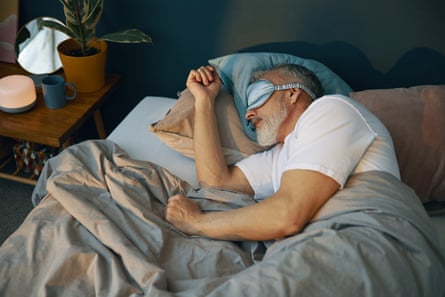
Dr. Winter frequently recommends sleep masks to his patients, particularly those facing challenges in controlling bedroom light, individuals who travel frequently and need to sleep on planes, or those working night shifts. "I suggest people try sleeping in a mask for a week and observe their response," he advises. "For many, masks can be a gamechanger, offering a simple yet profound improvement to their sleep architecture without the need for medication or complex behavioral interventions." This pragmatic approach underscores the growing acceptance of sleep masks as a legitimate, first-line tool within a broader sleep hygiene strategy, often before considering more intensive interventions.
Navigating Comfort and Hygiene: Material Matters for Your Skin
While the benefits to sleep are clear, potential concerns regarding skin health and comfort often arise. Dr. Mona Gohara, a clinical professor of dermatology at the Yale School of Medicine, likens sleep masks to "sheets for your face," emphasizing that "breathability and friction matter." The choice of material is paramount for both comfort and preventing skin issues.
- Silk: Often hailed as the "overachiever," silk boasts a smooth, low-friction texture that minimizes rubbing against the delicate skin around the eyes, reducing the likelihood of sleep creases and irritation. Crucially, silk is naturally hypoallergenic and less absorbent than other materials, meaning it won’t "steal" expensive skincare products applied before bed, nor will it absorb excessive moisture or oils from the skin. Its gentle nature also makes it an excellent choice for individuals with acne-prone or sensitive skin, as it creates a less occlusive and irritating environment.
- Cotton: A popular choice for its breathability and ease of cleaning, cotton is a generally good option. However, Dr. Gohara notes it can be slightly more absorbent and rougher than silk, which might be a concern for those with highly reactive skin or those prone to friction-induced irritation. Regular washing is essential to mitigate potential issues, as cotton can harbor bacteria more readily if not kept clean.
- Synthetics (e.g., Polyester, Satin blends): While often more affordable, synthetic materials tend to trap heat and sweat, creating a warm, moist, and non-breathable environment. This microclimate is conducive to bacterial growth and clogged pores, which can exacerbate acne (known as "acne mechanica") and lead to skin irritation. These are generally less ideal for prolonged nightly use, especially for individuals with sensitive or breakout-prone skin.
The Crucial Role of Cleanliness: Preventing Skin and Eye Issues
Just as one wouldn’t sleep on a dirty pillowcase, the cleanliness of a sleep mask is vital. Dr. Gohara advises treating a sleep mask like a "mini pillowcase sitting directly on your T-zone," recommending laundering it at least as often as pillowcases to prevent rashes, acne breakouts, and potential eye infections such as conjunctivitis or styes. Ideally, masks should be washed every two to three uses, with even greater frequency for those prone to acne or who sweat heavily at night. For consistent nightly users, having multiple masks in rotation is a practical strategy to ensure a clean mask is always available. Regular washing with a gentle, hypoallergenic detergent is recommended, followed by air drying to maintain the mask’s integrity and shape.
Mitigating Acne and Protecting Skincare Investments
For individuals concerned about acne, proactive measures are necessary when incorporating a sleep mask into their routine. Beyond selecting breathable fabrics and adhering to a strict washing schedule, Dr. Gohara offers specific skincare advice:
- Cleanse Thoroughly: Always wash your face before bed. "Makeup or sunscreen under a mask is essentially an invitation for clogged pores and bacterial proliferation," she warns. Removing all impurities, dirt, and oils is the first line of defense against breakouts.
- Allow Product Absorption: After applying nighttime skincare products, allow them a few minutes – typically 5 to 10 minutes – to fully absorb into the skin before putting on the mask. Occluding freshly applied products, particularly those with active ingredients, can create an environment that, while beneficial for hydration, might not be ideal for pore health, potentially leading to increased absorption of irritants or clogging.
Sleep Masks and the Pursuit of Youthful Skin: A Realistic Perspective
While the quest for anti-aging solutions is perpetual, Dr. Gohara clarifies that sleep masks are not a "magic anti-aging tool." She states, "There’s no strong evidence that sleep masks directly prevent wrinkles in the long term." However, they can play a supportive role in minimizing certain types of skin concerns. By reducing friction, especially when made of smooth materials like silk, masks can minimize "sleep creases" – the temporary lines that appear upon waking due to skin compression and folding against a pillow. Over time, reducing this repetitive tugging and folding on the delicate skin around the eyes could theoretically contribute to fewer permanent lines. Yet, she emphasizes that "true wrinkle prevention hinges on daily sunscreen use, a robust skincare regimen – including retinoids where appropriate – and overall skin health and lifestyle factors. A sleep mask serves as a supporting character, enhancing comfort and minimizing acute surface lines, not the main event in anti-aging."
Ocular Health: Dispelling Pressure Concerns
A common apprehension among potential users is whether sleep masks can exert undue pressure on the eyes, potentially causing harm to the cornea or increasing intraocular pressure. Dr. Kamat, an ophthalmologist, assures that "a standard flat eye mask resting gently on the eyelids does not typically place enough pressure on the eyes to cause harm." The human eye is remarkably resilient, and the minimal, evenly distributed pressure from a soft, well-fitting mask is generally well-tolerated. He notes that contoured masks, designed with pockets over the eyes, might offer greater comfort for some by reducing direct contact with the eyelids and lashes, which can be particularly beneficial for individuals with long eyelashes, those prone to dry eyes, or those who find any pressure uncomfortable. However, there is no evidence to suggest that a properly fitted flat mask, worn correctly, poses any threat to ocular health or increases the risk of conditions like glaucoma. For individuals with specific pre-existing eye conditions, such as severe dry eye, recent eye surgery, or glaucoma, consultation with an ophthalmologist is always prudent, but generally, sleep masks are deemed safe for routine use.
The Ergonomics of Comfort: Strap Designs
The fit and comfort of a sleep mask are often determined by its strap design, with two primary types prevalent in the market: Velcro and sliding adjusters. Each has distinct advantages and disadvantages that cater to different user preferences.
- Velcro Straps: These tend to be wider and often more padded, which some users find more comfortable as they distribute pressure more broadly across the head. The wider design can also feel more secure for restless sleepers. However, Velcro can lose its "stickiness" and efficacy over time, especially with frequent washing, requiring replacement. It can also sometimes snag hair or other fabrics if not carefully managed.
- Sliding Adjusters: Offering a more precise and customizable fit, sliding adjusters allow users to fine-tune the tension for optimal comfort and light blockage. They are also completely silent, preventing any potential noise disturbance during sleep. The drawback is that these straps are typically narrower, potentially leaving a dent in one’s hair or concentrating pressure on a smaller area at the back of the head, which some might find less comfortable for prolonged use.
Ultimately, the choice between Velcro and sliding adjusters is a matter of personal preference, prioritizing either broad, cushioned comfort or precise, silent adjustability. Many manufacturers also offer hybrid designs or elastic-only bands to cater to an even wider range of user needs.
Daily Use: Safety and Considerations
For most healthy adults, wearing a sleep mask every night is perfectly safe and can be a highly beneficial component of a consistent sleep routine. Dr. Kamat confirms, "Even if you have an eye condition, sleep masks are generally safe to wear nightly, provided they are clean and not excessively tight." However, Kristin L. Daley PhD offers a nuanced cautionary note for individuals with long-standing, severe sleep issues such as chronic insomnia. In such cases, relying solely on a sleep mask – or any sleep aid like a white noise machine or earplugs – as a primary method to "control" sleep could, paradoxically, exacerbate underlying sleep anxieties. For these individuals, a comprehensive evaluation by a sleep specialist to address the root causes of insomnia through cognitive behavioral therapy for insomnia (CBT-I) or other medical interventions is recommended. But for those simply struggling with an insufficiently dark room due to environmental factors, and who can maintain mask cleanliness, there are no physical impediments to nightly use, and it can significantly improve sleep quality.
Who Should Exercise Caution or Avoid Sleep Masks?
While broadly safe and beneficial, sleep masks are not suitable for everyone. Specific populations should avoid or use them with extreme caution:
- Infants and Toddlers: The American Academy of Pediatrics (AAP) strongly advises a safe sleep environment for babies, free of soft items, which unequivocally includes sleep masks. These items pose a significant suffocation risk.
- Young Children: Children who cannot reliably put on, adjust, or remove a mask, particularly in the middle of the night, should not use them. This is primarily a safety concern regarding potential airway obstruction or distress, and the inability to communicate discomfort effectively.
- Older Individuals with Cognitive Impairment or Fall Risk: Dr. Winter cautions that older adults with cognitive impairments, such as dementia, or those at an elevated risk of falling, may find a sleep mask disorienting if they wake up in the dark. This disorientation could increase their fall risk, especially if they attempt to navigate their environment without visual cues. In these cases, alternative methods for light control, such as blackout curtains or dimmable nightlights, should be considered.
- Individuals with Certain Respiratory Conditions: While rare, individuals with severe sleep apnea or other respiratory conditions that might be exacerbated by facial pressure should consult a physician before using a mask, especially if it’s tightly fitting or covers a large area of the face.
Beyond the Basic: Innovations in Sleep Mask Technology
The sleep mask market has evolved significantly beyond simple flat fabric designs, reflecting a growing consumer demand for tailored solutions. Innovations now cater to a wider range of needs and preferences, transforming the humble mask into a sophisticated sleep aid:
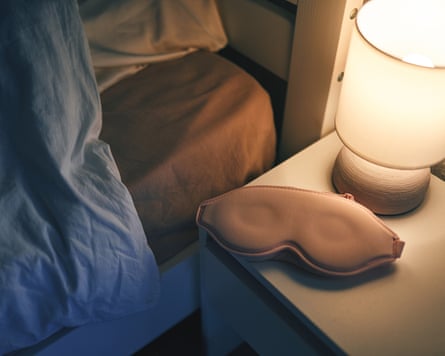
- Contoured Masks: These masks feature raised cups or domes over the eyes, preventing any pressure on the eyelids and lashes. This design is particularly beneficial for individuals with long eyelashes, those who wear lash extensions, or those who prefer not to feel any direct pressure on their eyes.
- Weighted Masks: Similar to weighted blankets, these masks apply gentle, evenly distributed pressure around the eyes and temples. This gentle pressure can stimulate the vagus nerve, which some users find soothing and conducive to