Jono Maryono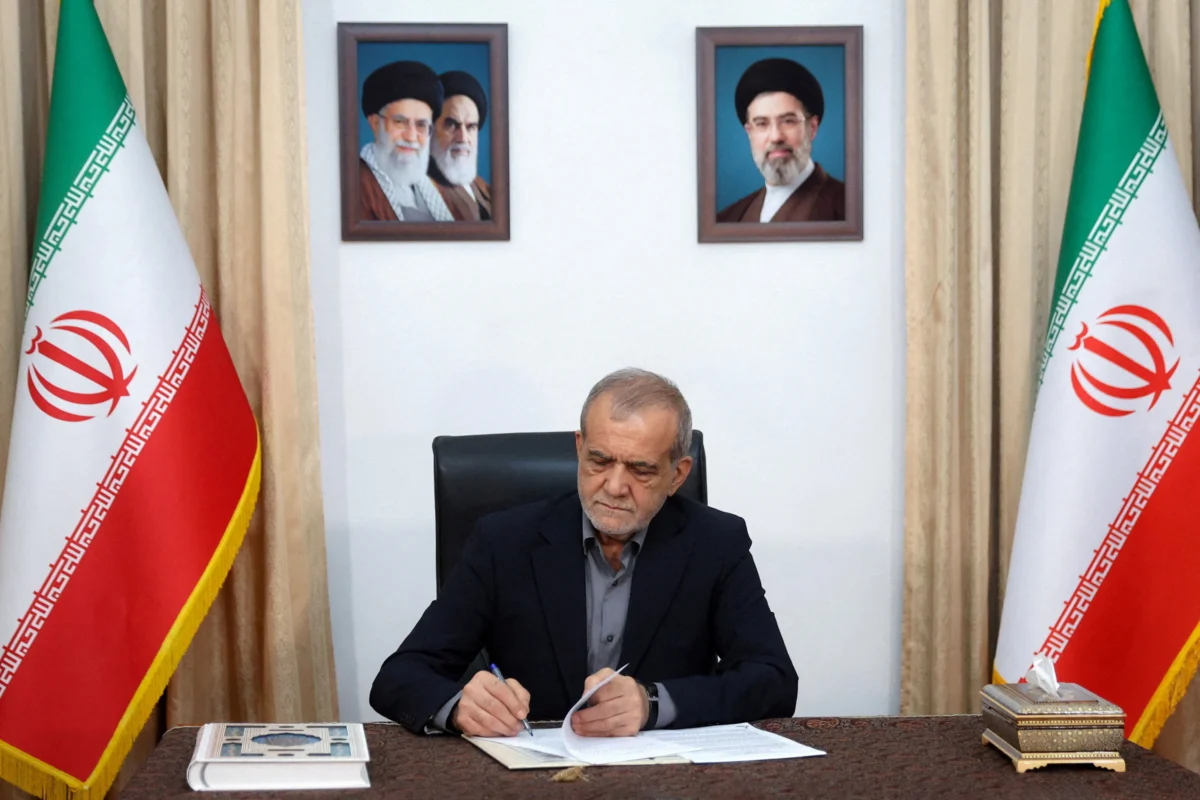
United States Vice President JD Vance has postponed his planned departure for Switzerland, where he was slated to initiate a new phase of peace negotiations with Iran. The delay follows the recent signing of a crucial memorandum of understanding (MoU) aimed at de-escalating the ongoing conflict, the White House announced. This development comes as Washington officially ends its naval blockade of Iranian ports, a move met with strong approval from Tehran, which is also celebrating what it terms "significant wartime gains."
The MoU, a preliminary agreement designed to pave the way for a comprehensive peace treaty, has officially launched a 60-day negotiation period. Vice President Vance had previously defended the accord amidst considerable skepticism from certain factions within the U.S. administration and staunch opposition from Israel. His team was reportedly prepared to travel to Geneva on Thursday evening, but the trip was abruptly cancelled late last night. This last-minute decision was reportedly triggered by a surge of Israeli airstrikes in southern Lebanon, which resulted in the deaths of at least three individuals.
Iran’s Stance on the Interim Agreement
Iran’s semi-official Tasnim news agency has indicated that Tehran has yet to formally confirm the attendance of its negotiators for the upcoming talks. According to their reporting, Iranian officials are awaiting tangible evidence of the interim agreement’s implementation, particularly its provisions concerning a ceasefire in Lebanon, before committing to travel. This demand underscores the deep-seated mistrust that has characterized the U.S.-Iran relationship and the complex dynamics at play in the fragile peace process.
The MoU, which has been formally signed by the presidents of both the United States and Iran, is being presented by the current administration as a critical step toward ending months of protracted conflict. However, the agreement has faced considerable scrutiny from critics who have raised pointed questions regarding its specific terms, the ambiguities it leaves unresolved, and the genuine commitment of the Iranian government to its stipulations.
Background to the Conflict and the MoU
The roots of the current conflict are deeply entwined with regional geopolitical tensions and a long history of adversarial relations between the United States and Iran, exacerbated by proxy conflicts and a perceived nuclear proliferation threat. For months, the region has been on a knife’s edge, with escalating skirmishes and a growing humanitarian crisis. The U.S. naval blockade, implemented in response to alleged Iranian aggression and support for destabilizing elements in the region, had significantly impacted Iran’s economy and strained international shipping lanes, particularly in the Strait of Hormuz.
The signing of the MoU represents a significant diplomatic pivot. While details remain scarce, reports suggest the agreement encompasses a phased approach to de-escalation, including the lifting of sanctions, the cessation of hostilities in designated zones, and a framework for future diplomatic engagement. The inclusion of Lebanon in the U.S.-Iran ceasefire is a particularly noteworthy aspect, signaling an attempt to broaden the scope of the peace efforts beyond direct bilateral concerns and address wider regional stability.
Timeline of Key Developments
- [Date of Initial Escalation]: The conflict intensifies, leading to increased regional instability and the imposition of U.S. sanctions and naval blockade.
- [Recent Weeks]: Diplomatic channels, previously strained, begin to show signs of renewed activity, with backchannel communications and exploratory talks initiated.
- [Date of MoU Signing]: Presidents of the United States and Iran sign a memorandum of understanding, outlining an interim agreement for de-escalation and a 60-day negotiation period for a final peace deal.
- [Recent Days]: U.S. Vice President JD Vance prepares for a trip to Switzerland to commence new rounds of peace talks.
- [Previous Evening]: Israeli airstrikes in southern Lebanon result in civilian casualties, casting a shadow over the burgeoning peace process.
- [Thursday Night]: Vice President Vance’s departure for Switzerland is abruptly cancelled.
- [Current Day]: White House confirms the delay in Vance’s trip and the lifting of the U.S. naval blockade. Iran’s Tasnim News Agency reports on Tehran’s cautious stance pending implementation.
Reactions and Statements from Key Parties
The White House, in its official statement, emphasized the provisional nature of the MoU and the critical importance of the upcoming negotiation period. "This memorandum of understanding represents a significant, albeit preliminary, step towards lasting peace," a spokesperson stated. "Vice President Vance remains committed to engaging directly with Iranian counterparts to build upon this foundation. The immediate focus is on ensuring the terms of the interim agreement are respected by all parties."
Conversely, Israeli officials have expressed deep reservations about the deal, citing concerns about Iran’s long-term intentions and its regional proxy activities. While no official statement has been released following the MoU’s signing, sources close to the Israeli government have privately conveyed apprehension, suggesting that the agreement may not adequately address Iran’s ballistic missile program or its support for groups deemed terrorist organizations by Israel and several Western nations. The recent airstrikes in Lebanon, while officially unacknowledged by Israel, could be interpreted as a demonstration of continued resolve or a reaction to perceived provocations.
Iranian leadership, while hailing the lifting of the blockade as a victory, has maintained a cautious diplomatic posture. President Rouhani’s administration has framed the MoU as a testament to Iran’s resilience and a validation of its strategic objectives. "The lifting of the unjust blockade is a recognition of Iran’s rights and its unwavering stance," a senior Iranian official commented to Tasnim News. "However, the true measure of this agreement will be its equitable implementation and a genuine commitment to de-escalation across the region. We are watching closely for concrete actions that demonstrate this commitment."
Broader Impact and Implications
The success or failure of these negotiations could have profound implications for regional stability, global energy markets, and international relations. A genuine de-escalation could lead to a significant reduction in geopolitical tensions, potentially easing the passage of vital trade routes and contributing to a more stable global economic environment. Conversely, a collapse of the talks could reignite more intense conflict, further destabilize already fragile states, and lead to increased global uncertainty.
The lifting of the U.S. naval blockade is a particularly significant economic development for Iran, which has been under severe pressure due to years of sanctions. This could lead to an influx of foreign investment, an increase in oil exports, and a much-needed boost to its domestic economy. However, the sustainability of this economic recovery will hinge on the long-term success of the peace process and the complete removal of all sanctions.
The involvement of Vice President Vance in these negotiations signifies a high-level commitment from the U.S. administration to resolving the protracted conflict. His willingness to engage directly, despite domestic and international criticism, suggests a strategic calculation that diplomatic engagement, however challenging, is the most viable path forward. The 60-day window for negotiation is a tight timeline, demanding swift and decisive action from both sides. The coming weeks will be critical in determining whether this fragile MoU can indeed blossom into a lasting peace, or if the region will be plunged back into a cycle of conflict and instability. The world will be watching to see if diplomacy can prevail over entrenched animosities and achieve a breakthrough that has eluded the international community for decades.