Danny Garick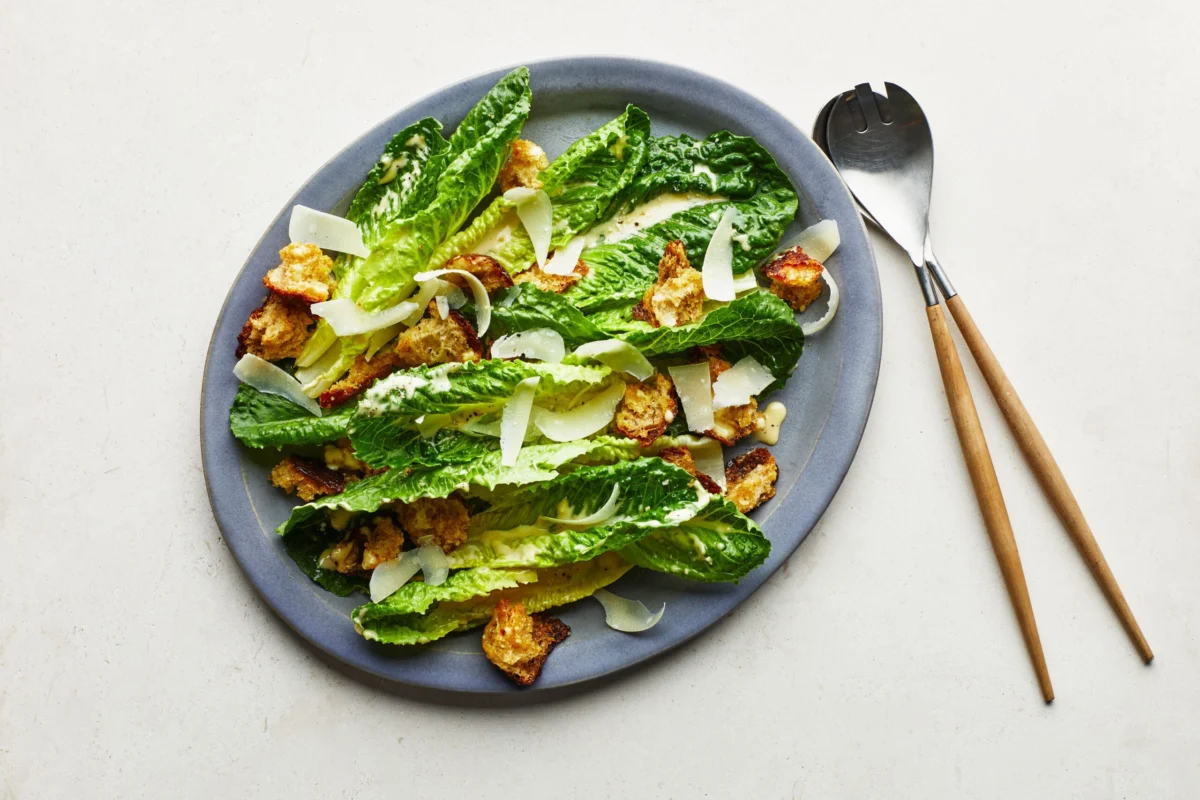
The Caesar salad remains a definitive cornerstone of Western gastronomy, characterized by its specific architectural assembly of crisp romaine lettuce, a rich emulsified dressing, parmigiano-reggiano, and toasted bread components. Far from being a mere side dish, the Caesar salad represents a complex interplay of culinary chemistry and historical happenstance that has allowed it to maintain a dominant position on restaurant menus for nearly a century. While modern iterations often incorporate shortcuts, the classic preparation—relying on raw egg yolks, anchovies, and hand-torn croutons—continues to be the benchmark by which professional kitchens are measured. This report examines the technical specifications of the dish, its historical trajectory from a Mexican border town to international fame, and the scientific principles that govern its enduring appeal.
Historical Origins and Chronology
The genesis of the Caesar salad is frequently shrouded in culinary myth, yet historical consensus points to the early 20th century in Tijuana, Mexico. Contrary to popular belief, the dish is not of Italian origin, nor was it named after Julius Caesar. It was the creation of Caesar Cardini, an Italian immigrant who operated restaurants in both Mexico and the United States.
1924: The Fourth of July Invention
The most widely accepted account dates the salad’s creation to July 4, 1924. According to Rosa Cardini, Caesar’s daughter, a holiday rush at the Caesar’s Hotel restaurant depleted the kitchen’s standard supplies. Cardini, forced to improvise with remaining ingredients, assembled the salad tableside to add a sense of flair and "swagger" to the service. The original preparation was designed to be eaten as finger food, with whole romaine leaves coated in dressing and laid out on a platter.
1930s: Hollywood and International Expansion
As Prohibition-era Americans traveled across the border to Tijuana to consume alcohol legally, the salad gained a following among the Hollywood elite. By the mid-1930s, the dish had migrated to restaurants in Los Angeles and eventually New York. In 1937, the International Society of Epicures in Paris reportedly named the Caesar salad the "greatest recipe to originate from the Americas in 50 years."
1948: The Trademarking of Cardini’s Dressing
Recognizing the commercial potential of the dressing, Caesar Cardini moved to Los Angeles and began bottling the sauce. This period marked the transition of the Caesar salad from a specialized tableside performance to a household staple, leading to the diverse array of commercial dressings available today.
Technical Composition and Culinary Chemistry
The enduring popularity of the Caesar salad is attributed to its balance of the five primary tastes: salty, sweet, sour, bitter, and umami. Each component of the classic recipe serves a specific functional and sensory purpose.
The Emulsion: Egg Yolks and Oil
The heart of the Caesar salad is its dressing, a temporary emulsion stabilized by the lecithin found in raw egg yolks. When whisked with neutral oil and olive oil, the yolks create a creamy matrix that carries the bold flavors of garlic and lemon. From a food safety perspective, modern commercial kitchens often utilize pasteurized eggs to mitigate the risk of salmonella, though traditionalists argue that fresh, high-quality yolks provide a superior texture.
The Umami Factor: Anchovies and Worcestershire
While Caesar Cardini famously opposed the use of whole anchovies in his original recipe—relying instead on the anchovy essence found in Worcestershire sauce—the modern "classic" version almost universally incorporates anchovy fillets mashed into a paste. These small forage fish are rich in glutamates, which provide the deep savory profile known as umami. For consumers seeking to avoid seafood, culinary analysts note that high-quality Worcestershire sauce remains the primary substitute, offering a similar fermented complexity.
Structural Integrity: Romaine and Bread Selection
The choice of Romaine lettuce (Lactuca sativa L. var. longifolia) is non-negotiable in professional standards. The sturdy midrib of the romaine leaf provides a structural "crunch" that can withstand the weight of a heavy, creamy dressing without wilting.
Furthermore, the preparation of croutons has evolved into a technical discipline. Culinary experts emphasize the use of rustic sourdough or country-style loaves. Tearing the bread by hand, rather than cutting it into uniform cubes, creates "shaggy edges"—increased surface area that allows the dressing to cling to the crouton more effectively. This creates a dynamic textural contrast between the crisp exterior and the slightly softened interior of the bread.
Supporting Data and Market Trends
The Caesar salad is more than a cultural icon; it is a significant driver in the agricultural and hospitality sectors.
Agricultural Impact
According to data from the United States Department of Agriculture (USDA), romaine lettuce accounts for approximately 30% of all lettuce production in the U.S., with California and Arizona serving as the primary hubs. The demand for Caesar-quality romaine has stabilized production even as other lettuce varieties see fluctuating market interest. However, the industry has faced challenges; between 2018 and 2020, multiple E. coli outbreaks linked to romaine lettuce led to temporary nationwide "Caesar bans" on menus, highlighting the dish’s vulnerability to supply chain disruptions.
Restaurant Economics
Market research from firms such as Technomic indicates that the Caesar salad remains one of the top five most-offered salads on American restaurant menus, appearing on nearly 35% of all menus nationwide. Its high profit margin—due to relatively low ingredient costs (lettuce, bread, and oil) compared to its premium price point—makes it a vital "anchor" dish for both casual and fine-dining establishments.
Official Responses and Culinary Standards
The debate over what constitutes an "authentic" Caesar salad continues to engage culinary boards and professional chefs. The International Guide of Gastronomy has frequently revisited the Caesar salad to define its parameters.
Chef Molly Baz, a prominent culinary figure and author, has advocated for the "essentialist" approach, emphasizing that the "swagger" of the dish comes from the boldness of its ingredients. "It’s about the garlic kick and the saltiness of the Parmesan," Baz noted in a recent demonstration of the technique. The consensus among the professional community is that while "lazy" versions using mayonnaise are acceptable for home convenience, they lack the specific aeration and brightness of a yolk-based emulsion.
In response to dietary shifts, the American Heart Association and other health organizations have frequently analyzed the Caesar salad’s nutritional profile. While the romaine lettuce provides high levels of Vitamin A and K, the traditional dressing can be calorically dense. This has led to an increase in "modernized" Caesar options featuring grilled proteins like chicken or salmon, which transform the appetizer into a nutritionally complete meal.
Broader Impact and Implications
The Caesar salad’s journey from a makeshift meal in a border town to a global standard reflects broader trends in the globalization of food. It represents the "fusion" of European techniques (French-style emulsions, Italian ingredients) with North American ingenuity.
Food Safety and Innovation
The controversy surrounding raw egg yolks has spurred innovation in the food science sector. The development of high-pressure processing (HPP) for liquid eggs has allowed restaurants to serve a "classic" Caesar dressing that is microbiologically safe for all populations, including the elderly and immunocompromised. This intersection of tradition and technology ensures the dish’s survival in an increasingly regulated food environment.
Cultural Legacy
The Caesar salad also serves as a case study in branding. The Cardini family’s success in transitioning a restaurant dish into a retail product paved the way for the modern "celebrity chef" business model. Today, the Caesar salad is a "universal language" in hospitality; whether in London, Tokyo, or New York, the dish is recognized as a reliable, high-texture, high-flavor option.
In conclusion, the Caesar salad is a testament to the power of culinary balance. Its reliance on the "essentials"—the crispness of the romaine, the savoriness of the anchovy, and the richness of the egg—creates a sensory experience that transcends fleeting food trends. As long as the hospitality industry values the contrast of textures and the boldness of flavor, the Caesar salad will likely remain an immutable fixture of the global menu, maintaining the "swagger" that Caesar Cardini first introduced nearly a century ago.