Ronny Sianturi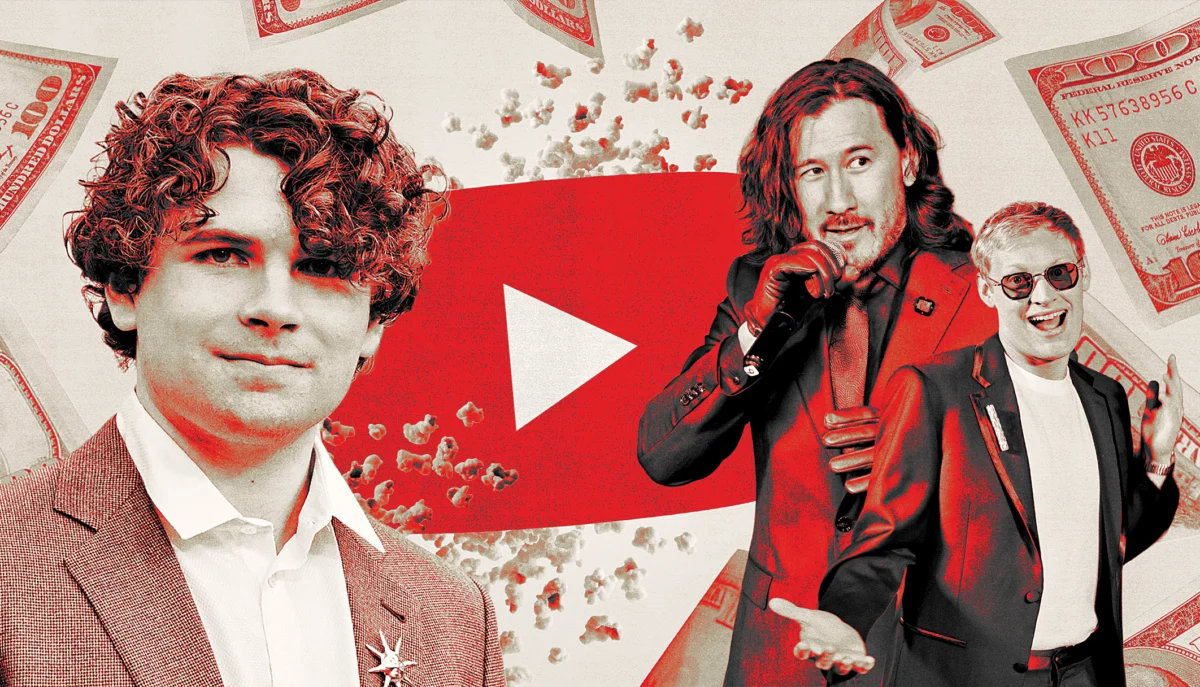
On Monday, the entertainment industry buzzed with unprecedented activity, marking a pivotal moment where digital creators are not just competing with, but often surpassing, traditional Hollywood powerhouses. The confluence of several high-profile successes, spearheaded by YouTube’s burgeoning film and TV initiatives, has sent ripples of both awe and strategic recalculation throughout the established media ecosystem. At the heart of this seismic shift is YouTube executive Fede Goldenberg, who, from his serene office in the historic Spruce Goose Hangar in Playa Vista, has been a key architect in fostering this new era of content creation and distribution.
The weekend’s exceptional performance saw Kane Parsons’ The Backrooms not only commanding significant audience attention but also, remarkably, experiencing an increase in viewership during its third weekend compared to its second – a feat rarely seen in theatrical releases and a testament to its viral appeal and enduring audience engagement. This surge placed it firmly ahead of even established franchises like Star Wars in terms of sustained audience interest. Adding to the industry’s astonishment, Curry Barker’s film, Obsession, also demonstrated remarkable staying power, defying typical box office trajectories. To cap off this extraordinary weekend, Mark Edward Fischbach, universally known as Markiplier, a titan among YouTube creators with an audience of tens of millions, debuted his highly anticipated winter theatrical hit, Iron Lung, exclusively on YouTube. This trifecta of successes – two independent films dominating box office conversations and a premier digital content creator launching a feature film on the platform – has irrevocably altered the perception of where groundbreaking entertainment can originate and find its audience.
The Unflappable Visionary: Fede Goldenberg
Despite the industry-wide frenzy, Fede Goldenberg, YouTube’s Head of Film and TV Partnerships, exuded a profound sense of calm. His office, situated within a landmark of aviation history, mirrors his own approach to the rapidly evolving media landscape: visionary, unconventional, and deeply rooted in a trust of the creative spirit. Goldenberg, whose title only hints at his expansive influence within Google, articulated his perspective with quiet confidence.
"It’s a particularly great feeling – two movies leading the box office and Markiplier on the platform too," Goldenberg stated, acknowledging the significant industry attention. "I know people are surprised, but it does not surprise me one bit. These are people who’ve had years to perfect the craft of entertaining audiences. They understand narrative, pacing, and the nuances of connecting with viewers in ways that traditional models are only now beginning to grasp."
Goldenberg’s foresight is not a recent development. Exactly one year prior to these landmark successes, he stood before an audience at a streaming conference near Denver and boldly predicted this very scenario. "It’s no exaggeration to call these guys the New Hollywood," he declared, drawing a parallel to the transformative generation of filmmakers like Coppola, Scorsese, and Lucas who revolutionized cinema in the 1970s. His prediction, once met with skepticism, now stands as an uncanny prescience.
A New Hollywood: The Creator Economy Ascendant
For executives like Goldenberg, the current moment represents the exhilarating culmination of years spent cultivating talent and trusting the inherent power of creators. Their journey mirrors the aspirations of many who flock to Los Angeles seeking to build careers in entertainment. By fostering an environment where talented artists are empowered and their work is given the space to grow, YouTube has witnessed its creators transition from niche online personalities to formidable forces in mainstream entertainment.
Goldenberg himself embodies this trajectory. Arriving in the United States from Brazil nearly two decades ago with a dream, he has dedicated the past 15 years at Google to identifying, supporting, and building the careers of storytellers on YouTube. Unlike traditional studios, YouTube’s model is not one of dictatorial creative control. Instead, the platform acts as a strategic partner, working collaboratively with creators on release strategies, content optimization, and audience growth. This hands-off yet supportive approach has yielded extraordinary results, evident in Parsons’ rapid ascent to over three million subscribers and Markiplier’s monumental achievement of 38 million subscribers through sustained, long-term engagement.
The Instinct of Connection: Understanding Audience Resonance
When asked about the secret to viral content, Goldenberg demurs from claiming proprietary knowledge. Instead, he emphasizes the crucial role of listening to the creators themselves. "Creators have a finger on the pulse of what feeds the audience better than anyone," he explained. "Last week I was at an event with Mark [iplier] here in Los Angeles, and he was saying that creators will very easily cross over from horror to comedy because both forms are about telling the audience one thing and then surprising them with a turn of events. Now, that’s not something that would be obvious or intuitive to most of us. But they just get that instinctively."
This perspective challenges the long-held Hollywood tenet that marketing executives possess the ultimate understanding of audience desires. YouTube executives maintain that the direct, unmediated interface creators have with their communities grants them an unparalleled insight into what resonates. This is particularly evident in the case of Kane Parsons, who, by embracing and evolving a popular internet meme, has repeatedly captivated millions. His ability to tap into collective cultural consciousness, transforming a niche concept into a widely appealing narrative, exemplifies this creator-led phenomenon.
While traditional marketing efforts by studios like Focus and A24 undoubtedly contributed to the success of Obsession and Backrooms, the sheer scale of their box office outperformance suggests that the creators’ organic connection with their audience played an equally, if not more, significant role. The films’ ability to eclipse previous benchmarks set by these respected distributors underscores the potent synergy between creator-driven content and audience demand.
The Power of Self-Distribution and Platform Loyalty
Markiplier’s decision to self-distribute Iron Lung offers a concrete example of the financial and creative autonomy now available to creators. This model allows for a greater share of revenue to remain with the creator, which can then be reinvested into future projects or further cultivated on the platform. While traditional studios often operate under output deals that limit such flexibility, YouTube’s stance is one of support, regardless of a creator’s distribution choices.
"We want to support each of these creators’ journeys wherever they want it to go," is a common refrain from Goldenberg and his colleagues. This seemingly altruistic approach, which might appear counterintuitive to retaining talent in-house, is rooted in a profound confidence in YouTube’s dominant position in the video consumption landscape. The platform’s executives understand that as long as YouTube remains the primary destination for video content, creators will be incentivized to build and maintain their presence there. "It behooves them to continue to invest in YouTube, because that was the spark that led to all of this," Goldenberg remarked, referring to the current wave of horror filmmakers and their pioneering efforts.
The unspoken but widely recognized reality is that YouTube consistently outperforms all other video platforms in viewership, often by a significant margin, frequently exceeding Netflix’s monthly audience by over 50 percent. This undeniable reach provides creators with an unparalleled foundation for building and sustaining their careers.
Differentiated Approaches, Unified Success
Goldenberg acknowledges nuances in the approaches of creators like Markiplier versus Parsons and Barker, noting the presence of "an additional stakeholder in the iterative process" for the latter two, likely referring to production teams or studios involved. However, he believes the self-distribution model, particularly for creators who have deeply cultivated their fan communities, holds immense appeal. "He relies a lot more on the roots of the fan community, and I think that’s very attractive," Goldenberg said, speaking about the strong bond Markiplier shares with his audience. While the concept of a hands-off platform owned by a global conglomerate might seem paradoxical, Goldenberg insists that this unique model fosters a symbiotic relationship that benefits all parties.
When pressed about future waves of creators poised to disrupt the box office, Goldenberg remains measured but optimistic. He emphasizes that the current successes are merely the beginning and that the potential extends far beyond the horror genre. "Mysteries, sci-fi, comedies – there are creators he’s working with at the moment who have a theatrical story to tell, and he says it would be surprising if we didn’t see features from a lot of them in the coming years." Furthermore, YouTube is actively exploring strategies to attract established A-list filmmakers, potentially offering them a platform to showcase portions of their films before a theatrical release, and then bringing the complete work back to YouTube.
Expanding Horizons: From Emmys to the Silver Screen
YouTube’s ambition is not confined to film. The platform has already made significant inroads in the television awards space, with upcoming events in Los Angeles celebrating homegrown hits such as Sean Evans’ Hot Ones, Cleo Abrams’ HUGE If True, and Brittany Broski’s Royal Court. The company is also actively working to attract prominent personalities like Alex Cooper and Trevor Noah, anticipating their potential for Emmy recognition. The logical extension of this strategy is to extend such recognition to YouTube’s burgeoning film creators as well.
"The beauty of the platform," Goldenberg concludes, "is we have room for every kind of journey." This sentiment encapsulates YouTube’s evolving role as not just a video-sharing site, but a comprehensive ecosystem for creative expression, talent development, and, increasingly, a formidable competitor to the established pillars of the entertainment industry. The successes of the past weekend are not isolated incidents, but rather a clear indication of a paradigm shift, with YouTube and its creators at the vanguard of redefining what it means to be a Hollywood success story.