Ana Megawati
The shattering sound of metal on metal—once, twice, then three times—was the soundtrack to six-year-old Laura Daly’s dawning realization that something was deeply amiss with her mother, Wendy. Cowering silently in the back seat, Laura watched as her mother, in a fit of inexplicable rage after locking herself out, repeatedly rammed the family car into their garage door. This harrowing incident, a raw manifestation of uncontrolled fury, was not an isolated event but a stark symptom of Premenstrual Dysphoric Disorder (PMDD), a severe and often misunderstood condition that silently devastates the lives of millions of women and their families. Wendy Barker, now 56, reflects on that moment with chilling clarity: "It was like I was watching myself. Nothing would’ve stopped me."
Inside their Hampshire home, the storm of rage would subside, leaving Barker in tears, overwhelmed by guilt. For years, she had meticulously hidden the worst of her symptoms from her two children, but that day, "the symptoms slipped out." Her husband, witnessing the escalating volatility, remained steadfast. "Why did you stay?" she often asks him now. His unwavering reply: "Because this wasn’t you. But I knew you were in there. We just needed to get you the right help." This resolve would underpin a two-decade battle for diagnosis, culminating in an understanding of a condition few medical professionals had even heard of.
Wendy Barker’s Decades-Long Ordeal
Barker’s experience encapsulates the profound suffering and diagnostic odyssey common for women with PMDD. She describes herself as a "coiled spring," constantly on the verge of an explosive outburst. "Until I had that outburst of anger, screaming and tears, it wouldn’t subside, no matter how much meditation someone tells you to do. And as soon as I had my period, it started building all over again." Her intuition told her it was "not just depression; something else is doing this to me." Like clockwork, for one week a month, her debilitating symptoms—extreme mood swings, irritability, and profound sadness—would vanish, only to return with relentless intensity for the following three weeks. This cyclical pattern, meticulously tracked by Barker, eventually ruled out initial suspicions of bipolar disorder, which she herself described as being "Jekyll and Hyde."
A pivotal moment arrived when Barker, experiencing symptoms at home, watched an episode of the BBC show Kilroy featuring Dr. Katharina Dalton, who coined the term premenstrual syndrome (PMS). Barker, driven by desperation, sought out Dalton, who initially diagnosed postnatal depression but also astutely noted, "I think you also have something else." That "something else" was Premenstrual Dysphoric Disorder. This three-word diagnosis, though revolutionary for Barker in 2000, was then on the fringes of medical understanding, making her one of Britain’s earliest formally diagnosed patients.
Unveiling PMDD: A Medical Overview
Premenstrual Dysphoric Disorder is a severe, chronic, and debilitating neurobiological disorder with symptoms linked to the menstrual cycle. It is characterized by extreme mood shifts, severe irritability, profound depression, anxiety, fatigue, and feelings of being overwhelmed. Unlike the milder symptoms of PMS, PMDD symptoms are so severe that they significantly disrupt daily life, work, relationships, and overall well-being. Current research indicates that PMDD affects approximately 3-8% of women of reproductive age globally, although official diagnoses remain strikingly low, with estimates suggesting only 1.6% of sufferers receive a formal diagnosis. A particularly alarming statistic reveals that up to a third of those diagnosed with PMDD have attempted suicide, underscoring the critical need for early recognition and intervention.

The understanding and formal recognition of PMDD have been a long and arduous journey:
- Early 2000s: While the concept of severe premenstrual distress had been discussed in medical circles, formal diagnostic criteria were still evolving. Wendy Barker’s diagnosis in 2000 placed her at the forefront of this emerging understanding.
- 2013: Official Recognition by DSM-5: A major breakthrough occurred when PMDD was officially added to the Diagnostic and Statistical Manual of Mental Disorders (DSM-5), the standard classification of mental disorders used by mental health professionals in the United States and globally. This inclusion provided standardized diagnostic criteria, lending significant credibility to the condition.
- 2019: WHO Recognition: Further validation came when the World Health Organization (WHO) recognized PMDD in its International Classification of Diseases (ICD-11), giving the condition global legitimacy and encouraging healthcare systems worldwide to acknowledge and address it. This recognition was monumental for countless individuals who had previously felt dismissed by medical professionals.
Medical experts attribute PMDD to an abnormal brain reaction to normal hormonal fluctuations during the menstrual cycle, rather than an imbalance of hormones themselves. Dr. Louise Newson, a women’s health expert, explains, "It’s usually triggered by changing and reducing levels of progesterone. Changing levels of oestradiol and testosterone can also have effects." This neurobiological sensitivity to hormonal shifts distinguishes PMDD from typical PMS and underscores the need for specific, targeted treatments.
A System in Crisis: Misdiagnosis and Medical Neglect
Despite its official recognition, PMDD remains largely unknown, even within the medical community. This lack of awareness leads to widespread misdiagnosis, with many women being told their symptoms are "just PMS," depression, anxiety, or bipolar disorder. The consequences of misdiagnosis are severe, prolonging suffering and hindering access to appropriate care.
Jenny Fairhurst, 41, from Crewe, experienced the devastating impact of this diagnostic vacuum after the birth of her second child. She described feeling "behind glass," watching her children play but "unable to feel joy or join in," and feeling "dead inside." Her home life became a cycle of "explosive outbursts at my partner and children for the smallest things," followed by "immense guilt." The constant fluctuation was disorienting: "I questioned myself constantly—I couldn’t understand the change in my mindset, thinking, emotions from one week to the next. It was like I had a split personality. I was becoming hard to live with—and my connection with my kids and husband suffered. I felt I was losing myself." One doctor dismissed her concerns as "normal hormonal mood swings," leaving Fairhurst "dejected and unheard." Her husband would frequently wonder, "which version today?"
Even medical professionals are not immune to this systemic oversight. Dr. Milli Raizada, 40, a GP and women’s health expert, admits she had never heard of PMDD before her own diagnosis six years ago. Her symptoms emerged after she stopped taking the pill: "In the luteal phase, I’d be arguing lots with him and he said, ‘This isn’t normal’." She experienced impostor syndrome, feelings of worthlessness, hypersensitivity, and apathy for two weeks each month. A severe outburst at her mother-in-law prompted her to seek help. During her gynaecologist appointment, she burst into tears, admitting, "I’m probably wasting your time but I feel like I can’t cope." The gynaecologist immediately recognized the symptoms: "You’ve got PMDD." Raizada’s reaction—"What’s that? And I’m a GP!"—underscores the critical gap in medical education.
Treatment Pathways and Access Barriers
Treatments for PMDD vary in effectiveness from patient to patient, highlighting the complex and individualized nature of the condition. Common approaches include selective serotonin reuptake inhibitors (SSRIs), hormonal contraceptives, and hormone therapy. However, access to effective treatments can be a significant barrier.
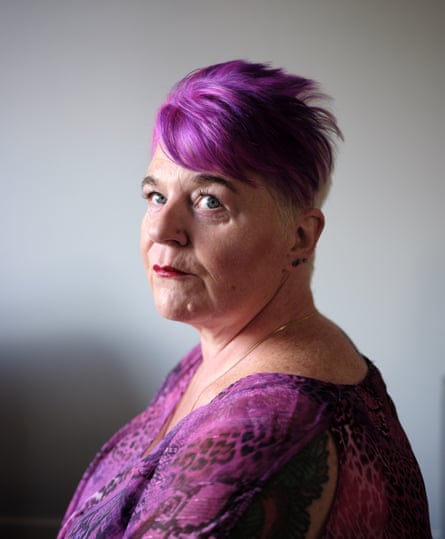
Wendy Barker’s breakthrough came with oestrogen implants, trialled by consultant gynaecologist Prof John Studd. "It was the only thing that worked—my symptoms disappeared," she recounts. Yet, the NHS initially refused to fund the treatment because PMDD was classified as a "syndrome" rather than a "disease," a distinction that impeded access to vital care. Barker, who moved from Hampshire to Edinburgh, was forced to pay £600 every six months to travel to London for privately fitted implants. At one point, her daughter even lent her £1,000 to cover the cost, demonstrating the desperate lengths women go to manage this life-altering condition.
Dr. Louise Newson advocates for hormone treatment, including testosterone, progesterone, or oestrogen, arguing that antidepressants, while helpful for some, "aren’t addressing the underlying root cause." She states, "I once prescribed them myself for PMDD—until I learned how transformational it is to replace those missing hormones." Dr. Raizada was prescribed Zoladex, which induces a chemical menopause, providing relief but with side effects that make long-term use challenging. Jenny Fairhurst, after persistent tracking and consultation, found relief by taking Fluoxetine (an antidepressant) specifically during the luteal phase of her cycle, which "helped me level out more intense symptoms." These varied approaches underscore the need for personalized care and a comprehensive understanding of each patient’s unique hormonal and psychological profile.
The Rippling Effect: Families and Relationships
The impact of PMDD extends far beyond the individual, profoundly affecting family dynamics and intimate relationships. Mothers with PMDD often grapple with immense guilt, believing they have failed their children or strained their marriages. Brighton counsellor Tamsin Taylor, known as the PMDD Therapist, confirms that mothers with the syndrome are "riddled with guilt," often feeling they have "overstepped with their partner." She notes that PMDD "can tear apart relationships," a sentiment supported by new research indicating that PMDD markedly affects trust and intimacy for both sufferers and their partners. Dr. Raizada’s own marriage ended in divorce, a stark testament to the intense strain PMDD can place on relationships.
However, the narrative is not solely one of devastation. Through vulnerability and open communication, some families find unexpected resilience and deeper connection. Laura Daly, now 37, recalls overhearing "big, fiery" arguments between her parents before her mum’s treatment, feeling sad to see her mother so upset. Yet, she states that her mother’s PMDD has actually brought them closer, describing Wendy as "absolutely my best friend." They now even laugh about the traumatic garage incident. "I can talk to my mum about anything because of how open she’s been about everything she’s been through," Daly shares, adding, "I’m so very proud of her." This phenomenon, sometimes referred to as "trauma bonding" in a positive context of shared overcoming, illustrates the capacity for growth and empathy within affected families.
Jenny Fairhurst, too, has seen her children develop remarkable empathy. By openly discussing her disorder in child-appropriate language, her 10-year-old son now understands "that everything’s a bit harder for Mummy" in the run-up to her period. He often senses her struggle, asking, "Are you OK? Are you feeling sad and getting your period?" and offering a comforting hug. Fairhurst notes, "I think it’s taught him real empathy. And he shows it because I’ve tried not to hide my vulnerability from him." This transparency fosters understanding and emotional intelligence in children, transforming a challenge into an opportunity for profound connection.
A Call for Change: Advocacy and Awareness
The persistent lack of medical understanding and comprehensive support for PMDD has spurred a growing movement for advocacy and awareness. Phoebe Williams, 28, experienced PMDD symptoms from age 15, describing how her "true self disappeared for a few weeks a month," marked by "unnecessarily angry" outbursts, depression, and anxiety. At 22, experiencing suicidal ideation, she stumbled upon an obscure blog describing PMDD—a lightbulb moment. After years of being "dismissed time after time" by doctors, including one who told her to "just crack on," she finally found a male doctor who, despite admitting he’d never heard of it, researched the condition and confirmed her self-diagnosis.

Driven by her own arduous journey through misdiagnosis, dismissal, and an information vacuum, Williams recently founded the PMDD Project, the UK’s first charity solely dedicated to Premenstrual Dysphoric Disorder. The charity aims to educate medical professionals, integrate PMDD into healthcare curricula, establish a dedicated helpline for women in crisis, and implement an employer accreditation scheme to promote necessary accommodations like flexible working hours.
The urgent need for systemic change is echoed by medical professionals and patients alike. Dr. Milli Raizada’s plea for "Better training. More research. Stop sidelining women’s health" resonates deeply. Dr. Newson starkly concludes, "It’s currently a health condition understood more by women than health professionals." This disparity highlights a broader historical pattern of underfunding and neglect in women’s health research and education, leading to a significant economic burden in lost productivity and healthcare costs from misdiagnosis.
Charting a New Course: The Future of PMDD Care
The journey for women like Wendy Barker, Jenny Fairhurst, Dr. Milli Raizada, and Phoebe Williams underscores the critical need for a paradigm shift in how PMDD is perceived and treated. While many look forward to potential relief post-menopause or after a hysterectomy, finding effective management strategies now is paramount. Jenny Fairhurst, while still dreaming of being PMDD-free, is thankful for her current treatment: "it’s allowed me to feel the love and joy from spending time with the kids which PMDD had stolen."
The ongoing efforts of organizations like the PMDD Project, coupled with the increasing visibility of personal stories, are slowly but surely chipping away at the stigma and ignorance surrounding this brutal condition. The future demands robust investment in research to better understand the neurobiological mechanisms of PMDD, comprehensive training for all healthcare providers, and the establishment of accessible, specialized diagnostic and treatment pathways. Only then can society move from a place of "hidden agony" to one of widespread understanding, compassionate care, and empowerment for all those affected by Premenstrual Dysphoric Disorder.