Kang Muslim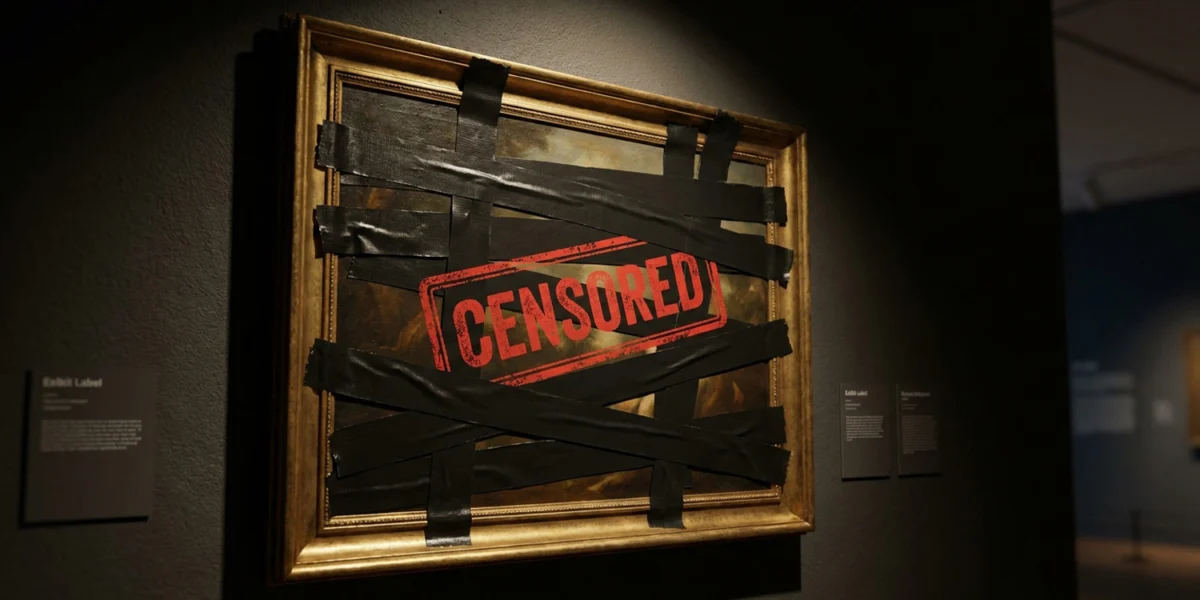
The psychological boundary between an artist’s personal conduct and the value of their creative output has long been a subject of philosophical debate, but new empirical evidence suggests that the public’s willingness to "cancel" or devalue art depends heavily on the specific nature of the artist’s alleged crimes. A comprehensive study published in the journal Psychology of Aesthetics, Creativity, & the Arts reveals that accusations of sexual assault trigger a significantly stronger desire for public censure and financial devaluation than other serious crimes, including murder and physical assault.
Led by Rebecka K. Hahnel-Peeters, an assistant professor of psychology at Indiana State University, the research team explored how modern audiences navigate the "art versus artist" dilemma. The findings suggest that while people may not necessarily like a piece of art less after learning of an artist’s transgressions, they are increasingly likely to demand its removal from the public square and to withdraw financial support if the transgression involves sexual violence. This distinction highlights a sophisticated moral calculus where private appreciation remains intact, but public endorsement becomes a liability.
The Intersection of Moral Judgment and Aesthetic Consumption
For centuries, the art world has grappled with the "monstrous" behavior of its creators. From the violent temper of Caravaggio to the controversial personal lives of Paul Gauguin and Pablo Picasso, the history of high art is replete with figures whose moral failings often stood in stark contrast to their creative genius. However, the contemporary landscape has shifted the power dynamic from elite critics to the general public. Through social media, boycotts, and the "cancel culture" phenomenon, ordinary consumers now exert unprecedented influence over which artists remain culturally relevant and financially viable.
The research conducted by Hahnel-Peeters and her colleagues, Jaimie Arona Krems, Keelah E. G. Williams, and Eric J. Pedersen, identifies the last decade as a turning point. Movements such as #MeToo, which gained global momentum in 2017, have fundamentally altered the social consequences of sexual misconduct. These movements did more than just expose bad actors; they forced a collective re-evaluation of how cultural products are consumed and supported.
"The past decade has seen several movements drawing attention to sexual violence," Hahnel-Peeters noted. "These movements often reignite the questions ‘Should I enjoy this cultural product? Can we separate art from the artist?’ Despite how common these debates may be, there’s been surprisingly little empirical work examining how people respond when they learn new, negative information about artists."
Methodological Framework: A Multi-Phased Investigation
To quantify these social reactions, the researchers designed a series of four studies—a pilot and three subsequent experiments—utilizing a repeated appraisal-reappraisal structure. This allowed the team to measure changes in a participant’s attitude toward a specific piece of art before and after they were presented with information regarding the artist’s criminal history.
The Pilot Study and Preliminary Benchmarks
The pilot study involved 270 U.S. adults who were presented with an abstract painting attributed to a fictional male artist. After an initial rating of the work, participants were asked to imagine the artist had been accused of one of seven crimes: sexual assault, murder, physical assault, sexual harassment, vandalism, manslaughter, or self-harm.
The results established a baseline: participants were significantly more inclined to censure the artist—meaning they supported removing the work from public display or refusing to pay for it—when the accusation was sexual assault. This held true even when sexual assault was compared to crimes generally considered "more harmful" in a legal sense, such as murder.
Study 1: The Emotional Weight of Favorites
In Study 1, the researchers increased the emotional stakes. Instead of a fictional artist, 217 participants were asked to name their favorite male artist and describe a work they loved. They then had to imagine this beloved artist was accused of a crime. Even with a pre-existing emotional bond to the work, the pattern remained: sexual assault accusations produced higher levels of censure than murder, vandalism, or the physical assault of a man. Interestingly, the level of censure for sexual assault was comparable to that for the physical assault of a woman, suggesting a gendered component to public moral outrage.
Study 2: Within-Person Consistency
Study 2 utilized a within-person design with 159 participants, where each individual evaluated the same artwork against multiple hypothetical accusations. This allowed researchers to see if the same person would react differently to different crimes. This study confirmed that sexual assault led to stronger censure than self-harm and physical assault, although, in this specific within-person comparison, it did not significantly differ from murder.
Study 3: Financial Devaluation and Large-Scale Analysis
The final study was the most expansive, involving 845 U.S. adults. It introduced a financial metric to the experiment. Participants were told that the artist’s work typically sold for $40,000 and were asked to provide a valuation for a specific piece after learning of an accusation.
The data was striking. Following a sexual assault accusation, the average valuation of the artwork plummeted from approximately $19,928 to $9,680. This drop was significantly more severe than the devaluation seen following accusations of murder, physical assault of a woman, or sexual harassment.
The Divergence of Public Censure and Private Enjoyment
One of the most critical findings of the research is the disconnect between how much a person "likes" a piece of art and how much they think it should be "censured." Across all studies, the researchers found that an accusation of sexual assault did not necessarily cause a greater decline in the aesthetic enjoyment of the work compared to other crimes.
"Participants’ reported liking of the artwork did not consistently change," Hahnel-Peeters explained. "People might still privately enjoy the art but feel uncomfortable supporting it publicly. Participants were making more nuanced judgments than a simple ‘like it vs. don’t like it.’ They’re considering social signaling, support, and social consequences."
This suggests that the "cancellation" of an artist is less about a sudden loss of aesthetic value and more about a social refusal to grant the artist status or wealth. In the modern era, the act of consuming art is often seen as an act of endorsement. By withdrawing public support, consumers are signaling their moral alignment with the victim and the broader community, even if they still find the artwork itself moving or visually appealing.
Comparative Analysis of Crime Types and Moral Disgust
The study raises a provocative question: Why does sexual assault trigger more censure than murder? In Study 2, participants actually rated murder as being more "morally wrong" and "harmful" than sexual assault. Yet, when it came to the art, the impulse to censor was higher for the latter.
Psychological theories regarding "moral disgust" may provide an explanation. While murder is viewed as a supreme violation of the social contract, sexual violence often carries a different type of social stigma and visceral revulsion that may feel more "contagious" to the products created by the offender. Furthermore, sexual assault is frequently viewed through the lens of power dynamics and systemic abuse, making the act of supporting the perpetrator’s work feel like a perpetuation of that abuse.
The research also found that political orientation and "art knowledge" (how much a person knows about the art world) did not significantly alter these patterns. Whether a participant was liberal or conservative, or whether they were an art connoisseur or a casual observer, the specific weight given to sexual assault accusations remained a consistent variable.
Institutional Challenges and the Future of Cultural Curation
The implications of this research extend far beyond individual consumer choices. Cultural institutions, such as museums, galleries, and streaming platforms like Spotify or Netflix, face immense pressure when an artist in their catalog is accused of misconduct.
If public censure is driven by social signaling rather than a change in aesthetic taste, institutions find themselves in a difficult position. Removing a popular artist’s work might frustrate those who believe in "separating the art from the artist," but keeping it on display may be viewed as a tacit endorsement of the artist’s behavior, leading to reputational and financial damage for the institution.
The financial data from Study 3—showing a 50% drop in valuation for artists accused of sexual assault—provides a concrete metric for the "risk" associated with "tainted" art. Insurance companies, collectors, and auction houses must now account for the fact that certain types of moral failings are more economically catastrophic than others.
Limitations and Future Research Directions
While the study is a significant step in understanding moral decision-making in the arts, Hahnel-Peeters was careful to note its limitations. The research relied on self-reported judgments in hypothetical scenarios, which do not always perfectly align with real-world behavior. Additionally, the sample was limited to U.S. adults, and cultural norms regarding morality and punishment vary significantly across the globe.
"We also used relatively simplified descriptions of accusations," Hahnel-Peeters said. "Real-world cases are often more complex and include ambiguity, media framing, biased social support, and legal outcomes influencing how people respond."
Looking forward, the researchers hope to explore whether these patterns hold true in other domains, such as science, medicine, or technology. For instance, would the public be as willing to "censor" or devalue a life-saving vaccine if its creator were accused of a serious crime? Because scientific products have more functional value than aesthetic value, the stakes of such a decision would be considerably higher.
Ultimately, the study suggests that "cancel culture" is not a monolithic force that strikes all offenders equally. Instead, it is a targeted manifestation of social values, where the public distinguishes between the private experience of art and the public responsibility of support. As society continues to navigate these complex moral waters, the distinction between what we enjoy and what we are willing to stand behind will likely remain a central point of cultural friction.