Kang Muslim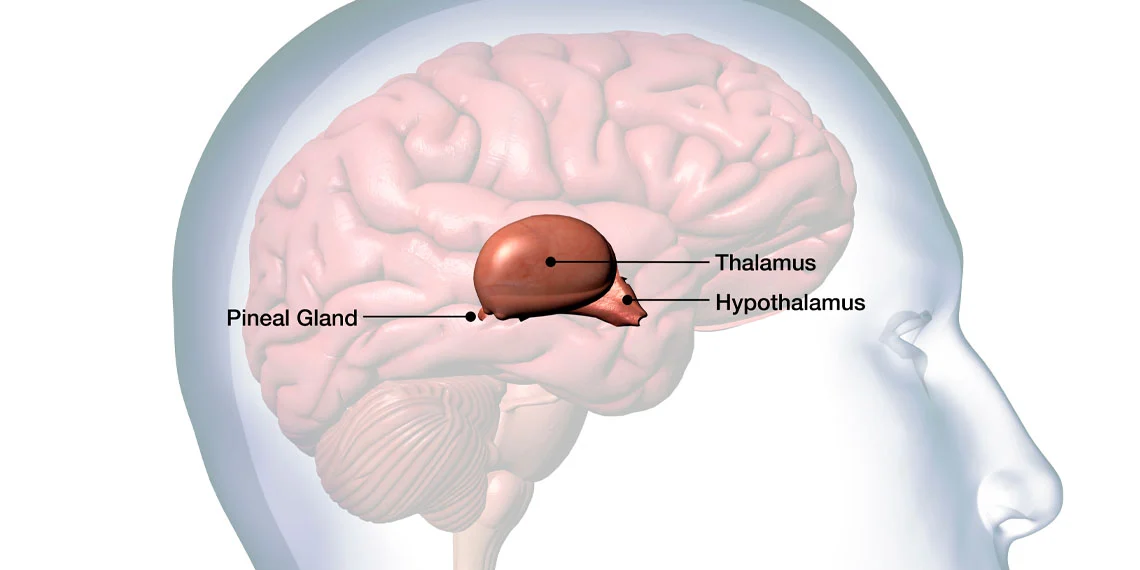
The Evolutionary Paradox of the Vertebrate Eye
For decades, evolutionary biologists have noted a strange discrepancy in the way eyes are constructed across the animal kingdom. Most animals with bilateral symmetry—those with distinct left and right sides—utilize two primary types of light-detecting cells, known as photoreceptors. The first group, rhabdomeric photoreceptors, are typically found in the lateral eyes of invertebrates like insects, spiders, and octopuses. These cells are optimized for detecting motion, forming high-resolution images, and navigating complex environments.
The second group, ciliary photoreceptors, serves a different purpose in most species. Usually located deep within the brain or in a single spot on the crown of the head, these cells are sensitive to ambient light levels rather than focused images. They function as biological clocks, helping organisms regulate circadian rhythms, seasonal behaviors, and "up-versus-down" orientation in the water column.
Vertebrates, including humans, birds, and fish, represent a glaring exception to this biological rule. Unlike invertebrates, the human eye uses ciliary cells to capture light. However, the neural circuitry behind these cells utilizes rhabdomeric-like characteristics to process the resulting visual information. This hybrid structure, which blends two distinct evolutionary lineages of cells into a single organ, has lacked a comprehensive explanation until now. The study, co-authored by neuroscientist Thomas Baden of the University of Sussex and Dan-Eric Nilsson of Lund University, suggests this "chimeric" eye is the result of a dramatic evolutionary detour.
A Chronology of Visual Transformation
To reconstruct the history of the eye, the research team analyzed the genetic and cellular profiles of 36 major animal groups. By mapping these traits onto the tree of life, they identified a timeline that stretches back approximately 600 million years to a small, worm-like ancestor.
The Bilaterian Ancestor (600 Million Years Ago)
The timeline begins with an early bilaterian creature that likely possessed a "standard" visual toolkit: a pair of lateral eyes on the sides of its head for navigation and a single median eye on top for light-level sensing. At this stage, the ancestor’s visual system mirrored what we see in many modern invertebrates today.
The Sedentary Transition
The researchers hypothesize that a significant shift occurred when the ancestors of vertebrates adopted a sedentary, bottom-dwelling lifestyle. These creatures likely burrowed into ocean sediment, filter-feeding on particles in the water. In such an environment, the metabolic cost of maintaining complex, image-forming lateral eyes was high, while the benefits were minimal. Over millions of years, these side eyes were lost to evolution.
However, the median eye on top of the head remained. Even for a creature buried in the sand, knowing the time of day and sensing the direction of light from above remained vital for survival. This single patch of light-sensing tissue became the organism’s primary connection to the external world.
The Return to the Water Column
Millions of years later, these ancestors abandoned their sedentary lifestyle and returned to active swimming. This shift created an immediate demand for sophisticated, directional vision to navigate the open ocean and avoid predators. Having already lost their original lateral eyes, evolution could not simply "turn them back on." Instead, the process of natural selection began to repurpose the only light-sensing equipment remaining: the median eye.
The Great Migration: From One Eye to Two
The researchers propose that as the need for complex vision grew, the single median eye began to expand. It developed cup-like structures capable of detecting the directionality of light. Eventually, these structures split and migrated toward the sides of the head, forming the paired eyes found in all modern vertebrates.
This "median-to-lateral" migration explains why the vertebrate retina is actually an outgrowth of the brain. In insects and squid, eyes develop from the skin (ectoderm) on the sides of the head. In contrast, the human retina is composed of neural tissue. Dan-Eric Nilsson notes that this distinction is crucial: "The film of our eyes—the retina—developed from the brain, whereas the eyes of insects and squid originate in the skin."
This evolutionary path also explains the hybrid cellular makeup of our eyes. The original median eye was likely a "composite" organ, containing both ciliary cells (for light sensing) and rhabdomeric cells (for processing). When this organ split to form our modern eyes, it took this integrated circuitry with it, resulting in the multilayered, complex retina that allows humans to see the world in high definition.
Bipolar Cells: The Missing Link
A central component of the researchers’ model is the role of the bipolar cell. In the modern human retina, bipolar cells act as the structural and functional bridge between photoreceptors and the rest of the nervous system. The study suggests that these cells played a vital role in the "re-invention" of the eye.
The team found evidence that bipolar cells themselves may have two distinct evolutionary origins, reflecting the fusion of the ancient ciliary and rhabdomeric systems. This complexity likely developed while the light-sensing tissue was still part of a central "sensor array" on top of the head, before the eyes migrated to their lateral positions. As Thomas Baden phrased it, "the retina predates the eye." The sophisticated neural architecture required to process images was already in place before the physical structure of the eye had fully formed.
Remnants of the Third Eye: The Pineal Gland
Perhaps the most striking implication of the study is that the original median eye never truly disappeared from the human body. Instead, it retreated deep into the brain to become the pineal gland.
In humans, the pineal gland is a small, pinecone-shaped endocrine gland that produces melatonin. While it no longer functions as a direct light-sensor in mammals, it still receives light signals from the eyes via the brain’s internal wiring to regulate sleep-wake cycles. In other modern vertebrates, the connection to the "third eye" is even more literal.
- The Tuatara: This New Zealand reptile possesses a "parietal eye" on the top of its head, featuring a lens, retina, and nerve connections. It is a living example of the ancestral state described in the study.
- Lampreys and Fish: Many primitive fish have pineal organs that are directly light-sensitive, often located just beneath a translucent patch of the skull.
The realization that our internal biological clock is the vestige of a 600-million-year-old "cyclopean" eye provides a new perspective on human physiology. It suggests that our ability to perceive the world and our ability to track the passage of time are inextricably linked through a shared evolutionary origin.
Scientific Methodology and Future Directions
The conclusions of the study were reached through a multidisciplinary approach combining comparative neurobiology, phylogenetics, and developmental genetics. By examining how specific genes govern eye development across different phyla, the researchers were able to "reverse-engineer" the likely appearance and function of extinct ancestors.
However, the authors acknowledge the challenges of such a deep-time reconstruction. The fossil record for soft-bodied organisms from the Ediacaran and Cambrian periods is notoriously sparse. Because eyes and brain tissue do not fossilize well, the team had to rely on "molecular fossils"—the genetic signatures left behind in living species.
The researchers also noted the phenomenon of "chimerization," where cells over millions of years blend traits from different lineages. This makes tracing the exact ancestry of every single cell in the retina a complex task. Future research will focus on the genetic mapping of simpler marine organisms, such as lancelets and tunicates, which occupy the evolutionary space between invertebrates and vertebrates. By studying these "living fossils," scientists hope to find further "yes-no" answers to the specific stages of the median eye’s migration.
Broader Impact on Evolutionary Biology
The findings published in Current Biology do more than just solve a puzzle about human anatomy; they challenge the long-held assumption that evolution always moves in a linear, additive fashion. The "loss and repurposing" model suggests that evolution is often a process of making do with what remains after a period of biological simplification.
This research has significant implications for developmental biology and medicine. Understanding the dual origin of retinal cells could provide new insights into congenital vision disorders and the way the brain integrates sensory information. If the retina and the pineal gland are essentially "siblings" born from the same ancestral organ, studying their shared genetic triggers could unlock new ways to treat diseases affecting both the visual and endocrine systems.
Ultimately, the study serves as a reminder of the deep history encoded within the human body. The way we see the stars, navigate our environments, and drift off to sleep at night is the result of a half-billion-year journey that began with a single, light-sensitive patch on the head of a worm in a prehistoric sea. As Dan-Eric Nilsson concluded, the results "turn our understanding of the evolution of the eye and the brain upside down," revealing that our most complex sensory organ is the result of one of nature’s most creative acts of recycling.