Kang Muslim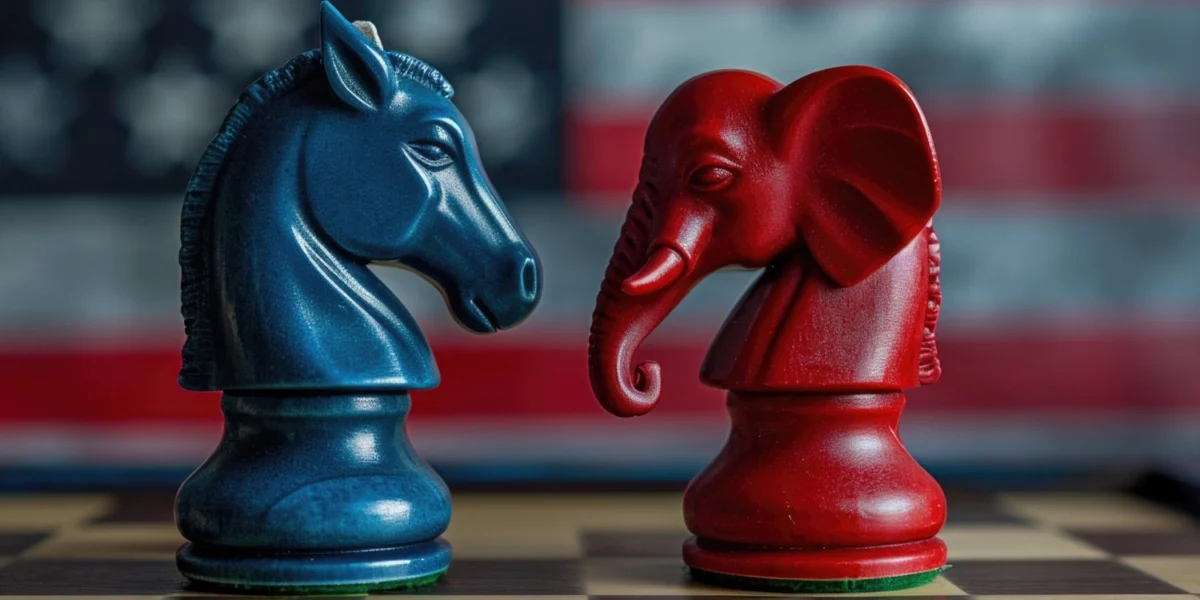
The landscape of American politics is increasingly defined not by a simple disagreement over policy, but by a visceral, mutual animosity between the supporters of the two major parties. New research published in The Journal of Race, Ethnicity, and Politics suggests that for Democrats, this hostility is driven by a specific perception: that Republicans are fundamentally opposed to policies designed to reduce racial inequality. This "racial ideology" framework provides a more nuanced explanation for the rise of affective polarization, demonstrating that Democratic voters’ dislike for the Republican Party is rooted in perceived policy stances rather than the demographic makeup of the opposing party’s base.
The Rise of Affective Polarization in American Life
Political scientists have spent the last two decades documenting a phenomenon known as affective polarization. Unlike "ideological polarization," which refers to diverging views on issues like taxation or healthcare, affective polarization describes a state where partisans do not just disagree with their opponents but actively loathe them. This trend has transformed the opposing party into a stigmatized "outgroup," leading to a breakdown in social cohesion that extends far beyond the ballot box.
Data from recent years suggests that this animosity influences significant life decisions. Studies have shown that Americans are increasingly reluctant to form friendships or romantic relationships with those across the political aisle. In the professional sphere, researchers have observed "partisan discrimination," where employers may favor job applicants who share their political affiliations or penalize those who do not. This deep-seated hostility creates a feedback loop, as social isolation from the opposing side reinforces negative stereotypes and prevents the "cross-cutting cleavages" that historically moderated American political life.
Evolution of Explanatory Models
To understand why this animosity has reached such heights, researchers have traditionally relied on two primary models. The first is the Ideological Model, which posits that voters dislike the opposing party because of fundamental disagreements over the role of government. Under this view, the rift is caused by conflicting visions of economic policy, the scope of the social safety net, and social issues such as reproductive rights. When the perceived distance between these visions grows too large, hostility follows.
The second is the Demographic Model, or the "Identity Sorting" theory. This model suggests that the two parties have become increasingly homogenous in terms of race, religion, and geography. As the Democratic Party has become more racially diverse and the Republican Party has remained predominantly white, political identity has merged with social identity. In this framework, animosity toward the opposing party is actually a proxy for animosity toward the demographic groups that comprise it. While this explains why some white Republicans might feel threatened by the diversifying Democratic coalition, it has struggled to explain the intense negative feelings held by Democrats toward the Republican Party, which represents a traditionally dominant social group.
The Racial Ideology Framework
Recognizing the limitations of previous theories, Tyler Reny and Byengseon Bae of Claremont Graduate University, along with Kirill Zhirkov of the University of Virginia, proposed a third approach: the Racial Ideology Model. Their research suggests that the animosity Democrats feel toward Republicans is not a reaction to the whiteness of the Republican Party, but a reaction to the party’s perceived commitment to maintaining racial hierarchies through policy opposition.
This model reflects the shifting focus of the Democratic platform. Over the last three presidential cycles, the party has moved from a "colorblind" approach to a "color-conscious" one, explicitly centering racial justice in its rhetoric and policy goals. This shift has created a clear contrast with the Republican platform, which often emphasizes individual meritocracy and criticizes government interventions—such as affirmative action or diversity initiatives—as discriminatory or overreaching.
Methodology: Isolating Perceptions Through Conjoint Analysis
To test their hypothesis, the research team employed a sophisticated experimental survey design involving more than 3,000 adult participants. The study utilized a representative sample of the U.S. population, ensuring diversity in age, gender, education, and political affiliation.
The core of the study involved "conjoint analysis," a method where participants evaluate hypothetical profiles of Republican supporters. Each participant was presented with 20 unique profiles, each featuring a randomized combination of nine traits. These traits included demographic markers (race, age, religion), economic views (size of government), and specific stances on racial policy. By using randomized traits, the researchers could isolate which specific characteristic—such as a supporter’s race versus their stance on government aid for Black Americans—most strongly influenced a participant’s judgment and level of dislike.
Before viewing the profiles, participants provided a baseline rating of their feelings toward the Republican Party on a 0-to-10 scale. This allowed the researchers to map how the "typicality" of certain traits in a profile correlated with the participants’ pre-existing levels of political animosity.
The Universal Archetype of the Modern Republican
One of the study’s most striking findings was the high level of consensus across the political spectrum regarding what constitutes a "typical" Republican. Regardless of their own party affiliation or race, participants—including white Democrats, non-white Democrats, and white Republicans—shared a consistent mental image of the Republican base.
The typical Republican was perceived as white, highly religious, and economically conservative. However, the data revealed that opposition to racially progressive policies was viewed as an even more defining characteristic of Republican identity than economic conservatism. This suggests that in the public imagination, the Republican Party is now defined as much by its stance on racial hierarchy as it is by its stance on taxes or government spending.
Divergent Drivers of Hostility
While there was consensus on what a Republican looks like, there were significant differences in how those perceptions translated into animosity. The researchers found that different subsets of the Democratic coalition are motivated by different factors:
- White Democrats: For this group, hostility toward the Republican Party is "multidimensional." Their dislike is driven by both economic and racial policy differences. They view the Republican Party as an opponent on two fronts: the size of the welfare state and the pursuit of racial equity.
- Non-White Democrats: For non-white Democrats, the perception of Republican opposition to racial equality was the single most powerful predictor of negative feelings. Interestingly, economic policy stances and personal traits (such as honesty or laziness) had little to no impact on their overall level of dislike. For these voters, the Republican Party’s perceived racial ideology is the primary lens through which the party is judged.
- White Republicans: In a notable contrast, white Republican participants did not penalize their fellow party members for holding conservative racial views. While they expressed lower approval for hypothetical Republicans who were economically liberal or possessed negative personal traits, racial conservatism was not viewed as a negative attribute within their own "ingroup."
The Role of Political Rhetoric and the 2024 Election
The researchers noted that the timing of the study—conducted in the lead-up to the 2024 election cycle—is critical. The rhetorical strategies of national leaders have played a significant role in cementing these perceptions.
During the 2016 campaign, Hillary Clinton famously declared that ending systemic racism would be a primary mission of her presidency. This trend has continued with Vice President Kamala Harris, who has framed conservative opposition to diversity programs as an attempt to "destroy access to opportunity" for marginalized groups. On the other side, Donald Trump’s rhetoric regarding American identity and immigration has been described by the researchers as a "racial bullhorn," signaling a clear opposition to the racially progressive goals of the Democratic Party.
This rhetorical environment has likely sharpened the "racial ideology" that voters attribute to each party. The study suggests that as candidates use race-coded language, they reinforce the perception that the parties are fighting a zero-sum game over racial hierarchy, which in turn fuels affective polarization.
Implications for Social Cohesion and Policy
The findings have broad implications for the future of American governance. If political animosity is increasingly driven by perceived stances on racial equality, the path to bipartisan compromise becomes even more narrow. When voters view the opposing party not just as wrong on the facts, but as morally opposed to the fundamental rights or progress of specific groups, the "other" is no longer a political rival but a social enemy.
Furthermore, the study highlights a potential "polarization trap." As Democrats prioritize racial justice, they may inadvertently increase the hostility felt by their base toward Republicans. Conversely, as Republicans lean into opposition to "woke" policies or diversity initiatives, they solidify their identity in a way that generates intense dislike from a diverse Democratic coalition. This dynamic suggests that the "racialization" of policy debates is a primary engine of the current era of political instability.
Limitations and Future Directions
The researchers acknowledged several limitations in their work. The study focused heavily on a single measure of racial conservatism: government assistance for Black Americans. In the current political climate, "racial policy" has expanded to include a wide array of issues, including border security, "Great Replacement" theories, and the teaching of history in schools. Future research will need to determine if these varied issues trigger the same levels of animosity.
Additionally, the study grouped non-white voters into a single category. Given the diverse interests and political trajectories of Black, Latino, and Asian American voters, more granular research is needed to understand how different marginalized groups perceive and react to Republican policy stances.
Conclusion
The research by Reny, Zhirkov, and Bae provides a vital update to our understanding of the American divide. By demonstrating that Democratic hostility is a reaction to perceived racial ideology rather than mere demographic sorting, the study clarifies the stakes of modern political conflict. As the two parties continue to diverge on the path toward racial equity, the affective rift between their supporters is likely to deepen, making the goal of national reconciliation an increasingly distant prospect.