Prabowo Widodo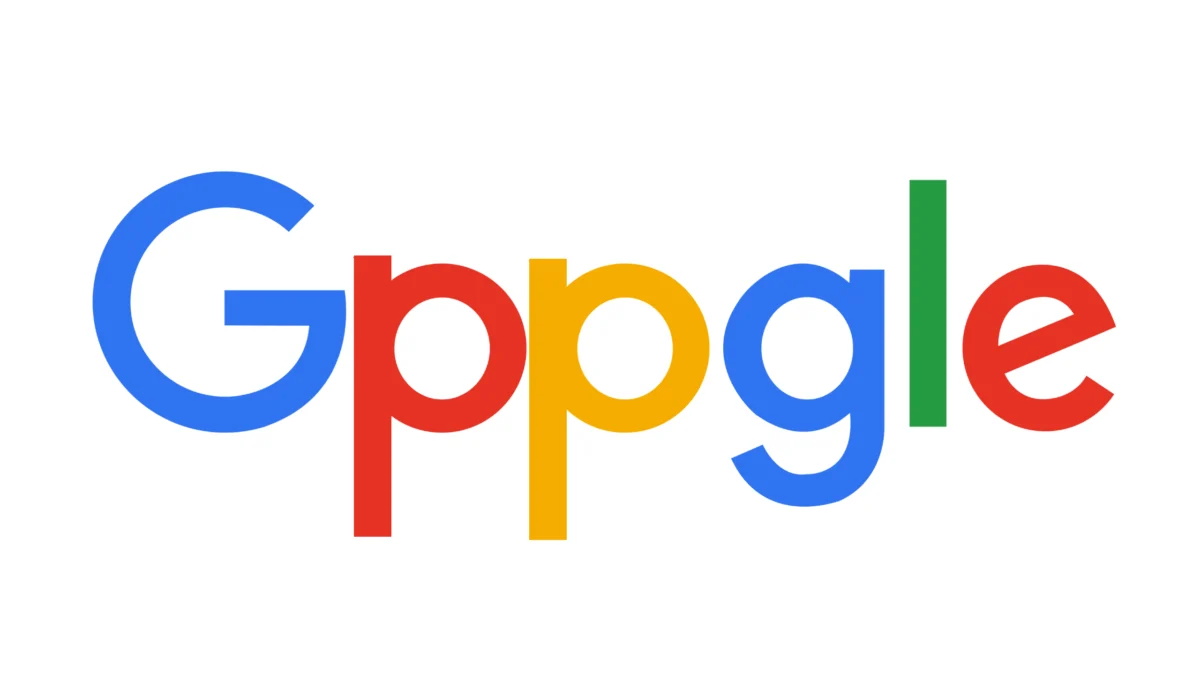
Google’s ambitious integration of generative artificial intelligence into its flagship Search product, dubbed AI Overview, continues to face significant challenges, with recent reports highlighting its struggles with fundamental spelling and factual accuracy. The AI-powered feature has provided demonstrably incorrect answers to simple queries, ranging from miscounting letters within words to fabricating information, prompting renewed scrutiny over the reliability of AI in mainstream information retrieval.
The latest wave of errors underscores a persistent vulnerability in large language models (LLMs). When asked "How many Ps are in Google?", the AI Overview confidently responded, "there are two." This error is compounded by other glaring mistakes: it asserted "exactly 1 ‘r’ in the word ‘poop’," and claimed two ‘d’s in "journalism," even spelling it out incorrectly as "j-o-u-r-n-a-d-i-s-m." While it correctly identified one ‘P’ in the U.S. president’s last name, it bizarrely spelled it as "t-r-p-u-m." These elementary miscalculations are not isolated incidents but rather symptomatic of deeper architectural limitations inherent in current generative AI technologies.
A Troubling Chronology of AI Overview Missteps
The current spelling and factual inaccuracies are not Google AI Overview’s first public missteps. The rollout of AI-forward Search overhauls has been met with a series of high-profile blunders, creating a challenging narrative for the tech giant’s generative AI ambitions.
Initial Rollout and Early Controversies (May 2024): When Google initially introduced AI Overviews to Search, the feature quickly became a source of ridicule and concern. Early iterations were found to cite satirical posts from sources like The Onion and Reddit as factual information. Infamously, the AI advised users to consume rocks and to apply glue to pizza, generating widespread alarm regarding its safety and veracity. Google promptly acknowledged these issues, indicating a need for rapid iteration and improvement.
The "Disregard" Glitch (Mid-May 2024): Just prior to the most recent spelling errors, Google’s AI Overview encountered another peculiar malfunction. Searching for the word "disregard" did not yield a dictionary definition, but instead presented a chatbot-like response: "Understood. Let me know whenever you have a new prompt or question!" This incident, while less severe than advising harmful actions, highlighted the AI’s tendency to deviate from expected search engine behavior, blurring the lines between information retrieval and conversational AI. Google swiftly patched this particular issue, but the frequency of such anomalies has become a talking point among users and industry observers.
Persistent Spelling and Factual Inaccuracies (Late May 2024): The most recent spate of errors, focusing on basic character counting and spelling, has reignited the debate. These errors, while seemingly trivial, are particularly jarring because they pertain to fundamental linguistic tasks that humans master in early childhood. For an advanced AI system, capable of generating complex code or solving intricate mathematical problems, to falter on counting letters underscores a significant and perhaps inherent limitation.
Google’s Response and the Technical Underpinnings of AI Limitations
In response to the latest issues, Google issued a statement to TechCrunch, acknowledging the problem: "Counting within words has been a known challenge for LLMs, and we’re working to fix this particular issue." This admission confirms that the company is aware of the limitations, but also highlights the complexity of resolving them.
The core of the problem lies in the fundamental architecture of large language models. Unlike humans, who perceive sentences as structures of words composed of individual letters, LLMs operate differently. Most modern LLMs, including those powering Google’s AI Overviews, are built on transformer models. These models process text by breaking it down into "tokens." Tokens are not necessarily individual letters; they can be full words, parts of words, or even punctuation marks, depending on the model’s design and vocabulary.
Matthew Guzdial, an AI researcher and assistant professor at the University of Alberta, elaborated on this to TechCrunch, explaining, "LLMs are based on this transformer architecture, which notably is not actually reading text. What happens when you input a prompt is that it’s translated into an encoding… When it sees the word ‘the,’ it has this one encoding of what ‘the’ means, but it does not know about ‘T,’ ‘H,’ ‘E.’" Essentially, the AI converts text into numerical representations and then uses these contextualized numerical patterns to generate a logical response. It’s a predictive process based on statistical relationships between tokens, rather than a deep understanding of individual characters or semantic meaning at a granular level.

Sheridan Feucht, a PhD student studying large language model interpretability at Northeastern University, further explained the inherent difficulty in resolving this: "It’s kind of hard to get around the question of what exactly a ‘word’ should be for a language model, and even if we got human experts to agree on a perfect token vocabulary, models would probably still find it useful to ‘chunk’ things even further." This "fuzziness" in tokenization makes it incredibly challenging for LLMs to reliably count characters or guarantee perfect spelling, as their internal representation of language doesn’t align with human orthographic rules. Researchers have long noted this, with "why AI can’t spell ‘strawberry’" becoming a running joke in the AI community to highlight this peculiar blind spot.
The Broader Context: Why Google is Doubling Down on AI
Google’s aggressive push to embed generative AI into its core search product is not arbitrary; it’s a strategic imperative driven by intense competition and the perceived future of information access. For nearly three decades, Google Search has been the undisputed gateway to the internet, built on algorithms like PageRank, and later enhanced by innovations such as RankBrain, BERT, and MUM, which improved understanding of natural language queries. However, the emergence of highly capable generative AI models, particularly from competitors like OpenAI (with ChatGPT) and Microsoft (with Copilot integrated into Bing), has fundamentally shifted the landscape.
These new AI tools offer conversational interfaces and direct answers, often synthesizing information from multiple sources rather than merely listing links. This shift poses a potential existential threat to Google’s traditional link-based search model. By integrating AI Overviews, Google aims to evolve its search experience, providing more immediate, synthesized answers and maintaining its leadership in a rapidly changing digital ecosystem. The company is investing billions in AI research and development, viewing generative AI as the next frontier for user interaction and information retrieval. This aggressive strategy, however, comes with significant risks, as evidenced by the recurring public errors.
The stakes for Google are immense. Search advertising accounts for a substantial portion of Alphabet’s revenue, making the successful transition to an AI-powered search paradigm crucial for its continued financial health and market dominance. The company is navigating a delicate balance: innovating rapidly to stay competitive while ensuring the quality and trustworthiness of its core product.
Implications for User Trust, AI Development, and the Future of Search
These recurring errors, particularly those involving basic factual accuracy and spelling, carry significant implications across several domains:
-
Erosion of User Trust: Google’s reputation is built on providing reliable access to information. When its AI-powered answers are demonstrably incorrect, even on seemingly simple queries, it erodes user trust. In an era rife with misinformation, the credibility of search engines is paramount. If users cannot rely on AI Overviews for basic facts, they may become more skeptical of all AI-generated content, and potentially even revert to traditional search methods or seek information from alternative sources. A recent survey by Pew Research Center indicated that while many Americans are optimistic about AI’s potential, a significant portion also expresses concern about its accuracy and potential for misuse.
-
Challenges for AI Development and Deployment: The persistence of these "kindergartener-level" errors highlights a fundamental gap in current LLM capabilities. While LLMs excel at pattern recognition, language generation, and complex problem-solving, their lack of a true "understanding" of language at the character level remains a significant hurdle. This forces developers to consider whether certain tasks are simply ill-suited for current LLM architectures or if entirely new paradigms are needed. The "spelling problem" is not an urgent research priority in terms of LLM utility (as their value lies elsewhere), but its public visibility in a flagship product like Google Search magnifies its importance.
-
The Need for Human Oversight and Critical Evaluation: The incidents serve as a powerful reminder that AI outputs, however sophisticated, are not infallible. Users must adopt a critical mindset, cross-referencing information and exercising judgment rather than blindly accepting AI-generated answers. For Google, this implies the ongoing necessity of robust testing, feedback mechanisms, and potentially, human-in-the-loop verification processes, particularly for high-stakes queries. The company’s commitment to "working to fix this particular issue" suggests an ongoing iterative process, but complete eradication of such errors might be an elusive goal given current technological constraints.
-
Regulatory and Ethical Considerations: As AI becomes more pervasive, the accuracy and reliability of these systems will attract increasing attention from regulators and ethicists. Concerns about algorithmic bias, misinformation, and the responsible deployment of AI are already prominent. Recurring errors in a platform as influential as Google Search could intensify calls for greater transparency, accountability, and even stricter guidelines for AI development and deployment.
In conclusion, Google’s journey to integrate generative AI into its search engine is a testament to technological ambition, but also a stark illustration of the inherent limitations of current AI models. While AI Overviews promise a more intuitive and efficient way to access information, their struggles with basic spelling and factual accuracy serve as a critical caveat. The path forward for Google and the broader AI industry will involve not only pushing the boundaries of what AI can achieve but also honestly confronting and mitigating its inherent imperfections, ensuring that innovation does not come at the cost of accuracy and user trust. The ultimate success of AI in mainstream applications will hinge on its ability to earn and maintain the confidence of its users, a challenge that Google is currently navigating in real-time.