Ferry Irwandi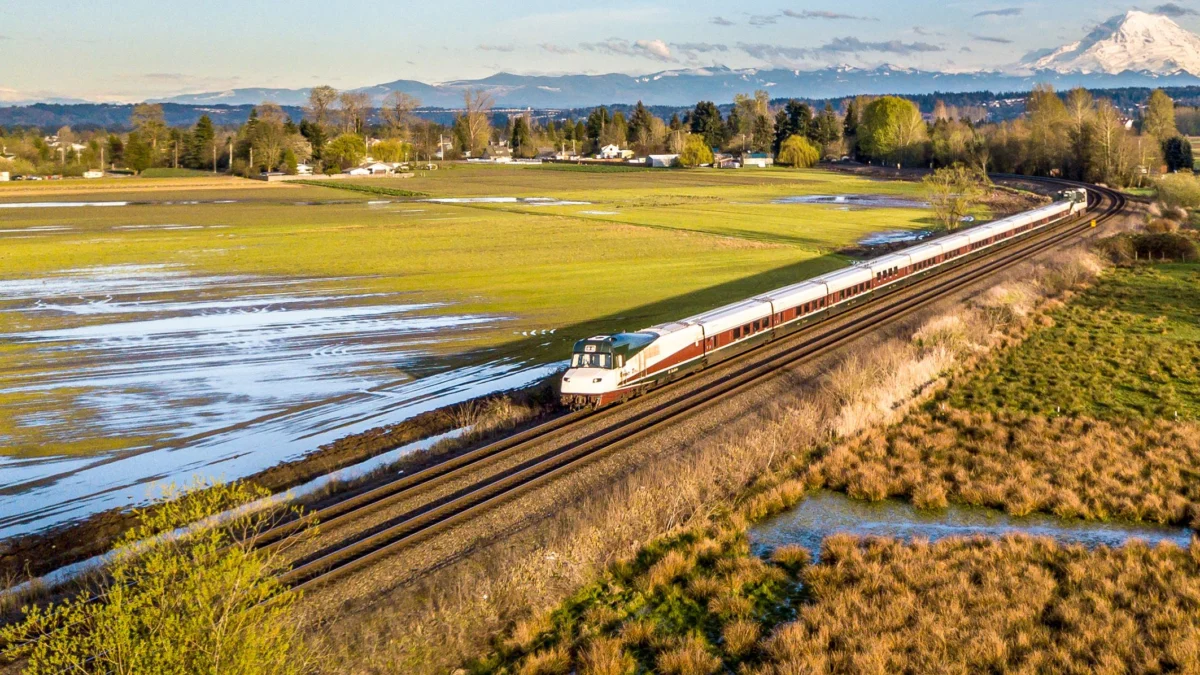
The landscape of American passenger rail is undergoing its most significant transformation in decades as the first Amtrak Airo trainset arrived in Seattle this week. This milestone marks the commencement of the final testing phase for a fleet designed to bring modern, European-style rail travel to the Pacific Northwest. The new equipment is slated for operation on the Amtrak Cascades route, a 467-mile corridor connecting Vancouver, British Columbia, through Washington State to Eugene, Oregon. This delivery represents the first of eight dedicated trainsets destined for the region, part of a broader national initiative to modernize aging infrastructure and meet the surging demand for sustainable, high-capacity intercity transit.
The arrival of the Airo equipment in the Seattle yards follows an extensive multi-state journey and a rigorous preliminary testing regimen. These trainsets are intended to replace the current fleet of aging Horizon and Talgo equipment, some of which has been in service for several decades. As Amtrak prepares for a full rollout by the end of 2026, the introduction of the Airo signifies more than just a hardware upgrade; it represents a fundamental shift in the passenger experience and a strategic investment in the future of the Interstate 5 corridor.
A New Era of Passenger Comfort and Design
The Amtrak Airo trainsets, manufactured by Siemens Mobility in Sacramento, California, are engineered with a focus on ergonomics, aesthetics, and modern utility. The interior design reflects a departure from traditional domestic rail layouts, leaning instead toward the sleek, open-concept interiors common in high-speed European rail networks.
Each coach car is equipped with upgraded seating designed for long-distance comfort. The ergonomic seats feature enhanced lumbar support and increased legroom compared to current standards. Recognizing the needs of the modern traveler, Amtrak has integrated several tech-centric features into every seat, including dedicated USB charging ports, sturdier tray tables capable of supporting laptops, and integrated seatback tablet stands. Cupholders, a frequently requested amenity, are now standard.
According to Derek Maier, Amtrak’s senior director of the Airo program, the new design prioritizes a sense of openness and light. The use of contemporary materials and a revised lighting scheme aims to reduce the "claustrophobic" feel often associated with older rail carriages. Perhaps most significantly for the Cascades route—frequently cited as one of the most scenic in the United States—the Airo trainsets feature significantly larger windows. These oversized panes are designed to provide panoramic views of the Puget Sound, the Cascade Mountains, and the lush river valleys of the Pacific Northwest, enhancing the route’s appeal as a premier tourist experience.
Addressing Capacity and Rising Demand
The introduction of the Airo fleet is a direct response to the burgeoning ridership figures in the Pacific Northwest. In 2025, the Amtrak Cascades service saw more than 950,000 passengers, representing a 1.4% increase over the previous year. This growth has frequently led to sell-out conditions, particularly during peak weekend travel and holiday seasons.
The new Airo trains will offer a substantial increase in capacity. Each trainset is configured to seat approximately 300 passengers, which is roughly a 50% increase over the capacity of the current equipment used on the line. This expansion is critical for the Washington State Department of Transportation (WSDOT) and the Oregon Department of Transportation (ODOT), which jointly manage the service. By increasing the number of available seats without necessarily increasing the number of train slots—which are limited by freight traffic—Amtrak can accommodate more travelers and potentially increase revenue per mile.
The business class section has also received a comprehensive overhaul. Travelers opting for the premium tier will find a choice between single and double seating configurations, catering to both solo business travelers and couples. Furthermore, the redesigned cafe car will introduce a "more contemporary" dining experience, featuring self-service options and a menu tailored to regional tastes, moving away from the traditional "snack bar" model of the past.
Technical Specifications and Manufacturing
The Airo trainsets are built on the Siemens Venture platform, the same technology used for Amtrak’s new Acela trains in the Northeast Corridor and various state-supported routes in the Midwest. The domestic manufacturing of these trains at Siemens’ California facility complies with "Buy America" requirements, supporting domestic jobs while utilizing global expertise in rail engineering.
Technically, the Airo is a dual-power locomotive system. This versatility allows the train to operate using either diesel power or electric overhead lines, where available. While the Cascades route is currently not electrified, this feature future-proofs the fleet for potential infrastructure upgrades. The locomotives are designed to be more fuel-efficient and produce significantly lower emissions than the current fleet, aligning with the sustainability goals of Washington and Oregon.

While the trains are capable of reaching speeds of up to 125 miles per hour, their operational speed in the Pacific Northwest remains a subject of ongoing infrastructure discussion. The majority of the tracks used by Amtrak Cascades are owned by BNSF Railway, a freight carrier. Under current conditions, passenger trains are often limited to 79 miles per hour due to track geometry and signaling constraints. Although the corridor was designated for high-speed rail development as early as 1992, the necessary capital investment to achieve sustained 125-mph speeds has yet to be fully realized.
The Testing Chronology: From Colorado to the Coast
The arrival of the first trainset in Seattle is the culmination of a multi-year development and testing timeline. Before reaching the West Coast, the Airo equipment underwent extensive "type testing" at the Transportation Technology Center in Pueblo, Colorado. This facility allows engineers to push the equipment to its limits on a closed track, testing braking systems, suspension, and high-speed stability in a controlled environment.
Following the Colorado trials, the trainsets were moved to the Northeast Corridor (NEC). This phase allowed Amtrak to test the equipment on active tracks with real-world complexities, including interaction with other rail traffic and varying weather conditions. The equipment even made a high-profile stop in Washington, D.C., for review by federal transportation officials before being transported cross-country to Washington State.
The current phase in Seattle is known as "field testing" or "acceptance testing." Over the coming months, Amtrak crews, including engineers and conductors, will undergo specialized training on the new systems. The trains will perform "deadhead" runs—trips without passengers—along the actual Cascades route to ensure compatibility with local station platforms, signaling systems, and the specific topography of the Pacific Northwest.
Strategic Impact and the Future of Regional Rail
The deployment of the Airo fleet is a centerpiece of Amtrak’s broader strategy to modernize its national network. With 83 trainsets on order for routes across the country, the Cascades route serves as a flagship for the rollout. The total investment for the Airo program is estimated at $7.3 billion, funded in large part by the Infrastructure Investment and Jobs Act (IIJA).
For the Pacific Northwest, the implications extend beyond mere convenience. Regional planners view the Cascades service as a vital alternative to the congested Interstate 5. By providing a more reliable and comfortable rail option, officials hope to shift a larger percentage of intercity travel from cars to rail, thereby reducing regional carbon emissions and easing highway wear and tear.
However, challenges remain. In 2025, the Cascades service reported an on-time performance rate of 67%. While new equipment is expected to improve mechanical reliability—reducing delays caused by locomotive failure—it does not solve the underlying issue of freight interference. Because BNSF freight trains share the same tracks, passenger service is frequently sidelined to allow cargo to pass. Amtrak officials have stated that the "fundamental shift" signaled by the Airo trains must be accompanied by continued infrastructure investment to improve track capacity and bypasses.
Timeline for Passenger Service
Travelers eager to board the new trains will need to wait until later in 2026 for the first scheduled passenger runs. Amtrak has indicated that the rollout will be gradual. As each of the eight Cascades-specific trainsets passes its final inspections and crew training is completed, they will be phased into the daily schedule.
When the trains do enter service, Amtrak plans to clearly mark "Airo" equipment in the booking results on its website and mobile app, similar to how it designates Acela or Borealis services. This transparency allows passengers to specifically choose the newer equipment if they prefer.
Ticket pricing is expected to remain competitive with current fares, which typically start at $29 for a coach seat between Seattle and Portland when booked in advance. However, the increased capacity may help stabilize prices during high-demand periods by ensuring a larger supply of "saver" level fares.
As the testing continues in the Seattle yards and along the scenic coastlines of the Sound, the Airo stands as a symbol of a renewed American commitment to rail. By blending European design sensibilities with American manufacturing, Amtrak is attempting to prove that the "golden age of rail" is not a historical footnote, but a viable, modern future for the Pacific Northwest.