Reynand Wu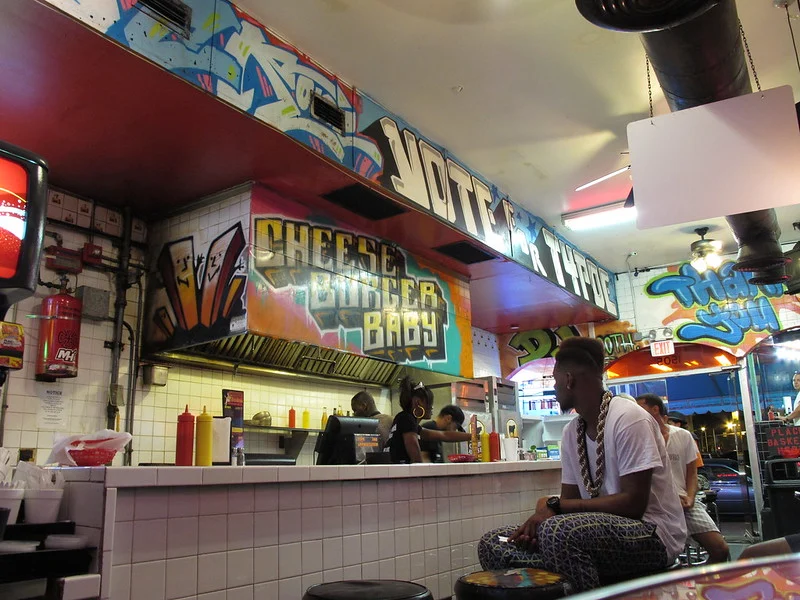
In a contemporary academic landscape increasingly focused on applied learning, an innovative pedagogical approach at the University of Massachusetts Boston is leveraging an unexpected cultural artifact—a documentary about regional American hamburgers—to make complex sociological theories both visible and intuitive for students. Professor Evan Stewart, an assistant professor of sociology at UMass Boston, has integrated George Motz’s 2004 film Hamburger America into his Introduction to Sociology course, addressing the pervasive challenge of illustrating abstract concepts like social construction, cultural objects, and bureaucracy in a way that resonates with students’ lived experiences. This method not only deepens understanding of foundational sociological principles but also provides a unique lens through which to examine broader societal issues such as economic change, cultural preservation, and the enduring impact of historical trends.
The "This is Water" Predicament in Sociological Pedagogy
One of the significant hurdles in teaching sociology, particularly concepts that describe the fundamental structures of society, is what is often termed the "This is Water" problem, a reference to David Foster Wallace’s commencement address. This metaphor highlights the difficulty in recognizing the most obvious, pervasive realities because individuals are so thoroughly immersed in them. For sociology students, this challenge manifests when attempting to analyze concepts like bureaucracy or cultural standardization. These phenomena are so deeply embedded in daily life—from navigating university registration systems to purchasing goods at retail outlets—that their unique traits and profound societal implications often go unnoticed, making critical analysis difficult.
Bureaucracy, as conceptualized by Max Weber, is a prime example. Weber, a pioneering German sociologist, described bureaucracy as a highly rational and efficient form of organization characterized by hierarchy, rules, impersonality, technical competence, and written documentation. While Weber recognized its efficiency in managing complex societies and large organizations, he also warned of its potential to create an "iron cage" of rationalization, stifling individual freedom and creativity. Students frequently interact with bureaucratic systems daily, whether it’s through academic advising, financial aid applications, or even local government services. Yet, the very ubiquity of these systems often renders their underlying structures and sociological significance invisible.
Similarly, George Ritzer’s theory of "McDonaldization," introduced in his influential 1993 book The McDonaldization of Society, extends Weber’s concept of rationalization to the broader service industry and beyond. Ritzer identified four key dimensions of McDonaldization: efficiency, calculability, predictability, and control through nonhuman technology. The point-of-sale (POS) system, now a ubiquitous feature in the service industry, exemplifies this control and predictability, standardizing transactions and customer interactions to an extent that most students perceive it as the only conceivable way to organize a business. This widespread normalization of highly rationalized processes underscores the pedagogical need for tools that can disrupt these ingrained perceptions and reveal the underlying social constructions.
Hamburger America: A Culinary Disruption of Standardization
It is against this backdrop that Hamburger America, a 2004 documentary by filmmaker and self-proclaimed "hamburger expert" George Motz, emerges as a remarkably effective teaching aid. The film embarks on a cross-country journey, exploring the diverse, often idiosyncratic, regional traditions of hamburger preparation across the United States. Far from the homogenized offerings of multinational fast-food chains, Motz’s documentary showcases small, independent eateries where cheeseburgers are prepared with unique methods, ingredients, and local flair. From Oklahoma’s fried-onion burgers to Connecticut’s steamed cheeseburgers and New Mexico’s green chile-infused patties, the film presents a vivid tableau of culinary variation that directly challenges the notion of a standardized "cheeseburger."
Professor Stewart explains that asking students how to make a cheeseburger typically elicits a fairly uniform response, reflecting the dominant influence of franchised fast-food models. The documentary, however, immediately subverts this expectation, demonstrating the "rich, unexpected variation" that exists. This visual and experiential disruption serves as a powerful entry point for discussing social construction—the idea that even seemingly straightforward concepts or objects, like a cheeseburger, are shaped by shared human agreement, cultural practices, and historical context rather than being inherently fixed or natural.
Unpacking Sociological Concepts Through the Lens of a Burger
The utility of Hamburger America extends far beyond merely showcasing culinary diversity; it acts as a robust framework for exploring several core sociological concepts:
Cultural Objects and Wendy Griswold’s Cultural Diamond
The documentary offers an intuitive understanding of how culture is embedded in objects. Each regional burger featured in the film functions as a "cultural object" – a tangible item that embodies specific cultural meanings, values, and practices. This aligns perfectly with Wendy Griswold’s "cultural diamond," a model that helps analyze the relationship between cultural objects, their creators, their receivers (audiences), and the broader social world in which they exist.
- Cultural Object: The unique regional burger (e.g., the specific ingredients, cooking method, presentation).
- Creator: The local restaurant owner, often a multi-generational proprietor, who upholds specific traditions.
- Receiver: The local community, patrons who have grown up with and cherish these particular styles of burgers, associating them with nostalgia, community, and identity.
- Social World: The specific regional culture, local economy, historical events, and social dynamics that have shaped the burger’s creation and reception.
By examining these elements, students can trace how local ingredients, historical migration patterns, economic conditions, and community preferences coalesce to produce distinct culinary traditions, thereby demonstrating the dynamic interplay between culture and society.
Beyond Bureaucracy and McDonaldization
Crucially, the independent burger joints depicted in Hamburger America often operate outside the highly systematized, bureaucratic structures characteristic of large, franchised restaurants. These establishments frequently rely on informal networks, generational knowledge transfer, and a personalized approach to customer service, offering a stark contrast to the efficiency-driven, predictable, and controlled environment of McDonaldized enterprises. This provides students with an intuitive sense of "how wildly different social arrangements can emerge without the systematizing force of bureaucracy," challenging their assumptions about the inevitability of rationalized systems. It illustrates that human ingenuity and cultural preferences can lead to diverse organizational forms, emphasizing that bureaucracy is a social choice, not a natural state.
Connections to Broader Social Issues
Beyond core theoretical concepts, Hamburger America serves as a springboard for discussions on a range of significant social issues:
- Segregation: The historical context of some of these establishments might reveal how patterns of racial or ethnic segregation influenced the development of local businesses and distinct culinary traditions within specific communities.
- De-industrialization and Economic Change: Many of the featured establishments are often found in towns that have experienced economic shifts, such as de-industrialization. Their longevity and continued success can speak to community resilience, the importance of local businesses in sustaining economies, and the ways tradition can anchor communities amidst change.
- Urban Planning: The film indirectly highlights the role of these local eateries in the urban and rural landscape, often predating modern zoning and development. They represent a form of organic urban planning, where food establishments grow out of local needs and community life rather than being imposed by large corporate blueprints.
- Food Systems: The documentary subtly contrasts the industrial food supply chains that feed large fast-food corporations with the more localized sourcing and preparation methods often found in smaller, independent joints. This can lead to discussions about sustainable food practices, local economies, and the social implications of different food production models.
- Tradition and History: Each burger tells a story, embodying the history of a family, a town, or a particular immigrant community. This allows students to grasp how tradition is not static but a dynamic process of inheritance, adaptation, and ongoing social practice.
A Chronology of Rationalization and Resistance
To contextualize the documentary’s significance, it’s helpful to consider a brief chronology of the forces it critiques and celebrates:
- Late 19th – Early 20th Century: Max Weber develops his theories of bureaucracy and rationalization, observing the rise of modern industrial and administrative systems.
- Post-World War II Era (1950s-1960s): The rapid expansion of fast-food chains, notably McDonald’s, pioneers standardized food preparation and service, laying the groundwork for widespread rationalization in the service sector.
- 1993: George Ritzer publishes The McDonaldization of Society, theorizing the extension of fast-food principles—efficiency, calculability, predictability, and control—to virtually all aspects of modern life. This work cemented the academic understanding of rationalization’s pervasive influence.
- 2004: George Motz releases Hamburger America, offering a cinematic counter-narrative to McDonaldization by showcasing and celebrating unique, often non-rationalized, local burger traditions across the United States. The film implicitly argues for the value of diversity, tradition, and local culture in an increasingly homogenized world.
- Present Day: Professor Stewart and other educators continue to use such cultural artifacts to illustrate sociological concepts, engaging students in critical analysis of the forces shaping their contemporary world. The ongoing popularity of "foodie culture" and the "eat local" movement can be seen as contemporary expressions of resistance to the very standardization the documentary highlights.
Broader Impact and Implications
The pedagogical strategy employed by Professor Stewart underscores several critical implications for higher education and societal understanding:
Innovation in Teaching
The use of a documentary like Hamburger America exemplifies innovative teaching practices that move beyond traditional textbooks and lectures. By engaging students through visual media and relatable cultural objects, educators can bridge the gap between abstract theory and concrete experience, fostering deeper comprehension and critical engagement. This approach is particularly vital in general education courses, where the goal is to equip students from diverse academic backgrounds with analytical tools applicable across various disciplines.
Relevance of Sociology
This method powerfully demonstrates the relevance of sociology in understanding everyday life. What might initially seem like a simple culinary tour transforms into a sophisticated exploration of social structures, cultural meanings, and power dynamics. Students learn that even a seemingly mundane object like a cheeseburger is imbued with social significance and can reveal profound insights into how societies function, change, and resist homogenization.
Cultural Preservation and Localism
The documentary’s focus on unique regional traditions also implicitly highlights the importance of cultural preservation and the value of localism in an increasingly globalized world. These small, independent burger joints often serve as cultural anchors, preserving unique recipes, fostering community identity, and resisting the pressures of corporate standardization. This can inspire students to critically examine their own local cultures and the forces that shape or threaten them.
Critical Consumption and Awareness
Ultimately, this pedagogical approach encourages students to become more critical consumers, not just of food, but of culture and information in general. By understanding the social construction of objects and the forces of rationalization, they are better equipped to question the origins, production, and implications of the products and services they encounter daily. This critical awareness is a cornerstone of sociological literacy, empowering individuals to navigate and potentially reshape the social world around them.
Professor Stewart’s integration of Hamburger America into his sociology curriculum offers a compelling model for making complex academic theories accessible and relevant. By deconstructing the humble cheeseburger, students gain a profound appreciation for the intricate social forces that shape even the most familiar aspects of their lives, providing them with essential tools for critical analysis and informed engagement with the world. The lively discussions spurred by the film, often described as revelatory by students, underscore the enduring power of creative pedagogy in illuminating the invisible structures of society, perhaps best appreciated after lunch.